woven handbag party use
CN → USProduct Images
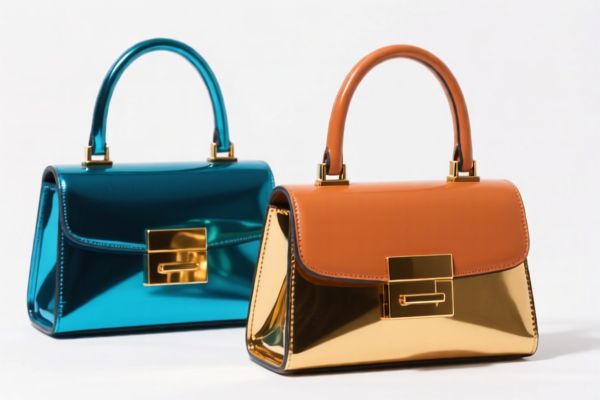
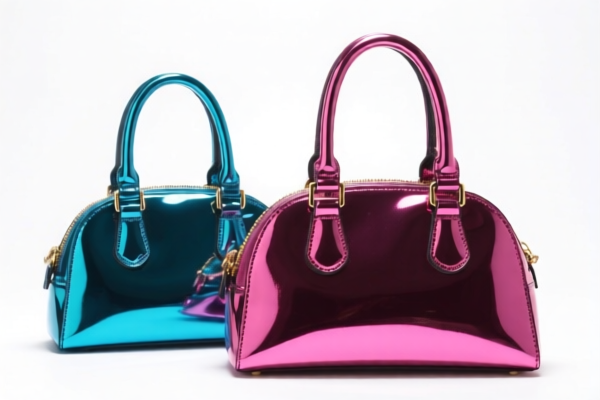
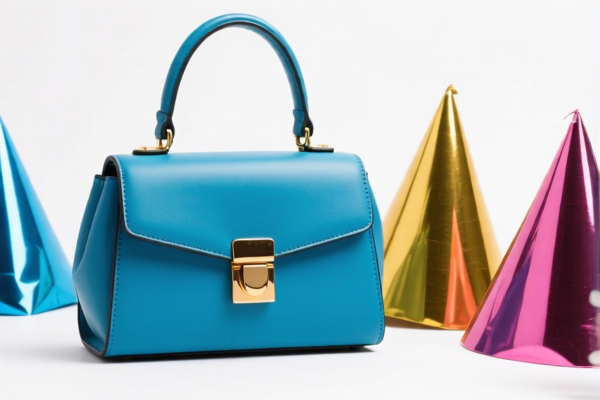
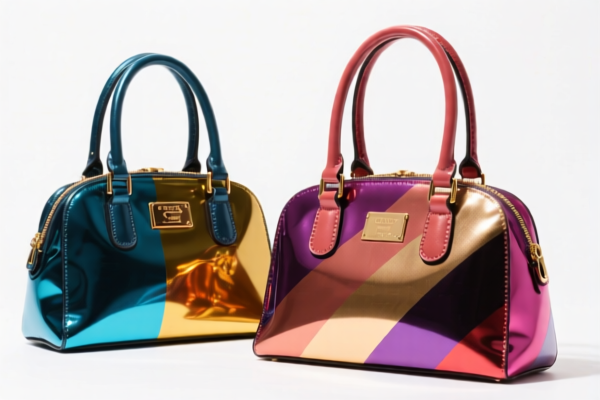
AI Analysis
👜 Woven Handbags for Party Use
🌐 HS Code Reference & Clearance Guide | 2026 Latest Tariff Analysis | Professional Customs Strategy
📌 I. Product Definition & Classification: Do You Really Know "Woven Handbags"?
Woven handbags for party use are fashion accessories made from natural or synthetic fibers (such as straw, rattan, jute, raffia, or synthetic plastics like PP/PVC) that are interlaced by hand or machine. In international trade, they are strictly distinguished from other types of bags based on their material composition, manufacturing process, and function.
Key Distinction Points:
- Material: If made from vegetable plaiting materials (straw, straw-like, bamboo, rattan, etc.) → Classified under Chapter 46.
- Material: If made from plastic materials (straps, woven mesh) → Classified under Chapter 39.
- Material: If made from textile materials (woven fabric, not loose plaiting) → Classified under Chapter 62 or 42 (depending on assembly).
- Usage: Specifically designed for party/fashion use, not for industrial storage or sports.
⚠️ Critical Classification Rule:
- Plaited bags (open structure, visible weave) → Chapter 46 or 39.
- Woven textile bags (closed structure, fabric-like) → Chapter 62 (if not lined) or Chapter 42 (if lined/structured).
- Party-use specificity does not change the HS code; it only affects marketing and potential duty-free thresholds for low-value goods.
📦 II. HS Code Classification Details (2026 Latest Tariff Authority Comparison)
| HS Code | Product Description | Applicable Scenario | Material Type | Structure |
|---|---|---|---|---|
4202.92.00 |
Handbags, whether or not with shoulder bag, of plastic sheeting or of textile materials | Most Common: Woven synthetic (PP/PVC) party bags, structured fashion bags | Plastic or Textile | Structured/Lined |
4202.92.30 |
Handbags of plastic sheeting | Bags made entirely of plastic weave (e.g., plastic straw) | Plastic | Structured |
4202.92.80 |
Handbags of textile materials | Bags made of woven fabric (e.g., cotton, polyester weave) | Textile | Structured |
4602.12.00 |
Handmade plaiting materials; articles of plaiting materials | Traditional: Straw, rattan, bamboo, raffia bags (hand-woven) | Vegetable Fiber | Open Weave/Plaited |
4601.93.00 |
Mats, matting and mats of plaiting materials | Floor mats, not handbags | Vegetable Fiber | Flat |
4602.19.00 |
Other articles of plaiting materials | Non-handbag plaited items (e.g., baskets, hats) | Vegetable Fiber | Various |
🔍 Key Reminder:
- Chapter 42 (HS 4202) is the most common for fashion handbags made of plastic or textile, even if they have a "woven" appearance.
- Chapter 46 (HS 4602) is strictly for handmade plaited articles using natural vegetable materials (straw, bamboo, etc.).
- Do not confuse "woven textile" (Chapter 62/42) with "plaiting materials" (Chapter 46).
💰 III. 2026 Latest Tariff Rate Details (Including Additional Duties & Policy Add-ons)
✅ Applicable Country: United States (US)
✅ Country of Origin: China (CN)
✅ Effective Date: November 10, 2025 (including subsequent imports)
🎯 1. 4202.92.00 —— Handbags of Plastic or Textile Materials (Most Common for Fashion)
| Item | Content |
|---|---|
| Base Rate | 12% (ad valorem) |
| USITC Additional Duty | +25% (under USITC Footnote 9903.88.01) |
| IEEPA Additional Duty | +10% (for China/HK products, from Nov 10, 2025) |
| Total Rate | 47% |
| Tax Calculation | CIF Value × 47% |
| De Minimis Eligibility | ❌ No (deny_de_minimis) |
| Legal Basis Path | IEEPA:9903.01.25 → IEEPA:9903.01.24 → USITC:4202.92.00 → FOOTNOTE:9903.88.01 |
📌 Explanation:
- Most "woven handbags" for parties are made of PP (polypropylene) or PVC plastic, which fall under 4202.92.
- These are subject to Section 301 and IEEPA tariffs, resulting in a high 47% total rate.
🎯 2. 4602.12.00 —— Handmade Plaiting Materials (Straw/Rattan/Bamboo)
| Item | Content |
|---|---|
| Base Rate | 0% (ad valorem) |
| USITC Additional Duty | +25% (under USITC Footnote 9903.88.01) |
| IEEPA Additional Duty | +10% (for China/HK products, from Nov 10, 2025) |
| Total Rate | 35% |
| Tax Calculation | CIF Value × 35% |
| De Minimis Eligibility | ❌ No (deny_de_minimis) |
| Legal Basis Path | IEEPA:9903.01.25 → IEEPA:9903.01.24 → USITC:4602.12.00 → FOOTNOTE:9903.88.01 |
📌 Note:
- Even though the base rate is 0%, the 35% total is still high.
- Natural material bags (straw, bamboo) are taxed differently than synthetic ones.
🎯 3. 4202.92.80 —— Handbags of Textile Materials (Woven Fabric)
| Item | Content |
|---|---|
| Base Rate | 12% |
| USITC Additional Duty | +25% |
| IEEPA Additional Duty | +10% |
| Total Rate | 47% |
| Tax Calculation | CIF Value × 47% |
| De Minimis Eligibility | ❌ No (deny_de_minimis) |
📌 Note:
- If the handbag is made of woven cotton or polyester fabric (not plaited), it still falls under 4202.92.
- Same high tariff as plastic handbags.
🛠️ IV. Customs Clearance Practical Advice (Battle-Tested Pitfall Guide)
✅ 1. Document Checklist (All Required)
| Document | Must Provide | Description |
|---|---|---|
| ✅ Product Specification Sheet | ✔️ | Material (PP, Straw, Cotton), Dimensions, Weight, Lining Info |
| ✅ Product Photos (Clear) | ✔️ | Front, Back, Inside, Label, Weave Pattern Close-up |
| ✅ Commercial Invoice | ✔️ | Must state "Woven Handbag for Party Use" |
| ✅ Packing List | ✔️ | Quantity, Weight, Packaging Type |
| ✅ Certificate of Origin (CO) | ✔️ | If non-China origin, may qualify for lower rates |
| ✅ Material Declaration | ✔️ | Specify if "Plaited" (Ch 46) or "Woven Textile/Plastic" (Ch 42) |
✅ 2. Declaration Tips (Key Mnemonics)
🔥 “Plaited is Ch46, Woven is Ch42, Name it right, tax rate half!”
| Scenario | Correct Declaration | Wrong Practice |
|---|---|---|
| Straw/Rattan handbag | 4602.12.00 – "Handmade plaited bag of straw" |
Misclassify as "Plastic Bag" → Higher tax |
| PP Plastic weave bag | 4202.92.00 – "Handbag of plastic sheeting" |
Misclassify as "Textile" → Same rate, but risk of audit |
| Cotton Woven Bag | 4202.92.80 – "Handbag of textile materials" |
Misclassify as "Plaited" → Wrong chapter |
| Bag with leather trim | 4202.92.00 |
Split declaration → Audit Risk |
✅ 3. Special Cases Handling
| Scenario | Handling Advice |
|---|---|
| Mixed Material | If >50% by weight is plastic/textile → Chapter 42. If >50% is natural plaiting → Chapter 46. |
| Party Use Specifics | "Party use" is not a customs classification term. Declare as "Fashion Handbag" or "Woven Handbag". |
| De Minimis (Section 321) | ❌ No exemption for China-origin goods from Nov 10, 2025, regardless of value (<$800). |
| OEM Custom Bags | Provide design drawings to prove material composition and structure. |
🌍 V. Global Market Comparison (2026 Latest)
| Country/Region | Recommended HS Code | Tariff (China Origin) | Certification | Notes |
|---|---|---|---|---|
| 🇺🇸 USA | 4202.92.00 / 4602.12.00 |
35%-47% | None | High tariffs, no de minimis |
| 🇨🇳 China | 4202.92.00 / 4602.12.00 |
0% - 5% | None | Low import duty |
| 🇪🇺 EU | 4202.92.00 / 4602.12.00 |
0% - 12% | REACH, CPSR | No Section 301 |
| 🇦🇺 Australia | 4202.92.00 / 4602.12.00 |
5% - 10% | None | Moderate tariff |
| 🇯🇵 Japan | 4202.92.00 / 4602.12.00 |
0% - 8% | None | Low tariff |
📌 Conclusion:
- USA is the most expensive market due to Section 301 and IEEPA tariffs.
- EU and Asia have lower barriers, but still require compliance with material safety standards (e.g., REACH in EU).
📌 VI. Common Errors & Pitfall Guide (Blood-Learn Lessons)
❌ Error 1: Calling a plastic PP bag "Woven Straw"
👉 Consequence: Misclassification → Customs Penalty + Retaxation
❌ Error 2: Splitting a handbag into "Strap + Body"
👉 Consequence: Each part taxed separately → Higher Total Duty (up to 60%+)
❌ Error 3: Using "Accessory" as the product name
👉 Consequence: Customs may classify as "Part of Garment" → Different Duty Rate + Delay
❌ Error 4: Ignoring the "De Minimis" change for China
👉 Consequence: Assuming $800 exemption → Seizure + Penalty
✅ Correct Practice:
"Woven Handbag, Party Use, Made of Polypropylene (PP) Plastic Weave, Lined with Polyester, Model XYZ, HS 4202.92.00"
🎯 VII. Conclusion: Professional Declaration, Save Time, Reduce Cost!
🎯 Remember Mnemonic:
🔹 "Plaited is Ch46, Woven is Ch42, Name it right, tax rate half!"
🔹 "China Origin, USA Destination, 47% is the price, declare right, survive alive!"
📌 Tips:
- If your handbags are originating from Vietnam, Thailand, or Indonesia, you may qualify for lower or zero IEEPA tariffs.
- Consider Advance Ruling for large shipments to ensure correct classification.
- For party-use bags, ensure they are not classified as "Toys" or "Costume Accessories" to avoid different duty rates.
📣 Take Action Now:
📞 Contact a licensed customs broker + Provide material specs + Apply for HS Code Advance Ruling
🚀 Ensure your woven handbags clear customs smoothly, maximize profit, and expand globally!
✨ Professional clearance starts with accurate classification!
💼 Every dollar of cost, deserves precise calculation!
Customer Reviews
About HS Code Classification
The Harmonized System (HS) is an internationally standardized nomenclature developed by the World Customs Organization (WCO) to classify traded products. Over 200 countries use the HS system as the basis for customs tariffs, trade statistics, and import/export regulations.
Each HS code follows a hierarchical structure:
- Chapter (2 digits) — Broad category of goods (e.g., Chapter 84: Machinery and Mechanical Appliances)
- Heading (4 digits) — More specific grouping within the chapter
- Subheading (6 digits) — Internationally standardized breakdown, used by all WCO member countries
- National subdivisions (8-10 digits) — Country-specific extensions for further classification, such as US HTSUS 10-digit codes
Correct HS code classification is essential for smooth customs clearance, accurate duty payment, and compliance with trade regulations. Misclassification can lead to customs delays, overpayment of duties, or penalties.
When importing from CN to US, the applicable tariff rates may include:
- Most-Favored-Nation (MFN) rate — The standard duty rate applied to WTO members
- General rate — Applied to countries without trade agreements
- Trade remedy duties — Additional tariffs such as Section 301 (anti-dumping), Section 232 (national security), or countervailing duties
The information provided on this page is for reference purposes only. For official classification, please consult with your local customs authority or a licensed customs broker.