woven handbag strap with magnetic clasp
CN → US| HS Code | Tariff Rate | Origin | Destination | Doc |
|---|---|---|---|---|
| 4205002000 | 35.0% | CN | US | Official Doc |
| 4205004000 | 36.8% | CN | US | Official Doc |
| 6307909891 | 24.5% | CN | US | Official Doc |
| 6307908940 | 17.0% | CN | US | Official Doc |
Product Images
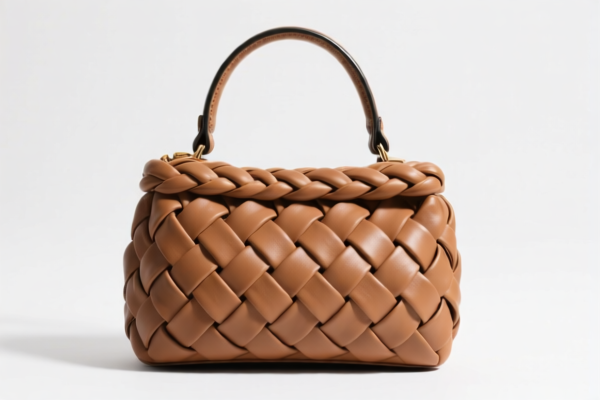
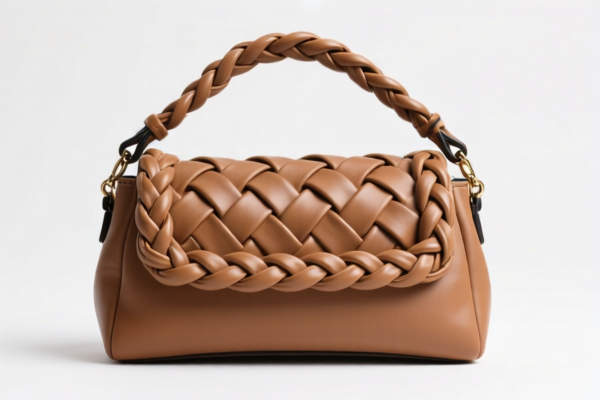
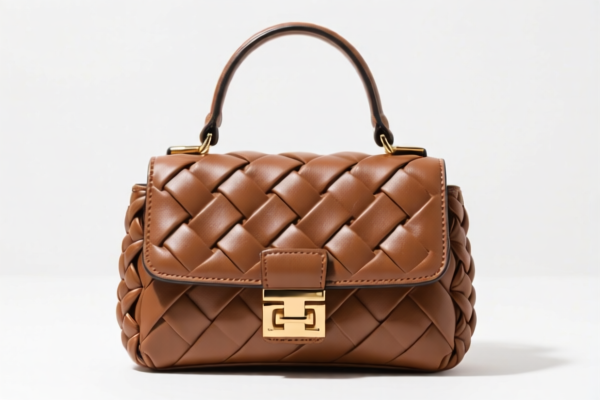

AI Analysis
👜 Woven Handbag Strap with Magnetic Clasp: HS Code Classification & Customs Clearance Guide
🌐 HS Code Reference & Customs Clearance Guide | 2026 Latest Tariff Analysis | Professional Clearance Strategy
📌 I. Product Definition & Classification: Do You Really Understand "Handbag Straps"?
A Woven Handbag Strap with Magnetic Clasp is a component accessory for bags, characterized by its textile/woven structure and functional closure (magnetic). In international trade, it is not classified as a "bag" (Chapter 42 Heading 4202) but as an "article of leather or composition leather" or an "article of textile materials" depending on the primary material and construction.
However, based on the provided <DATA>, we are looking at specific HS Codes under Chapter 42 (Articles of Leather) and Chapter 63 (Other Made Up Articles).
⚠️ Key Classification Point:
- If the strap is made of leather or composition leather (even if woven/textured), it falls under Chapter 42.
- If it is purely textile (cotton, polyester, etc.) with a magnetic clasp, it generally falls under Chapter 63 (Other made up articles).
- Crucial Distinction: The provided data includes "Shoelaces" and "Straps and strops" under Chapter 42. It also includes "Other made up articles" under Chapter 63. We must determine which best fits a handbag strap.
📦 II. HS Code Classification Details (Based on Provided Data)
The provided <DATA> contains four HS Codes. Let's analyze which one applies to a Woven Handbag Strap with Magnetic Clasp.
| HS Code | Product Description | Applicability to Woven Handbag Strap | Why? |
|---|---|---|---|
4205.00.20.00 |
Other articles of leather/composition leather: Shoelaces | ❌ No | A handbag strap is not a shoelace. Incorrect classification. |
4205.00.40.00 |
Other articles of leather/composition leather: Straps and strops | ✅ Yes (If Leather/Composition Leather) | This is the most likely fit if the strap is made of leather or composition leather, even if woven. "Straps" covers bag straps, belt straps, etc. |
6307.90.98.91 |
Other made up articles: Other | ⚠️ Possible (If Textile) | If the strap is made of pure textile (cotton, synthetic fiber) and not leather, it may fall here as an "other made up article." |
6307.90.89.40 |
Other made up articles: Cotton towels of pile/tufted construction... | ❌ No | This is for towels, not straps. Incorrect. |
🔍 Critical Insight:
- Primary Classification: If the strap contains leather or composition leather (even as a layer or backing), it must be classified under4205.00.40.00(Straps and strops).
- Secondary Classification: If the strap is 100% textile (e.g., cotton, polyester) with a fabric covering, it may be classified under6307.90.98.91(Other made up articles).
- Magnetic Clasp Impact: The presence of a magnetic clasp does not change the classification from "strap" to "bag" or "magnetic device." It remains an accessory/strap.
💰 III. 2026 Latest Tariff Rate Details (Including Additional Taxes)
✅ Applicable Country: United States (US)
✅ Origin: China (CN)
✅ Effective Time: 2025/2026 (Current Trade Environment)
🎯 1. 4205.00.40.00 —— Straps and Strops (Leather/Composition Leather)
| Item | Content |
|---|---|
| Base Tariff Rate | 1.8% (ad valorem) |
| Additional Tariff (Section 301) | +25.0% |
| Total Tariff Rate | 26.8% |
| Tax Calculation | CIF Value × 26.8% |
| De Minimis Exemption | ❌ Not Eligible (Section 301 goods are generally excluded from de minimis) |
| Legal Basis | HTSUS 4205.00.40.00 + USITC Footnote 9903.88.01 (Section 301) |
📌 Explanation:
- The 1.8% is the standard Most Favored Nation (MFN) rate for leather articles.
- The 25% is the Section 301 additional tariff applied to Chinese-origin goods.
- Total: 26.8%. This is a moderate-high tariff, but lower than electronics or heavy machinery.
🎯 2. 6307.90.98.91 —— Other Made Up Articles (Textile)
| Item | Content |
|---|---|
| Base Tariff Rate | 7.0% (ad valorem) |
| Additional Tariff (Section 301) | +7.5% |
| Total Tariff Rate | 14.5% |
| Tax Calculation | CIF Value × 14.5% |
| De Minimis Exemption | ❌ Not Eligible (Section 301 applies) |
| Legal Basis | HTSUS 6307.90.98.91 + USITC Footnote 9903.88.01 (Section 301) |
📌 Explanation:
- The 7.0% is the MFN rate for other textile made-up articles.
- The 7.5% is the Section 301 additional tariff.
- Total: 14.5%. This is significantly lower than the leather strap classification.
- Strategic Tip: If the strap is 100% textile (no leather), classify here to save 12.3% in tariffs.
🛠️ IV. Customs Clearance Practical Advice (Real-World Pitfall Guide)
✅ 1. Preparation Checklist (Non-Negotiable)
| Document | Required? | Explanation |
|---|---|---|
| ✅ Product Specification Sheet | ✔️ | Must specify material composition (e.g., "Outer: Woven Cotton, Inner: Leather Lining"). |
| ✅ Composition Declaration | ✔️ | Critical: Must clearly state if leather is present. If yes → 4205.00.40.00. If no → 6307.90.98.91. |
| ✅ Product Photos | ✔️ | Clear images showing the woven texture, magnetic clasp, and any leather components. |
| ✅ Commercial Invoice | ✔️ | Must match HS Code. Description: "Woven Handbag Strap with Magnetic Clasp." |
| ✅ Origin Certificate | ✔️ | If non-China origin, may reduce/eliminate Section 301 tariffs. |
✅ 2. Classification Strategy (Key Mnemonic)
🔥 “Leather First, Textile Second; Magnetic is Neutral, Material is Key!”
| Scenario | Correct HS Code | Tariff Rate | Why? |
|---|---|---|---|
| Strap has any leather/composition leather | 4205.00.40.00 |
26.8% | GATT Explanatory Notes state that articles of leather are classified in Ch. 42, even if partially textile. |
| Strap is 100% textile (cotton/polyester) | 6307.90.98.91 |
14.5% | No leather → Chapter 63 applies. Lower tariff. |
| Strap is leather with textile weaving | 4205.00.40.00 |
26.8% | Leather component triggers Chapter 42. |
⚠️ Warning:
- Misclassification Risk: Declaring a leather strap as textile (6307.90.98.91) to save 12.3% is fraud if leather is present. Customs can audit material composition.
- Magnetic Clasp: The clasp material (plastic, metal) does not change the classification. It is considered an accessory.
✅ 3. Special Cases
| Situation | Advice |
|---|---|
| OEM Custom Straps | Provide design specs and material test reports (e.g., FTIR for leather detection). |
| Sample vs. Bulk | Ensure sample matches bulk material. Discrepancies cause delays. |
| Leather vs. Composition Leather | Both fall under 4205.00.40.00. "Composition leather" includes vulcanized fiber and other processed leather products. |
| Non-China Origin | If from Vietnam/Mexico, Section 301 tariffs may not apply. Check FTAs. |
🌍 V. Global Market Comparison (2026)
| Country/Region | Recommended HS Code | Tariff (China Origin) | Notes |
|---|---|---|---|
| 🇺🇸 USA | 4205.00.40.00 (Leather) / 6307.90.98.91 (Textile) |
26.8% / 14.5% | Section 301 applies. |
| 🇨🇳 China | 4205.00.40.00 / 6307.90.98.91 |
Low (0-10%) | Import tariffs are low; focus on domestic consumption. |
| 🇪🇺 EU | 4205.00.40.00 / 6307.90.98.91 |
0-12% | No Section 301. Lower base tariffs. |
| 🇯🇵 Japan | 4205.00.40.00 / 6307.90.98.91 |
0-5% | Favorable for textiles; moderate for leather. |
📌 Conclusion:
- USA is the most expensive market due to Section 301 tariffs.
- Material composition is the key lever to reduce costs. Switching from leather-backed to 100% textile straps can save 12.3%.
📌 VI. Common Errors & Pitfalls (Lessons Learned)
❌ Error 1: Declaring a leather-lined strap as "Textile Strap" (6307.90.98.91)
👉 Consequence: Customs audit → Misclassification penalty → Back taxes + fines.
❌ Error 2: Ignoring the magnetic clasp material
👉 Consequence: Usually no impact, but if the clasp is pure metal and the strap is fabric, some might incorrectly classify as "metal goods." Stick to Chapter 42/63.
❌ Error 3: Using "Handbag Strap" as the only description
👉 Consequence: Vague descriptions lead to delays.
✅ Correct Description: "Woven Cotton Handbag Strap with Leather Lining and Magnetic Clasp, Model XYZ, 100% Cotton Outer, Genuine Leather Inner."
🎯 VII. Conclusion: Smart Classification, Lower Costs
🎯 Remember the Rule:
🔹 "Leather Present? → 26.8% (Ch. 42)"
🔹 "100% Textile? → 14.5% (Ch. 63)"
🔹 "Magnetic Clasp? → Neutral (Doesn't Change Classification)"
📌 Pro Tip:
If you are importing large volumes, consider material substitution (e.g., high-quality woven synthetic instead of leather) to drop into the 14.5% bracket, saving 12.3% on every shipment.
📣 Immediate Action:
📞 Verify Material Composition with your supplier.
📄 Prepare Material Test Reports (especially for leather detection).
🚀 Apply for Advance Ruling if unsure about "Composition Leather" status.
✨ Professional clearance starts with precise classification!
💼 Every percentage point in tariff is profit or loss!
Customer Reviews
About HS Code Classification
The Harmonized System (HS) is an internationally standardized nomenclature developed by the World Customs Organization (WCO) to classify traded products. Over 200 countries use the HS system as the basis for customs tariffs, trade statistics, and import/export regulations.
Each HS code follows a hierarchical structure:
- Chapter (2 digits) — Broad category of goods (e.g., Chapter 84: Machinery and Mechanical Appliances)
- Heading (4 digits) — More specific grouping within the chapter
- Subheading (6 digits) — Internationally standardized breakdown, used by all WCO member countries
- National subdivisions (8-10 digits) — Country-specific extensions for further classification, such as US HTSUS 10-digit codes
Correct HS code classification is essential for smooth customs clearance, accurate duty payment, and compliance with trade regulations. Misclassification can lead to customs delays, overpayment of duties, or penalties.
When importing from CN to US, the applicable tariff rates may include:
- Most-Favored-Nation (MFN) rate — The standard duty rate applied to WTO members
- General rate — Applied to countries without trade agreements
- Trade remedy duties — Additional tariffs such as Section 301 (anti-dumping), Section 232 (national security), or countervailing duties
The information provided on this page is for reference purposes only. For official classification, please consult with your local customs authority or a licensed customs broker.