woven handbag with inner pocket
CN → US| HS Code | Tariff Rate | Origin | Destination | Doc |
|---|---|---|---|---|
| 6307909891 | 24.5% | CN | US | Official Doc |
| 6307908940 | 17.0% | CN | US | Official Doc |
| 4202923900 | 52.6% | CN | US | Official Doc |
| 4602112100 | 41.2% | CN | US | Official Doc |
| 4202224020 | 42.4% | CN | US | Official Doc |
Product Images
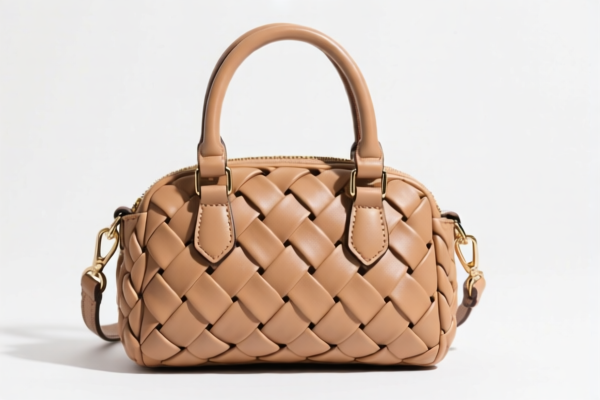
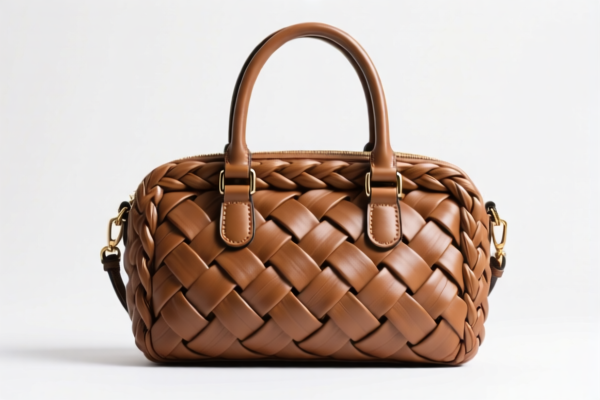
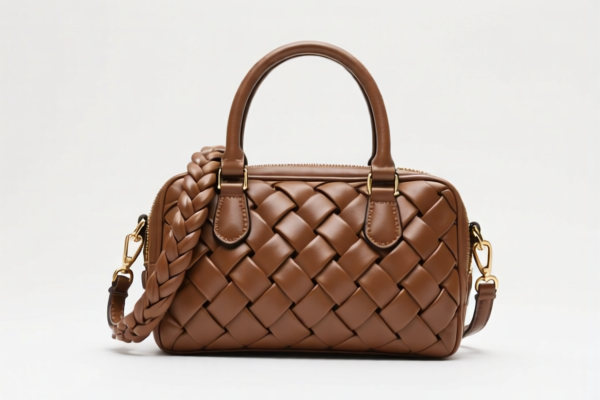
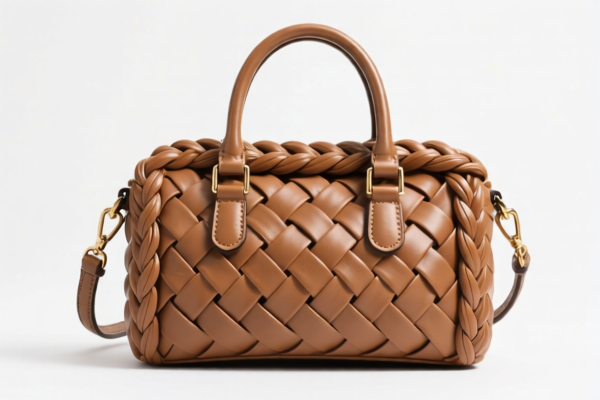
AI Analysis
👜 Woven Handbag with Inner Pocket (编织手提包,带内隔层)
🌐 HS Code Reference & Customs Clearance Guide | 2026 Latest Tariff Analysis | Professional Entry Strategy
📌 I. Product Definition & Classification: Do You Really Understand "Woven Handbags"?
A woven handbag with an inner pocket is a composite textile accessory. Its classification depends heavily on the raw material used for weaving and the specific form/function of the bag. In international trade, these are generally split into three categories:
1. Textile/Fiber Woven Bags: Made from cotton, linen, synthetic fibers, or jute. These fall under Chapter 63 or Chapter 42 depending on the specific lining and structure.
2. Vegetable Material Woven Bags: Made from bamboo, rattan, reed, or straw. These are classified under Chapter 46.
3. General Luggage/Bags: Any bag that doesn't fit the specific "textile" or "vegetable" exemptions and is treated as general luggage.
⚠️ Key Distinction Point:
- If made from cotton, linen, or synthetic fibers → Look at Chapter 63 (Other Made-up Textile Goods) or Chapter 42 (Leather/Travel Goods).
- If made from bamboo, rattan, or plant materials → Look at Chapter 46 (Basketry and Wickerwork).
- If the material is ambiguous but it functions as a general travel/sports bag → Look at Chapter 42 (Luggage).
📦 II. HS Code Classification Details (2026 Latest Tariff Authority Comparison)
| HS Code | Product Description | Material Inference | Applicable Scenario |
|---|---|---|---|
6307.90.98.91 |
Other made-up textile articles | Textile or Fiber (e.g., Cotton, Polyester) | Generic woven bags, craft materials |
6307.90.89.40 |
Other made-up textile articles | Cotton, Linen, or Synthetic Fiber | Common consumer woven bags |
4202.92.39.00 |
Other luggage, handbags, satchels | Woven Material (General) | Travel bags, sports bags, ambiguous woven materials |
4602.11.21.00 |
Woven articles of vegetable materials | Bamboo, Rattan, Reeds, etc. | Eco-friendly, natural material bags |
4202.22.40.20 |
Satchels, handbags | Woven Material | Bags where shape matches "woven" description strictly |
🔍 Key Reminder:
- "Woven" is not a single HS Code. You must identify the substance first.
- If the bag is made of bamboo strips, it MUST go to4602.
- If the bag is made of cloth strips, it usually goes to6307or4202.
- Misclassification leads to significant tax discrepancies (e.g., 17% vs. 52%).
💰 III. 2026 Latest Tariff Rate Breakdown (Including Surcharges & Policy Add-ons)
✅ Applicable Country: United States (US)
✅ Origin: China (CN)
✅ Effective Time: Includes subsequent imports (Section 301 & IEEPA provisions)
🎯 1. 6307.90.98.91 — Other Made-up Textile Articles (General Textile)
| Item | Content |
|---|---|
| Basic Tariff | 7.0% |
| Section 301 Surcharge | 7.5% |
| Section 122 Surcharge | 10.0% |
| Total Tax Rate | 24.5% |
| Tax Calculation | CIF Value × 24.5% |
| De Minimis Eligibility | ❌ No (Subject to high tariffs) |
| Legal Basis Path | Base:6307 → Sec301:7.5 → Sec122:10 |
📌 Explanation:
- This code applies to generic textile-based woven bags not specified elsewhere.
- The total burden is 24.5%, which is moderate but still significant.
🎯 2. 6307.90.89.40 — Other Made-up Textile Articles (Cotton/Linen/Synthetic)
| Item | Content |
|---|---|
| Basic Tariff | 7.0% |
| Section 301 Surcharge | 0.0% |
| Section 122 Surcharge | 10.0% |
| Total Tax Rate | 17.0% |
| Tax Calculation | CIF Value × 17.0% |
| De Minimis Eligibility | ❌ No |
| Legal Basis Path | Base:6307 → Sec301:0 → Sec122:10 |
📌 Note:
- This is the most cost-effective option if the material is strictly defined as cotton, linen, or standard synthetic fibers.
- The Section 301 surcharge is waived for this specific subheading, lowering the total rate from 24.5% to 17%.
- Recommendation: Ensure the product description clearly states "Cotton/Linen/Synthetic" to qualify for this lower rate.
🎯 3. 4202.92.39.00 — Other Luggage/Handbags (General Woven/Travel)
| Item | Content |
|---|---|
| Basic Tariff | 17.6% |
| Section 301 Surcharge | 25.0% |
| Section 122 Surcharge | 10.0% |
| Total Tax Rate | 52.6% |
| Tax Calculation | CIF Value × 52.6% |
| De Minimis Eligibility | ❌ No |
| Legal Basis Path | Base:4202 → Sec301:25 → Sec122:10 |
📌 Explanation:
- This code is often used if the bag is considered "luggage" or if the material doesn't fit the specific textile exemptions.
- Warning: This is the highest tax rate (52.6%) due to the standard 25% Section 301 tariff on travel goods + 10% Section 122.
- Avoid this classification unless necessary, as it severely impacts profit margins.
🎯 4. 4602.11.21.00 — Woven Articles of Vegetable Materials
| Item | Content |
|---|---|
| Basic Tariff | 6.2% |
| Section 301 Surcharge | 25.0% |
| Section 122 Surcharge | 10.0% |
| Total Tax Rate | 41.2% |
| Tax Calculation | CIF Value × 41.2% |
| De Minimis Eligibility | ❌ No |
| Legal Basis Path | Base:4602 → Sec301:25 → Sec122:10 |
📌 Note:
- Applies to bags made of bamboo, rattan, reed, or other vegetable materials.
- Although the basic tariff is low (6.2%), the 25% Section 301 surcharge pushes the total to 41.2%.
- Crucial: You must provide proof of material (e.g., botanical source) to use this code.
🎯 5. 4202.22.40.20 — Satchels/Handbags (Woven Material Form)
| Item | Content |
|---|---|
| Basic Tariff | 7.4% |
| Section 301 Surcharge | 25.0% |
| Section 122 Surcharge | 10.0% |
| Total Tax Rate | 42.4% |
| Tax Calculation | CIF Value × 42.4% |
| De Minimis Eligibility | ❌ No |
| Legal Basis Path | Base:4202 → Sec301:25 → Sec122:10 |
📌 Note:
- This code is used when the bag's form (satchel/handbag) and woven nature are emphasized, but it falls under the general luggage chapter.
- Total rate is 42.4%, which is lower than4202.92but still significantly higher than the textile options (6307).
🛠️ IV. Customs Clearance Practical Advice (Battle-Tested Pitfall Guide)
✅ 1. Preparation Checklist (All Required)
| Document | Mandatory | Explanation |
|---|---|---|
| ✅ Product Specification | ✔️ | Must specify WEAVING MATERIAL (e.g., 100% Cotton, Bamboo, PVC strips). |
| ✅ Material Composition Certificate | ✔️ | Critical for distinguishing between 6307 (Textile) and 4602 (Vegetable). |
| ✅ Product Photos (Clear) | ✔️ | Show the weave pattern, inner pocket structure, and closure type. |
| ✅ Commercial Invoice | ✔️ | Description: "Woven Handbag with Inner Pocket, [Material Name]" |
| ✅ Packing List | ✔️ | Include weight and dimensions to verify fit with HS Code. |
✅ 2. Declaration Tips (Key Mantra)
🔥 "Material First, Code Second, Section 122 Applies to All!"
| Scenario | Correct Declaration | Wrong Practice |
|---|---|---|
| Cotton/Linen Bag | 6307.90.89.40 (17%) |
Use 4202 → 42-52% |
| Bamboo/Rattan Bag | 4602.11.21.00 (41.2%) |
Use 6307 → Misclassification risk |
| Generic Synthetic Bag | 6307.90.98.91 (24.5%) |
Use 4202 → Unnecessarily high tax |
| Unclear Material | Request Lab Test | Guessing → Audit penalty |
✅ 3. Special Circumstances Handling
| Situation | Handling Advice |
|---|---|
| Mixed Materials | If the bag is 80% cotton, 20% plastic, it likely falls under 6307 (Textile). If it's plastic weave, it may be 3923 or 6307. Define the essential character. |
| Eco-Friendly Marketing | If claiming "Biodegradable," ensure you have certificates to support 4602 or specific textile exemptions. |
| Section 122 Impact | Note that Section 122 (10%) applies to almost all these categories. There is no avoidance strategy for this 10% surcharge on Chinese-origin goods. |
| Pre-Ruling | If the material is novel (e.g., recycled plastic yarn woven like fabric), apply for an Advance Ruling to avoid disputes. |
🌍 V. Global Market Customs Comparison (2026 Latest)
| Country/Region | Recommended HS Code | Tariff (China Origin) | Certification | Note |
|---|---|---|---|---|
| 🇺🇸 USA | 6307.90.89.40 |
17.0% | No special cert | Best option if cotton/synthetic |
| 🇺🇸 USA | 4202.92.39.00 |
52.6% | No special cert | Avoid unless necessary |
| 🇨🇳 China | 6307.90 |
10-15% | No surcharge | Low entry barrier |
| 🇪🇺 EU | 6307.90 |
4-6% | CE/REACH (if applicable) | No Section 122/301 |
| 🇬🇧 UK | 6307.90 |
4-6% | UKCA | Post-Brexit rules apply |
📌 Conclusion:
- USA is the most critical market due to Section 301 (25%) and Section 122 (10%).
- Strategy: Classify under6307.90.89.40if possible to save ~25-35% in taxes compared to luggage codes.
- Key: Accurate material declaration is the single most important factor in reducing costs.
📌 VI. Common Errors & Pitfall Guide (Lessons Learned)
❌ Error 1: Classifying a cotton woven bag as 4202.92 (Luggage)
👉 Consequence: Tax jumps from 17% to 52.6%.
👉 Fix: Use 6307.90.89.40.
❌ Error 2: Claiming bamboo material for a 4602 code without proof
👉 Consequence: Customs reclassifies as textile or plastic → Penalty + Back Tax.
👉 Fix: Provide material test reports.
❌ Error 3: Ignoring Section 122 in cost calculation
👉 Consequence: Budget shortfall. The 10% surcharge is unavoidable for these HS codes.
👉 Fix: Include 10% in all FOB/CIF calculations.
❌ Error 4: Vague description "Woven Bag"
👉 Consequence: Customs officer has discretion → Likely chooses highest tax rate (4202).
👉 Fix: Use specific descriptions: "Woven Cotton Handbag with Interior Zipper Pocket."
✅ Correct Declaration Example:
"Woven Handbag, 100% Cotton Yarn, with Interior Pocket, Model W-101, HS Code 6307.90.89.40"
🎯 VII. Conclusion: Precise Classification, Maximize Profit!
🎯 Remember the Mantra:
🔹 "Cotton/Linen = 6307 (17%) | Bamboo = 4602 (41.2%) | General Luggage = 4202 (42-52%)"
🔹 "Section 122 is Fixed at 10% | Section 301 is the Variable Key!"
🔹 "Material Definition Determines Tax Rate!"
📌 Pro Tip:
If your handbag is made from recycled synthetic fibers, try to qualify for 6307.90.89.40 (17%) by proving the textile nature. Avoid the "Luggage" classification unless the bag is structurally a backpack or duffel.
Apply for a Pre-Ruling if the material is unusual (e.g., jute blended with leather).
📣 Immediate Action:
📞 Verify Material Composition
📄 Select HS Code:6307.90.89.40(Best Case) or4602.11.21.00(If Natural)
🚀 Clear Customs Smoothly, Reduce Costs, Boost Margins!
✨ Professional Customs Clearance Starts with Accurate Classification!
💼 Every Percentage Point of Tax Saved is Pure Profit!
Customer Reviews
About HS Code Classification
The Harmonized System (HS) is an internationally standardized nomenclature developed by the World Customs Organization (WCO) to classify traded products. Over 200 countries use the HS system as the basis for customs tariffs, trade statistics, and import/export regulations.
Each HS code follows a hierarchical structure:
- Chapter (2 digits) — Broad category of goods (e.g., Chapter 84: Machinery and Mechanical Appliances)
- Heading (4 digits) — More specific grouping within the chapter
- Subheading (6 digits) — Internationally standardized breakdown, used by all WCO member countries
- National subdivisions (8-10 digits) — Country-specific extensions for further classification, such as US HTSUS 10-digit codes
Correct HS code classification is essential for smooth customs clearance, accurate duty payment, and compliance with trade regulations. Misclassification can lead to customs delays, overpayment of duties, or penalties.
When importing from CN to US, the applicable tariff rates may include:
- Most-Favored-Nation (MFN) rate — The standard duty rate applied to WTO members
- General rate — Applied to countries without trade agreements
- Trade remedy duties — Additional tariffs such as Section 301 (anti-dumping), Section 232 (national security), or countervailing duties
The information provided on this page is for reference purposes only. For official classification, please consult with your local customs authority or a licensed customs broker.