woven pet basket
CN → US| HS Code | Tariff Rate | Origin | Destination | Doc |
|---|---|---|---|---|
| 4602110700 | 35.0% | CN | US | Official Doc |
| 4602110900 | 45.0% | CN | US | Official Doc |
| 4601920500 | 37.7% | CN | US | Official Doc |
| 3926909989 | 22.8% | CN | US | Official Doc |
| 4602110700 | 35.0% | CN | US | Official Doc |
Product Images
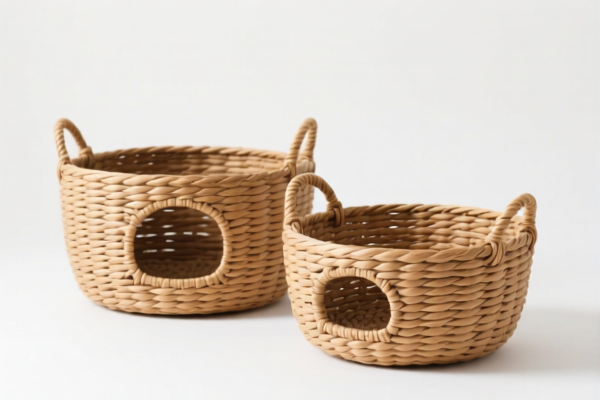
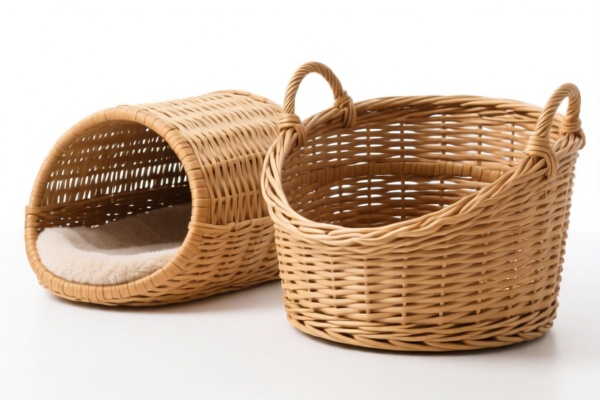
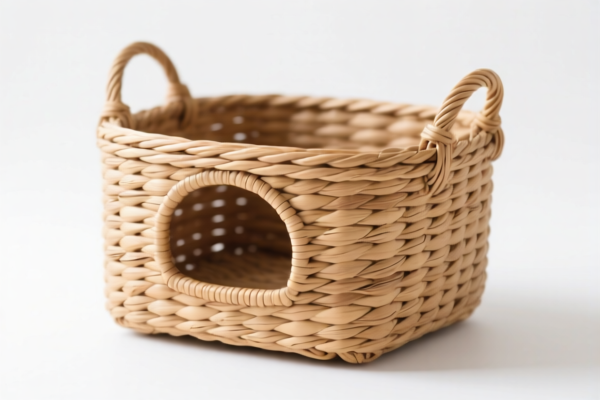
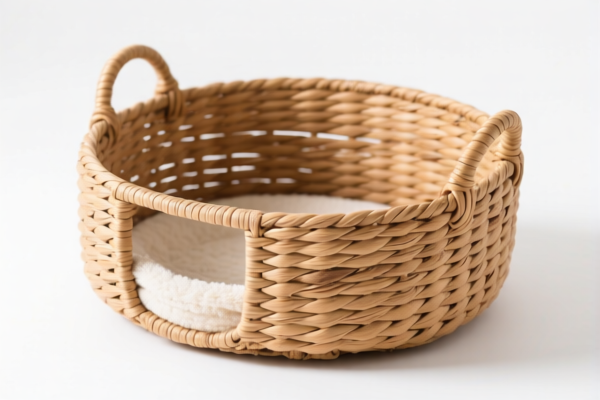
AI Analysis
🧺 Woven Pet Basket (Woven Baskets of Vegetable Plaiting Materials)
🌐 HS Code Reference & Customs Clearance Guide | 2026 Latest Tariff Analysis | Professional Entry Strategy
📌 1. Product Definition & Classification: Do You Know Your "Basket" Really Is?
A Woven Pet Basket is a storage or resting container for pets, constructed from interlaced natural fibers. In international trade, its classification depends heavily on two factors:
1. Material Composition: Is it natural plant fibers (bamboo, rattan, willow, straw) or synthetic/plastic?
2. Specific Heading: Does it fall under "Plaiting Materials" or "Manufactured Articles"?
⚠️ Key Distinction:
- If made of natural plant fibers (bamboo, rattan, etc.) and woven into a basket shape → Usually Chapter 46.
- If made of plastic or synthetic fibers that mimic weaving → Often Chapter 39 or Chapter 63 (textiles), but often misclassified as plastic goods if not clearly natural.
📦 2. HS Code Classification Details (2026 Latest Tariff Authority)
Based on the inferred material and form, here are the most likely HS Codes and their explanations:
| HS Code | Product Description | Material Inference | Application Scenario |
|---|---|---|---|
4602.11.07.00 |
Baskets and other articles of plaiting material, wholly or mainly of bamboo | Bamboo/Plant Fiber | Bamboo pet mats, bamboo crate liners |
4602.11.09.00 |
Other baskets of plaiting material | Rattan/Willow/Straw/Other Plants | Traditional rattan pet beds, straw baskets |
4601.92.05.00 |
Plaiting materials and products thereof (other than woven wallcoverings) | Bamboo Weaving (Floor Mats/Interiors) | Bamboo weaving used as interior lining or flat mats |
3926.90.99.89 |
Other articles of plastics and articles of other materials of headings 3901 to 3914 | Plastic/Synthetic Fiber | Plastic "woven" pet baskets, synthetic rope mats |
🔍 Critical Note:
- Natural vs. Synthetic: Customs officers will physically inspect the material. If it feels like plastic but looks like wicker, it may be classified under HS 3926, not Chapter 46.
- Form: If it is a "basket" (3D structure), 4602 is preferred. If it is a "mat" or "sheet", 4601 might apply.
💰 3. 2026 Latest Tariff Rate Breakdown (Including Surtaxes & Policy Surcharges)
✅ Target Market: United States (US)
✅ Origin: China (CN)
✅ Effective Date: From November 10, 2025 (and subsequent imports)
🎯 1. 4602.11.07.00 —— Baskets of Bamboo (Wholly or Mainly)
| Item | Detail |
|---|---|
| Base Duty Rate | 0.0% (ad valorem) |
| USITC Section 301 Surtax | +25.0% |
| Section 122 Tariff (IEEPA) | +10.0% |
| Total Effective Tax Rate | 35.0% |
| Tax Calculation | CIF Value × 35% |
| De Minimis Exemption? | ❌ No (Denied due to Section 301 & 122) |
| Legal Basis Path | Section 301 → Section 122 (IEEPA) → USITC:4602.11.07.00 |
📌 Explanation:
- Base Duty 0%: Bamboo products often enjoy low base tariffs.
- 35% Total: The 25% Section 301 tariff and 10% Section 122 tariff are cumulative.
- Risk: High tariff cost. Must ensure material is genuinely bamboo, not plastic, to avoid reclassification penalties.
🎯 2. 4602.11.09.00 —— Other Woven Baskets (Rattan, Willow, etc.)
| Item | Detail |
|---|---|
| Base Duty Rate | 10.0% (ad valorem) |
| USITC Section 301 Surtax | +25.0% |
| Section 122 Tariff (IEEPA) | +10.0% |
| Total Effective Tax Rate | 45.0% |
| Tax Calculation | CIF Value × 45% |
| De Minimis Exemption? | ❌ No |
| Legal Basis Path | Base:10% → Section 301:25% → Section 122:10% |
📌 Note:
- This is the highest tariff among natural baskets because the base rate is already 10%.
- Applicable to rattan, willow, reed, or straw baskets.
- Warning: 45% is a significant cost driver. Consider pricing strategy or sourcing from non-China origins if possible.
🎯 3. 4601.92.05.00 —— Plaiting Materials (Bamboo Weaving)
| Item | Detail |
|---|---|
| Base Duty Rate | 2.7% (ad valorem) |
| USITC Section 301 Surtax | +25.0% |
| Section 122 Tariff (IEEPA) | +10.0% |
| Total Effective Tax Rate | 37.7% |
| Tax Calculation | CIF Value × 37.7% |
| De Minimis Exemption? | ❌ No |
| Legal Basis Path | Base:2.7% → Section 301:25% → Section 122:10% |
📌 Explanation:
- This code is for plaiting materials (e.g., mats, wall coverings, flat woven items).
- If your "pet basket" is actually a flat bamboo mat or a liner, this might be the correct code.
- Cost Savings: 2.3% cheaper than4602.11.09.00, but still high.
🎯 4. 3926.90.99.89 —— Other Plastic Articles (Synthetic "Woven" Look)
| Item | Detail |
|---|---|
| Base Duty Rate | 5.3% (ad valorem) |
| USITC Section 301 Surtax | +7.5% (Note: Some plastic items face lower 301 rates than bamboo) |
| Section 122 Tariff (IEEPA) | +10.0% |
| Total Effective Tax Rate | 22.8% |
| Tax Calculation | CIF Value × 22.8% |
| De Minimis Exemption? | ❌ No |
| Legal Basis Path | Base:5.3% → Section 301:7.5% → Section 122:10% |
📌 Key Insight:
- If the product is plastic (even if it looks like wicker), the total tax is 22.8%, which is significantly lower than natural baskets (35-45%).
- Risk: Misdeclaring natural bamboo as plastic to save tax can lead to heavy fines and seizure. Must have material test reports.
🛠️ 4. Customs Clearance Practical Advice (Avoid Pitfalls)
✅ 1. Required Documentation Checklist
| Document | Mandatory? | Description |
|---|---|---|
| ✅ Product Specification Sheet | ✔️ | Material composition (e.g., "100% Natural Bamboo"), dimensions, weight |
| ✅ Material Test Report | ✔️ | Critical: Third-party lab report confirming natural fiber vs. plastic |
| ✅ Product Photos | ✔️ | Clear shots of texture, weave, and any labels |
| ✅ Commercial Invoice | ✔️ | Must accurately describe as "Woven Bamboo Pet Basket" or "Plastic Wicker Pet Bed" |
| ✅ Packing List | ✔️ | Show quantity, gross/net weight |
| ✅ Origin Certificate (CO) | ✔️ | If non-China origin, may qualify for lower tariffs |
✅ 2. Declaration Strategy (Golden Rules)
🔥 "Be Honest, Be Precise, Avoid Misclassification!"
| Scenario | Correct Declaration | Common Mistake | Consequence |
|---|---|---|---|
| Natural Bamboo Basket | 4602.11.07.00 |
Declare as 3926 (Plastic) |
Fraud: Fines, penalties, seizure |
| Rattan Basket | 4602.11.09.00 |
Declare as 4602.11.07.00 |
Error: Higher base tax (10% vs 0%) |
| Plastic Wicker-Style Basket | 3926.90.99.89 |
Declare as 4602 (Natural) |
Error: Lower tax, but risk of audit if material differs |
| Bamboo Mat (Flat) | 4601.92.05.00 |
Declare as 4602 (Basket) |
Risk: If clearly a mat, misclassification |
✅ 3. Special Cases & Tips
| Situation | Recommendation |
|---|---|
| Mixed Material (e.g., Bamboo frame + Fabric lining) | Declare based on essential character. If bamboo frame dominates, likely 4602. Provide detailed BOM. |
| OEM Custom Design | Provide design drawings to prove it is a "basket" (3D) not a "mat" (2D). |
| Dropshipping | If using de minimis (Section 321) for < $800, note that Section 301 and 122 tariffs still apply if the carrier does not collect them at checkout. Plan for potential duty collection upon entry. |
| High-Value Shipments | Consider Advance Ruling from CBP to confirm HS Code and avoid post-entry audits. |
🌍 5. Global Market Comparison (2026)
| Country | Recommended HS Code | Total Tax Rate (China Origin) | Notes |
|---|---|---|---|
| 🇺🇸 USA | 4602.11.07.00 / 4602.11.09.00 |
35% - 45% | High tariffs due to Section 301 & 122 |
| 🇨🇳 China | 4602.11.07.00 |
0% - 10% | No surtaxes. Easy export. |
| 🇪🇺 EU | 4602.11.00 |
6% | No Section 301/122. VAT varies by country. |
| 🇬🇧 UK | 4602.11.00 |
6% | Post-Brexit rules apply. |
| 🇨🇦 Canada | 4602.11.00 |
0% | USMCA/CUSMA may apply if originating. |
📌 Conclusion:
- The US market is the most challenging due to the 35-45% effective tariff.
- Non-US markets (EU, UK, Canada) offer much better tariff rates (0-6%).
- Plastic alternatives (3926) reduce US tax to 22.8%, but must be genuinely plastic.
📌 6. Common Errors & Pitfalls (Lessons Learned)
❌ Mistake 1: Declaring natural bamboo as "plastic" to save tax.
👉 Consequence: CBP inspection reveals natural fibers → Penalty + Back Duties + Seizure.
❌ Mistake 2: Confusing "Basket" (4602) with "Plaiting Material" (4601).
👉 Consequence: If it is a 3D basket but declared as 2D material, customs may reject or reclassify.
❌ Mistake 3: Ignoring Section 122 Tariff.
👉 Consequence: Even if base tax is 0%, the 10% Section 122 applies. Many importers forget this, leading to unexpected costs.
✅ Best Practice:
"Test Material First. Declare Accurately. Plan for 35-45% Tax in US."
🎯 7. Conclusion: Professional Clearance, Cost Control
🎯 Remember the Rules:
🔹 "Natural Bamboo: 35%. Rattan/Straw: 45%. Plastic Look: 22.8%."
🔹 "Honest Declaration Saves Money; Fraud Costs Everything."
📌 Pro Tip:
If your product is made of natural fibers, consider shifting supply chain to Vietnam, India, or Thailand to avoid Section 301/122 tariffs (if origin rules allow).
For plastic baskets, ensure material safety compliance (CPC, ASTM F963) for pet products.
📣 Immediate Action:
📞 Engage a licensed customs broker to verify material composition.
📄 Apply for CBP Advance Ruling if shipment value is high.
🚀 Optimize packaging to reduce CIF value where possible (legally).
✨ Precision in Classification, Success in Customs!
💼 Your Tax Bill is Predictable Only If Your HS Code is Precise.
Customer Reviews
About HS Code Classification
The Harmonized System (HS) is an internationally standardized nomenclature developed by the World Customs Organization (WCO) to classify traded products. Over 200 countries use the HS system as the basis for customs tariffs, trade statistics, and import/export regulations.
Each HS code follows a hierarchical structure:
- Chapter (2 digits) — Broad category of goods (e.g., Chapter 84: Machinery and Mechanical Appliances)
- Heading (4 digits) — More specific grouping within the chapter
- Subheading (6 digits) — Internationally standardized breakdown, used by all WCO member countries
- National subdivisions (8-10 digits) — Country-specific extensions for further classification, such as US HTSUS 10-digit codes
Correct HS code classification is essential for smooth customs clearance, accurate duty payment, and compliance with trade regulations. Misclassification can lead to customs delays, overpayment of duties, or penalties.
When importing from CN to US, the applicable tariff rates may include:
- Most-Favored-Nation (MFN) rate — The standard duty rate applied to WTO members
- General rate — Applied to countries without trade agreements
- Trade remedy duties — Additional tariffs such as Section 301 (anti-dumping), Section 232 (national security), or countervailing duties
The information provided on this page is for reference purposes only. For official classification, please consult with your local customs authority or a licensed customs broker.