yarn twist 900+ turns/meter
CN → US| HS Code | Tariff Rate | Origin | Destination | Doc |
|---|---|---|---|---|
| 5205280020 | 47.0% | CN | US | Official Doc |
| 5205220020 | 42.3% | CN | US | Official Doc |
| 5402529000 | 43.8% | CN | US | Official Doc |
| 5402590100 | 43.0% | CN | US | Official Doc |
| 5509220090 | 45.6% | CN | US | Official Doc |
Product Images
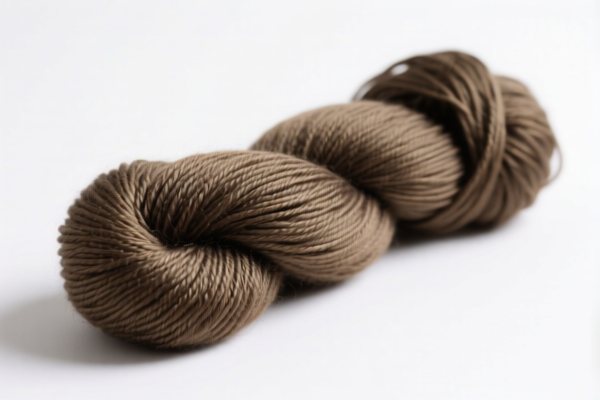
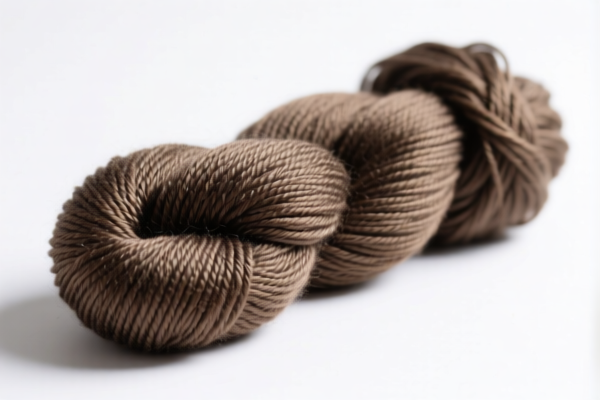
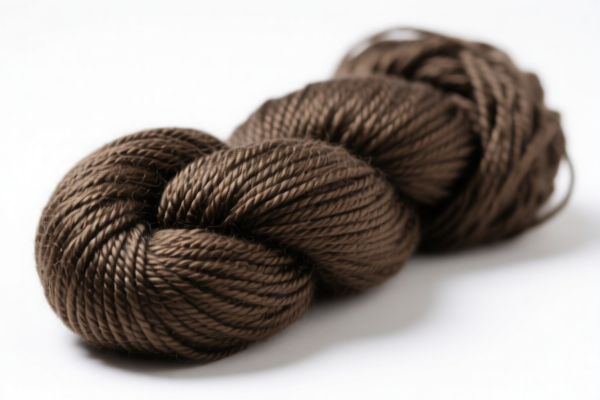
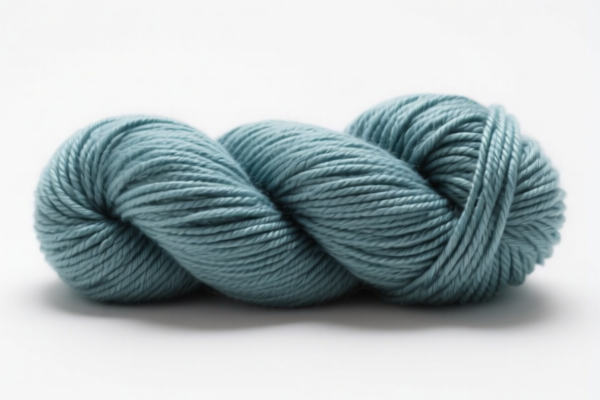
AI Analysis
🧵 Yarn Twist: 900+ Turns/Meter (High-Twist Yarns)
🌐 HS Code Reference & Customs Clearance Guide | 2026 Latest Tariff Analysis | Professional Compliance Strategy
📌 I. Product Definition & Classification: What is "High-Twist Yarn"?
High-twist yarn, defined here as yarn with a twist intensity exceeding 50 turns per meter (tpm), often reaching 900+ tpm for crimping or specific texturing effects. In international trade, these are primarily classified based on their fiber material (Cotton vs. Synthetic) and spinning process (Ring-spun vs. Other).
⚠️ Key Distinction Points:
- If the yarn is Cotton (natural fiber) and made via Ring Spinning → Falls under HS 5205 series.
- If the yarn is Synthetic (Polyester, Nylon, etc.) and continuous filaments → Falls under HS 5402/5509 series.
- The high twist (>50 tpm) is a critical technical parameter that distinguishes these from standard yarns in some sub-headings, triggering specific tariff rules.
📦 II. HS Code Classification Details (2026 Latest Tariff Authority对照)
Based on the provided data, here are the five specific HS codes applicable to high-twist yarns, categorized by material and construction:
| HS Code | Product Description | Inferred Material/Feature | Key Technical Trigger |
|---|---|---|---|
5205.28.00.20 |
High-twist yarn | Cotton or natural fiber blend | Consistent with cotton yarn classification |
5205.22.00.20 |
High-twist yarn | Ring-spun characteristic | Implies fiber product, likely cotton ring-spun |
5402.52.90.00 |
Twist >50 tpm | Polyester Monofilament | Synthetic fiber, single continuous filament |
5402.59.01.00 |
Twist >50 tpm | Synthetic Filament Yarn | General synthetic continuous filament |
5509.22.00.90 |
High-speed twisting | Polyester Blend | Meets polyester content requirements, high-speed twist |
🔍 Critical Reminder:
- Material is King: You must declare the exact fiber composition. "Yarn" is not specific enough.
- Twist Count: The specification ">50 turns/meter" is explicitly mentioned in the HS descriptions for synthetic codes (5402), confirming that high twist is a defining characteristic for these sub-headings.
- Manufacturing Process: For cotton codes (5205), distinguishing between Ring-spun (5205.22) and Other (5205.28) is crucial for accurate classification.
💰 III. 2026 Latest Tariff Rate Breakdown (Including Additional Duties & Policy Surcharges)
✅ Applicable Country: United States (US)
✅ Country of Origin: China (CN)
✅ Effective Date: Current rates apply as per 2026 data provided.
🎯 1. 5205.28.00.20 — Cotton High-Twist Yarn (Non-Ring-Spun/Other)
| Item | Content |
|---|---|
| Base Duty Rate | 12.0% (Ad Valorem) |
| Section 301 Additional Duty | +25.0% |
| Section 122 Clause Duty | +10.0% |
| Total Effective Rate | 47.0% |
| Tax Calculation | CIF Value × 47.0% |
| De Minimis Eligibility | ❌ Not Eligible (High duty threshold blocks de minimis) |
| Legal Basis Path | USITC:5205.28.00.20 → Section 301: +25% → Section 122: +10% |
📌 Explanation:
- This category attracts the highest tax burden (47%) among the listed options due to the higher base duty (12%) for certain cotton yarns compared to finer ring-spun yarns.
- The Section 122 duty (10%) is a specific punitive tariff on certain textile imports, adding significant cost.
🎯 2. 5205.22.00.20 — Cotton High-Twist Yarn (Ring-Spun)
| Item | Content |
|---|---|
| Base Duty Rate | 7.3% (Ad Valorem) |
| Section 301 Additional Duty | +25.0% |
| Section 122 Clause Duty | +10.0% |
| Total Effective Rate | 42.3% |
| Tax Calculation | CIF Value × 42.3% |
| De Minimis Eligibility | ❌ Not Eligible |
| Legal Basis Path | USITC:5205.22.00.20 → Section 301: +25% → Section 122: +10% |
📌 Note:
- Savings Alert: Choosing the Ring-Spun classification (5205.22) reduces the base duty from 12% to 7.3%, lowering the total tax by 4.7% compared to the other cotton category.
- Ensure your manufacturing process is documented as Ring-Spinning to qualify for this lower base rate.
🎯 3. 5402.52.90.00 — Synthetic Polyester Monofilament (Twist >50 tpm)
| Item | Content |
|---|---|
| Base Duty Rate | 8.8% (Ad Valorem) |
| Section 301 Additional Duty | +25.0% |
| Section 122 Clause Duty | +10.0% |
| Total Effective Rate | 43.8% |
| Tax Calculation | CIF Value × 43.8% |
| De Minimis Eligibility | ❌ Not Eligible |
| Legal Basis Path | USITC:5402.52.90.00 → Section 301: +25% → Section 122: +10% |
📌 Explanation:
- This code applies specifically to Monofilaments (single continuous filament, often used for fishing lines, bristles, or technical textiles).
- If your product is a multi-filament yarn (not mono), this code may be incorrect. Misclassification here can lead to penalties.
🎯 4. 5402.59.01.00 — Other Synthetic Filament Yarn (Twist >50 tpm)
| Item | Content |
|---|---|
| Base Duty Rate | 8.0% (Ad Valorem) |
| Section 301 Additional Duty | +25.0% |
| Section 122 Clause Duty | +10.0% |
| Total Effective Rate | 43.0% |
| Tax Calculation | CIF Value × 43.0% |
| De Minimis Eligibility | ❌ Not Eligible |
| Legal Basis Path | USITC:5402.59.01.00 → Section 301: +25% → Section 122: +10% |
📌 Note:
- This is a catch-all for synthetic filament yarns with high twist that do not fit specific mono-filament categories.
- It offers the lowest base duty (8.0%) among all synthetic options, resulting in a total rate of 43.0%.
🎯 5. 5509.22.00.90 — Blended Synthetic Yarn (High-Speed Twist)
| Item | Content |
|---|---|
| Base Duty Rate | 10.6% (Ad Valorem) |
| Section 301 Additional Duty | +25.0% |
| Section 122 Clause Duty | +10.0% |
| Total Effective Rate | 45.6% |
| Tax Calculation | CIF Value × 45.6% |
| De Minimis Eligibility | ❌ Not Eligible |
| Legal Basis Path | USITC:5509.22.00.90 → Section 301: +25% → Section 122: +10% |
📌 Explanation:
- This code is for Blended Yarns (e.g., Polyester/Cotton blends) where the synthetic fiber is the predominant component by weight.
- The "High-Speed Twist" descriptor implies a specific manufacturing method. Ensure your product matches the polyester content requirements for this sub-heading.
🛠️ IV. Customs Clearance Practical Advice (Field Pitfall Avoidance Guide)
✅ 1. Documentation Checklist (Non-Negotiable)
| Document | Must Provide | Explanation |
|---|---|---|
| ✅ Product Spec Sheet | ✔️ | Must explicitly state "Twist: 900+ Turns/Meter" and fiber composition (%). |
| ✅ Material Declaration | ✔️ | Clearly distinguish between Cotton (5205) vs. Synthetic (5402/5509). |
| ✅ Spinning Process Proof | ✔️ | For cotton: Confirm Ring-Spun vs. Other to justify 5205.22 vs. 5205.28. |
| ✅ Commercial Invoice | ✔️ | Describe as "High-Twist Yarn, [Material], >50 tpm" to align with HS notes. |
| ✅ Packaging List | ✔️ | Show net weight and gross weight; high-twist yarn is often sold in cones/bobbins. |
| ✅ Test Report | ✔️ | Optional but helpful: Third-party lab test confirming twist per meter (TPM). |
✅ 2. Declaration Tips (Critical Mnemonics)
🔥 “Material First, Twist Second, Base Duty Dictates Total!”
| Scenario | Correct Declaration | Wrong Practice |
|---|---|---|
| 100% Cotton, Ring-Spun, High Twist | 5205.22.00.20 (42.3% Total) |
Declare as 5205.28 → Pay 47% (Loss of 4.7%) |
| 100% Polyester, Monofilament | 5402.52.90.00 (43.8% Total) |
Declare as 5402.59 → Wrong technical fit |
| Polyester/Cotton Blend | 5509.22.00.90 (45.6% Total) |
Declare as pure cotton → Severe Penalty |
| Twist < 50 tpm | Do NOT use 5402.59.01.00 |
Misuse of twist clause → Rejection |
✅ 3. Special Cases Handling
| Situation | Handling Advice |
|---|---|
| Blended Yarns | If the blend contains both natural and synthetic fibers, check the weight percentage. If synthetic >50%, it likely falls under 5509. |
| Crinkled Yarn | If the high twist is used to create crimp (texture), ensure the description highlights the textured nature if it affects the final use (e.g., knitting vs. weaving). |
| Pre-Compliance Ruling | For high-volume shipments, apply for an ACE Pre-Ruling from CBP to lock in the HS code and avoid retrospective audits. |
| Section 122 Risk | Since Section 122 (10%) applies to all, consider if any exclusions or trade remedy waivers apply (rare, but check latest USTR lists). |
🌍 V. Global Market Comparison (2026 Overview)
| Country/Region | Recommended HS Code | Est. Total Duty (China Origin) | Key Certification | Note |
|---|---|---|---|---|
| 🇺🇸 USA | See Table Above | 42.3% – 47.0% | None specific | High Section 301 + 122 taxes |
| 🇪🇺 EU | Similar HS Codes | 4.0% – 6.5% | REACH (Chemicals) | No Section 301/122 |
| 🇨🇳 China | Similar HS Codes | 4.0% – 7.5% | N/A (Import Duty) | Low base duty, no punitive tariffs |
| 🇬🇧 UK | Similar HS Codes | 4.0% – 6.5% | UKCA (Post-Brexit) | Post-Brexit rates similar to EU |
📌 Conclusion:
- The US market is exceptionally costly for high-twist yarns from China due to the cumulative effect of Base + Section 301 (25%) + Section 122 (10%).
- Strategic Advice: If possible, explore transshipment (via Vietnam/Mexico) with substantial transformation to change the Country of Origin, or negotiate Cost Sharing with buyers.
📌 VI. Common Errors & Pitfalls (Lessons Learned)
❌ Error 1: Failing to specify "Ring-Spun" for cotton yarns
👉 Consequence: Defaulted to higher base duty (5205.28 at 12%) → Higher total tax (47% vs 42.3%).
❌ Error 2: Confusing Monofilament (5402.52) with Multifilament (5402.59)
👉 Consequence: Misclassification leads to customs holds, audits, and potential fines. Monofilaments have different base duties (8.8% vs 8.0%).
❌ Error 3: Ignoring the Section 122 Clause
👉 Consequence: Underestimating landed cost by 10%. This is a mandatory surcharge for many Chinese textile imports.
❌ Error 4: Vague Product Description ("Yarn")
👉 Consequence: Customs officers may reclassify under general headings with higher penalties or delay shipment for inspection.
✅ Correct Approach:
"High-Twist Yarn, 100% Cotton, Ring-Spun, Twist 900 TPM, for Knitting, Model HT-900"
🎯 VII. Conclusion: Precision is Profit
🎯 Key Takeaway:
🔹 Cotton: Choose Ring-Spun (
5205.22) to save 4.7% vs. Other (5205.28).
🔹 Synthetic: Differentiate Mono vs. Multi filament to ensure correct HS code.
🔹 Total Cost: Budget for 42% – 47% total tax in the US. This is not a niche duty; it's a structural cost.
📌 Pro Tip:
📞 Consult a Licensed Customs Broker to review your spinning process documentation and fiber blend percentages before filing the Bill of Lading.
🚀 Accurate Classification = Predictable Costs = Competitive Pricing!
✨ Professional Customs Clearance Starts with Accurate Classification!
💼 Your Margin Depends on These Percentages!
Customer Reviews
About HS Code Classification
The Harmonized System (HS) is an internationally standardized nomenclature developed by the World Customs Organization (WCO) to classify traded products. Over 200 countries use the HS system as the basis for customs tariffs, trade statistics, and import/export regulations.
Each HS code follows a hierarchical structure:
- Chapter (2 digits) — Broad category of goods (e.g., Chapter 84: Machinery and Mechanical Appliances)
- Heading (4 digits) — More specific grouping within the chapter
- Subheading (6 digits) — Internationally standardized breakdown, used by all WCO member countries
- National subdivisions (8-10 digits) — Country-specific extensions for further classification, such as US HTSUS 10-digit codes
Correct HS code classification is essential for smooth customs clearance, accurate duty payment, and compliance with trade regulations. Misclassification can lead to customs delays, overpayment of duties, or penalties.
When importing from CN to US, the applicable tariff rates may include:
- Most-Favored-Nation (MFN) rate — The standard duty rate applied to WTO members
- General rate — Applied to countries without trade agreements
- Trade remedy duties — Additional tariffs such as Section 301 (anti-dumping), Section 232 (national security), or countervailing duties
The information provided on this page is for reference purposes only. For official classification, please consult with your local customs authority or a licensed customs broker.