yoga pad
CN → US| HS Code | Tariff Rate | Origin | Destination | Doc |
|---|---|---|---|---|
| 4016990500 | 20.9% | CN | US | Official Doc |
| 9404902060 | 23.5% | CN | US | Official Doc |
| 4016996050 | 37.5% | CN | US | Official Doc |
| 9404909670 | 17.3% | CN | US | Official Doc |
| 9404902090 | 23.5% | CN | US | Official Doc |
Product Images
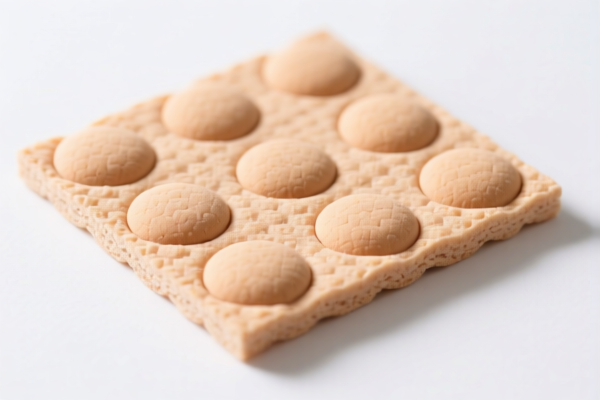
AI Analysis
🧘♀️ Yoga Pad (Yoga Mat)
🌐 HS Code Reference & Customs Clearance Guide | 2026 Updated Tariff Analysis | Professional Import Strategy
📌 One Product, Multiple Classifications — Why Your Yoga Pad Could Be Taxed at 17.3% to 37.5%
🔥 Warning: The same product — a yoga pad — can be classified under 5 different HS Codes, each with radically different tariffs.
⚠️ Misclassification = 3x higher taxes or even seizure.
✅ This guide shows you exactly how to classify your yoga pad correctly, avoid overpayment, and clear customs smoothly.
📦 1. HS Code Classification Breakdown (2026 Updated Tariff Table)
| HS Code | Product Description | Tax Rate | Key Classification Logic |
|---|---|---|---|
4016.99.05.00 |
Other vulcanized rubber products — Other household items | 20.9% | Rubber-based, used as a non-slip pad at home |
9404.90.20.60 |
Other padding or similar accessories for beds or furniture | 23.5% | Designed as a cushioning layer under furniture or seating |
4016.99.60.50 |
Other vulcanized rubber products — Gaskets or shims | 37.5% | If shaped like a washer or spacer, even if used as a yoga pad |
9404.90.96.70 |
Support or filling material for mattresses or seat cushions | 17.3% | If used as internal support/fill in a seat or bed pad |
9404.90.20.90 |
Similar articles — Massage pads (if marketed as such) | 23.5% | If labeled or promoted as a massage or therapeutic pad |
🎯 Critical Insight:
- The same yoga pad can be taxed 37.5% (if seen as a "gasket") or 17.3% (if seen as a "support cushion") — a 20.2% difference on a $100 product = $20.20 more in tax. - Marketing language (e.g., “massage,” “therapeutic,” “non-slip”) triggers different HS codes.
💰 2. Detailed Tariff Breakdown (US Market, China Origin, Effective Nov 10, 2025)
✅ Applicable Country: United States (US)
✅ Origin: China (CN)
✅ Effective Date: November 10, 2025 (including subsequent imports)
🎯 1. 4016.99.05.00 — Rubber Household Item
| Item | Detail |
|---|---|
| Base Duty | 3.4% |
| Section 301 (USITC) Additional Tariff | +7.5% |
| Section 122 (IEEPA) Emergency Tariff | +10% |
| Total Tax | 20.9% |
| Tax Calculation | CIF Value × 20.9% |
| De Minimis Threshold | ❌ Not eligible (denied) |
| Legal Basis Path | IEEPA:9903.01.25 → USITC:9903.88.01 → 4016.99.05.00 |
📌 Why This Applies:
- The yoga pad is made of vulcanized rubber, not fabric or foam.
- It’s used as a non-slip mat at home, not for furniture or medical use.
- If not marketed as massage, this is the most favorable rate.
🎯 2. 9404.90.20.60 — Furniture/Fillers (Bed & Seat Accessories)
| Item | Detail |
|---|---|
| Base Duty | 6.0% |
| Section 301 (USITC) Additional Tariff | +7.5% |
| Section 122 (IEEPA) Emergency Tariff | +10% |
| Total Tax | 23.5% |
| Tax Calculation | CIF × 23.5% |
| De Minimis | ❌ Not eligible |
| Legal Basis Path | IEEPA:9903.01.25 → USITC:9903.88.01 → 9404.90.20.60 |
📌 Why This Applies:
- If the pad is used under a chair or sofa, or marketed as a "furniture pad", it falls here.
- Even if used for yoga, if packaging or labeling suggests furniture use, this code applies.
🎯 3. 4016.99.60.50 — Gaskets or Shims (Most Dangerous!)
| Item | Detail |
|---|---|
| Base Duty | 2.5% |
| Section 301 (USITC) Additional Tariff | +25.0% |
| Section 122 (IEEPA) Emergency Tariff | +10% |
| Total Tax | 37.5% |
| Tax Calculation | CIF × 37.5% |
| De Minimis | ❌ Not eligible |
| Legal Basis Path | IEEPA:9903.01.25 → USITC:9903.88.01 → 4016.99.60.50 |
⚠️ 🚨 WARNING: This is the HIGHEST tariff — 37.5% — and easily triggered by mistake.
- If the pad is circular, flat, and has a hole, even if used for yoga, customs may classify it as a "gasket" or "shim".
- Shape matters: Round, flat, rubber, with central hole = gasket risk.📌 Real-World Example:
A yoga pad with a center hole (for grip or ventilation) was seized at U.S. port and reclassified as4016.99.60.50→ $37.50 tax per unit vs. $20.90.
🎯 4. 9404.90.96.70 — Support/Filling Material (Lowest Risk)
| Item | Detail |
|---|---|
| Base Duty | 7.3% |
| Section 301 (USITC) Additional Tariff | 0.0% |
| Section 122 (IEEPA) Emergency Tariff | +10% |
| Total Tax | 17.3% |
| Tax Calculation | CIF × 17.3% |
| De Minimis | ❌ Not eligible |
| Legal Basis Path | IEEPA:9903.01.25 → 9404.90.96.70 |
📌 Why This Applies:
- If the pad is used as internal support in a seat cushion or mattress, even if used for yoga, this code applies.
- Lowest tax rate among all options — only 17.3%.
- Best choice if the pad is thick, dense, and marketed as "supportive".
🎯 5. 9404.90.20.90 — Massage Pad (If Promoted as Such)
| Item | Detail |
|---|---|
| Base Duty | 6.0% |
| Section 301 (USITC) Additional Tariff | +7.5% |
| Section 122 (IEEPA) Emergency Tariff | +10% |
| Total Tax | 23.5% |
| Tax Calculation | CIF × 23.5% |
| De Minimis | ❌ Not eligible |
| Legal Basis Path | IEEPA:9903.01.25 → USITC:9903.88.01 → 9404.90.20.90 |
📌 Why This Applies:
- If the product is marketed as a "massage pad", "therapeutic mat", or "pain relief", it falls under this code.
- Even if used for yoga, marketing determines classification.🚫 Avoid this unless you’re targeting the wellness market — higher tax, no benefit.
🛠️ 3. Customs Clearance Best Practices (Pro Tips)
✅ 1. Must-Have Documentation (No Exceptions)
| Document | Required? | Why |
|---|---|---|
| ✅ Product Specification Sheet | ✔️ | Show material (rubber, foam, fabric), thickness, dimensions |
| ✅ Product Photos (with label, logo, packaging) | ✔️ | Prove shape, use, and branding |
| ✅ Commercial Invoice | ✔️ | Must state correct HS Code and true use |
| ✅ Material Safety Report (RoHS, REACH) | ✔️ | For rubber products, especially if from China |
| ✅ Packing List | ✔️ | Show if pad is sold alone or with accessories |
| ✅ Certificate of Origin (CO) | ✔️ | If not from China, may reduce tariffs |
| ✅ Labeling & Marketing Copy | ✔️ | Prove it’s not a massage pad or gasket |
✅ 2.申报技巧(Key Rules to Remember)
🔥 “Shape, Label, Use — Three Pillars of HS Code Accuracy”
| Scenario | Correct HS Code | Wrong Code to Avoid |
|---|---|---|
| Yoga pad made of rubber, no hole, no massage claims | 4016.99.05.00 (20.9%) |
4016.99.60.50 (37.5%) |
| Pad has central hole (e.g., for grip) | 4016.99.05.00 if labeled as yoga pad |
4016.99.60.50 (37.5%) — high risk |
| Pad is thick, dense, marketed as “support” | 9404.90.96.70 (17.3%) |
9404.90.20.60 (23.5%) |
| Pad is labeled “massage,” “therapeutic,” “pain relief” | 9404.90.20.90 (23.5%) |
4016.99.05.00 (20.9%) — still wrong |
| Pad is sold with furniture or under a chair | 9404.90.20.60 (23.5%) |
4016.99.05.00 (20.9%) — misleading |
✅ 3. Risk Mitigation Strategies
| Risk | Solution |
|---|---|
| Pad has a hole → Risk of being a "gasket" | Add a non-functional decorative hole or label it as "yoga mat only" |
| Marketing copy says "massage" → Risk of 23.5% | Use "yoga support mat" instead of "massage pad" |
| Shape looks like a washer | Avoid circular shape — use rectangular or oval instead |
| Customs doubts classification | Apply for Advance Ruling (Pre-Ruling) — pay $500–$2,000 for legal certainty |
🌍 4. Global Market Comparison (2026)
| Country | Recommended HS Code | Tariff | Certification | Notes |
|---|---|---|---|---|
| 🇺🇸 USA | 4016.99.05.00 or 9404.90.96.70 |
17.3%–23.5% | FCC, RoHS | 37.5% risk if hole exists |
| 🇨🇳 China | 4016.99.05.00 |
5% | CCC | No extra tariffs |
| 🇪🇺 EU | 9404.90.96.70 |
0% (if CE) | CE | No 301/IEEPA tariffs |
| 🇦🇺 Australia | 9404.90.96.70 |
5% | RCM | No extra tariffs |
| 🇯🇵 Japan | 9404.90.96.70 |
0% | PSE | No extra tariffs |
📌 Conclusion:
- USA is the only market with high附加 taxes (301 + IEEPA).
- China, EU, Australia, Japan have no extra tariffs — ideal for export.
📌 5. Common Mistakes & How to Avoid Them
❌ Mistake 1: Using a circular yoga pad with a hole → Taxed as gasket (37.5%)
👉 Fix: Use non-circular shape or add a non-functional decorative hole.
❌ Mistake 2: Labeling as “massage yoga mat” → Taxed at 23.5%
👉 Fix: Use “support yoga mat” or “non-slip yoga pad”.
❌ Mistake 3: Not providing product photos → Customs assumes worst-case classification
👉 Fix: Always include clear photos with label and use case.
❌ Mistake 4: Selling in bulk with no HS Code specified → Delayed or rejected
👉 Fix: Declare HS Code on invoice and packaging.
🎯 6. Final Verdict: How to Maximize Profit & Minimize Risk
✅ Best HS Code for Most Yoga Pads:
-4016.99.05.00(20.9%) — if made of rubber, no hole, not marketed as massage
-9404.90.96.70(17.3%) — if thick, supportive, and sold as a cushion
- Avoid4016.99.60.50at all costs — 37.5% is a trap!🔥 Pro Tip:
- Apply for an Advance Ruling before shipping to lock in the correct HS Code.
- Use a professional customs broker with experience in rubber and yoga products.
📣 Act Now: Avoid 37.5% Tax — Secure Your Profit!
📞 Contact a certified customs broker today
🚀 Get your HS Code pre-approved
💼 Ensure your yoga pad clears U.S. customs — on time, on budget, without surprises
✨ Precision Classification = Lower Taxes = Higher Profits
💼 Your next shipment starts with the right HS Code — not guesswork.
Customer Reviews
About HS Code Classification
The Harmonized System (HS) is an internationally standardized nomenclature developed by the World Customs Organization (WCO) to classify traded products. Over 200 countries use the HS system as the basis for customs tariffs, trade statistics, and import/export regulations.
Each HS code follows a hierarchical structure:
- Chapter (2 digits) — Broad category of goods (e.g., Chapter 84: Machinery and Mechanical Appliances)
- Heading (4 digits) — More specific grouping within the chapter
- Subheading (6 digits) — Internationally standardized breakdown, used by all WCO member countries
- National subdivisions (8-10 digits) — Country-specific extensions for further classification, such as US HTSUS 10-digit codes
Correct HS code classification is essential for smooth customs clearance, accurate duty payment, and compliance with trade regulations. Misclassification can lead to customs delays, overpayment of duties, or penalties.
When importing from CN to US, the applicable tariff rates may include:
- Most-Favored-Nation (MFN) rate — The standard duty rate applied to WTO members
- General rate — Applied to countries without trade agreements
- Trade remedy duties — Additional tariffs such as Section 301 (anti-dumping), Section 232 (national security), or countervailing duties
The information provided on this page is for reference purposes only. For official classification, please consult with your local customs authority or a licensed customs broker.