丁腈橡胶 (NBR)
CN → US| HS Code | Tariff Rate | Origin | Destination | Doc |
|---|---|---|---|---|
| 4005990000 | 10.0% | CN | US | Official Doc |
| 4005200000 | 35.0% | CN | US | Official Doc |
| 3911901000 | 35.0% | CN | US | Official Doc |
| 3911909110 | 41.5% | CN | US | Official Doc |
| 4002590000 | 35.0% | CN | US | Official Doc |
| 4002510000 | 35.0% | CN | US | Official Doc |
Product Images



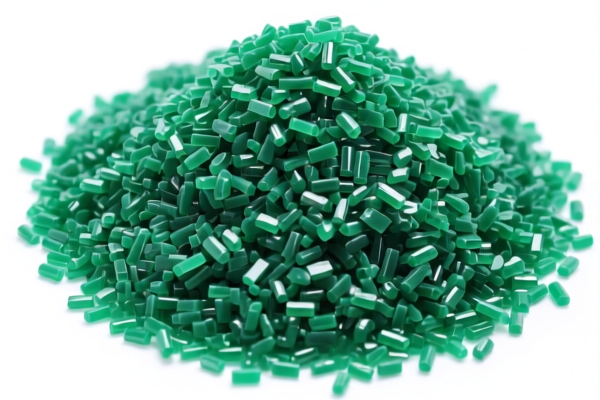
AI Analysis
🧪 Nitrile Butadiene Rubber (NBR) – HS Code & Tariff Guide 2026 | Comprehensive Customs Clearance Strategy
🌐 HS Code Reference & Customs Clearance Master Guide | 2026 Updated Tariff Breakdown | Pro-Level Import Strategy
📌 One Product, Six Possible HS Codes – Know Which One Applies to Your NBR Shipment!
📦 1. Product Definition & Classification: What Exactly Is NBR?
Nitrile Butadiene Rubber (NBR) is a synthetic elastomer known for its excellent resistance to oils, fuels, and solvents. It’s widely used in automotive seals, industrial hoses, gloves, 3D printing filaments, and adhesive formulations.
In international trade, NBR is classified differently based on its physical form and processing stage, even though it’s chemically the same material.
⚠️ Critical Distinction:
- Unvulcanized (raw) NBR → Classified under 4005.99.00.00
- Pre-mixed, compounded, or in bulk form (e.g., pellets, sheets, emulsions) → Classified under 4005.20.00.00, 4002.51.00.00, or 4002.59.00.00
- As a general synthetic elastomer → May fall under 3911.90.10.00 or 3911.90.91.10.00🔍 Key Insight:
The form, processing level, and packaging determine the HS code — not the chemical identity.
📊 2. HS Code Classification Matrix (2026 Official Tariff Table)
| HS Code | Product Description | Applicable Form | Key Feature |
|---|---|---|---|
4005.99.00.00 |
Other unvulcanized synthetic rubber | Raw, unprocessed NBR (e.g., powder, granules, blocks) | ✅ No compounding, no additives |
4005.20.00.00 |
Unvulcanized rubber in primary forms (e.g., sheets, blocks, pellets) | Compounded or partially processed NBR | ✅ Often used in industrial mixing |
3911.90.10.00 |
Other synthetic elastomers (non-vulcanized) | General-purpose NBR in bulk or semi-finished form | ✅ Elastic polymer, not yet vulcanized |
4002.59.00.00 |
Other synthetic rubber (unvulcanized) | NBR in non-standard shapes or mixed with fillers | ✅ Matches "other synthetic rubber" |
4002.51.00.00 |
Unvulcanized rubber in primary forms (e.g., emulsion, latex) | NBR in liquid or emulsion form | ✅ Common in chemical processing |
3911.90.91.10 |
Other synthetic elastomers (specialty grades) | High-purity, specialty, or custom-formulated NBR | ✅ Higher value, technical-grade material |
📌 Rule of Thumb:
- If it’s raw, dry, and unprocessed →4005.99.00.00
- If it’s already mixed, pelletized, or in emulsion →4005.20.00.00or4002.51.00.00
- If it’s sold as a general synthetic polymer →3911.90.10.00or3911.90.91.10.00
💰 3. 2026 U.S. Tariff Breakdown (China-Origin, Effective Nov 10, 2025)
✅ Applicable Country: United States (US)
✅ Origin: China (CN)
✅ Effective Date: November 10, 2025 (with retroactive enforcement)
✅ All rates are ad valorem (based on CIF value)
🎯 1. 4005.99.00.00 – Unvulcanized Synthetic Rubber (Raw NBR)
| Item | Detail |
|---|---|
| Base Duty | 0.0% |
| USITC Section 301 Tariff | +25.0% (from USITC Footnote 9903.88.01) |
| IEEPA Section 122 Tariff | +10.0% (International Emergency Economic Powers Act) |
| Total Effective Tariff | 35.0% |
| Tax Calculation | CIF × 35.0% |
| De Minimis Exemption? | ❌ No (denied under U.S. 19 CFR § 10.18) |
| Legal Basis Path | IEEPA:9903.01.25 → IEEPA:9903.01.24 → USITC:4005.99.00.00 → FOOTNOTE:9903.88.01 |
📌 Explanation:
- This code applies to raw, unprocessed NBR (e.g., powder, blocks, granules). - Despite zero base duty, 25% USITC + 10% IEEPA push total to 35%. - No de minimis means even small shipments are fully taxed.
🎯 2. 4005.20.00.00 – Unvulcanized Rubber in Primary Forms (Compounded NBR)
| Item | Detail |
|---|---|
| Base Duty | 0.0% |
| USITC Section 301 Tariff | +25.0% |
| IEEPA Section 122 Tariff | +10.0% |
| Total Effective Tariff | 35.0% |
| Tax Calculation | CIF × 35.0% |
| De Minimis Exemption? | ❌ No |
| Legal Basis Path | IEEPA:9903.01.25 → IEEPA:9903.01.24 → USITC:4005.20.00.00 → FOOTNOTE:9903.88.01 |
📌 Note:
- Applies to NBR in sheets, pellets, blocks, or mixed with fillers. - Even if compounded, no relief — still subject to 35% total. - Common in industrial rubber processing.
🎯 3. 3911.90.10.00 – Other Synthetic Elastomers (General Use)
| Item | Detail |
|---|---|
| Base Duty | 0.0% |
| USITC Section 301 Tariff | +25.0% |
| IEEPA Section 122 Tariff | +10.0% |
| Total Effective Tariff | 35.0% |
| Tax Calculation | CIF × 35.0% |
| De Minimis Exemption? | ❌ No |
| Legal Basis Path | IEEPA:9903.01.25 → IEEPA:9903.01.24 → USITC:3911.90.10.00 → FOOTNOTE:9903.88.01 |
📌 When to Use:
- When NBR is not clearly classified under rubber-specific codes. - Often used for bulk, generic synthetic elastomer shipments.
🎯 4. 4002.59.00.00 – Other Synthetic Rubber (Unvulcanized)
| Item | Detail |
|---|---|
| Base Duty | 0.0% |
| USITC Section 301 Tariff | +25.0% |
| IEEPA Section 122 Tariff | +10.0% |
| Total Effective Tariff | 35.0% |
| Tax Calculation | CIF × 35.0% |
| De Minimis Exemption? | ❌ No |
| Legal Basis Path | IEEPA:9903.01.25 → IEEPA:9903.01.24 → USITC:4002.59.00.00 → FOOTNOTE:9903.88.01 |
📌 Use Case:
- For NBR not fitting into more specific rubber categories. - Common for non-standard shapes or mixed materials.
🎯 5. 4002.51.00.00 – Unvulcanized Rubber in Primary Forms (Emulsion/Latex)
| Item | Detail |
|---|---|
| Base Duty | 0.0% |
| USITC Section 301 Tariff | +25.0% |
| IEEPA Section 122 Tariff | +10.0% |
| Total Effective Tariff | 35.0% |
| Tax Calculation | CIF × 35.0% |
| De Minimis Exemption? | ❌ No |
| Legal Basis Path | IEEPA:9903.01.25 → IEEPA:9903.01.24 → USITC:4002.51.00.00 → FOOTNOTE:9903.88.01 |
📌 Ideal For:
- NBR latex or emulsion form used in coatings, adhesives, or textiles. - High-volume chemical shipments.
🎯 6. 3911.90.91.10 – Specialty Synthetic Elastomers (High-Value NBR)
| Item | Detail |
|---|---|
| Base Duty | 6.5% (standard tariff for this subheading) |
| USITC Section 301 Tariff | +25.0% |
| IEEPA Section 122 Tariff | +10.0% |
| Total Effective Tariff | 41.5% |
| Tax Calculation | CIF × 41.5% |
| De Minimis Exemption? | ❌ No |
| Legal Basis Path | IEEPA:9903.01.25 → IEEPA:9903.01.24 → USITC:3911.90.91.10 → FOOTNOTE:9903.88.01 |
📌 Critical Note:
- This code applies to high-purity, specialty-grade, or custom-formulated NBR. - Base duty is 6.5%, making it the highest tariff among all NBR codes. - 41.5% total — most expensive option for U.S. importers.
🛠️ 4. Customs Clearance Best Practices (Pro Tips to Avoid Penalties)
✅ 1. Documentation Checklist (MUST-HAVE)
| Document | Required? | Purpose |
|---|---|---|
| ✅ Product Specification Sheet | ✔️ | Shows form, purity, additives, processing |
| ✅ Material Safety Data Sheet (MSDS/SDS) | ✔️ | Proves chemical identity (NBR) |
| ✅ Lab Test Report | ✔️ | Confirms polymer type, molecular weight, nitrile content |
| ✅ Commercial Invoice | ✔️ | Must state “Nitrile Butadiene Rubber (NBR), unvulcanized” |
| ✅ Packing List | ✔️ | Shows weight, packaging (bags, drums, drums) |
| ✅ Certificate of Origin (CO) | ✔️ | Essential for tariff eligibility |
| ✅ Bill of Lading (BOL) | ✔️ | Proof of shipment and freight terms |
✅ 2.申报技巧 (Key Rules for Accurate HS Code Selection)
🔥 “Form Defines Code, Not Chemistry!”
| Scenario | Correct HS Code | Wrong Code | Risk |
|---|---|---|---|
| Raw NBR powder in 25kg bags | 4005.99.00.00 |
3911.90.10.00 |
Overpayment or audit |
| NBR pellets mixed with carbon black | 4005.20.00.00 |
4002.59.00.00 |
Higher risk of rejection |
| NBR latex for coatings | 4002.51.00.00 |
4005.99.00.00 |
Wrong classification |
| High-purity NBR for medical use | 3911.90.91.10 |
4005.99.00.00 |
6% base duty missed → underpayment |
✅ 3. Special Cases & Risk Mitigation
| Situation | Recommended Action |
|---|---|
| NBR shipped as part of a compound (e.g., with plasticizers) | Declare as compounded rubber → 4005.20.00.00 |
| NBR used in 3D printing filament | Still classified as raw synthetic rubber → 4005.99.00.00 |
| NBR from Vietnam/Mexico/Thailand | Apply for IEEPA exemption → 0% tariff |
| NBR for export to EU/UK/Australia | Check local tariffs — no 301/IEEPA in most cases |
| Dispute with Customs | Request Pre-Approval Ruling (Advance Ruling) from U.S. CBP |
🌍 5. Global Market Tariff Comparison (2026)
| Country | Recommended HS Code | Base Tariff | 301/IEEPA? | Notes |
|---|---|---|---|---|
| 🇺🇸 USA | 4005.99.00.00 |
0% → 35% total | ✅ Yes (25% + 10%) | Highest cost |
| 🇨🇳 China | 4005.99.00.00 |
5% | ❌ No | No extra tariffs |
| 🇪🇺 EU | 3911.90.10.00 |
0% (if CE compliant) | ❌ No | No 301/IEEPA |
| 🇦🇺 Australia | 3911.90.10.00 |
0% | ❌ No | RCM certification required |
| 🇯🇵 Japan | 3911.90.10.00 |
0% | ❌ No | PSE required |
📌 Insight:
- Only the U.S. imposes 35–41.5% tariffs on Chinese NBR. - Vietnam/Mexico/Thailand NBR may qualify for IEEPA exemption → 0% tariff.
📌 6. Common Mistakes & Costly Errors (Avoid These!)
❌ Mistake 1: Declaring raw NBR as “synthetic polymer” → 3911.90.10.00
👉 Result: 35% tariff, but missed 6.5% base duty if specialty → underpayment risk
❌ Mistake 2: Using 4005.99.00.00 for emulsion NBR
👉 Result: Wrong code → rejection or audit
❌ Mistake 3: Not providing SDS or lab report
👉 Result: Customs delays, possible seizure
❌ Mistake 4: Assuming all NBR is the same
👉 Result: Wrong HS code → penalties, fines, back taxes
✅ Best Practice:
Use “Nitrile Butadiene Rubber (NBR), unvulcanized, in granular form, 35% nitrile content, 25kg bags, CO from CN” in invoice and packing list.
🎯 7. Final Verdict: How to Win the NBR Tariff Game
🎯 Remember the Golden Rule:
🔹 "Form Determines Code, Chemistry Doesn’t!"
🔹 "Raw → 4005.99.00.00 (35%) | Emulsion → 4002.51.00.00 (35%) | Specialty → 3911.90.91.10 (41.5%)"✅ Pro Tip:
If your NBR is from Vietnam, Mexico, or Thailand, apply for IEEPA exemption — tariff drops to 0%.📞 Action Step:
➤ Contact a licensed customs broker
➤ Submit product specs + SDS + invoice
➤ Request HS Code pre-ruling (advance determination)
📣 Call to Action:
🚀 Stop guessing. Start winning.
💼 Get your NBR classified right — avoid 35%+ tariffs, delays, and penalties.
✨ Your Supply Chain. Your Profit. Your Precision.
💼 One wrong HS code = thousands in lost revenue.
✅ Get it right from Day One.
Customer Reviews
About HS Code Classification
The Harmonized System (HS) is an internationally standardized nomenclature developed by the World Customs Organization (WCO) to classify traded products. Over 200 countries use the HS system as the basis for customs tariffs, trade statistics, and import/export regulations.
Each HS code follows a hierarchical structure:
- Chapter (2 digits) — Broad category of goods (e.g., Chapter 84: Machinery and Mechanical Appliances)
- Heading (4 digits) — More specific grouping within the chapter
- Subheading (6 digits) — Internationally standardized breakdown, used by all WCO member countries
- National subdivisions (8-10 digits) — Country-specific extensions for further classification, such as US HTSUS 10-digit codes
Correct HS code classification is essential for smooth customs clearance, accurate duty payment, and compliance with trade regulations. Misclassification can lead to customs delays, overpayment of duties, or penalties.
When importing from CN to US, the applicable tariff rates may include:
- Most-Favored-Nation (MFN) rate — The standard duty rate applied to WTO members
- General rate — Applied to countries without trade agreements
- Trade remedy duties — Additional tariffs such as Section 301 (anti-dumping), Section 232 (national security), or countervailing duties
The information provided on this page is for reference purposes only. For official classification, please consult with your local customs authority or a licensed customs broker.