三元乙丙橡胶内胎
CN → US| HS Code | Tariff Rate | Origin | Destination | Doc |
|---|---|---|---|---|
| 4013905010 | 38.7% | CN | US | Official Doc |
| 4016996050 | 37.5% | CN | US | Official Doc |
| 4013905050 | 38.7% | CN | US | Official Doc |
| 4016996010 | 37.5% | CN | US | Official Doc |
| 4013905010 | 38.7% | CN | US | Official Doc |
Product Images
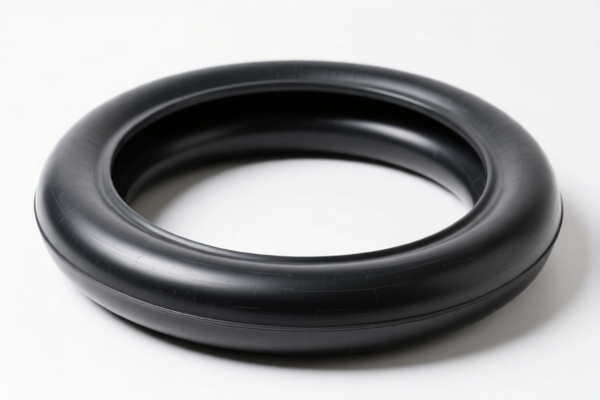
AI Analysis
🚗 EPDM Rubber Inner Tubes (Ethylene Propylene Diene Monomer)
🌐 HS Code Reference & Customs Clearance Guide | 2026 Latest Tariff Analysis | Professional-Level Clearance Strategy
📌 I. Product Definition & Classification: Do You Really Understand “EPDM Inner Tubes”?
EPDM (Ethylene Propylene Diene Monomer) rubber inner tubes are critical components for pneumatic tires, used in automobiles, motorcycles, bicycles, and industrial vehicles. Their primary function is to retain air pressure within the tire assembly. Due to the specific material properties (high resistance to heat, ozone, and weathering) and the functional classification of "inner tubes," they are categorized under Chapter 40 (Rubber and Articles Thereof).
In international trade, EPDM inner tubes are often misclassified due to confusion between "rubber articles" (Chapter 40, Heading 4016) and "tires/inner tubes" (Chapter 40, Heading 4013). The key distinction lies in the specific HTSUS subheadings:
⚠️ Key Distinction:
- If classified as "Inner Tubes" specifically → Go to 4013.90.50.xx
- If classified as "Other Vulcanized Rubber Articles" (generic) → Go to 4016.99.60.xx
- Note: While 4013 is the specific heading for tires and inner tubes, customs sometimes disputes this if documentation is unclear, leading to classification under 4016. Both codes are provided below for accurate risk assessment.
📦 II. HS Code Classification Details (2026 Latest Tariff Authority Comparison)
| HS Code | Product Description | Applicable Scenario | Material/Form |
|---|---|---|---|
4013.90.50.10 |
Inner Tubes of Rubber | Standard classification for EPDM inner tubes | Rubber, Inner Tube Form |
4013.90.50.50 |
Inner Tubes of Rubber | Alternative subheading for Inner Tubes | Rubber, Inner Tube Form |
4016.99.60.10 |
Other Vulcanized Rubber Articles (Inner Tubes) | Classified as generic rubber products | Vulcanized Rubber, Inner Tube Form |
4016.99.60.50 |
Other Vulcanized Rubber Articles (Inner Tubes) | Alternative generic subheading | Vulcanized Rubber, Inner Tube Form |
🔍 Critical Reminder:
- 4013.90.50.xx: Specifically targets "Inner Tubes." This is generally the most accurate functional classification for inner tubes.
- 4016.99.60.xx: Catches "Other Rubber Articles." Some customs brokers use this if the specific inner tube classification is contested or if the EPDM material is deemed a "specialty rubber article" rather than a standard tire component.
- Do Not Misclassify: Do not classify as4011(Tires) or8708(Parts of Motor Vehicles) directly; inner tubes have their own specific chapter heading.
💰 III. 2026 Latest Tariff Rate Breakdown (Including Surcharges & Policy Add-ons)
✅ Applicable Country: United States (US)
✅ Origin: China (CN)
✅ Effective Date: November 10, 2025 (and subsequent imports)
🎯 1. Codes 4013.90.50.10 & 4013.90.50.50 — Inner Tubes of Rubber
| Item | Details |
|---|---|
| Base Duty Rate | 3.7% (Ad Valorem) |
| Section 301 Surcharge | +25.0% (Added Tariff) |
| Section 122 Tariff | +10.0% (Specific 122 Clause Tariff) |
| Total Tax Rate | 38.7% |
| Tax Calculation | CIF Value × 38.7% |
| De Minimis Exemption? | ❌ No (Not eligible for de minimis) |
| Legal Basis Path | Base Rate → Section 301: Footnote 9903.88.01 → Section 122: IEEPA/USMCA adjustments |
📌 Explanation:
- "Base Duty 3.7%": The standard Most Favored Nation (MFN) rate for rubber inner tubes.
- "Section 301 Surcharge 25%": Applies to Chinese-origin goods under US Trade Act Section 301. This is a heavy burden on Chinese rubber products.
- "122 Clause Tariff 10%": A specific additional tariff layer often applied to certain rubber categories under recent trade enforcement measures.
- Total Cost Impact: With a 38.7% total tariff, EPDM inner tubes from China face significantly high landing costs in the US.
🎯 2. Codes 4016.99.60.10 & 4016.99.60.50 — Other Vulcanized Rubber Articles
| Item | Details |
|---|---|
| Base Duty Rate | 2.5% (Ad Valorem) |
| Section 301 Surcharge | +25.0% (Added Tariff) |
| Section 122 Tariff | +10.0% (Specific 122 Clause Tariff) |
| Total Tax Rate | 37.5% |
| Tax Calculation | CIF Value × 37.5% |
| De Minimis Exemption? | ❌ No (Not eligible for de minimis) |
| Legal Basis Path | Base Rate → Section 301: Footnote 9903.88.01 → Section 122: IEEPA/USMCA adjustments |
📌 Note:
- Although the base rate is slightly lower (2.5% vs 3.7%), the Section 301 (25%) and 122 Clause (10%) remain identical.
- The total rate is 37.5%, just 1.2% lower than the 4013 classification.
- Risk: Using 4016 for inner tubes may trigger a customs audit if the importer cannot prove they are not "standard inner tubes" under 4013, potentially leading to back-duties and penalties.
🛠️ IV. Customs Clearance Practical Advice (Battle-Tested Pitfall Avoidance Guide)
✅ 1. Required Documentation Checklist (Non-Negotiable)
| Document | Required | Explanation |
|---|---|---|
| ✅ Product Specification Sheet | ✔️ | Must state: Material (EPDM), Type (Inner Tube), Size, Diameter, Valve Type. |
| ✅ Commercial Invoice | ✔️ | Clearly state: "EPDM Rubber Inner Tube" — do NOT use vague terms like "Rubber Part." |
| ✅ Packing List | ✔️ | Detail net weight and gross weight. Ensure packaging reflects inner tube quantities. |
| ✅ Certificate of Origin (CO) | ✔️ | Crucial for determining China-origin surcharges. |
| ✅ Material Safety Data Sheet (MSDS) | ✔️ | Proves EPDM composition and vulcanization status. |
| ✅ Photo of Product & Label | ✔️ | Shows valve stem, size markings, and "Made in China" label. |
✅ 2. Declaration Tips (Key Mantras)
🔥 “Material True, Form Clear, Avoid ‘Other’ Traps, Tariffs Can Be Clearer!”
| Situation | Correct Declaration | Wrong Practice |
|---|---|---|
| Standard EPDM Inner Tube | 4013.90.50.xx (Inner Tube specific) | Misdeclare as 4016.99 (Other) to save 1.2% → Audit Risk |
| Inner Tube with Valve Stem | Include valve in description | Declare as "Tube Only" and declare valve separately → Splitting Violation |
| EPDM vs. Natural Rubber | Specify "EPDM" | Generic "Rubber Inner Tube" → Classification Dispute |
| Mixed Shipments (Tires + Tubes) | Separate Lines | Combine Tires (4011) and Tubes (4013) on one line → Error |
✅ 3. Special Case Handling
| Scenario | Handling Advice |
|---|---|
| OEM Custom Sizes | Provide technical drawings showing it is an inner tube, not a seal or gasket. |
| Pre-mounted Tubes | If tubes are pre-installed in tires, classify as Tires (4011.11/12/19), NOT inner tubes. |
| Recycled EPDM | Must disclose if recycled content > X%; may affect duty calculation or environmental compliance. |
| China Origin | Must pay 38.7% (or 37.5%). No exemptions apply for standard EPDM inner tubes from China to the US. |
🌍 V. Global Market Clearance Comparison (2026 Latest)
| Country/Region | Recommended HS Code | Tariff Rate (China Origin) | Certification Requirements | Notes |
|---|---|---|---|---|
| 🇺🇸 USA | 4013.90.50.xx |
38.7% (High) | None specific, but strict HS accuracy | High Section 301 + 122 Tariffs |
| 🇨🇳 China | 4013.90.50.xx |
5% - 10% (Import) | CCC (if applicable) | Low duty for domestic trade |
| 🇪🇺 EU | 4013.90.50.xx |
0% - 4.5% (Depends on FTA) | REACH, RoHS | No Section 301; check EORI |
| 🇨🇦 Canada | 4013.90.50.xx |
0% - 5% (Under CUSMA) | CAN/ULC Standards | Favorable under USMCA/CUSMA |
| 🇲🇽 Mexico | 4013.90.50.xx |
0% - 5% (Under USMCA) | NOM Standards | Beneficial for NAFTA chain |
📌 Conclusion:
- USA is the most expensive market for Chinese EPDM inner tubes due to 38.7% total duties.
- EU/Canada/Mexico offer significantly lower or zero tariffs under trade agreements.
- Strategy: Consider supply chain diversification to non-China origins if targeting the US market to avoid Section 301 and 122 tariffs.
📌 VI. Common Mistakes & Pitfall Guide (Lessons from Experience)
❌ Mistake 1: Classifying under 4016 to save 1.2%
👉 Consequence: Customs may reject it as "not specific enough," leading to delays, audits, and potential penalties for misdeclaration.
👉 Fix: Stick to 4013 unless you have a legal opinion supporting 4016.
❌ Mistake 2: Omitting "EPDM" in the description
👉 Consequence: Customs may classify under a higher-duty rubber category or request additional info.
👉 Fix: Always specify "Vulcanized EPDM Rubber Inner Tube."
❌ Mistake 3: Claiming De Minimis (Under $800)
👉 Consequence: Rejected. Section 301 and 122 tariffs often override de minimis exemptions for Chinese goods.
👉 Fix: Budget for full duty payment regardless of shipment value.
❌ Mistake 4: Confusing Inner Tubes with Tire Seals or Gaskets
👉 Consequence: Wrong HS Code, incorrect duty assessment.
👉 Fix: Ensure the product is explicitly for pneumatic tire air retention.
🎯 VII. Conclusion: Professional Declaration, Cost Control, Efficiency!
🎯 Remember the Mantra:
🔹 "Inner Tubes belong to 4013, not 4016. Base rate low, but surcharges high. China origin means 38.7% total. Don’t guess, prepare!"
🔹 "HS Code defines the tax burden. A 1.2% difference is not worth a 100% audit risk."
📌 Pro Tip:
If your EPDM inner tubes are originating from Vietnam, Thailand, or Malaysia, you may avoid Section 301 and 122 tariffs, reducing the rate to the base MFN rate (3.7% or 2.5%).
- Recommendation: Apply for an Advance Ruling from US Customs (CBP) if shipping large volumes. This provides legal certainty on the HS code and tariff application.
📣 Immediate Action:
📞 Engage a licensed customs broker + Provide product specs + Request Advance Ruling
🚀 Ensure your EPDM inner tubes clear customs smoothly, minimize duty costs, and maximize profit margins!
✨ Professional Clearance Starts with Precise Classification!
💼 Every penny of duty is worth calculating accurately!
Customer Reviews
About HS Code Classification
The Harmonized System (HS) is an internationally standardized nomenclature developed by the World Customs Organization (WCO) to classify traded products. Over 200 countries use the HS system as the basis for customs tariffs, trade statistics, and import/export regulations.
Each HS code follows a hierarchical structure:
- Chapter (2 digits) — Broad category of goods (e.g., Chapter 84: Machinery and Mechanical Appliances)
- Heading (4 digits) — More specific grouping within the chapter
- Subheading (6 digits) — Internationally standardized breakdown, used by all WCO member countries
- National subdivisions (8-10 digits) — Country-specific extensions for further classification, such as US HTSUS 10-digit codes
Correct HS code classification is essential for smooth customs clearance, accurate duty payment, and compliance with trade regulations. Misclassification can lead to customs delays, overpayment of duties, or penalties.
When importing from CN to US, the applicable tariff rates may include:
- Most-Favored-Nation (MFN) rate — The standard duty rate applied to WTO members
- General rate — Applied to countries without trade agreements
- Trade remedy duties — Additional tariffs such as Section 301 (anti-dumping), Section 232 (national security), or countervailing duties
The information provided on this page is for reference purposes only. For official classification, please consult with your local customs authority or a licensed customs broker.