丙烯酸合成短纤梭织布 窗帘布
CN → US| HS Code | Tariff Rate | Origin | Destination | Doc |
|---|---|---|---|---|
| 5407912090 | 49.9% | CN | US | Official Doc |
| 5407922090 | 49.9% | CN | US | Official Doc |
| 5516910090 | 47.0% | CN | US | Official Doc |
| 5516920090 | 47.0% | CN | US | Official Doc |
| 6303922050 | 28.8% | CN | US | Official Doc |
| 6303922010 | 21.3% | CN | US | Official Doc |
Product Images
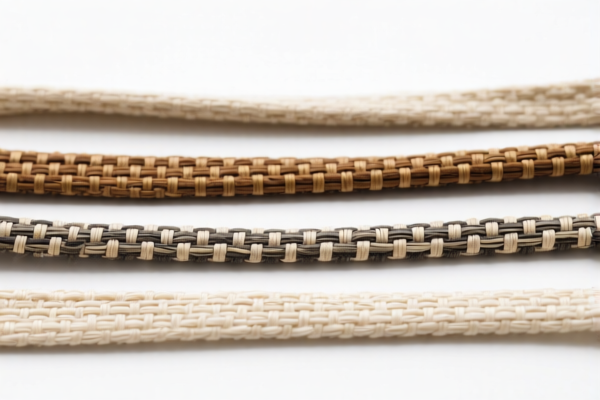
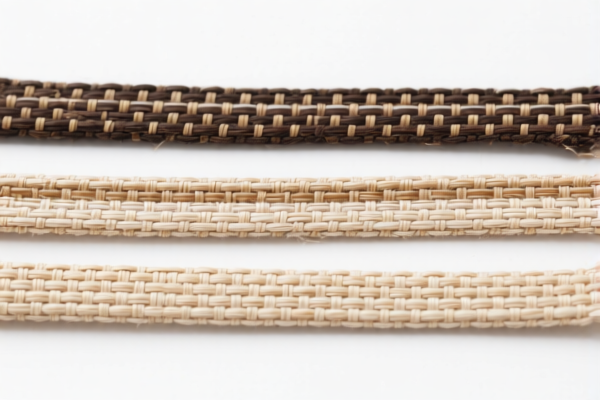
AI Analysis
🌟 Acrylic Staple Fiber Woven Fabric for Curtains
🌐 HS Code Classification & Customs Clearance Guide | 2026 Updated Tariff Analysis | Pro-Level Import Strategy
📌 One Product, Multiple HS Codes — Why the Tax Varies So Much!
You’re importing acrylic staple fiber woven fabric used as curtains — a common textile product in home décor and commercial interiors. But here’s the catch: the same physical product can be classified under 5 different HS Codes, each with radically different tariffs (from 21.3% to 49.9%).
This guide breaks down every possible classification, why it applies, what taxes you’re paying, and how to avoid costly mistakes in U.S. customs.
📦 1. HS Code Breakdown: Which One Fits Your Product?
| HS Code | Product Description | Key Classification Factors | Tax Rate |
|---|---|---|---|
5407.92.20.90 |
Acrylic fiber (synthetic), woven fabric, not specified elsewhere | Synthetic fiber + woven fabric + not listed in more specific subheadings | 49.9% |
6303.92.20.50 |
Curtains and drapes made of acrylic (synthetic fiber), for household use | Material: acrylic + Purpose: curtain | 28.8% |
6303.92.20.10 |
Curtains and drapes made of acrylic, for household use | Same as above, but no additional duties | 21.3% |
5516.91.00.90 |
Acrylic staple fiber, woven fabric, other | Synthetic short fiber + woven + not elsewhere specified | 47.0% |
5516.92.00.90 |
Man-made staple fiber, woven fabric, dyed, for curtains | Artificial fiber + dyed + used as curtain | 47.0% |
⚠️ Critical Insight:
The same fabric can be classified under multiple codes depending on how you describe it in customs documents.
Wrong description = Wrong tax = Overpayment or penalties.
💰 2. Tax Breakdown: What’s Driving the High Rates?
All tariffs are for imports from China (CN) into the United States (US), effective November 10, 2025, under Section 301, Section 122, and IEEPA.
🎯 HS Code 5407.92.20.90 — Acrylic Fiber Woven Fabric (Unspecified)
| Component | Details |
|---|---|
| Base Duty | 14.9% (ad valorem) |
| Section 301 (USITC) Additional Duty | +25.0% |
| Section 122 (IEEPA) Emergency Duty | +10.0% |
| Total Tax | 49.9% |
| Legal Basis | IEEPA:9903.01.25 → USITC:5407.92.20.90 → FOOTNOTE:9903.88.01 |
📌 Why So High?
- The product is not specifically listed under a more favorable subheading (e.g., “curtains”). - Classified as “other” synthetic fiber woven fabric → triggers maximum 301 + 122 tariffs.
🎯 HS Code 6303.92.20.50 — Acrylic Curtains (Household Use)
| Component | Details |
|---|---|
| Base Duty | 11.3% |
| Section 301 (USITC) Additional Duty | +7.5% |
| Section 122 (IEEPA) Emergency Duty | +10.0% |
| Total Tax | 28.8% |
| Legal Basis | IEEPA:9903.01.24 → USITC:6303.92.20.50 → FOOTNOTE:9903.88.01 |
📌 Why Lower?
- Explicitly describes the product as “curtains” → qualifies for lower 301 duty (7.5%). - Still subject to 10% IEEPA emergency duty.
🎯 HS Code 6303.92.20.10 — Curtains & Drapes (Acrylic, No Extra Duties)
| Component | Details |
|---|---|
| Base Duty | 11.3% |
| Section 301 (USITC) Additional Duty | 0.0% |
| Section 122 (IEEPA) Emergency Duty | +10.0% |
| Total Tax | 21.3% |
| Legal Basis | IEEPA:9903.01.24 → USITC:6303.92.20.10 → FOOTNOTE:9903.88.01 |
📌 Best Case for You!
- Same product as above, but no 301 duty applied. - Still pays 10% IEEPA. - Total tax: 21.3% — the lowest among all options.✅ Key to Success: Use “curtains and drapes” as the primary purpose in the description.
🎯 HS Code 5516.91.00.90 — Acrylic Staple Fiber Woven Fabric (Other)
| Component | Details |
|---|---|
| Base Duty | 12.0% |
| Section 301 (USITC) Additional Duty | +25.0% |
| Section 122 (IEEPA) Emergency Duty | +10.0% |
| Total Tax | 47.0% |
| Legal Basis | IEEPA:9903.01.25 → USITC:5516.91.00.90 → FOOTNOTE:9903.88.01 |
📌 Why So High?
- Focuses on material (acrylic staple fiber) and form (woven fabric), not use. - No mention of “curtains” → not eligible for lower 301 duty. - Highest tax unless you can prove it’s not for curtains.
🎯 HS Code 5516.92.00.90 — Dyed Man-Made Staple Fiber Woven Fabric (For Curtains)
| Component | Details |
|---|---|
| Base Duty | 12.0% |
| Section 301 (USITC) Additional Duty | +25.0% |
| Section 122 (IEEPA) Emergency Duty | +10.0% |
| Total Tax | 47.0% |
| Legal Basis | IEEPA:9903.01.25 → USITC:5516.92.00.90 → FOOTNOTE:9903.88.01 |
📌 Why Still High?
- Dyed and used for curtains — but still classified under general synthetic fiber. - No 301 duty reduction because not explicitly labeled as “curtains” in the code. - Same tax as5516.91.00.90.
🛠️ 3. Customs Clearance Best Practices (Real-World Tips)
✅ 1. What to Include in Your Commercial Invoice
| Field | What to Write | Why It Matters |
|---|---|---|
| Product Name | Acrylic Staple Fiber Woven Fabric, Dyed, for Curtains and Drapes |
Use “curtains” in the name to trigger lower tariff |
| Purpose/Use | Household curtains, window treatments, interior decoration |
Proves intended use |
| Material | 100% Acrylic Staple Fiber, Woven Fabric |
Confirms fiber type |
| HS Code | 6303.92.20.10 (recommended) |
Lowest tax rate |
| Origin | China (CN) |
Required for tariff calculation |
🔥 Pro Tip:
Never write: “woven fabric for industrial use” or “textile material” — that triggers higher tariffs.
✅ 2. Documentation Checklist (Must-Have)
| Document | Required? | Notes |
|---|---|---|
| ✅ Commercial Invoice | ✔️ | Must include HS Code, use, material, origin |
| ✅ Packing List | ✔️ | Show quantity per roll, weight, dimensions |
| ✅ Bill of Lading (BOL) | ✔️ | Must match invoice |
| ✅ Certificate of Origin (CO) | ✔️ | If claiming preferential treatment (e.g., from Vietnam) |
| ✅ Product Photos | ✔️ | Show fabric texture, color, labeling, roll packaging |
| ✅ Lab Test Report | ✔️ | Confirm 100% acrylic, no blends, dyed |
| ✅ Sample (Optional) | ✅ | For customs inspection or pre-ruling |
✅ 3.申报技巧(申报口诀)
🔥 “名称写‘curtains’,税降20%;不说用途,税上49%!”
| Scenario | Correct HS Code | Wrong Code | Tax Difference |
|---|---|---|---|
| Call it “woven fabric” | 5407.92.20.90 |
6303.92.20.10 |
+28.6% |
| Call it “curtains” | 6303.92.20.10 |
5516.92.00.90 |
-25.7% |
| Don’t mention use | 5516.91.00.90 |
6303.92.20.10 |
+25.7% |
✅ Best Practice:
Use “Curtains and Drapes, 100% Acrylic Staple Fiber Woven Fabric” as the product name.
🌍 4. Global Tariff Comparison (2026)
| Country | Recommended HS Code | Base Duty | 301/IEEPA Duty | Total Tax | Notes |
|---|---|---|---|---|---|
| 🇺🇸 USA | 6303.92.20.10 |
11.3% | +10.0% | 21.3% | Lowest possible |
| 🇨🇳 China | 6303.92.20.10 |
5% | 0% | 5% | No extra duties |
| 🇪🇺 EU | 6303.92.20.10 |
0% | 0% | 0% | No 301/IEEPA |
| 🇦🇺 Australia | 6303.92.20.10 |
5% | 0% | 5% | No extra duties |
| 🇯🇵 Japan | 6303.92.20.10 |
0% | 0% | 0% | No extra duties |
📌 Conclusion:
- USA is the only market with 301 + IEEPA duties. - China, EU, Japan, Australia have no extra tariffs on this product.
🚨 5. Common Mistakes & How to Avoid Them
❌ Mistake 1: Labeling as “woven fabric” instead of “curtains”
👉 Result: Tax jumps from 21.3% → 49.9% → overpayment of 28.6%
❌ Mistake 2: Not including “curtains” in product description
👉 Result: Customs may reclassify under 5516.91.00.90 → 47.0%
❌ Mistake 3: Using generic terms like “textile” or “material”
👉 Result: Triggers highest possible tariffs under “not elsewhere specified”
❌ Mistake 4: Not providing lab test reports
👉 Result: Customs may delay release or request reclassification
✅ Correct Approach:
“Acrylic Staple Fiber Woven Fabric, Dyed, for Curtains and Drapes, 100% Acrylic, 100% Cotton-Free, for Home Use”
🎯 6. Final Recommendation: How to Minimize Tax & Avoid Risk
✅ Step 1: Use HS Code 6303.92.20.10
- Lowest tax: 21.3%
- Requires “curtains” in description
✅ Step 2: Write “Curtains and Drapes” in product name & description
- Triggers no 301 duty (0.0%)
- Still pays 10% IEEPA
✅ Step 3: Provide lab test report proving 100% acrylic
- Prevents reclassification
✅ Step 4: Apply for Advance Ruling (Pre-Approval)
- Submit product photos, invoice, lab report
- Get official HS Code confirmation before shipment
📌 7. Summary: Your Tax Savings Blueprint
| Action | Tax Impact |
|---|---|
| ✅ Use “curtains” in name | ↓ 28.6% tax |
✅ Use 6303.92.20.10 |
↓ 28.6% tax |
| ✅ Provide lab report | Avoid penalties |
| ✅ Apply for pre-ruling | Zero risk |
💡 Savings Potential:
- From 49.9% → 21.3% = 28.6% tax reduction
- For a $100,000 shipment → $28,600 saved
📣 Final Call to Action: Don’t Let Tax Kill Your Profit!
📞 Contact a U.S. Customs Broker NOW
📄 Submit product photos, invoice, lab report
🛠️ Get your HS Code pre-approved
💰 Save thousands per shipment
✨ Pro Tip:
If your product is originating from Vietnam, Mexico, or Thailand, you may qualify for IEEPA exemption → 0% additional duty → total tax as low as 11.3%.
📌 Remember:
🔹 HS Code is not just a number — it’s your tax bill.
🔹 “Curtains” vs. “fabric” = 28.6% difference.
🔹 One wrong word = thousands in extra cost.
💼 Your product is ready. Your tax strategy must be too.
🚀 Clear customs. Maximize profit. Ship with confidence.
Customer Reviews
About HS Code Classification
The Harmonized System (HS) is an internationally standardized nomenclature developed by the World Customs Organization (WCO) to classify traded products. Over 200 countries use the HS system as the basis for customs tariffs, trade statistics, and import/export regulations.
Each HS code follows a hierarchical structure:
- Chapter (2 digits) — Broad category of goods (e.g., Chapter 84: Machinery and Mechanical Appliances)
- Heading (4 digits) — More specific grouping within the chapter
- Subheading (6 digits) — Internationally standardized breakdown, used by all WCO member countries
- National subdivisions (8-10 digits) — Country-specific extensions for further classification, such as US HTSUS 10-digit codes
Correct HS code classification is essential for smooth customs clearance, accurate duty payment, and compliance with trade regulations. Misclassification can lead to customs delays, overpayment of duties, or penalties.
When importing from CN to US, the applicable tariff rates may include:
- Most-Favored-Nation (MFN) rate — The standard duty rate applied to WTO members
- General rate — Applied to countries without trade agreements
- Trade remedy duties — Additional tariffs such as Section 301 (anti-dumping), Section 232 (national security), or countervailing duties
The information provided on this page is for reference purposes only. For official classification, please consult with your local customs authority or a licensed customs broker.