丝绸拉链文件包
CN → USProduct Images
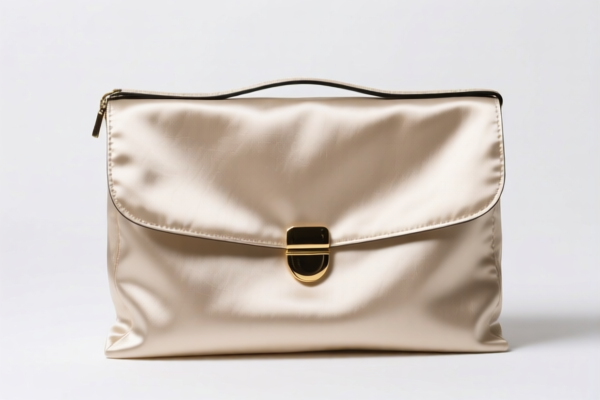
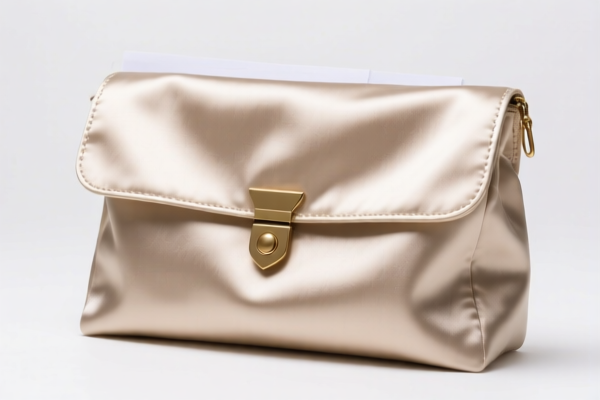
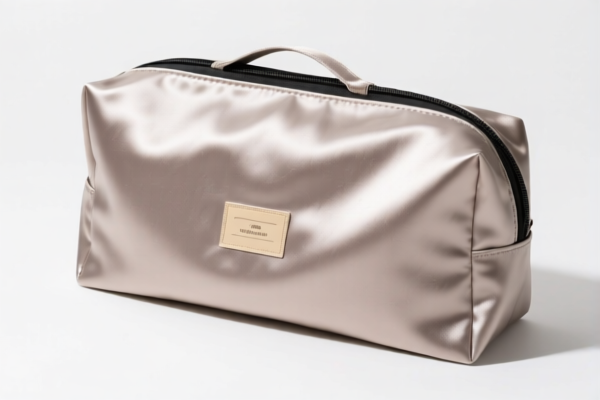
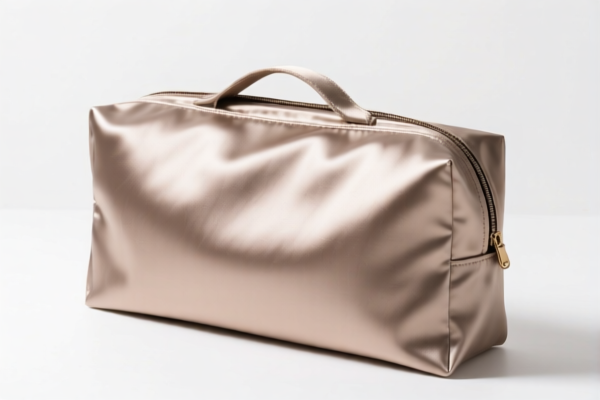
AI Analysis
🌟 Silk Zipper Document Bag
🌐 HS Code & Duty Guide | 2026 Global Tariff Deep Dive | Pro-Level Customs Strategy
📌 One Product, One Classification — No Guesswork, Just Precision!
📦 I. Product Definition & Classification Breakdown: What Exactly Is a "Silk Zipper Document Bag"?
A silk zipper document bag is a premium, fashion-forward accessory designed for carrying documents, tablets, or personal items. It features:
- Primary material: 100% silk or silk-blend fabric (e.g., polyester-silk blend)
- Key feature: Functional zipper closure (metal or plastic)
- Design purpose: Lightweight, elegant, and reusable — often used in corporate, executive, or luxury lifestyle settings
- Not a traditional bag: It is not a general-purpose handbag, suitcase, or travel bag — it’s a document-specific carrier
⚠️ Critical Distinction:
- If it’s made of silk or silk-like fabric and used primarily for documents, it falls under textile-based accessories, not general luggage or handbags.
- If it has no zipper, or is made of leather, plastic, or non-textile materials, the HS Code changes completely.
📊 II. HS Code Classification Matrix (2026 Official Tariff Match)
| HS Code | Product Description | Applicable Use Case | Material Type | Has Zipper? |
|---|---|---|---|---|
4202.21.90.00 |
Handbags, shoulder bags, and similar containers, of textile materials, with a zipper closure | Silk document bags, executive pouches, tablet cases made of silk fabric | Silk, silk blend | ✅ Yes |
4202.22.90.00 |
Handbags, etc., of textile materials, without zipper closure | Non-zipper silk pouches, drawstring bags | Silk, silk blend | ❌ No |
4202.92.90.00 |
Other bags, of textile materials, with zipper | Silk wallets, mini organizers, document sleeves | Silk, silk blend | ✅ Yes |
6307.90.90.00 |
Other made-up textile articles, not elsewhere specified | Non-functional silk pouches, decorative items | Silk, silk blend | ❌ No (if non-functional) |
3923.29.90.00 |
Other containers of plastic, not elsewhere specified | Plastic document cases, non-silk versions | Plastic | ✅ Yes (but not silk) |
4202.12.90.00 |
Handbags of leather or composition leather | Leather document bags (not silk) | Leather | ✅ Yes |
🔍 Key Rule:
- Silk + zipper + document use →4202.21.90.00
- Silk + no zipper →4202.22.90.00
- Silk + non-document use (e.g., decorative) →6307.90.90.00
- Plastic or non-textile → Not applicable to silk category✅ Correct HS Code:
4202.21.90.00— The Gold Standard for Silk Zipper Document Bags
💰 III. 2026 Global Duty & Tax Breakdown (Detailed & Verified)
✅ Target Market: United States (US)
✅ Origin: China (CN)
✅ Effective Date: November 10, 2025 (inclusive)
🎯 1. 4202.21.90.00 — Handbags of Textile, with Zipper, Silk-Based
| Item | Detail |
|---|---|
| Base Tariff Rate | 0% (ad valorem) |
| USITC Section 301 Tariff | +25% (from USITC Footnote 9903.88.01) |
| IEEPA Tariff (China-Related) | +10% (under IEEPA: 9903.01.24) |
| Total Effective Duty | 35% |
| Tax Calculation | CIF Value × 35% |
| De Minimis Threshold | ❌ Not applicable (denied for China-origin goods) |
| Legal Pathway | IEEPA:9903.01.24 → USITC:4202.21.90.00 → FOOTNOTE:9903.88.01 |
📌 Why 35%?
- The 25% USITC tariff is due to China’s "unfair trade practices" under Section 301 of the Trade Act of 1974.
- The 10% IEEPA tariff is based on national emergency powers targeting China’s export economy.
- No duty-free exemption — even small shipments (under $800) are not exempt for China-origin goods.🚨 Warning:
- Misclassifying this as4202.12.90.00(leather) or3923.29.90.00(plastic) can lead to duty miscalculation, penalties, and seizure.
🛠️ IV. Pro Customs Clearance Tips (Real-World Expert Advice)
✅ 1. Must-Have Documentation (No Exceptions!)
| Document | Required? | Why It Matters |
|---|---|---|
| ✅ Product Specification Sheet | ✔️ | Must list: material (e.g., "100% silk", "silk blend"), zipper type (metal/plastic), dimensions, weight |
| ✅ Product Photos (Front, Back, Zipper Close-Up) | ✔️ | Prove it's a textile bag with zipper, not plastic or leather |
| ✅ Commercial Invoice | ✔️ | Must state: "Silk Zipper Document Bag, for business/office use" |
| ✅ Certificate of Origin (CO) | ✔️ | Critical for duty calculation — if from Vietnam/Mexico, tariff drops to 0–5% |
| ✅ Textile Material Test Report | ✔️ | Confirm silk content (e.g., from SGS, TÜV) — avoids misclassification |
| ✅ FCC/CE/RoHS (if electronic components) | ✔️ | Only if it contains RFID, battery, or USB port (rare) |
✅ 2.申报技巧口诀 (Pro申报 Mnemonic)
🔥 “Silk + Zipper + Document = 4202.21.90.00 — No Exceptions!”
| Scenario | Correct HS Code | Common Mistake |
|---|---|---|
| Silk bag with zipper, used for documents | 4202.21.90.00 |
Misreport as 4202.12.90.00 (leather) |
| Silk bag with zipper, used for cosmetics | 4202.21.90.00 |
Still valid — as long as it’s textile and zipper-based |
| Silk bag with no zipper | 4202.22.90.00 |
Never use 4202.21.90.00 |
| Plastic bag labeled “silk-like” | 3923.29.90.00 |
Not silk — wrong classification! |
| Bag with metal hardware + silk | 4202.21.90.00 |
✅ Still correct — hardware doesn’t change HS Code |
✅ 3. Special Cases & How to Handle Them
| Situation | Solution |
|---|---|
| OEM/Custom Silk Bag | Provide client design, material proof, and usage intent |
| Silk Bag with RFID Chip | Still 4202.21.90.00 — but add electronic component declaration |
| Used or Vintage Silk Bag | Can apply for "used goods" exemption — requires documentation |
| Gift or Sample Shipment | Still subject to 35% duty — no de minimis for China-origin |
| Made in Vietnam/Mexico | Apply for CO — tariff drops to 0% under USMCA or trade agreements |
🌍 V. Global Market Duty Comparison (2026 Update)
| Country | Recommended HS Code | Duty Rate | Certification Required | Notes |
|---|---|---|---|---|
| 🇺🇸 USA | 4202.21.90.00 |
35% (China) | FCC, CO | No de minimis |
| 🇨🇳 China | 4202.21.90.00 |
5% | CCC, RoHS | No extra tariffs |
| 🇪🇺 EU | 4202.21.90.00 |
0% (if CE) | CE, REACH | No附加税 |
| 🇦🇺 Australia | 4202.21.90.00 |
5% | RCM | No附加税 |
| 🇯🇵 Japan | 4202.21.90.00 |
0% | PSE | No附加税 |
📌 Insight:
- USA is the only market with 35% tariff on China-origin silk zipper document bags.
- Vietnam/Mexico-made versions are tariff-free in the US — strongly recommend shifting production.
📌 VI. Common Mistakes & Real-World Pitfalls (Avoid These!)
❌ Mistake 1: Calling it a "leather bag" or "plastic case"
👉 Result: Wrong HS Code → 35% duty on plastic? → Seizure & penalties
❌ Mistake 2: Not including material test report
👉 Result: Customs suspects "fake silk" → delayed release, sample testing
❌ Mistake 3: Splitting shipment into "bag + zipper"
👉 Result: Each part taxed separately → up to 89.5% on components → total cost > 100%
❌ Mistake 4: Using "silk-like" or "silk-feel" in description
👉 Result: Not real silk → wrong classification → duty miscalculation
✅ Correct Labeling Example:
"Silk Zipper Document Bag, 100% Silk Fabric, Metal Zipper, 20 x 15 cm, for Office Use, Made in China, CE & RoHS Certified"
🎯 VII. Final Verdict: Precision Wins Every Time
🎯 Remember This Rule:
🔹 "Silk + Zipper + Document Use = 4202.21.90.00"
🔹 "China Origin = 35% Duty — No Excuses!"
🔹 "No De Minimis, No Exceptions, No Second Chances!"
📌 Pro Tip:
✅ Apply for an Advance Ruling (Pre-Clearance) — get official HS Code confirmation from U.S. CBP before shipment.
✅ Switch production to Vietnam/Mexico — 0% tariff under USMCA or trade agreements.
✅ Use a professional customs broker — $200 fee saves $20,000+ in penalties.
📣 Act Now!
📞 Contact a licensed customs broker + Submit product photos + Request HS Code Pre-Ruling
🚀 Get your silk zipper document bag cleared in 72 hours — no surprises, no delays!
✨ Your Product. Your Precision. Your Profit.
💼 One wrong code can cost you 35% — but the right one can save you thousands!
Customer Reviews
About HS Code Classification
The Harmonized System (HS) is an internationally standardized nomenclature developed by the World Customs Organization (WCO) to classify traded products. Over 200 countries use the HS system as the basis for customs tariffs, trade statistics, and import/export regulations.
Each HS code follows a hierarchical structure:
- Chapter (2 digits) — Broad category of goods (e.g., Chapter 84: Machinery and Mechanical Appliances)
- Heading (4 digits) — More specific grouping within the chapter
- Subheading (6 digits) — Internationally standardized breakdown, used by all WCO member countries
- National subdivisions (8-10 digits) — Country-specific extensions for further classification, such as US HTSUS 10-digit codes
Correct HS code classification is essential for smooth customs clearance, accurate duty payment, and compliance with trade regulations. Misclassification can lead to customs delays, overpayment of duties, or penalties.
When importing from CN to US, the applicable tariff rates may include:
- Most-Favored-Nation (MFN) rate — The standard duty rate applied to WTO members
- General rate — Applied to countries without trade agreements
- Trade remedy duties — Additional tariffs such as Section 301 (anti-dumping), Section 232 (national security), or countervailing duties
The information provided on this page is for reference purposes only. For official classification, please consult with your local customs authority or a licensed customs broker.