中央锁止系统
CN → US| HS Code | Tariff Rate | Origin | Destination | Doc |
|---|---|---|---|---|
| 8301200060 | 40.7% | CN | US | Official Doc |
| 8301200030 | 40.7% | CN | US | Official Doc |
| 8708295160 | 0.0% | CN | US | Official Doc |
| 8536490080 | 37.7% | CN | US | Official Doc |
| 8708998180 | 12.5% | CN | US | Official Doc |
| 8536509065 | 35.0% | CN | US | Official Doc |
Product Images
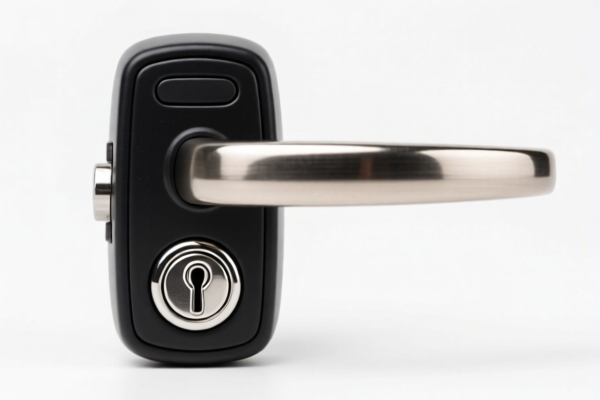
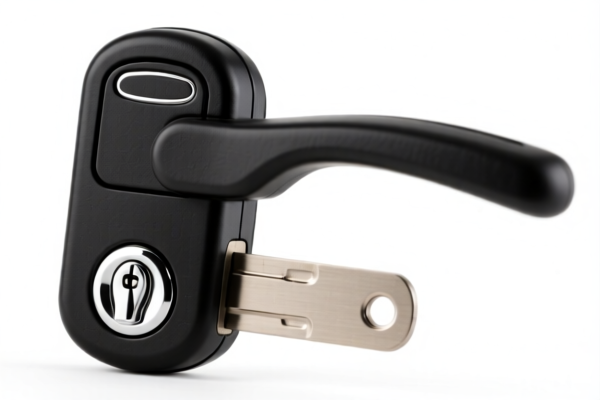
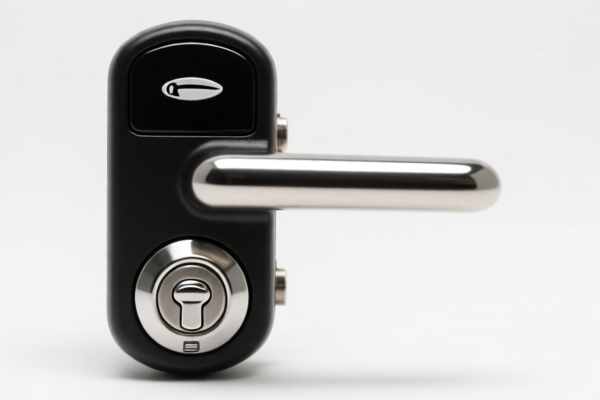
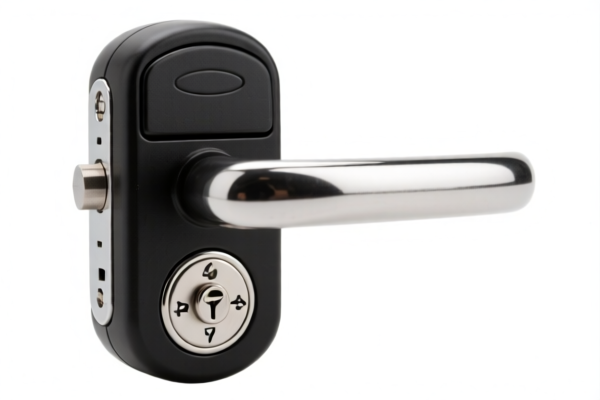
AI Analysis
🔐 Central Locking Systems (Automotive Electronic/Mechanical Components)
🌐 HS Code Reference & Customs Clearance Guide | 2026 Latest Tariff Analysis | Professional Clearance Strategy
📌 1. Product Definition & Classification: Do You Really Understand “Central Locking Systems”?
A Central Locking System is a critical safety and convenience component in modern automobiles. It allows the driver to lock or unlock all doors (and often the trunk/tailgate) simultaneously via a remote key fob, interior button, or electronic control unit (ECU).
In international trade, classification is complex because these systems involve both mechanical parts (locks, actuators) and electronic control units (sensors, wires, switches). The final HS Code depends heavily on the primary function and material composition declared.
⚠️ Key Distinction:
- If classified as an automotive part/attachment → Falls under Chapter 87 (8708.xxxx).
- If classified as an electrical control/switch → Falls under Chapter 85 (8536.xxxx).
- If classified as a lock made of base metal → Falls under Chapter 83 (8301.20).
📦 2. HS Code Classification Matrix (Based on Provided Data)
| HS Code | Summary Logic | Total Tax Rate | Tax Detail Breakdown |
|---|---|---|---|
| 8708.99.81.80 | Classified as an automotive electronic/mechanical component, fitting the definition of car parts/accessories. | 37.5% | Base: 2.5% + 25% (Add-on Tariff) + 10% (Section 122) |
| 8536.50.90.65 | Classified as an electrical control component, fitting the category of other switches/control devices. | 35.0% | Base: 0.0% + 25% (Add-on Tariff) + 10% (Section 122) |
| 8301.20.00.60 | Classified as a component of automotive locks, fitting the usage classification for automotive locks. | 40.7% | Base: 5.7% + 25% (Add-on Tariff) + 10% (Section 122) |
| 8301.20.00.30 | Material is base metal; usage matches automotive locks. | 40.7% | Base: 5.7% + 25% (Add-on Tariff) + 10% (Section 122) |
| 8708.29.51.60 | Classified as a functional part of the vehicle body system, fitting "other parts and accessories of bodies." | 87.5% | Base: 2.5% + 25% (Add-on Tariff) + 50% (Steel/Aluminum/Copper Surcharge) + 10% (Section 122)* |
| 8536.49.00.80 | Classified as part of an electrical control device, fitting the "other" catch-all category. | 37.7% | Base: 2.7% + 25% (Add-on Tariff) + 10% (Section 122) |
🔍 Note on 8708.29.51.60:
The total tax rate of 87.5% is significantly higher due to the specific 50% surcharge applied to steel, aluminum, or copper products under certain trade provisions, in addition to the standard 25% add-on and 10% Section 122 tariffs. This classification is the most expensive and risky unless strictly justified by material composition.
💰 3. Detailed Tariff Structure Explanation (2026 Latest)
The tax calculation for Central Locking Systems (imported to the US from China) generally follows this structure:
🎯 A. Base Tariff (MFN Rate)
- Range: 0.0% – 5.7%
- Explanation: Depends on the specific HS Code subheading. Electrical parts (Ch 85) often have lower base rates than mechanical locks (Ch 83) or general auto parts (Ch 87).
🎯 B. Section 301 Add-on Tariff
- Rate: +25.0%
- Source: US Trade Representative (USTR) Section 301 investigations on Chinese imports.
- Applicability: Applies to almost all HS Codes listed above for Chinese origin goods.
🎯 C. Section 122 Tariff (If Applicable)
- Rate: +10.0%
- Source: Specific trade provisions mentioned in the data (likely referring to recent or specific trade actions).
- Applicability: Applied uniformly across all provided HS Codes in the dataset.
🎯 D. Special Surcharge (Steel/Aluminum/Copper)
- Rate: +50.0% (Only for 8708.29.51.60)
- Source: Specific metal product surcharges.
- Impact: Drastically increases the cost for this specific classification.
✅ Total Tax Calculation Example for 8536.50.90.65:
$0.0\% (\text{Base}) + 25.0\% (\text{Add-on}) + 10.0\% (\text{Sec 122}) = \mathbf{35.0\%}$✅ Total Tax Calculation Example for 8301.20.00.60:
$5.7\% (\text{Base}) + 25.0\% (\text{Add-on}) + 10.0\% (\text{Sec 122}) = \mathbf{40.7\%}$
🛠️ 4. Customs Clearance Practical Advice
✅ 1. Documentation Checklist
| Document | Required? | Purpose |
|---|---|---|
| Product Specification Sheet | ✔️ | Must detail if the system is electronic, mechanical, or both. |
| Bill of Materials (BOM) | ✔️ | Critical for determining material (Base Metal vs. Plastic/Electronic). |
| Functional Diagram | ✔️ | Helps clarify if it is primarily an "electrical control device" (Ch 85) or "lock" (Ch 83). |
| Commercial Invoice | ✔️ | Must clearly state "Central Locking System for Automotive Use." |
| Origin Certificate | ✔️ | To verify Chinese origin and apply accurate tariffs. |
| Packaging List | ✔️ | To show if components are shipped separately or assembled. |
✅ 2. Classification Strategy & Risk Mitigation
| Scenario | Recommended HS Code | Risk Level | Reason |
|---|---|---|---|
| Pure Electronic Control Unit | 8536.50.90.65 | 🟢 Low | Lowest base rate (0%). Easiest to justify as "electrical switch/control." |
| Mixed System (Mechanical + Electronic) | 8708.99.81.80 | 🟡 Medium | Standard automotive part. Safe if integrated into vehicle body systems. |
| Primarily Mechanical Locks | 8301.20.00.60/30 | 🟠 High | Higher base rate (5.7%). Must prove "base metal" construction. |
| Metal Body Parts with Locks | 8708.29.51.60 | 🔴 Critical | Avoid if possible. 87.5% tax is prohibitive. Only use if strictly a metal body part. |
✅ 3. Key Clearance Tips
- Prefer Chapter 85 or 87 over Chapter 83:
- Chapters 85 (Electrical) and 87 (Vehicles) generally offer lower base rates (0-2.5%) compared to Chapter 83 (Base Metal Locks, 5.7%).
-
8536.50.90.65 is the most cost-effective option at 35.0% total.
-
Avoid 8708.29.51.60 Unless Necessary:
-
The 50% steel/aluminum surcharge makes this the most expensive option. Only classify here if the product is primarily a structural metal part, not a functional locking system.
-
Accurate Description is Vital:
- Use terms like "Electronic Central Locking Control Module" for Ch 85.
- Use "Automotive Door Lock Assembly" for Ch 83.
-
Use "Auto Body Electrical Component" for Ch 87.
-
Section 122 Compliance:
- Ensure all shipments comply with Section 122 requirements to avoid unexpected delays or penalties, as this 10% tariff applies to all listed codes.
🌍 5. Market Comparison & Strategy
| Market | Typical Classification | Est. Total Tariff (China Origin) | Notes |
|---|---|---|---|
| 🇺🇸 United States | 8536.50.90.65 / 8708.99.81.80 | 35.0% - 37.5% | High due to 301 tariffs. Section 122 adds 10%. |
| 🇪🇺 European Union | 8536.50 / 8708.99 | 0% - 4.5% | No Section 301 or Section 122 equivalent. Much lower cost. |
| 🇨🇳 China | 8536.50 / 8708.99 | 0% - 5.7% | Import duty only. No major surcharges. |
📌 Conclusion for US Importers:
- The 35.0% rate under 8536.50.90.65 is the optimal classification if the system can be argued as an electrical control device.
- Budget for ~37.5% if classified as a general auto part (8708.99.81.80).
- Avoid the 87.5% rate unless unavoidable.
📌 6. Common Mistakes & Pitfalls
❌ Mistake 1: Classifying the entire system as "Base Metal Locks" (Ch 83) when it’s mostly electronic.
👉 Result: Higher base tax (5.7%) and potential disputes over material composition.
❌ Mistake 2: Ignoring Section 122.
👉 Result: Underpayment of 10% tariff, leading to penalties and interest.
❌ Mistake 3: Using 8708.29.51.60 for plastic/electronic components.
👉 Result: Incurring the 50% steel/aluminum surcharge incorrectly.
✅ Best Practice:
"Highlight the Electronic Control Nature" in documentation to support Ch 85 classification (8536.50.90.65) for the lowest total tax burden.
🎯 7. Final Recommendation
🎯 Optimal Strategy:
Target HS Code:
8536.50.90.65
- Total Tax: 35.0%
- Why: Lowest base rate (0%), clear "electrical control" justification, avoids high metal surcharges.
🎯 Backup Strategy:
Target HS Code:
8708.99.81.80
- Total Tax: 37.5%
- Why: Safe "automotive part" classification if electronic nature is hard to prove.📣 Immediate Action:
1. Review product specs to emphasize electronic control features.
2. Consult with a customs broker to validate 8536.50.90.65 eligibility.
3. Prepare detailed BOMs to defend against Chapter 83 or 8708.29 misclassifications.
✨ Precision in classification saves up to 52.5% in tariff costs!
💼 From 87.5% down to 35.0% — that’s the power of smart HS Coding!
Customer Reviews
About HS Code Classification
The Harmonized System (HS) is an internationally standardized nomenclature developed by the World Customs Organization (WCO) to classify traded products. Over 200 countries use the HS system as the basis for customs tariffs, trade statistics, and import/export regulations.
Each HS code follows a hierarchical structure:
- Chapter (2 digits) — Broad category of goods (e.g., Chapter 84: Machinery and Mechanical Appliances)
- Heading (4 digits) — More specific grouping within the chapter
- Subheading (6 digits) — Internationally standardized breakdown, used by all WCO member countries
- National subdivisions (8-10 digits) — Country-specific extensions for further classification, such as US HTSUS 10-digit codes
Correct HS code classification is essential for smooth customs clearance, accurate duty payment, and compliance with trade regulations. Misclassification can lead to customs delays, overpayment of duties, or penalties.
When importing from CN to US, the applicable tariff rates may include:
- Most-Favored-Nation (MFN) rate — The standard duty rate applied to WTO members
- General rate — Applied to countries without trade agreements
- Trade remedy duties — Additional tariffs such as Section 301 (anti-dumping), Section 232 (national security), or countervailing duties
The information provided on this page is for reference purposes only. For official classification, please consult with your local customs authority or a licensed customs broker.