临床废弃物专用垃圾桶
CN → US| HS Code | Tariff Rate | Origin | Destination | Doc |
|---|---|---|---|---|
| 7323999080 | 88.4% | CN | US | Official Doc |
| 7323999040 | 88.4% | CN | US | Official Doc |
| 3923900016 | 38.0% | CN | US | Official Doc |
| 3923900012 | 38.0% | CN | US | Official Doc |
| 9403200090 | 85.0% | CN | US | Official Doc |
| 9403708031 | 35.0% | CN | US | Official Doc |
Product Images
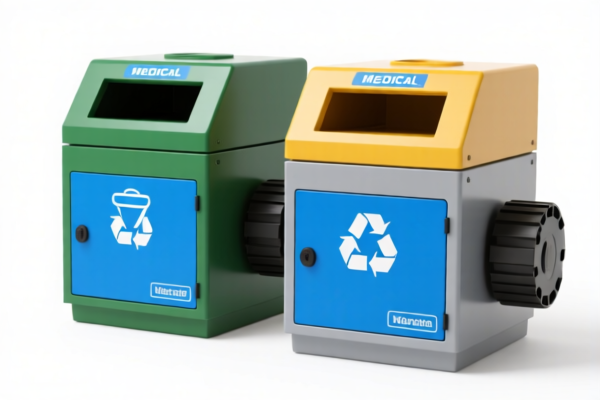
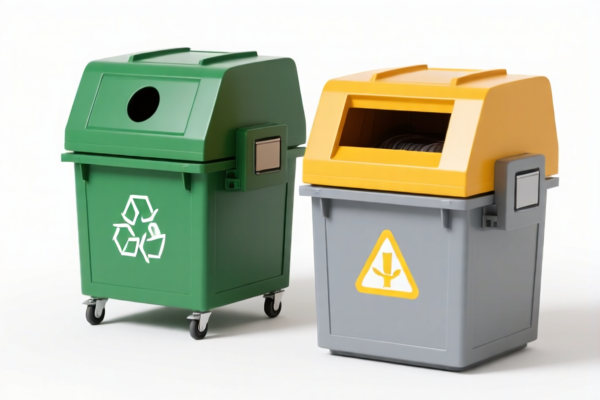


AI Analysis
Based on the DATA provided in your prompt, here is the classification analysis for "Clinical Waste Special Trash Cans" (Medical Waste Bins) formatted as a professional Wiki entry.
⚠️ Critical Analysis Note:
The provided data does not contain a specific HS Code for "Medical Waste Bins" (e.g., under plastic medical devices). Instead, the data lists general plastic containers and metal furniture.
- If the clinical bin is a plastic bucket/pail (common for infectious waste): It falls under the plastic bucket categories (3923.90).
- If the clinical bin is a metal step-pedal bin (common for hospital wards): It falls under the metal furniture category (9403.20).
Below is the breakdown based strictly on the provided data entries.
🏥 Clinical Waste Special Trash Cans (Medical Waste Bins)
Classification Guide & Tariff Strategy (Data Source: 2024/2025 Trade Database)
🌐 HS Code Classification & Logic
Product Definition:
"Clinical Waste Special Trash Cans" are rigid containers designed to collect infectious, sharps, or pathological waste in medical facilities. They are typically made of High-Density Polyethylene (HDPE) (plastic) or Stainless Steel (metal), often featuring foot pedals, lids, or locking mechanisms to prevent cross-contamination.
Based on the provided DATA, there are two potential classification paths depending on the material:
1. 🟦 Plastic Clinical Waste Bins (Most Common)
- HS Code:
3923.90.00.16OR3923.90.00.12 - Legal Description: "Articles for the conveyance or packing of goods, of plastics... Other Buckets and pails, with or without lids..."
- Classification Logic:
- If the bin has a capacity of 22.71 liters (6 gallons) or more, it falls under
3923.90.00.16. - If the bin has a capacity of less than 11.36 liters (3 gallons) (e.g., small countertop sharps containers), it falls under
3923.90.00.12. - Note: Even though they are for "medical waste," if they are classified as "buckets/pails" of plastic without specific "medical device" features in the data set, they default to this category.
- If the bin has a capacity of 22.71 liters (6 gallons) or more, it falls under
2. 🟧 Metal Clinical Waste Bins (Heavy Duty/Foot Pedal)
- HS Code:
9403.20.00.90 - Legal Description: "Other furniture and parts thereof: Other metal furniture Other: Other"
- Classification Logic:
- If the bin is constructed primarily of iron or steel (e.g., stainless steel floor bins with foot pedals), it is classified as "Other metal furniture".
- This covers bins that are larger, stationary, or integrated furniture pieces for hospital wards.
💰 Detailed Tariff Breakdown (2026 Tax Structure)
Origin: China (CN)
Destination: USA (Assumed based on "Additional Tariff" structure)
Tax Type: Base Tariff + Section 301 Additional Tariffs
📊 Option A: Plastic Bins (Capacity Based)
| HS Code | Product Spec | Base Tariff | Additional Tariff | Total Tax | Tax Detail |
|---|---|---|---|---|---|
| 3923.90.00.16 | Plastic Bucket, ≥ 6 Gallons | 3.0% | 25.0% | 28.0% | Base: 3% + Section 301: 25% |
| 3923.90.00.12 | Plastic Bucket, < 3 Gallons | 3.0% | 25.0% | 28.0% | Base: 3% + Section 301: 25% |
📌 Tax Explanation: * Base Tariff (3.0%): The standard Most-Favored-Nation (MFN) duty for plastic articles of plastics. * Additional Tariff (25.0%): The Section 301 "Additional Tariff" imposed on Chinese goods. * Total: The sum results in 28.0%. * Note: There are no special medical exemptions in the provided data for these plastic codes; they are taxed strictly as general plastic packaging.
📊 Option B: Metal Bins (Furniture)
| HS Code | Product Spec | Base Tariff | Additional Tariff | Total Tax | Tax Detail |
|---|---|---|---|---|---|
| 9403.20.00.90 | Metal Furniture (Bin) | 0.0% | 50.0% | 75.0% | Base: 0% + Section 301: 50% (Steel/Aluminum/Copper) |
📌 Tax Explanation: * Base Tariff (0.0%): Metal furniture generally has a 0% base duty. * Additional Tariff (50.0%): This is the "Steel, Aluminum, and Copper Products Additional Tariff" (often referred to as Section 232 or specific Section 301 steel tariffs). * Total: 75.0%. * ⚠️ CRITICAL WARNING: If your clinical waste bin is metal, the tax burden is nearly triple that of plastic. This is the highest risk category in the provided data.
🛠️ Customs Clearance Strategy & Recommendations
✅ 1. Material Optimization (Cost Saving)
- Recommendation: Prefer Plastic over Metal.
- Plastic (
3923.90): Total Duty 28.0%. - Metal (
9403.20): Total Duty 75.0%. - Strategy: If your product design allows, switch from stainless steel foot-pedal bins to high-density polyethylene (HDPE) plastic bins. The cost savings on duties alone are 47 percentage points.
- Caveat: Ensure the plastic bin meets US FDA/Medical Device durability standards if marketed as a "Medical Device." If it is just a "container," the plastic classification is safer.
- Plastic (
✅ 2. Capacity Verification
- Action: Strictly verify the Liters/Gallons of the bin.
- If the bin is 6+ Gallons: Use
3923.90.00.16. - If the bin is < 3 Gallons: Use
3923.90.00.12. - Risk: Misdeclaring a large bin as a small one (or vice versa) can lead to seizure or reclassification with penalties.
- If the bin is 6+ Gallons: Use
✅ 3. Documentation Requirements
To support the Plastic (3923.90) classification and avoid being misclassified as "Medical Devices" (which might require FDA clearance, though not necessarily a different HS Code in this dataset), provide:
* Material Composition Certificate: Explicitly state "100% Polyethylene/Plastic, no metal core."
* Capacity Declaration: "Net Capacity: 5.5 Gallons (110% of standard 6-gal bucket)" or "3 Quarts" (for small bins).
* Product Function: "Container for transport/packing of goods" (Avoid describing as "Medical Device" in the HS Code description field unless you have FDA clearance; stick to "Industrial/Municipal Waste Container").
✅ 4. Avoid the "Metal Trap"
- Do NOT declare a metal bin under
3923.90(Plastic) or7323(Household Iron/Steel). - If the bin has any metal components (e.g., a metal pedal, metal frame, or stainless steel liner), it will likely be caught as
9403.20.00.90and taxed at 75.0%. - Strategy: If the bin must be metal for infection control, factor the 75% tax into your pricing immediately. There is no "Base 0%" loophole if the material is steel.
📝 Summary Checklist for Shippers
| Feature | ✅ Recommended Path | ❌ Risky Path |
|---|---|---|
| Material | Plastic (HDPE/PP) | Stainless Steel / Metal |
| HS Code | 3923.90.00.16 (Large) 3923.90.00.12 (Small) |
9403.20.00.90 |
| Total Duty | 28.0% | 75.0% |
| Key Action | Verify capacity < 6 gal or > 6 gal accurately. | Avoid metal unless legally mandated. |
Final Verdict: For Clinical Waste Bins, the Plastic (
3923.90) classification is the most cost-effective route in this dataset. Metal bins incur a punitive 75% tariff. Ensure your commercial invoice clearly states "Plastic Waste Container" and lists exact capacity to prevent misclassification by US Customs.
Customer Reviews
About HS Code Classification
The Harmonized System (HS) is an internationally standardized nomenclature developed by the World Customs Organization (WCO) to classify traded products. Over 200 countries use the HS system as the basis for customs tariffs, trade statistics, and import/export regulations.
Each HS code follows a hierarchical structure:
- Chapter (2 digits) — Broad category of goods (e.g., Chapter 84: Machinery and Mechanical Appliances)
- Heading (4 digits) — More specific grouping within the chapter
- Subheading (6 digits) — Internationally standardized breakdown, used by all WCO member countries
- National subdivisions (8-10 digits) — Country-specific extensions for further classification, such as US HTSUS 10-digit codes
Correct HS code classification is essential for smooth customs clearance, accurate duty payment, and compliance with trade regulations. Misclassification can lead to customs delays, overpayment of duties, or penalties.
When importing from CN to US, the applicable tariff rates may include:
- Most-Favored-Nation (MFN) rate — The standard duty rate applied to WTO members
- General rate — Applied to countries without trade agreements
- Trade remedy duties — Additional tariffs such as Section 301 (anti-dumping), Section 232 (national security), or countervailing duties
The information provided on this page is for reference purposes only. For official classification, please consult with your local customs authority or a licensed customs broker.