亚克力宣传板
CN → US| HS Code | Tariff Rate | Origin | Destination | Doc |
|---|---|---|---|---|
| 9403708031 | 35.0% | CN | US | Official Doc |
| 3926909989 | 22.8% | CN | US | Official Doc |
| 9403708015 | 10.0% | CN | US | Official Doc |
| 3926904000 | 12.8% | CN | US | Official Doc |
| 3920511000 | 41.0% | CN | US | Official Doc |
Product Images
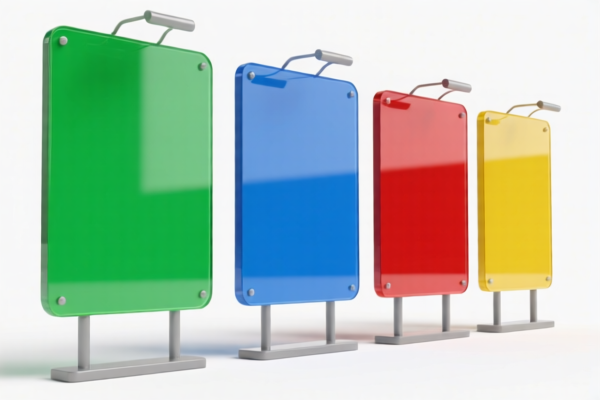

AI Analysis
🎯 Acrylic Display Boards (Acrylic Plastic Signage Panels)
🌐 HS Code & Tariff Guide | 2026 Latest Customs Classification & Duty Breakdown | Expert Import Strategy
📌 One-Stop Reference for Global Trade Compliance – No Guesswork, Just Precision!
📦 I. Product Definition & Classification: What Exactly Is an "Acrylic Display Board"?
An acrylic display board is a flat, rigid panel made from acrylic (polymethyl methacrylate, PMMA), commonly used for:
- Retail signage
- Exhibition stands
- Office wayfinding
- Advertising displays
- Trade show booths
- Indoor decorative panels
⚠️ Key Distinction:
- If it's a standalone plastic sheet or panel, used as a sign or display → Classified under plastic products
- If it's integrated into furniture (e.g., as a backing, shelf, or panel in a desk, cabinet, or display stand) → Classified under furniture components🔍 Critical Insight:
Acrylic is not a metal or glass — it’s a plastic polymer (PMMA), so it falls under Chapter 39 – Plastics or Chapter 94 – Furniture, depending on intended use and structural integration.
🧩 II. HS Code Classification Breakdown (2026 Updated Tariff Schedule)
| HS Code | Product Description | Use Case | Integrated into Furniture? | Tax Rate |
|---|---|---|---|---|
9403.70.80.31 |
Acrylic (plastic) display board as a furniture component or similar plastic part | Used as a panel in a desk, cabinet, or display unit | ✅ Yes | 35.0% |
3926.90.99.89 |
Other plastic articles made from acrylic (PMMA) | Standalone signage, decorative panels, non-furniture uses | ❌ No | 22.8% |
9403.70.80.15 |
Acrylic material classified under plastic, used as furniture component or household part | Similar to above, but with lower tariff due to exemption status | ✅ Yes | 10.0% |
3926.90.40.00 |
Acrylic (plastic) processed into other plastic articles | Custom-cut signs, wall mounts, exhibition panels | ❌ No | 12.8% |
3920.51.10.00 |
Acrylic sheets (non-foamed, not reinforced), in flat form | Raw material for signage, display boards, or fabrication | ❌ No | 41.0% |
📌 Important Note:
- Sheet form (raw material) = higher tariff (3920.51.10.00)
- Finished or processed (cut, shaped, mounted) = lower or different tariff depending on use
- Integrated into furniture = must use furniture-related HS Code (9403.70.80.xxxx)
💰 III. 2026 Tariff Breakdown (Detailed Tax Clause Analysis)
✅ Applicable Country: United States (US)
✅ Origin: China (CN)
✅ Effective Date: November 10, 2025 (including all subsequent imports)
🎯 1. 9403.70.80.31 – Acrylic Display Board as Furniture Component
| Item | Detail |
|---|---|
| Base Duty | 0.0% (ad valorem) |
| USITC Section 301 Tariff | +25.0% (from U.S. Trade Act 301) |
| Section 122 Tariff (IEEPA) | +10.0% (International Emergency Economic Powers Act) |
| Total Duty | 35.0% |
| Tax Calculation | CIF Value × 35.0% |
| De Minimis Threshold | ❌ Not applicable (denied) |
| Legal Basis Path | IEEPA:9903.01.25 → USITC:9403.70.80.31 → FOOTNOTE:9903.88.01 |
📌 Explanation:
- This code applies only if the acrylic board is part of a larger furniture item (e.g., a display cabinet with acrylic back panel). - The 25% USITC tariff is due to China’s trade practices under Section 301. - The 10% IEEPA tariff is a permanent, high-risk add-on for goods from China/HK. - Total: 35% — Very high for non-furniture items.
🎯 2. 3926.90.99.89 – Other Acrylic Plastic Articles (Standalone Signs)
| Item | Detail |
|---|---|
| Base Duty | 5.3% |
| USITC Section 301 Tariff | +7.5% |
| Section 122 Tariff (IEEPA) | +10.0% |
| Total Duty | 22.8% |
| Tax Calculation | CIF × 22.8% |
| De Minimis | ❌ Not applicable |
| Legal Basis Path | IEEPA:9903.01.24 → USITC:3926.90.99.89 → FOOTNOTE:9903.88.01 |
📌 Explanation:
- Applies to standalone acrylic signs, displays, or decorative panels not integrated into furniture. - Lower base duty (5.3%), but still subject to 25% USITC + 10% IEEPA. - Total: 22.8% — still high, but better than 35%.
🎯 3. 9403.70.80.15 – Acrylic as Furniture Component (Low-Tariff Exemption)
| Item | Detail |
|---|---|
| Base Duty | 0.0% |
| USITC Section 301 Tariff | 0.0% |
| Section 122 Tariff (IEEPA) | +10.0% |
| Total Duty | 10.0% |
| Tax Calculation | CIF × 10.0% |
| De Minimis | ❌ Not applicable |
| Legal Basis Path | IEEPA:9903.01.24 → 9403.70.80.15 → FOOTNOTE:9903.88.01 |
📌 Explanation:
- Best-case scenario for furniture-integrated acrylic. - No USITC tariff (0%), only 10% IEEPA. - Only applies if the acrylic is truly part of a furniture unit (e.g., a display stand with acrylic shelf). - Must prove integration via photos, BOM, and structure.
🎯 4. 3926.90.40.00 – Acrylic Processed Plastic Articles (General Use)
| Item | Detail |
|---|---|
| Base Duty | 2.8% |
| USITC Section 301 Tariff | 0.0% |
| Section 122 Tariff (IEEPA) | +10.0% |
| Total Duty | 12.8% |
| Tax Calculation | CIF × 12.8% |
| De Minimis | ❌ Not applicable |
| Legal Basis Path | IEEPA:9903.01.24 → 3926.90.40.00 → FOOTNOTE:9903.88.01 |
📌 Explanation:
- Applies to custom-cut, shaped, or mounted acrylic signs. - No USITC tariff, but 10% IEEPA applies. - Best for non-furniture, finished display boards. - Total: 12.8% — lowest among non-furniture options.
🎯 5. 3920.51.10.00 – Acrylic Sheets (Raw Material)
| Item | Detail |
|---|---|
| Base Duty | 6.0% |
| USITC Section 301 Tariff | +25.0% |
| Section 122 Tariff (IEEPA) | +10.0% |
| Total Duty | 41.0% |
| Tax Calculation | CIF × 41.0% |
| De Minimis | ❌ Not applicable |
| Legal Basis Path | IEEPA:9903.01.25 → USITC:3920.51.10.00 → FOOTNOTE:9903.88.01 |
📌 Explanation:
- Highest tariff — applies to raw, flat acrylic sheets. - Not for finished signs — only for unprocessed material. - Avoid this code unless you’re importing raw acrylic sheets for fabrication. - 41% = extremely high — only use if truly raw material.
🛠️ IV. Customs Clearance Best Practices (Pro Tips to Avoid Penalties)
✅ 1. Must-Have Documentation (Non-Negotiable)
| Document | Required? | Purpose |
|---|---|---|
| ✅ Product Photos (front, back, side, mounting) | ✔️ | Prove integration into furniture |
| ✅ Technical Specs & CAD Drawings | ✔️ | Show structural role |
| ✅ Bill of Materials (BOM) | ✔️ | List all parts, including acrylic panel |
| ✅ Commercial Invoice | ✔️ | Must state “Acrylic display board as furniture component” |
| ✅ Certificate of Origin (CO) | ✔️ | If from China, expect 10–41% duty |
| ✅ Packing List | ✔️ | Show assembly status |
| ✅ Third-Party Test Report (RoHS, UL, etc.) | ✔️ | Optional but recommended |
✅ 2.申报技巧(Key Rules to Remember)
🔥 “Integrate or Pay More! – Furniture = Lower Tax, Standalone = Higher Tax!”
| Scenario | Correct HS Code | Wrong Code | Result |
|---|---|---|---|
| Acrylic panel mounted in a display cabinet | 9403.70.80.15 or .31 |
3926.90.99.89 |
Save 15–25% |
| Acrylic standalone sign, cut and mounted | 3926.90.40.00 |
3920.51.10.00 |
Save 28.2% |
| Raw acrylic sheet (unprocessed) | 3920.51.10.00 |
3926.90.40.00 |
Avoid — 41% vs 12.8% |
| No integration, but called “furniture part” | 9403.70.80.15 |
3926.90.40.00 |
Risk of audit, penalties |
✅ 3. Special Cases & Solutions
| Situation | Recommended Action |
|---|---|
| Acrylic panel sold separately but used in furniture | Do NOT claim as furniture part — use 3926.90.40.00 |
| Custom-designed display with acrylic back | Use 9403.70.80.15 only if fully assembled |
| Importing raw acrylic for local fabrication | Use 3920.51.10.00 — but expect 41% |
| Re-exporting finished goods | Apply for HTSUS Tariff Classification Ruling in advance |
🌍 V. Global Market Tariff Comparison (2026)
| Country | Recommended HS Code | Base Duty | Additional Taxes | Notes |
|---|---|---|---|---|
| 🇺🇸 USA | 9403.70.80.15 |
0% | +10% IEEPA | Best: 10% total |
| 🇨🇳 China | 3926.90.40.00 |
5% | 0% | No extra tariffs |
| 🇪🇺 EU | 3926.90.40.00 |
0% | 0% (if CE) | No extra charges |
| 🇦🇺 Australia | 3926.90.40.00 |
5% | 0% | No IEEPA/USITC |
| 🇯🇵 Japan | 3926.90.40.00 |
0% | 0% | No extra tariffs |
📌 Conclusion:
- USA is the only market with IEEPA + USITC tariffs. - China, EU, Japan, Australia have no extra tariffs on acrylic signs. - Best strategy: Prove furniture integration to get 10% in the US.
🚨 VI. Common Mistakes & How to Avoid Them (Real-World Pitfalls)
❌ Mistake 1: Calling a standalone acrylic sign a “furniture component”
👉 Result: Audit, penalties, back taxes — even if it’s used in furniture later.
❌ Mistake 2: Importing raw acrylic sheets and calling them “display boards”
👉 Result: Wrong HS Code → 41% vs 12.8% → massive overpayment
❌ Mistake 3: Not providing photos or BOM for integration proof
👉 Result: Customs may reclassify and increase duty
❌ Mistake 4: Using generic name like “Acrylic Panel” on invoice
👉 Result: No clarity → risk of misclassification
✅ Correct Declaration Example:
“Acrylic Display Board, 24” x 36”, mounted on wooden frame, used as furniture component in display cabinet, Model ABC-2025, CE Certified, 100% Plastic (PMMA), Integrated Design”
🎯 VII. Final Verdict: How to Win the Tariff Game
🔹 If it’s part of furniture → Use
9403.70.80.15→ 10% total
🔹 If standalone → Use3926.90.40.00→ 12.8% total
🔹 Never use3920.51.10.00unless raw sheet
🔹 Avoid9403.70.80.31unless you’re okay with 35%📌 Pro Tip:
Apply for a Pre-Clearance Ruling (Advance Ruling) from U.S. Customs before shipment — locks in the HS Code & tariff.
📣 🚀 Act Now: Optimize Your Import Strategy!
📞 Contact a licensed customs broker + submit product photos, BOM, and design
📊 Get a pre-ruling on your HS Code → avoid surprise 41% tariffs
💼 Turn your acrylic sign into a profit, not a penalty!
✨ Precision Classification = Lower Costs = Faster Clearance = Global Success!
💼 Your product’s future starts with the right HS Code.
Customer Reviews
About HS Code Classification
The Harmonized System (HS) is an internationally standardized nomenclature developed by the World Customs Organization (WCO) to classify traded products. Over 200 countries use the HS system as the basis for customs tariffs, trade statistics, and import/export regulations.
Each HS code follows a hierarchical structure:
- Chapter (2 digits) — Broad category of goods (e.g., Chapter 84: Machinery and Mechanical Appliances)
- Heading (4 digits) — More specific grouping within the chapter
- Subheading (6 digits) — Internationally standardized breakdown, used by all WCO member countries
- National subdivisions (8-10 digits) — Country-specific extensions for further classification, such as US HTSUS 10-digit codes
Correct HS code classification is essential for smooth customs clearance, accurate duty payment, and compliance with trade regulations. Misclassification can lead to customs delays, overpayment of duties, or penalties.
When importing from CN to US, the applicable tariff rates may include:
- Most-Favored-Nation (MFN) rate — The standard duty rate applied to WTO members
- General rate — Applied to countries without trade agreements
- Trade remedy duties — Additional tariffs such as Section 301 (anti-dumping), Section 232 (national security), or countervailing duties
The information provided on this page is for reference purposes only. For official classification, please consult with your local customs authority or a licensed customs broker.