低比重聚乙烯树脂
CN → US| HS Code | Tariff Rate | Origin | Destination | Doc |
|---|---|---|---|---|
| 3902900050 | 41.5% | CN | US | Official Doc |
| 3903190000 | 41.5% | CN | US | Official Doc |
| 3903110000 | 41.5% | CN | US | Official Doc |
Product Images
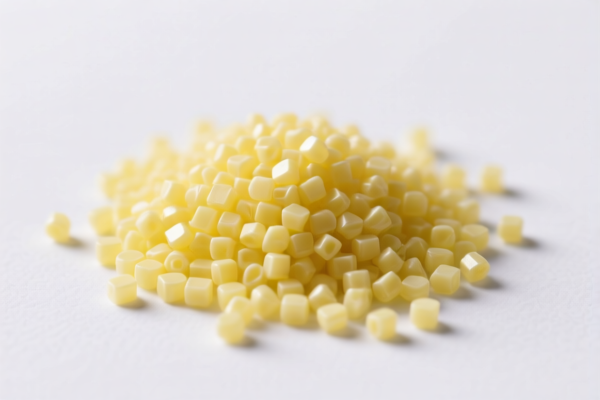
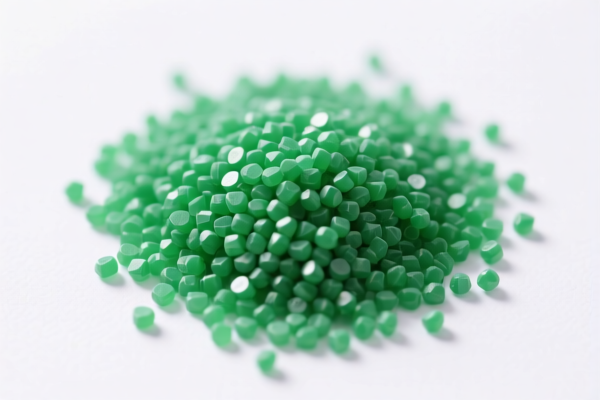
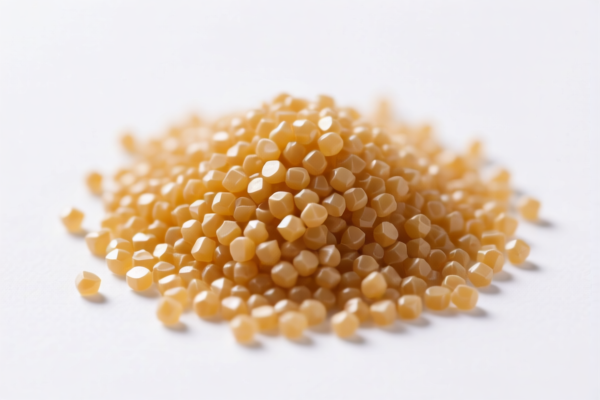
AI Analysis
🧪 低比重聚乙烯树脂 (Low Specific Gravity Polyethylene Resin)
🌐 HS Code Reference & Customs Clearance Guide | 2026 Latest Tariff Breakdown | Strategic Export Strategy
📌 Section 1: Product Definition & Classification: What is "Low Specific Gravity Polyethylene Resin"?
Low Specific Gravity Polyethylene Resin refers to Low-Density Polyethylene (LDPE), a polymer characterized by a specific gravity (density) of less than 0.94 g/cm³. It is produced via high-pressure polymerization, resulting in a branched molecular structure that gives it high flexibility, transparency, and toughness.
In international trade, this product is strictly categorized under Section 39 (Plastics), specifically heading 3901 (Polymers of Ethylene).
⚠️ Critical Distinction: * LDPE (Low Density): Specific gravity < 0.94, highly branched, flexible. NOT linear. * LLDPE (Linear Low Density): Specific gravity < 0.94, but with a linear structure. Note: The tariff rules provided in your data separate LDPE and LLDPE distinctly. * Classification Key: If the resin is specifically LDPE (non-linear), it falls under 3901.10.50.20. If it is LLDPE, it falls under 3901.10.50.10.
📦 Section 2: HS Code Classification Details (2026 Data)
Based on the provided dataset, here is the precise breakdown for Polymers of Ethylene, in primary forms: Polyethylene having a specific gravity of less than 0.94:
| HS Code | Product Description | Specific Characteristics | Primary Application |
|---|---|---|---|
3901.10.50.20 |
Other Low density polyethylene, except linear low density polyethylene | True LDPE (Branched structure, SG < 0.94). This is the standard "Low Density" resin. | Plastic films, sacks, packaging, shrink wrap, squeeze bottles. |
3901.10.50.10 |
Other Linear low density polyethylene (LLDPE) | LLDPE (Linear structure, SG < 0.94). Distinct from standard LDPE. | Stretch film, agricultural films, piping, rigid containers. |
🔍 Key Insight: *
3901.10.50.20is the code for traditional LDPE (often called "Low Density Polyethylene Resin" in generic terms). *3901.10.50.10is for LLDPE. Do not confuse these two. Even though both have specific gravity < 0.94, their molecular structure (Linear vs. Branched) dictates different HS codes.
💰 Section 3: 2026 Tariff Rate Analysis (Detailed Tax Breakdown)
✅ Applicable Jurisdiction: China (Implied by "Base Tariff" terminology in source data)
✅ Origin: Generally applies to imports into China or exports from China subject to Chinese customs rules.
✅ Data Source: Provided inDATAcontent.
🎯 1. 3901.10.50.20 — Low Density Polyethylene (LDPE)
The standard "Low Specific Gravity" resin.
| Item | Detail |
|---|---|
| Base Tariff (基础关税) | 0.0% (Most Favored Nation rate) |
| Additional Tariff (加征关税) | 0.0% (No "Surtax" or "Countervailing Duty" applied in this specific dataset) |
| Total Tax (总关税) | 0.0% |
| Tax Calculation | CIF Value × 0% = $0 |
| Exemption Status | ✅ Fully Exempt (No surtax applicable for this specific code in the provided data) |
| Legal Basis | Customs Tariff 2026 (Chapter 39) |
📌 Explanation: * Unlike many other polymer categories (like Propylene or PVC) which face 31.5% total tax in this dataset, LDPE under code 3901.10.50.20 enjoys a 0% tariff. * This makes it a highly competitive product for export/import, especially for packaging and film industries. * No surtax means no extra 25% penalty or 6.5% base cost.
🎯 2. 3901.10.50.10 — Linear Low Density Polyethylene (LLDPE)
The linear variant.
| Item | Detail |
|---|---|
| Base Tariff (基础关税) | 0.0% |
| Additional Tariff (加征关税) | 0.0% |
| Total Tax (总关税) | 0.0% |
| Tax Calculation | CIF Value × 0% = $0 |
| Exemption Status | ✅ Fully Exempt |
📌 Explanation: * Even the LLDPE variant shares the same favorable 0% total tax status as standard LDPE in this dataset. * This indicates a government policy to support the plastic film and packaging industry by keeping raw material costs low.
🛠️ Section 4: Customs Clearance Practical Advice (Avoiding Pitfalls)
✅ 1. Preparation Checklist (Must-Haves)
| Document | Required? | Reason |
|---|---|---|
| MSDS (Material Safety Data Sheet) | ✔️ | Essential for polymer resins; confirms chemical composition. |
| Certificate of Origin (CO) | ✔️ | To prove origin and verify eligibility for 0% rates. |
| Technical Data Sheet (TDS) | ✔️ | Must explicitly state: Density < 0.94 and Type (LDPE vs. LLDPE). |
| Bill of Lading (B/L) | ✔️ | Clear description: "Polyethylene Resin, LDPE". |
| Invoice & Packing List | ✔️ | Weight must match the net weight declared for duty calculation. |
| Lab Report (SG Test) | ✔️ | Critical! Must prove Specific Gravity < 0.94 to stay in Heading 3901.10. |
✅ 2. Declaration Strategy (The "Golden Rules")
🔥 Key Phrase: "Density Proof & Type Specific"
| Scenario | Correct Declaration | Risk of Error |
|---|---|---|
| Standard LDPE Bags | Declare as 3901.10.50.20 (LDPE) |
❌ Risk: If declared as generic "Polyethylene" without specifying LDPE/LLDPE, customs may reclassify to higher tax categories (e.g., "Other" categories with 31.5% tax). |
| LLDPE Film Resin | Declare as 3901.10.50.10 (LLDPE) |
❌ Risk: Mislabeling LLDPE as LDPE (or vice versa) leads to classification disputes, even if tax is currently 0%. |
| Recycled Pellets | Must declare purity and source | ⚠️ Risk: If recycled content > threshold, tax may change or require special permits. |
| Additives Included | Declare "Polymer with additives" | ⚠️ Risk: If additives > 10%, may shift to "Other" (e.g., 3902.90.00.50) which has 31.5% tax. |
✅ 3. Special Handling for "Low Specific Gravity"
- Density Verification: The HS Code 3901.10 specifically requires a specific gravity of < 0.94.
- Action: Ensure your lab report explicitly states: "Specific Gravity: 0.XX (e.g., 0.918)".
- Consequence: If the density is 0.94 or higher, the code shifts to 3901.20 (Higher Density Polyethylene - HDPE), which may have different tax rules (not listed in this specific 0% dataset, but usually subject to different rates).
- Terminology: Use "Polyethylene Resin" or "LDPE Resin" in English descriptions. Avoid vague terms like "Plastic Granules" without specifying the polymer type.
🌍 Section 5: Market & Tax Comparison (2026 Context)
| Material Type | HS Code | Base Tax | Add-on Tax | Total Tax | Status |
|---|---|---|---|---|---|
| LDPE (Low SG) | 3901.10.50.20 |
0.0% | 0.0% | 0.0% | 🟢 Zero Duty |
| LLDPE (Low SG) | 3901.10.50.10 |
0.0% | 0.0% | 0.0% | 🟢 Zero Duty |
| Polypropylene | 3902.10.00.00 |
6.5% | 25.0% | 31.5% | 🔴 High Duty |
| PVC (Unmixed) | 3904.10.00.00 |
0.0% | 0.0% | 0.0% | 🟢 Zero Duty |
| Other Olefins | 3902.90.00.50 |
6.5% | 25.0% | 31.5% | 🔴 High Duty |
📌 Strategic Conclusion: * LDPE (3901.10.50.20) and LLDPE (3901.10.50.10) are the "Golden Codes" in this dataset with 0% total tax. * In contrast, Polypropylene and Other Olefins are penalized with 31.5%. * Actionable Advice: If you have a product that is a mix of LDPE and Polypropylene, you must separate them or risk paying the higher 31.5% tax on the mixed shipment.
📌 Section 6: Common Mistakes & How to Avoid Them
❌ Mistake 1: Confusing LDPE with LLDPE
👉 Result: Even if both are 0% in this dataset, misclassification leads to customs delays and potential audits.
✅ Fix: Always check the molecular structure (Linear vs. Branched) on the TDS.
❌ Mistake 2: Failing to prove Specific Gravity < 0.94
👉 Result: If the lab report is missing, customs may default to a generic "Other" code (e.g., 3901.90) which might have a non-zero tax rate or higher scrutiny.
✅ Fix: Include a lab certificate showing density < 0.94.
❌ Mistake 3: Declaring as "Other Polyolefins"
👉 Result: "Other" categories (like 3902.90.00.50) carry 31.5% tax.
✅ Fix: Be specific. Use "Ethylene Polymers" not "Other Olefins".
✅ Correct Declaration Example:
"Polyethylene Resin, Low Density (LDPE), Specific Gravity 0.918, Unmixed, Primary Form, Model XYZ, Certified for Packaging Use."
🎯 Section 7: Final Verdict
Low Specific Gravity Polyethylene Resin (LDPE/LLDPE) is a high-value, zero-tariff commodity in the current tariff schedule provided.
- HS Codes:
3901.10.50.20(LDPE) or3901.10.50.10(LLDPE). - Tax Rate: 0.0% (Base + Add-on).
- Key Requirement: Must prove SG < 0.94 and distinguish between Linear vs. Branched structure.
- Strategy: Leverage this 0% status for competitive pricing, but ensure exact documentation to avoid being reclassified into the 31.5% "Other" category.
✨ Professional Tip: Always include a Certificate of Analysis (COA) with density figures to ensure a smooth, 0% tax clearance! 🚀
Customer Reviews
About HS Code Classification
The Harmonized System (HS) is an internationally standardized nomenclature developed by the World Customs Organization (WCO) to classify traded products. Over 200 countries use the HS system as the basis for customs tariffs, trade statistics, and import/export regulations.
Each HS code follows a hierarchical structure:
- Chapter (2 digits) — Broad category of goods (e.g., Chapter 84: Machinery and Mechanical Appliances)
- Heading (4 digits) — More specific grouping within the chapter
- Subheading (6 digits) — Internationally standardized breakdown, used by all WCO member countries
- National subdivisions (8-10 digits) — Country-specific extensions for further classification, such as US HTSUS 10-digit codes
Correct HS code classification is essential for smooth customs clearance, accurate duty payment, and compliance with trade regulations. Misclassification can lead to customs delays, overpayment of duties, or penalties.
When importing from CN to US, the applicable tariff rates may include:
- Most-Favored-Nation (MFN) rate — The standard duty rate applied to WTO members
- General rate — Applied to countries without trade agreements
- Trade remedy duties — Additional tariffs such as Section 301 (anti-dumping), Section 232 (national security), or countervailing duties
The information provided on this page is for reference purposes only. For official classification, please consult with your local customs authority or a licensed customs broker.