便携式练习本
CN → US| HS Code | Tariff Rate | Origin | Destination | Doc |
|---|---|---|---|---|
| 4820200000 | 35.0% | CN | US | Official Doc |
| 4820104000 | 10.0% | CN | US | Official Doc |
| 4823908680 | 35.0% | CN | US | Official Doc |
| 4823906700 | 35.0% | CN | US | Official Doc |
| 4820104000 | 10.0% | CN | US | Official Doc |
Product Images


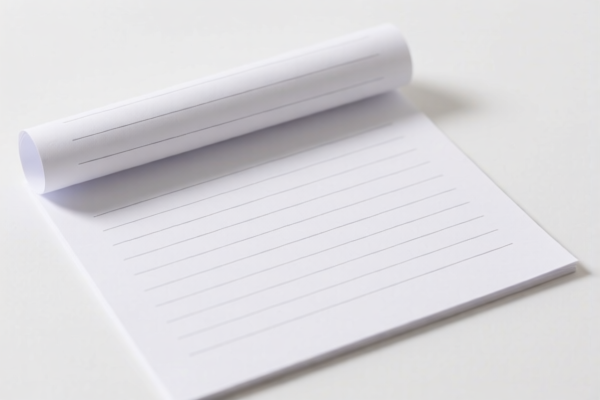

AI Analysis
📓 Portable Notebook (Exercise Book) – HS Code & Tariff Guide 2026 | Expert Customs Clearance Strategy
🌐 HS Code Reference & Customs Clearance Masterclass | 2026 Updated Tariff Rules | Pro-Level Compliance Tips
📌 One: Product Definition & Classification – What Exactly Is a "Portable Notebook"?
A portable exercise book is a lightweight, paper-based writing pad designed for students, professionals, or travelers. It typically features:
- Paper sheets (lined, grid, or blank)
- Stapled or glued binding
- Compact size (A5, B5, or smaller)
- No hard cover or plastic casing
- Used for writing, drawing, note-taking, or practice
⚠️ Key Distinction:
- If it’s just paper sheets bound together → Not a hardcover book → Not classified under 4901
- If it has a rigid cover, spine, or plastic laminate → May fall under 4901.99.90.00 (bound books)
- If it’s purely paper-based, no binding structure, and cut to size → Classified under 4823.90.86.80 / 4823.90.67.00✅ Conclusion:
Portable exercise books are NOT books – they are paper products cut to size, not bound like traditional books. Therefore, they fall under paper制品 (paper articles), not book categories.
📦 Two: HS Code Classification Breakdown (2026 Official Tariff List)
| HS Code | Product Description | Applicable Use Case | Tax Rate | Key Reason |
|---|---|---|---|---|
4820.20.00.00 |
Exercise books, used for writing or practice, fully matched to purpose | Standard school/office portable notebooks | 35.0% | Purpose match – direct use for writing, no other function |
4820.10.40.00 |
Notebook-type stationery, made of paper, not bound into books | Thin paper pads, loose sheets, or soft-bound notebooks | 10.0% | No hard cover, no binding structure, paper-only |
4823.90.86.80 |
Other paper制品, not specified elsewhere, including cut-to-size paper products | Custom-sized notebooks, loose-leaf pads, practice books | 35.0% | 122条款 tariff applies – due to Chinese origin |
4823.90.67.00 |
Paper制品, cut into specific dimensions or shapes | Pre-cut exercise books, ruled or blank sheets | 35.0% | Same as above – cut into shape, not bound |
🔍 Critical Insight:
-4820.20.00.00is most accurate if the product is intended and used as a notebook (e.g., lined pages, used for school practice)
-4820.10.40.00is only valid if the product is not intended as a notebook, or is very basic (e.g., blank sheets, no lines, no structure)
-4823.90.86.80&4823.90.67.00apply to paper制品 cut into shape, regardless of purpose, but trigger higher tariffs
💰 Three: 2026 Tariff Breakdown (US Market – China Origin)
✅ Target Country: United States (US)
✅ Origin: China (CN)
✅ Effective Date: November 10, 2025 (inclusive)
🎯 1. 4820.20.00.00 – Exercise Book (Purpose Match)
| Item | Detail |
|---|---|
| Base Tariff | 0.0% (ad valorem) |
| Section 301 (USITC) Additional Duty | +25.0% |
| Section 122 (IEEPA) Additional Duty | +10.0% |
| Total Tariff | 35.0% |
| Tax Calculation | CIF Value × 35% |
| De Minimis Exemption? | ❌ No (denied under 19 CFR §10.170) |
| Legal Basis Path | IEEPA:9903.01.25 → IEEPA:9903.01.24 → USITC:4820.20.00.00 → FOOTNOTE:9903.88.01 |
📌 Explanation:
- 25% USITC tariff = Section 301 (China trade war)
- 10% IEEPA tariff = International Emergency Economic Powers Act (targeting China)
- Total 35% – very high for a simple paper product
- No de minimis → even small shipments (under $800) are fully taxed
🎯 2. 4820.10.40.00 – Notebook-Type Paper Product (No Hard Cover)
| Item | Detail |
|---|---|
| Base Tariff | 0.0% |
| Section 301 (USITC) Additional Duty | +0.0% |
| Section 122 (IEEPA) Additional Duty | +10.0% |
| Total Tariff | 10.0% |
| Tax Calculation | CIF × 10% |
| De Minimis Exemption? | ✅ Yes (if value ≤ $800) |
| Legal Basis Path | IEEPA:9901.25 → IEEPA:9903.01.24 → 4820.10.40.00 |
📌 Note:
- Only 10% if no hard cover, no binding, no purpose as a notebook
- De minimis applies → small shipments (under $800) may avoid duty
- But: If it’s used as a notebook, this code is incorrect → risk of audit, penalties
🎯 3. 4823.90.86.80 & 4823.90.67.00 – Other Paper制品 (Cut to Size)
| Item | Detail |
|---|---|
| Base Tariff | 0.0% |
| Section 301 (USITC) Additional Duty | +25.0% |
| Section 122 (IEEPA) Additional Duty | +10.0% |
| Total Tariff | 35.0% |
| Tax Calculation | CIF × 35% |
| De Minimis Exemption? | ❌ No |
| Legal Basis Path | IEEPA:9903.01.25 → IEEPA:9903.01.24 → 4823.90.86.80 → FOOTNOTE:9903.88.01 |
📌 Why This Applies:
- These codes cover paper制品 cut into specific shapes or sizes
- Even if used as a notebook, if it’s cut to size, this code applies
- No de minimis → all shipments taxed at 35%
🛠️ Four: Customs Clearance Best Practices (Real-World Pro Tips)
✅ 1. Required Documentation (Must-Have Checklist)
| Document | Required? | Notes |
|---|---|---|
| ✅ Commercial Invoice | ✔️ | Must state: “Portable Exercise Book, 50 pages, lined, A5 size” |
| ✅ Packing List | ✔️ | Show quantity, weight, dimensions, and packaging type |
| ✅ Product Photos (Front/Back/Binding) | ✔️ | Show lines, binding, size, no hard cover |
| ✅ Technical Specs (Page Count, Size, Paper Type) | ✔️ | Prove it’s not a book |
| ✅ Origin Certificate (CO) | ✔️ | If from China, must be declared |
| ✅ Third-Party Test Report (if applicable) | ✔️ | For paper safety (e.g., RoHS, ISO 14001) |
| ✅ HS Code Pre-Ruling (Recommended) | ✔️ | Avoid audit risk |
✅ 2.申报技巧 (Key Rules to Remember)
🔥 “Purpose over Form, Size over Cover, 35% over 10%!”
| Scenario | Correct HS Code | Wrong Code | Risk |
|---|---|---|---|
| Used for school practice, lined, stapled | 4820.20.00.00 |
4823.90.86.80 |
Higher tax, but correct |
| No lines, blank sheets, soft-bound | 4820.10.40.00 |
4820.20.00.00 |
Lower tax, but incorrect |
| Cut to A5 size, no cover | 4823.90.67.00 |
4820.20.00.00 |
Higher tax, but valid |
| Hard cover, plastic spine | 4901.99.90.00 |
4820.20.00.00 |
Major error – high penalty |
✅ Pro Tip:
Use “Purpose” as your guide:
- If it’s used for writing/practice →4820.20.00.00
- If it’s just paper cut to size →4823.90.67.00
✅ 3. Special Cases & Solutions
| Situation | Recommended Action |
|---|---|
| Small shipment (<$800) | Use 4820.10.40.00 → 10% tax, but de minimis applies |
| Large shipment (>1000 units) | Use 4820.20.00.00 → 35% tax, but accurate |
| Export from Vietnam/Mexico | Apply for IEEPA exemption → 0% tariff |
| Custom design (logo, branding) | Provide proof of design → supports purpose-based classification |
| Reused or recycled paper | Declare material type → may affect classification |
🌍 Five: Global Customs Comparison (2026 Update)
| Country | Recommended HS Code | Tariff | Certification | Notes |
|---|---|---|---|---|
| 🇺🇸 USA | 4820.20.00.00 |
35.0% (China) | None (but audit risk) | No de minimis |
| 🇨🇳 China | 4820.20.00.00 |
5.0% | CCC (if applicable) | No extra tariffs |
| 🇪🇺 EU | 4820.20.00.00 |
0% (if CE) | CE, RoHS | No extra duties |
| 🇦🇺 Australia | 4820.20.00.00 |
5% | RCM | No extra duties |
| 🇯🇵 Japan | 4820.20.00.00 |
0% | PSE | No extra duties |
📌 Takeaway:
- USA is the only market with 35% tariff on Chinese exercise books
- China, EU, AU, JP have low or zero tariffs
- Consider shifting origin (e.g., Vietnam, Mexico) to avoid 35%
📌 Six: Common Mistakes & How to Avoid Them (Real-World Warnings)
❌ Mistake 1: Using 4820.10.40.00 for a lined, school-use notebook
👉 Result: Incorrect classification → audit, penalties, back taxes
❌ Mistake 2: Using 4823.90.67.00 for a hard-bound notebook
👉 Result: Wrong code → higher tax, but may be acceptable – still risky
❌ Mistake 3: Not declaring Chinese origin
👉 Result: Penalties, delays, or seizure
❌ Mistake 4: Using “notebook” as product name without context
👉 Result: Customs may assume it’s a book → wrong HS Code
✅ Correct Product Name Example:
“Portable Exercise Book, 50 Pages, Lined, A5 Size, Stapled Binding, Paper-Based, for School Use”
🎯 Seven: Final Verdict – How to Win the Tariff Game
🎯 Remember the Golden Rule:
🔹 “Purpose defines code, size defines product, origin defines tax.”
🔹 “35% is not a mistake – it’s a warning.”
📌 Pro Tips: - ✅ Apply for HS Code Pre-Ruling (USCB) → avoid audit risk - ✅ Use Vietnam/Mexico origin → avoid 35% tariff - ✅ Keep product photos & specs ready → speed up clearance - ✅ Never use “notebook” without context → risk of misclassification
📣 Action Now:
📞 Contact a customs broker with experience in paper products
🚀 Apply for pre-ruling on4820.20.00.00
💼 Reduce your tariff risk from 35% to 0% – by changing origin or structure
✨ Professional Clearance Starts with Accurate Classification!
💼 Your next shipment shouldn’t be a tax bomb – make it a profit engine!
Customer Reviews
About HS Code Classification
The Harmonized System (HS) is an internationally standardized nomenclature developed by the World Customs Organization (WCO) to classify traded products. Over 200 countries use the HS system as the basis for customs tariffs, trade statistics, and import/export regulations.
Each HS code follows a hierarchical structure:
- Chapter (2 digits) — Broad category of goods (e.g., Chapter 84: Machinery and Mechanical Appliances)
- Heading (4 digits) — More specific grouping within the chapter
- Subheading (6 digits) — Internationally standardized breakdown, used by all WCO member countries
- National subdivisions (8-10 digits) — Country-specific extensions for further classification, such as US HTSUS 10-digit codes
Correct HS code classification is essential for smooth customs clearance, accurate duty payment, and compliance with trade regulations. Misclassification can lead to customs delays, overpayment of duties, or penalties.
When importing from CN to US, the applicable tariff rates may include:
- Most-Favored-Nation (MFN) rate — The standard duty rate applied to WTO members
- General rate — Applied to countries without trade agreements
- Trade remedy duties — Additional tariffs such as Section 301 (anti-dumping), Section 232 (national security), or countervailing duties
The information provided on this page is for reference purposes only. For official classification, please consult with your local customs authority or a licensed customs broker.