修剪工具
CN → US| HS Code | Tariff Rate | Origin | Destination | Doc |
|---|---|---|---|---|
| 8201600000 | 0.0% | CN | US | Official Doc |
| 8201500000 | 0.0% | CN | US | Official Doc |
| 8202990000 | 35.0% | CN | US | Official Doc |
| 8205306000 | 40.0% | CN | US | Official Doc |
Product Images
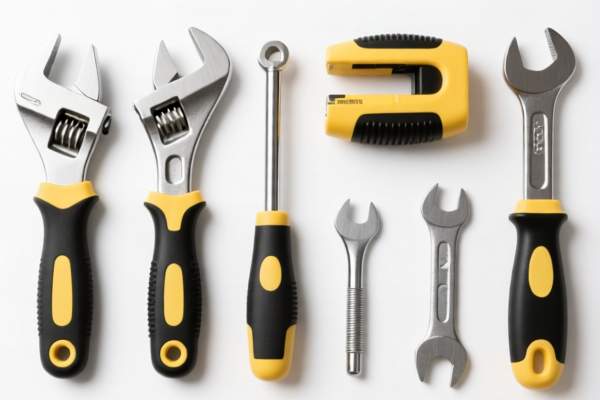
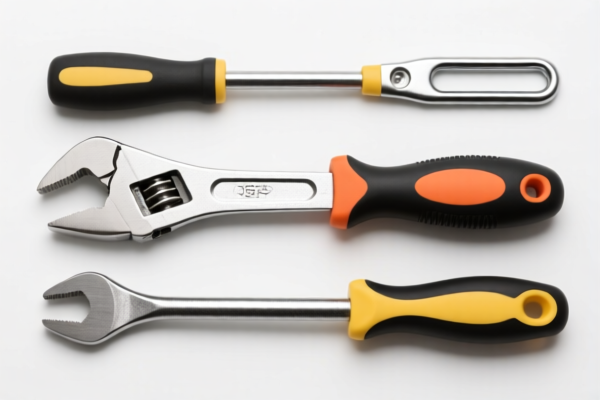


AI Analysis
✂️ Pruning Tools (Garden and Horticultural Cutting Instruments)
🌐 HS Code Classification & Customs Clearance Guide | 2026 Updated Tariff Analysis | Expert-Level Import Strategy
📌 One, Product Definition & Classification: What Exactly Are Pruning Tools?
Pruning tools are essential instruments used in horticulture, landscaping, and forestry to trim, shape, and maintain plants, trees, and shrubs. These tools are designed for precision cutting of branches, stems, and foliage, and are commonly used by gardeners, arborists, and agricultural professionals.
In international trade, pruning tools are classified based on function, material, and form — particularly whether they are shears, saws, or cutting blades.
⚠️ Key Differentiation Points: - Scissors-type tools (e.g., hand shears, bypass pruners) → fall under 8201.50.00.00 / 8201.60.00.00
- Saw blades or saw-like cutting parts → fall under 8202.99.00.00
- Woodworking cutting tools (e.g., chisels, blades for wood shaping) → fall under 8205.30.60.00
📦 Two, HS Code Classification Details (2026 Updated Tariff Authority)
| HS Code | Product Description | Use Case | Material | Contains Drive Circuit? |
|---|---|---|---|---|
8201.60.00.00 |
Hand pruners, pruning shears, garden scissors for trimming branches and foliage | General gardening, shrub pruning, indoor/outdoor plants | Metal (steel) | ❌ No |
8201.50.00.00 |
Pruning shears, loppers, branch cutters, garden cutters for woody stems | Tree trimming, thick branch cutting, orchard maintenance | Metal (steel) | ❌ No |
8202.99.00.00 |
Saw blades, saw blades for pruning, pruning saw blades (metal parts only) | Cutting through thick wood, pruning large branches | Metal (steel) | ❌ No |
8205.30.60.00 |
Woodworking cutting tools, chisels, blades for wood shaping and trimming | Wood processing, carpentry, artisanal trimming | Metal (steel) | ❌ No |
🔍 Critical Insight:
- Shears and scissors (for plants) → 8201.50 or 8201.60
- Saw blades (even if used for pruning) → 8202.99.00.00
- Tools designed for wood shaping (not plant pruning) → 8205.30.60.00
💰 Three, 2026 Updated Tariff Breakdown (Including附加 Taxes & Policy Triggers)
✅ Applicable Country: United States (US)
✅ Origin: China (CN)
✅ Effective Date: November 10, 2025 (and onward)
🎯 1. 8201.60.00.00 — Pruning Shears (Garden Scissors)
| Item | Detail |
|---|---|
| Base Duty | 1¢ each + 2.8% ad valorem |
| USITC Additional Duty (Section 301) | +25.0% |
| Section 122 (IEEPA) Additional Duty | +10.0% |
| Total Effective Rate | 35.0% |
| Tax Calculation | (CIF Value × 2.8%) + 1¢ + 25% + 10% |
| De Minimis Exemption? | ❌ No (denied under 19 U.S.C. § 1304) |
| Legal Basis Path | IEEPA:9903.01.25 → IEEPA:9903.01.24 → USITC:8201.60.00.00 → FOOTNOTE:9903.88.01 |
📌 Explanation:
- The 1¢ each is a per-unit fixed duty (common for small tools).
- The 2.8% is the standard base tariff.
- The +25% is from Section 301 (USITC) due to China’s unfair trade practices.
- The +10% is from IEEPA (International Emergency Economic Powers Act) — targeting Chinese-origin goods.
- Total: 35.0% — highly punitive for small garden tools.
🎯 2. 8201.50.00.00 — Pruning Shears & Loppers (for woody stems)
| Item | Detail |
|---|---|
| Base Duty | 1¢ each + 2.8% ad valorem |
| USITC Additional Duty (Section 301) | +25.0% |
| Section 122 (IEEPA) Additional Duty | +10.0% |
| Total Effective Rate | 35.0% |
| Tax Calculation | (CIF Value × 2.8%) + 1¢ + 25% + 10% |
| De Minimis Exemption? | ❌ No |
| Legal Basis Path | IEEPA:9903.01.25 → IEEPA:9903.01.24 → USITC:8201.50.00.00 → FOOTNOTE:9903.88.01 |
📌 Note:
- Identical to8201.60.00.00in tax treatment.
- Applies to all hand-operated pruning tools used in horticulture, even if designed for thicker branches.
🎯 3. 8202.99.00.00 — Saw Blades for Pruning (Metal Cutting Parts)
| Item | Detail |
|---|---|
| Base Duty | 0.0% (ad valorem) |
| USITC Additional Duty (Section 301) | +25.0% |
| Section 122 (IEEPA) Additional Duty | +10.0% |
| Total Effective Rate | 35.0% |
| Tax Calculation | (CIF Value × 25%) + (CIF Value × 10%) |
| De Minimis Exemption? | ❌ No |
| Legal Basis Path | IEEPA:9903.01.25 → IEEPA:9903.01.24 → USITC:8202.99.00.00 → FOOTNOTE:9903.88.01 |
📌 Key Insight:
- Even if the blade is sold separately (e.g., as a spare part), it’s still subject to 35% total tariff.
- This applies to any metal blade used for pruning wood, regardless of size or shape.
🎯 4. 8205.30.60.00 — Woodworking Cutting Tools (e.g., chisels, blades for wood shaping)
| Item | Detail |
|---|---|
| Base Duty | 5.0% ad valorem |
| USITC Additional Duty (Section 301) | +25.0% |
| Section 122 (IEEPA) Additional Duty | +10.0% |
| Total Effective Rate | 40.0% |
| Tax Calculation | (CIF Value × 5%) + (CIF Value × 25%) + (CIF Value × 10%) |
| De Minimis Exemption? | ❌ No |
| Legal Basis Path | IEEPA:9903.01.25 → IEEPA:9903.01.24 → USITC:8205.30.60.00 → FOOTNOTE:9903.88.01 |
📌 Why Higher?
- This code applies to tools designed for wood processing, not plant pruning.
- Even if used in gardening, if the tool is shaped for wood carving or shaping, it falls under this higher tariff.
🛠️ Four, Customs Clearance Best Practices (Pro Tips to Avoid Penalties)
✅ 1. Required Documentation (Must-Have Checklist)
| Document | Required? | Purpose |
|---|---|---|
| ✅ Product Specifications | ✔️ | Include material, blade type, size, weight |
| ✅ Product Photos (with branding) | ✔️ | Show blade shape, handle, usage |
| ✅ Bill of Lading & Commercial Invoice | ✔️ | Must clearly state “Pruning Shears” or “Saw Blade for Wood” |
| ✅ Certificate of Origin (CO) | ✔️ | Required for tariff eligibility |
| ✅ Test Report (e.g., ISO, CE, RoHS) | ✔️ | Optional but recommended for compliance |
| ✅ Technical Drawings (if applicable) | ✔️ | For complex tools or blades |
✅ 2.申报技巧 (Key Rules of Thumb)
🔥 “Form over Function, Material over Name, Name Matches Code!”
| Scenario | Correct HS Code | Wrong Approach |
|---|---|---|
| Hand pruners for shrubs | 8201.60.00.00 |
Mislabel as “scissors” → wrong code |
| Loppers for thick branches | 8201.50.00.00 |
Declare as “garden tool” → vague |
| Pruning saw blade (metal only) | 8202.99.00.00 |
Call it “pruning tool” → incorrect |
| Wood chisel used in garden | 8205.30.60.00 |
Say “pruning tool” → higher tax risk |
✅ 3. Special Cases & Solutions
| Situation | Recommended Action |
|---|---|
| Tool sold with handle + blade | Declare as complete tool → use 8201.50.00.00 or 8201.60.00.00 |
| Spare blade only | Declare as 8202.99.00.00 — even if for pruning |
| Tool used for both plants and wood | Base on primary function — if for plants, use 8201.x |
| Tool made in Vietnam/Mexico | Apply for IEEPA exemption — 0% tariff possible |
| Small quantity (under $800) | Still no de minimis — must pay full 35% or 40% |
🌍 Five, Global Market Tariff Comparison (2026 Update)
| Country/Region | Recommended HS Code | Base Tariff | Additional Duties | Notes |
|---|---|---|---|---|
| 🇺🇸 United States | 8201.50.00.00 |
1¢ + 2.8% | +25% +10% → 35% | No de minimis |
| 🇨🇳 China | 8201.50.00.00 |
5% | None | No extra tariffs |
| 🇪🇺 European Union | 8201.50.00.00 |
0% (if CE) | None | No 301/IEEPA |
| 🇦🇺 Australia | 8201.50.00.00 |
5% | None | No extra taxes |
| 🇯🇵 Japan | 8201.50.00.00 |
0% | None | No附加税 |
📌 Takeaway:
- The U.S. is the only market imposing 35–40% total tariff on pruning tools from China.
- China, EU, Japan, and Australia have much lower or zero additional duties.
📌 Six, Common Mistakes & How to Avoid Them (Real-World Risks)
❌ Mistake 1: Calling a pruning saw blade “garden tool”
👉 Result: Misclassified → 35% tariff applied incorrectly → penalties, delays
❌ Mistake 2: Declaring a wood chisel as “pruning tool”
👉 Result: Wrong HS Code → 40% tariff instead of 35% → overpayment
❌ Mistake 3: Not providing photos or specs
👉 Result: Customs cannot verify function → delayed clearance or rejection
❌ Mistake 4: Assuming de minimis applies
👉 Result: Shipments under $800 still must pay full 35% → surprise cost
✅ Correct Declaration Example:
“Pruning Shears, Stainless Steel, 8-inch Blades, for Garden Use, Model XYZ, Made in China, 100 units”
🎯 Seven, Final Verdict: Accurate Classification = Cost Control
🎯 Remember the Golden Rules:
🔹 “Shears → 8201.50 or 8201.60 → 35%”
🔹 “Saw blade → 8202.99 → 35%”
🔹 “Woodworking tool → 8205.30.60 → 40%”
🔹 “No de minimis in the U.S. — pay the full rate!”
📌 Pro Tip:
If your tools are originated in Vietnam, Mexico, Thailand, or Malaysia, you may qualify for IEEPA exemption — tariff drops to 0%.
👉 Apply for a Pre-Clearance Ruling (Advance Ruling) to lock in favorable treatment.
📣 Take Action Now:
📞 Contact a licensed customs broker + provide product photos + specs
🚀 Apply for HS Code Pre-Approval to avoid delays, penalties, and overpayment
✨ Smart Importing Starts with Smart Classification!
💼 Your profit margin depends on the right HS Code — choose wisely!
Customer Reviews
About HS Code Classification
The Harmonized System (HS) is an internationally standardized nomenclature developed by the World Customs Organization (WCO) to classify traded products. Over 200 countries use the HS system as the basis for customs tariffs, trade statistics, and import/export regulations.
Each HS code follows a hierarchical structure:
- Chapter (2 digits) — Broad category of goods (e.g., Chapter 84: Machinery and Mechanical Appliances)
- Heading (4 digits) — More specific grouping within the chapter
- Subheading (6 digits) — Internationally standardized breakdown, used by all WCO member countries
- National subdivisions (8-10 digits) — Country-specific extensions for further classification, such as US HTSUS 10-digit codes
Correct HS code classification is essential for smooth customs clearance, accurate duty payment, and compliance with trade regulations. Misclassification can lead to customs delays, overpayment of duties, or penalties.
When importing from CN to US, the applicable tariff rates may include:
- Most-Favored-Nation (MFN) rate — The standard duty rate applied to WTO members
- General rate — Applied to countries without trade agreements
- Trade remedy duties — Additional tariffs such as Section 301 (anti-dumping), Section 232 (national security), or countervailing duties
The information provided on this page is for reference purposes only. For official classification, please consult with your local customs authority or a licensed customs broker.