俯卧撑板
CN → USProduct Images
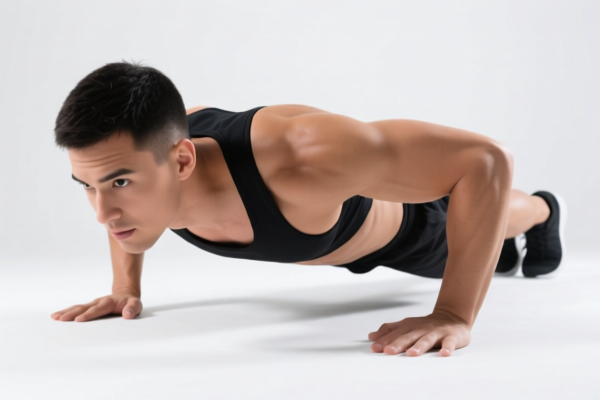
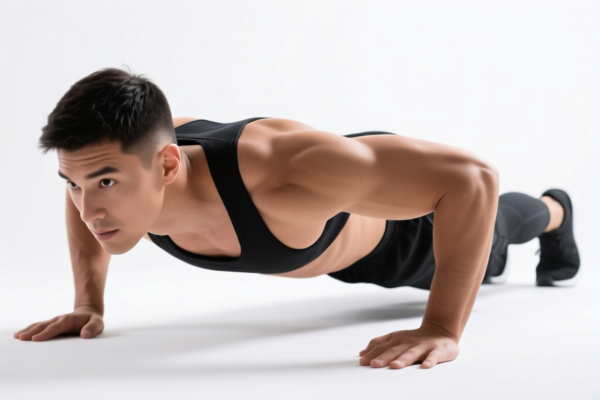
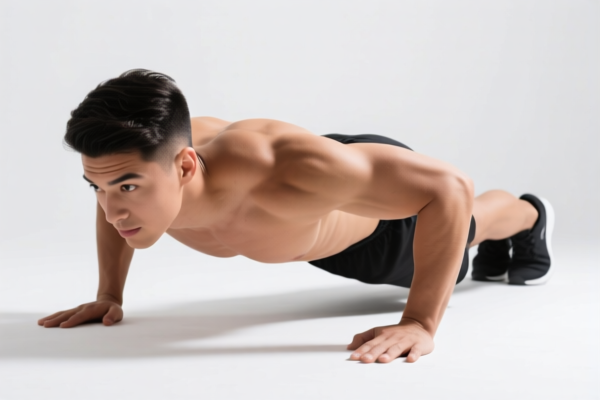
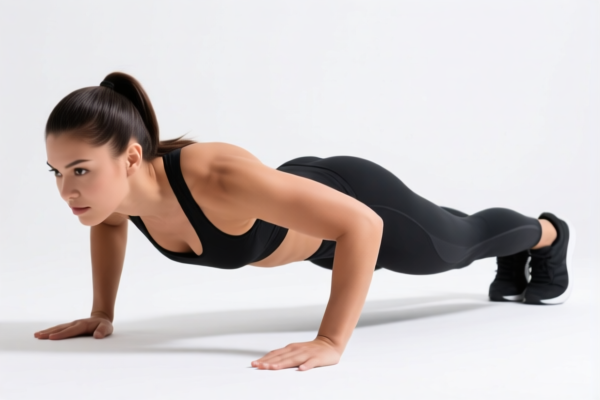
AI Analysis
🏋️♂️ Push-up Board (Fitness Equipment / Plyometric Board)
🌐 HS Code Reference & Customs Clearance Guide | 2026 Latest Tariff Analysis | Professional Level通关 Strategy
📌 I. Product Definition & Classification: Do You Really Understand the "Push-up Board"?
A Push-up Board (also known as a Plyometric Board or Abdominal Board) is a specialized fitness tool used to target different muscle groups (chest, shoulders, triceps, abs) during push-up exercises. In international trade, its classification depends heavily on design structure and primary function.
It is generally categorized into two main types:
- Specialized Fitness Equipment: Designed specifically for exercise, often with rotating discs, multiple handle positions, or ergonomic designs.
→ Classified under Chapter 95 (Toys, Games, Sports Equipment). - General Plastic Accessories/Components: If the item is a simple flat plastic plate without specialized mechanical features, it might be viewed as a general plastic article.
→ Classified under Chapter 39 (Plastics and Articles Thereof).
⚠️ Key Distinction Point:
- If it has moving parts, rotating mechanisms, or is explicitly marketed as "fitness equipment" → Go to 9503.
- If it is a static, simple plastic plate with no mechanical features → Go to 3926.
📦 II. HS Code Classification Details (2026 Latest Tariff Authority Comparison)
Based on the provided data, here are the four possible HS Codes for Push-up Boards, categorized by material and function.
| HS Code | Product Description | Applicable Scenario | Key Characteristic |
|---|---|---|---|
| 9503.00.00.73 | Other toys/sports articles; Fitness equipment, no material conflict | Specialized push-up boards with ergonomic handles or rotating discs; Marketed as "Sports/Fitness" | ✅ Fitness Focus |
| 9503.00.00.90 | Other sports articles; Fits into general "Other" category for fitness gear | General push-up boards, multi-functional exercise mats/boards; No specific conflict | ✅ General Fitness |
| 3926.90.99.89 | Other plastic articles; Usually made of plastic or composite plastic | Simple plastic push-up mats/boards; No mechanical parts; Generic use | ✅ Plastic Material |
| 3926.90.10.00 | Plastic articles; Inferred material is plastic/composite; Fits "Other" category | Basic plastic fitness plates; Simple design; No complex structure | ✅ Simple Plastic |
| 3926.90.60.90 | Mechanical/Fitness Equipment Accessories; Inferred plastic material | Accessories for other fitness equipment (e.g., a plastic base plate for a larger machine); Or misclassified as part of a machine | ⚠️ Accessory/Machine Part |
🔍 Critical Reminder:
- Customs authorities often scrutinize fitness equipment made of plastic. If the push-up board has rotating dials or adjustable angles, it strongly supports classification under 9503 (Fitness Equipment).
- If it is a static, flat plastic plate, customs may classify it under 3926 (Plastics).
- Misclassification Risk: Declaring a complex fitness board as a "plastic toy" or "plastic accessory" can lead to delays or penalties. Be precise in your description.
💰 III. 2026 Latest Tariff Rate Detailed Analysis (Including Additional Taxes & Policy Surcharges)
✅ Applicable Country: United States (US)
✅ Country of Origin: China (CN)
✅ Effective Date: From November 10, 2025 (including subsequent imports)
🎯 1. 9503.00.00.73 & 9503.00.00.90 —— Fitness Equipment (Specialized & General)
| Item | Content |
|---|---|
| Base Tariff | 0% (Ad Valorem) |
| Section 301 Tariff | 0% (No additional 25% tariff for this HS Code) |
| Section 122 Tariff | +10% (Specific surcharge for certain goods) |
| Total Tariff Rate | 10.0% |
| Tax Calculation | CIF Value × 10% |
| De Minimis Eligibility | ❌ Not Eligible (Deny de minimis for Section 122 goods) |
| Legal Basis Path | Section 122: 10% surcharge applied |
📌 Explanation:
- These codes fall under Chapter 95 (Toys/Sports).
- The 10% total tax consists of 0% base tariff + 0% Section 301 + 10% Section 122.
- Section 122 is a specific US trade policy surcharge that applies to certain fitness equipment and toys.
- This is the most favorable and common classification for genuine fitness push-up boards.
🎯 2. 3926.90.99.89 —— Other Plastic Articles (Complex Plastic)
| Item | Content |
|---|---|
| Base Tariff | 5.3% |
| Section 301 Tariff | +7.5% |
| Section 122 Tariff | +10% |
| Total Tariff Rate | 22.8% |
| Tax Calculation | CIF Value × 22.8% |
| De Minimis Eligibility | ❌ Not Eligible |
| Legal Basis Path | Base: 5.3% + Section 301: 7.5% + Section 122: 10% |
📌 Explanation:
- If classified as a general plastic article, it incurs Section 301 tariffs (7.5%) in addition to the base and Section 122 rates.
- Higher Cost: 22.8% vs. 10%.
- Risk: Customs may reclassify a fitness-specific item as "plastic" if documentation is weak, leading to unexpected costs.
🎯 3. 3926.90.10.00 —— Plastic Articles (General Other)
| Item | Content |
|---|---|
| Base Tariff | 3.4% |
| Section 301 Tariff | +7.5% |
| Section 122 Tariff | +10% |
| Total Tariff Rate | 20.9% |
| Tax Calculation | CIF Value × 20.9% |
| De Minimis Eligibility | ❌ Not Eligible |
| Legal Basis Path | Base: 3.4% + Section 301: 7.5% + Section 122: 10% |
📌 Explanation:
- Slightly lower than3926.90.99.89but still significantly higher than the 10% fitness rate.
- Applies if the item is seen as a basic plastic accessory without clear fitness equipment designation.
🎯 4. 3926.90.60.90 —— Mechanical/Fitness Equipment Accessories (Plastic)
| Item | Content |
|---|---|
| Base Tariff | 4.2% |
| Section 301 Tariff | +25.0% |
| Section 122 Tariff | +10% |
| Total Tariff Rate | 39.2% |
| Tax Calculation | CIF Value × 39.2% |
| De Minimis Eligibility | ❌ Not Eligible |
| Legal Basis Path | Base: 4.2% + Section 301: 25.0% + Section 122: 10% |
📌 Explanation:
- HIGHEST TAX RATE: 39.2%.
- This code applies if the item is deemed an accessory to a machine or falls under a different subset of plastic articles with higher Section 301 penalties.
- Avoid this classification if possible. It is extremely costly and likely incorrect for a standalone push-up board.
🛠️ IV. Customs Clearance Practical Advice (Real-World Pitfall Avoidance Guide)
✅ 1. Required Documentation Checklist (All Must Be Provided)
| Document | Mandatory | Description |
|---|---|---|
| ✅ Product Specification Sheet | ✔️ | Detail dimensions, weight, material (PP, ABS, etc.), and features (rotating? adjustable?) |
| ✅ Product Photos | ✔️ | Clear images showing handles, rotating discs, or fitness markings |
| ✅ Commercial Invoice | ✔️ | Clearly state "Fitness Equipment - Push-up Board", NOT "Plastic Plate" or "Toy" |
| ✅ Packing List | ✔️ | Indicate quantity and packaging type |
| ✅ Origin Certificate | ✔️ | To prove Chinese origin (triggers Section 301/122 if applicable) |
| ✅ Third-Party Test Report | Optional but Recommended | ASTM F963 (Toy Standard) or EN71, if marketed as "sports toy" |
✅ 2. Declaration Tips (Key Mantra)
🔥 "Fitness First, Plastic Last; Describe Features, Lower the Tax!"
| Scenario | Correct Declaration | Wrong Practice |
|---|---|---|
| Push-up board with rotating discs/ergonomic handles | 9503.00.00.73 or 9503.00.00.90 |
Declare as "Plastic Plate" → 22.8%+ |
| Simple flat plastic board | 3926.90.10.00 |
Declare as "Fitness Equipment" → Risk of reclassification penalty |
| Accessories for a larger machine | 3926.90.60.90 |
Declare as standalone fitness item → 39.2% |
📌 Note:
- If your product has moving parts or is designed for muscle training, strongly advocate for HS Code 9503.
- Use keywords like "Fitness," "Exercise," "Workout," "Core Training" in your description.
- Avoid terms like "Plastic Toy" or "Household Plastic Item" unless it is genuinely a child’s toy.
✅ 3. Special Case Handling
| Case | Handling Advice |
|---|---|
| OEM Custom Boards | Provide design drawings to prove fitness function. |
| Bundled Sets (Board + Bands) | Declare the board as the primary item (9503). Bands may be declared separately or included if minor. |
| Misclassified as "Toy" | If marketed for adults, do NOT use "Toy" keywords. Use "Fitness Equipment." |
| Plastic Only, No Fitness Markings | If no obvious fitness function, expect classification under 3926. Provide photos proving fitness use if appealing. |
🌍 V. Global Market Comparison (2026 Latest)
| Country/Region | Recommended HS Code | Tariff Rate (China Origin) | Certification Requirements | Notes |
|---|---|---|---|---|
| 🇺🇸 USA | 9503.00.00.73/90 |
10% | ASTM F963 (if toy), CPSIA | Best Rate. Avoid 3926 (22.8%+). |
| 🇨🇳 China | 9503.00.00.90 |
5% | CCC (if applicable) | Low tariff, easy clearance. |
| 🇪🇺 EU | 9503.00.00 |
4.7% | CE, EN71, REACH | No Section 301/122 surcharges. |
| 🇬🇧 UK | 9503.00.00 |
4.7% | UKCA, CE | Post-Brexit rules apply. |
| 🇨🇦 Canada | 9503.00.00 |
0% | Health Canada | No major surcharges. |
📌 Conclusion:
- USA is the most critical market due to Section 122 and Section 301 tariffs.
- Correct classification as Fitness Equipment (9503) saves ~12-29% in taxes compared to plastic classifications.
- Do not under-declare to avoid penalties. Use 9503 if the product is fitness-oriented.
📌 VI. Common Errors & Pitfall Guide (Lessons from Blood and Tears)
❌ Error 1: Declaring a complex push-up board as "Plastic Plate"
👉 Result: Tax jumps from 10% to 22.8% or higher.
👉 Penalty: Customs may audit and demand back taxes.
❌ Error 2: Using "Toy" description for an adult fitness product
👉 Result: Customs may reject or delay shipment if it doesn’t meet toy safety standards (ASTM F963) or if it’s deemed inappropriate.
👉 Fix: Use "Fitness Equipment."
❌ Error 3: Not providing photos with rotating parts
👉 Result: Customs classifies as static plastic → 3926.
👉 Fix: Include photos showing mechanical features in the declaration.
❌ Error 4: Incorrectly using 3926.90.60.90
👉 Result: 39.2% Tax! This is for accessories/machines, not standalone fitness gear.
👉 Fix: Ensure your product is a standalone item, not a part of a larger machine.
✅ Correct Declaration Example:
"Plastic Push-up Board, Fitness Equipment, Ergonomic Design, Rotating Handles, for Home Workout, Model XYZ, Not a Toy."
🎯 VII. Conclusion: Professional Declaration, Save Cost, Ensure Smooth Clearance!
🎯 Remember the Mantra:
🔹 "Fitness Function, HS 9503; Plastic Only, HS 3926; Section 122, 10% On; Section 301, 7.5% or 25% Gone!"
🔹 "10% vs 22.8%: The Difference is in the Description!"
📌 Pro Tip:
- If your push-up board is exporting to the US, ensure your commercial invoice clearly states "Fitness Equipment" and "For Exercise Use."
- If you have rotating components, mention "Rotating Mechanism" to reinforce the fitness equipment classification.
- Consider applying for an Advance Ruling from CBP if your product is unique or borderline.
📣 Immediate Action:
📞 Contact a licensed customs broker + Provide product photos + Declare as Fitness Equipment
🚀 Ensure your Push-up Boards clear customs smoothly, save 12%+ in taxes, and boost your profit margins!
✨ Professional Clearance, Starts with Accurate Classification!
💼 Your Every Dollar is Worth Calculating Precisely!
Customer Reviews
About HS Code Classification
The Harmonized System (HS) is an internationally standardized nomenclature developed by the World Customs Organization (WCO) to classify traded products. Over 200 countries use the HS system as the basis for customs tariffs, trade statistics, and import/export regulations.
Each HS code follows a hierarchical structure:
- Chapter (2 digits) — Broad category of goods (e.g., Chapter 84: Machinery and Mechanical Appliances)
- Heading (4 digits) — More specific grouping within the chapter
- Subheading (6 digits) — Internationally standardized breakdown, used by all WCO member countries
- National subdivisions (8-10 digits) — Country-specific extensions for further classification, such as US HTSUS 10-digit codes
Correct HS code classification is essential for smooth customs clearance, accurate duty payment, and compliance with trade regulations. Misclassification can lead to customs delays, overpayment of duties, or penalties.
When importing from CN to US, the applicable tariff rates may include:
- Most-Favored-Nation (MFN) rate — The standard duty rate applied to WTO members
- General rate — Applied to countries without trade agreements
- Trade remedy duties — Additional tariffs such as Section 301 (anti-dumping), Section 232 (national security), or countervailing duties
The information provided on this page is for reference purposes only. For official classification, please consult with your local customs authority or a licensed customs broker.