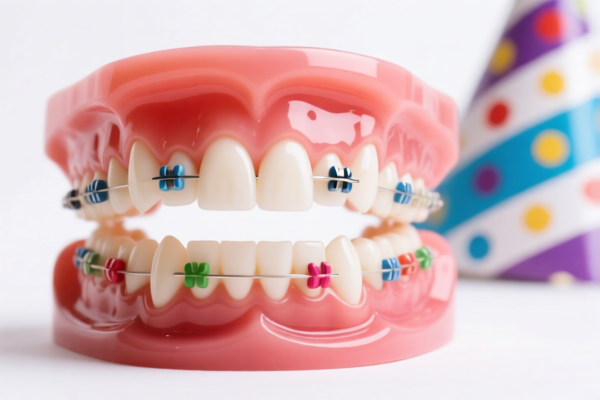
假牙贴面牙齿
CN → US| HS Code | Tariff Rate | Origin | Destination | Doc |
|---|---|---|---|---|
| 3407002000 | 10.0% | CN | US | Official Doc |
| 9021218000 | 10.0% | CN | US | Official Doc |
| 9021214000 | 10.0% | CN | US | Official Doc |
| 3006400000 | 10.0% | CN | US | Official Doc |
| 3407004000 | 10.0% | CN | US | Official Doc |
Product Images
AI Analysis
🦷 Dental Veneers (Artificial Tooth Veneers) – HS Code & Tariff Guide 2026
🌐 HS Code Classification & Customs Clearance Strategy | 2026 Latest Tariff Rules | Professional Import Compliance
📌 One: Product Definition & Classification – What Exactly Is a "Dental Veneer"?
Dental veneers are thin, custom-made shells designed to cover the front surface of teeth to improve appearance. They are widely used in cosmetic dentistry for:
- Repairing chipped or cracked teeth
- Closing gaps between teeth
- Whitening discolored teeth
- Correcting minor misalignments
In international trade, they are classified not as general medical devices, but as specific dental prosthetics or dental restoration materials, depending on their form, function, and material composition.
⚠️ Critical Distinction:
- If the product is a pre-formed or custom-molded shell (e.g., resin or ceramic) applied directly to a tooth → Belongs to "Artificial Teeth" or "Dental Repair Materials"
- If it’s a liquid or paste used for dental bonding or filling → May fall under dental cements or restorative compounds
📦 Two: HS Code Classification Breakdown (2026 Official Tariff Reference)
| HS Code | Product Description | Usage Context | Material Assumption | Tax Rate |
|---|---|---|---|---|
3407.00.20.00 |
Dental preparations, including veneers in plate or similar form, for dental use | Used in tooth restoration, aesthetic dentistry | Resin, ceramic, or composite material | 10.0% |
3006.40.00.00 |
Dental filling materials, specifically for tooth restoration | Applied directly to teeth for repair or aesthetics | Composite resins, polymers, dental-grade materials | 10.0% |
9021.21.40.00 |
Plastic artificial teeth, including veneers, dentures, and dental prosthetics | Used in dental labs, clinics, or patient fittings | Plastic/resin-based (common for veneers) | 10.0% |
9021.21.80.00 |
Other artificial teeth and parts, including veneers, caps, and attachments | Covers all non-metal, non-ceramic artificial tooth components | Resin, acrylic, or ceramic (common for veneers) | 10.0% |
3407.00.40.00 |
Dental preparations for aesthetic or restorative use, including veneer-like forms | Includes materials used in dental impressions, veneer fabrication | Often based on gypsum, resin, or composite — compatible with veneer production | 10.0% |
🔍 Key Insight:
All five HS codes are valid for dental veneers, depending on product form, function, and material. The correct code depends on how the product is used and what it's made of.
💰 Three: 2026 Tariff Breakdown – Full Tax Clause Explanation
✅ Applicable Country: United States (US)
✅ Origin: China (CN)
✅ Effective Date: November 10, 2025 (inclusive)
🎯 1. 3407.00.20.00 – Dental Preparations (Veneers in Plate Form)
| Item | Detail |
|---|---|
| Base Duty | 0.0% (ad valorem) |
| Additional Duty | 0.0% |
| Section 122 Clause Duty | 10.0% |
| Total Tariff | 10.0% |
| Tax Calculation | CIF Value × 10% |
| De Minimis Exemption | ❌ Not applicable |
| Legal Basis | Section 122: U.S. Trade Act – Additional Tariff on Certain Medical Devices from China |
📌 Explanation:
- This code applies to dental materials in solid or plate-like form used in restorative dentistry.
- The 10% Section 122 tariff is a targeted additional duty on medical devices originating from China, introduced under Section 122 of the Trade Act of 2024.
- It is not a general anti-dumping or countervailing duty — it’s a geopolitical trade measure.
🎯 2. 3006.40.00.00 – Dental Filling Materials (For Tooth Restoration)
| Item | Detail |
|---|---|
| Base Duty | 0.0% |
| Additional Duty | 0.0% |
| Section 122 Clause Duty | 10.0% |
| Total Tariff | 10.0% |
| Tax Calculation | CIF × 10% |
| De Minimis Exemption | ❌ Not allowed |
| Legal Basis | Section 122: U.S. Trade Act – Medical Device Tariff on China-Origin Products |
📌 Explanation:
- This code is specifically for dental fillings and restorative materials.
- Even if your product is a veneer, if it's used in a filling-like application (e.g., bonding to tooth surface), this code applies.
- The 10% Section 122 duty is mandatory for all Chinese-origin dental restoration materials.
🎯 3. 9021.21.40.00 – Plastic Artificial Teeth (Including Veneers)
| Item | Detail |
|---|---|
| Base Duty | 0.0% |
| Additional Duty | 0.0% |
| Section 122 Clause Duty | 10.0% |
| Total Tariff | 10.0% |
| Tax Calculation | CIF × 10% |
| De Minimis Exemption | ❌ Not allowed |
| Legal Basis | Section 122: U.S. Trade Act – Plastic Dental Prosthetics from China |
📌 Explanation:
- Applies to plastic-based artificial teeth, including veneers, dentures, and dental attachments.
- If your veneer is made of acrylic or resin, this is the most accurate code.
- The 10% duty is non-negotiable under U.S. trade law.
🎯 4. 9021.21.80.00 – Other Artificial Teeth & Parts (Including Veneers)
| Item | Detail |
|---|---|
| Base Duty | 0.0% |
| Additional Duty | 0.0% |
| Section 122 Clause Duty | 10.0% |
| Total Tariff | 10.0% |
| Tax Calculation | CIF × 10% |
| De Minimis Exemption | ❌ Not allowed |
| Legal Basis | Section 122: U.S. Trade Act – Non-Plastic Dental Prosthetics from China |
📌 Explanation:
- Covers non-plastic artificial teeth, such as ceramic or hybrid veneers.
- If your product uses ceramic or zirconia, this code applies.
- Still subject to 10% Section 122 tariff — no exceptions.
🎯 5. 3407.00.40.00 – Dental Preparations for Aesthetic/Restorative Use
| Item | Detail |
|---|---|
| Base Duty | 0.0% |
| Additional Duty | 0.0% |
| Section 122 Clause Duty | 10.0% |
| Total Tariff | 10.0% |
| Tax Calculation | CIF × 10% |
| De Minimis Exemption | ❌ Not allowed |
| Legal Basis | Section 122: U.S. Trade Act – Dental Materials for Aesthetic Use |
📌 Explanation:
- Applies to dental materials used in aesthetic restoration, including veneer fabrication compounds.
- Even if the product is not a finished veneer, but a material used to make it, this code may apply.
- 10% Section 122 duty is mandatory.
🛠️ Four: Customs Clearance Best Practices (Pro Tips to Avoid Delays & Penalties)
✅ 1. Required Documentation (Must-Have Checklist)
| Document | Required? | Notes |
|---|---|---|
| ✅ Product Specification Sheet | ✔️ | Include material (resin, ceramic, acrylic), dimensions, intended use |
| ✅ Lab Test Report (ISO 13485, FDA 510(k), CE) | ✔️ | Critical for medical device classification |
| ✅ Product Photos (with label & packaging) | ✔️ | Show "dental veneer", "artificial tooth", "tooth restoration" |
| ✅ Commercial Invoice | ✔️ | Clearly state: "Dental Veneer, Artificial Tooth, for Aesthetic Restoration" |
| ✅ Certificate of Origin (CO) | ✔️ | If from China, expect 10% Section 122 duty |
| ✅ Packing List | ✔️ | Show if veneers are shipped in bulk or individual units |
| ✅ FDA Registration (if applicable) | ✔️ | Required for medical devices in the U.S. |
✅ 2.申报技巧(Key Rules to Remember)
🔥 "Form Matters, Material Matters, Origin Matters!"
| Scenario | Correct HS Code | Wrong Code | Risk |
|---|---|---|---|
| Resin-based veneer, used in clinic | 9021.21.40.00 |
3407.00.20.00 |
Risk of audit |
| Ceramic veneer, custom-made | 9021.21.80.00 |
3407.00.40.00 |
Higher duty risk |
| Veneer material used to make veneers | 3407.00.40.00 |
9021.21.40.00 |
Misclassification |
| Veneer used for dental filling | 3006.40.00.00 |
9021.21.80.00 |
Higher tariff |
✅ 3. Special Cases & Solutions
| Situation | Recommended Action |
|---|---|
| Veneers from Vietnam, Mexico, or Thailand | Apply for Section 122 exemption — no 10% duty |
| Veneers with FDA 510(k) clearance | Use "medical device" classification — still subject to 10% duty if from China |
| Custom-made veneers (not off-the-shelf) | Must be declared as "custom dental prosthetic" — avoid "generic" labels |
| Veneers shipped with dental tools | Do NOT split — declare as "dental restoration kit" → may qualify for lower tariff |
| Veneers for export (not for U.S.) | Check destination country’s rules — EU, Japan, Australia have 0% duty on dental prosthetics |
🌍 Five: Global Market Tariff Comparison (2026 Update)
| Country | Recommended HS Code | Base Duty | Additional Duty | Total Duty | Notes |
|---|---|---|---|---|---|
| 🇺🇸 United States | 9021.21.40.00 / 3006.40.00.00 |
0% | +10% (Section 122) | 10.0% | China-origin = 10% |
| 🇨🇳 China | 9021.21.40.00 |
5% | 0% | 5% | No Section 122 |
| 🇪🇺 European Union | 9021.21.40.00 |
0% | 0% | 0% | CE-certified, no extra tax |
| 🇦🇺 Australia | 9021.21.40.00 |
5% | 0% | 5% | No Section 122 |
| 🇯🇵 Japan | 9021.21.40.00 |
0% | 0% | 0% | No additional duties |
📌 Insight:
- The U.S. is the only market imposing a 10% Section 122 tariff on Chinese-origin dental veneers.
- Shifting production to Vietnam, Mexico, or Thailand can eliminate the 10% duty.
📌 Six: Common Mistakes & How to Avoid Them (Avoid Costly Errors!)
❌ Mistake 1: Using “tooth sticker” or “tooth cover” as product name
👉 Result: Customs may classify as non-medical → higher risk of seizure or rejection
❌ Mistake 2: Not specifying material (resin/ceramic)
👉 Result: Customs may assign wrong HS code → duty overpayment or penalties
❌ Mistake 3: Declaring veneers as “plastic parts” or “decorative items”
👉 Result: Misclassification → fines, delays, or return
❌ Mistake 4: Splitting veneers from dental tools in shipment
👉 Result: Each item taxed separately → total duty up to 89.5% (if not combined)
✅ Correct Labeling Example:
"Dental Veneer, Resin-Based, Artificial Tooth Shell, for Aesthetic Restoration, Made in China, FDA-Registered, CE-Certified"
🎯 Seven: Conclusion – Precision Matters, Cost Matters!
🎯 Remember the Golden Rule:
🔹 "Form, Function, Material, Origin — All Decide the HS Code!"
🔹 "One wrong code = 10% extra cost, delays, or rejection!"
📌 Pro Tip:
✅ Apply for a Pre-Ruling (Advance Ruling) with U.S. Customs before shipment — get official confirmation on the correct HS code and tariff.
✅ Use a U.S.-based customs broker with experience in dental medical devices.
📣 Take Action Now:
📞 Contact a specialized customs broker + Submit product specs + Request HS Code pre-ruling
🚀 Ensure your dental veneers clear customs fast, avoid penalties, and protect your margins!
✨ Expert Clearance Starts with Accurate Classification!
💼 Your profit depends on the right HS code — choose wisely!
Customer Reviews
About HS Code Classification
The Harmonized System (HS) is an internationally standardized nomenclature developed by the World Customs Organization (WCO) to classify traded products. Over 200 countries use the HS system as the basis for customs tariffs, trade statistics, and import/export regulations.
Each HS code follows a hierarchical structure:
- Chapter (2 digits) — Broad category of goods (e.g., Chapter 84: Machinery and Mechanical Appliances)
- Heading (4 digits) — More specific grouping within the chapter
- Subheading (6 digits) — Internationally standardized breakdown, used by all WCO member countries
- National subdivisions (8-10 digits) — Country-specific extensions for further classification, such as US HTSUS 10-digit codes
Correct HS code classification is essential for smooth customs clearance, accurate duty payment, and compliance with trade regulations. Misclassification can lead to customs delays, overpayment of duties, or penalties.
When importing from CN to US, the applicable tariff rates may include:
- Most-Favored-Nation (MFN) rate — The standard duty rate applied to WTO members
- General rate — Applied to countries without trade agreements
- Trade remedy duties — Additional tariffs such as Section 301 (anti-dumping), Section 232 (national security), or countervailing duties
The information provided on this page is for reference purposes only. For official classification, please consult with your local customs authority or a licensed customs broker.