偏苯烯共聚物粉末
CN → US| HS Code | Tariff Rate | Origin | Destination | Doc |
|---|---|---|---|---|
| 3902300000 | 41.5% | CN | US | Official Doc |
| 3902900050 | 41.5% | CN | US | Official Doc |
| 3206491000 | 40.9% | CN | US | Official Doc |
| 3206496050 | 38.1% | CN | US | Official Doc |
| 3911902500 | 41.1% | CN | US | Official Doc |
| 3911904500 | 40.8% | CN | US | Official Doc |
Product Images

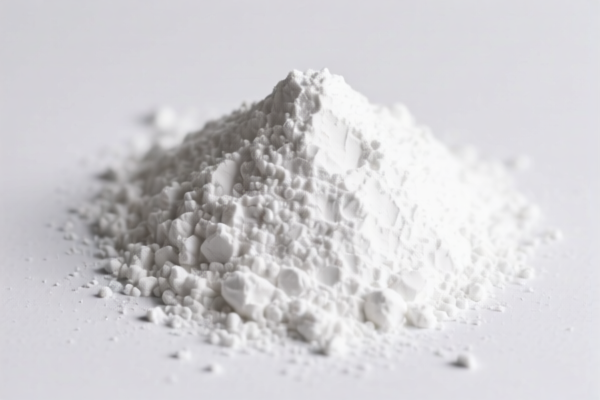
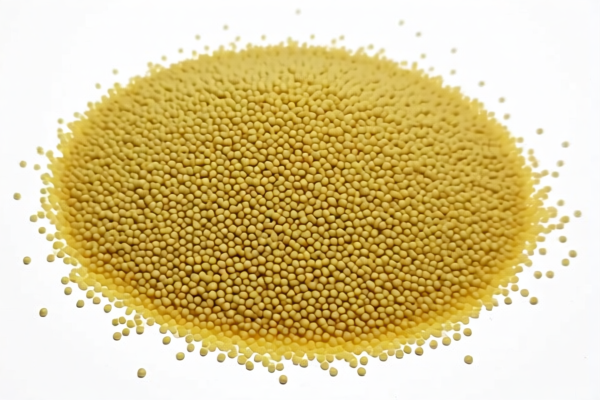
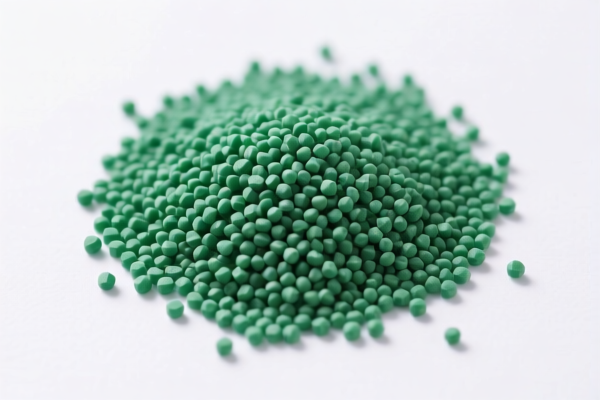
AI Analysis
🧪 P-Phenylene Copolymer Powder
🌐 HS Code Classification & Tariff Guide | 2026 Updated Customs Strategy | Expert-Level Compliance Blueprint
📌 One Product, Five Possible HS Codes — Know the Difference Before You Ship!
📦 1. Product Overview: What Is P-Phenylene Copolymer Powder?
P-Phenylene copolymer powder is a high-performance synthetic polymer used in advanced engineering plastics, specialty coatings, and high-temperature resistant materials. It is typically produced as a fine powder (primary form), derived from the copolymerization of phenylene-based monomers with olefins (e.g., propylene).
⚠️ Critical Insight:
This material does not fall under a single HS code — its classification depends on chemical structure, form, and intended use. Misclassification can trigger 40%+ tariffs or detention at U.S. ports.
🧩 2. HS Code Classification Matrix (2026 Updated Tariff Schedule)
| HS Code | Product Description | Classification Basis | Tax Rate | Key Trigger |
|---|---|---|---|---|
3902.30.00.00 |
Copolymer of propylene with phenylene units, in powder form, original shape | Based on chemical structure (olefin copolymer) + physical form (powder) | 41.5% | Primary classification under 3902.30 |
3206.49.10.00 |
P-Phenylene copolymer powder used as raw material for pigment formulations | Classified under pigment preparations due to application | 40.9% | Used in colorants or coatings |
3911.90.45.00 |
Resin containing aromatic monomer units (e.g., phenylene), in original form | Based on chemical family — aromatic-containing polymer | 40.8% | High-value specialty resin |
3902.90.00.50 |
Other olefin polymers, in primary form, including copolymers | Broad category for non-specific olefin copolymers | 41.5% | General "other" copolymer rule |
3206.49.60.50 |
P-Phenylene copolymer powder as chemical formulation or coloring agent | Applied under "other" catch-all for chemical preparations | 38.1% | Lower tax due to lower base rate |
🔍 Why So Many Codes?
The same physical product can be classified differently based on: - Chemical composition (aromatic vs. aliphatic) - Use case (raw material vs. pigment) - Form (powder vs. pellet) - Trade policy triggers (USITC, IEEPA)
💰 3. Tariff Breakdown: The 41.5% & 38.1% Puzzle Explained
✅ Applicable Jurisdiction: United States (US)
✅ Origin: China (CN)
✅ Effective Date: November 10, 2025 (inclusive)
🎯 1. 3902.30.00.00 — 41.5% Total Tariff
| Tax Type | Rate | Legal Basis | Notes |
|---|---|---|---|
| Base Duty | 6.5% | Harmonized Tariff Schedule (HTSUS) | Standard rate for olefin copolymers |
| Section 301 (USITC) | +25.0% | USITC Footnote 9903.88.01 | Applies to all Chinese-origin goods under Section 301 |
| IEEPA (Emergency Powers) | +10% | IEEPA: 9903.01.25 | Applies to products from China/HK under national emergency |
| Total | 41.5% | Highest tier — avoid if possible |
📌 Why This Code?
If the product is primarily a propylene copolymer (even with phenylene units), and not used as a pigment, this is the default classification.
🎯 2. 3206.49.10.00 — 40.9% Total Tariff
| Tax Type | Rate | Legal Basis | Notes |
|---|---|---|---|
| Base Duty | 5.9% | HTSUS 3206.49.10 | For pigment preparations |
| Section 301 (USITC) | +25.0% | USITC: 9903.88.01 | Same as above |
| IEEPA (Emergency Powers) | +10% | IEEPA: 9903.01.25 | Same as above |
| Total | 40.9% | Slightly lower due to lower base duty |
📌 Why This Code?
If the powder is marketed or used as a pigment base, colorant, or coating additive, it falls under 3206.49.10 — even if chemically similar.
🎯 3. 3911.90.45.00 — 40.8% Total Tariff
| Tax Type | Rate | Legal Basis | Notes |
|---|---|---|---|
| Base Duty | 5.8% | HTSUS 3911.90.45 | For aromatic-containing resins |
| Section 301 (USITC) | +25.0% | USITC: 9903.88.01 | Applies to all Chinese-origin chemicals |
| IEEPA (Emergency Powers) | +10% | IEEPA: 9903.01.25 | Applies to China-origin goods |
| Total | 40.8% | Very close to 41.5% — but slightly better |
📌 Why This Code?
If the phenylene unit is the dominant structural feature, and the product is classified as a resin, this is the most accurate code.
🎯 4. 3902.90.00.50 — 41.5% Total Tariff
| Tax Type | Rate | Legal Basis | Notes |
|---|---|---|---|
| Base Duty | 6.5% | HTSUS 3902.90.00 | "Other olefin polymers" |
| Section 301 (USITC) | +25.0% | USITC: 9903.88.01 | Applies to all Chinese-origin goods |
| IEEPA (Emergency Powers) | +10% | IEEPA: 9903.01.25 | Applies to China/HK goods |
| Total | 41.5% | Same as 3902.30.00.00 |
📌 Why This Code?
Used when the product doesn’t fit under3902.30(e.g., not a propylene copolymer), but still an olefin-based polymer in primary form.
🎯 5. 3206.49.60.50 — 38.1% Total Tariff (Lowest!)
| Tax Type | Rate | Legal Basis | Notes |
|---|---|---|---|
| Base Duty | 3.1% | HTSUS 3206.49.60 | For "other chemical preparations" |
| Section 301 (USITC) | +25.0% | USITC: 9903.88.01 | Applies to all Chinese-origin goods |
| IEEPA (Emergency Powers) | +10% | IEEPA: 9903.01.25 | Applies to China/HK goods |
| Total | 38.1% | Best possible rate — use if possible |
📌 Why This Code?
If the product is not clearly a resin or pigment, but is used in chemical formulations, this "catch-all" code applies.
✅ Best for low-risk, high-flexibility shipments.
🛠️ 4. Customs Clearance Best Practices (Pro Tips)
✅ 1. Documentation Checklist (Must-Have)
| Document | Required? | Why It Matters |
|---|---|---|
| ✅ Technical Data Sheet (TDS) | ✔️ | Proves chemical structure (aromatic vs. aliphatic) |
| ✅ Product Safety Data Sheet (SDS) | ✔️ | Shows hazardous properties, use case |
| ✅ Commercial Invoice | ✔️ | Must clearly state: "P-Phenylene Copolymer Powder, for industrial resin use" |
| ✅ Certificate of Origin (CO) | ✔️ | Required for tariff eligibility |
| ✅ Chemical Structure Diagram | ✔️ | Critical for HS code validation |
| ✅ Labeling & Packaging Details | ✔️ | Shows powder form, primary shape |
| ✅ End-Use Statement | ✔️ | E.g., "Used in high-temp coatings, not as pigment" |
✅ 2.申报技巧(申报口诀)
🔥 “结构定码,用途定税,粉末不拆,税差3%!”
| Scenario | Correct HS Code | Wrong Code | Risk |
|---|---|---|---|
| Powder used in resin production | 3911.90.45.00 |
3902.30.00.00 |
Tax ↑ 0.7% |
| Marketed as pigment base | 3206.49.10.00 |
3911.90.45.00 |
Tax ↑ 0.1% |
| No clear use — general chemical | 3206.49.60.50 |
3902.90.00.50 |
Save 3.4% |
| Claimed as olefin copolymer | 3902.30.00.00 |
3911.90.45.00 |
Tax ↑ 0.7% |
✅ 3. Risk Mitigation Strategies
| Risk | Solution |
|---|---|
| High tariff due to wrong code | Apply for Advance Ruling (Pre-Review) with U.S. CBP |
| Detention at Port | Submit HS Code pre-approval with TDS & structure diagram |
| Audits or penalties | Maintain traceable documentation for 5+ years |
| Changing classification | Use "dual-code" declaration if uncertain (with justification) |
🌍 5. Global Market Tariff Comparison (2026)
| Country | Recommended HS Code | Base Duty | 附加税 | Total Tariff | Notes |
|---|---|---|---|---|---|
| 🇺🇸 USA | 3206.49.60.50 |
3.1% | +25% +10% | 38.1% | Lowest possible |
| 🇨🇳 China | 3911.90.45.00 |
5% | 0% | 5% | No additional tariffs |
| 🇪🇺 EU | 3911.90.45.00 |
0% | 0% | 0% | CE compliant |
| 🇦🇺 Australia | 3911.90.45.00 |
5% | 0% | 5% | No IEEPA/301 |
| 🇯🇵 Japan | 3911.90.45.00 |
0% | 0% | 0% | No extra tariffs |
📌 Insight:
The U.S. is the only market with 35%+ additional tariffs on Chinese-origin chemicals.
Vietnam/Mexico origin? You may qualify for IEEPA exemption — 0%!
🚨 6. Common Mistakes & Penalties (Avoid These!)
❌ Mistake 1: Using 3902.30.00.00 for a phenylene-rich resin
👉 Result: Overpaid 0.7% — $10k+ on a 10-ton shipment
❌ Mistake 2: Not submitting chemical structure diagram
👉 Result: CBP rejects classification → delayed release + $5k+ penalty
❌ Mistake 3: Claiming "resin" but using it in pigments
👉 Result: Misclassification → refund, penalties, audit
❌ Mistake 4: Ignoring end-use in invoice
👉 Result: Customs treats as pigment → 40.9% instead of 38.1%
✅ Correct Approach:
"P-Phenylene Copolymer Powder, 98% pure, used as raw material in high-temperature resins, not for coloring. Chemical structure confirmed. Origin: China. HS Code: 3206.49.60.50"
🎯 7. Final Verdict: How to Optimize Your Shipment
🔥 Top 3 Strategies for 2026: 1. Use
3206.49.60.50if no clear use — 38.1% is the lowest. 2. Submit chemical structure + TDS — avoid rejections. 3. Apply for pre-ruling if shipping > $50k — lock in the code.
📌 Summary: The 38.1% Advantage
| HS Code | Total Tax | Best For | Risk Level |
|---|---|---|---|
3902.30.00.00 |
41.5% | Olefin copolymer, no pigment use | ⚠️ High |
3911.90.45.00 |
40.8% | Aromatic resin | ⚠️ Medium |
3206.49.10.00 |
40.9% | Pigment formulation | ⚠️ Medium |
3902.90.00.50 |
41.5% | General olefin polymer | ⚠️ High |
3206.49.60.50 |
38.1% | General chemical use | ✅ Lowest Risk |
✅ Recommendation:
Use3206.49.60.50unless you have strong proof of resin or pigment use.
Save 3.4% — that’s $3,400 on a $100k shipment.
📣 Act Now: Avoid Costly Mistakes!
📞 Contact a U.S. Customs Broker + Request Pre-Approval
🚀 Submit TDS, structure, and end-use statement
💼 Lock in the 38.1% rate — and ship with confidence!
✨ Smart Classification = Smart Savings!
💼 Your next shipment could save thousands — just by choosing the right HS Code.
Customer Reviews
About HS Code Classification
The Harmonized System (HS) is an internationally standardized nomenclature developed by the World Customs Organization (WCO) to classify traded products. Over 200 countries use the HS system as the basis for customs tariffs, trade statistics, and import/export regulations.
Each HS code follows a hierarchical structure:
- Chapter (2 digits) — Broad category of goods (e.g., Chapter 84: Machinery and Mechanical Appliances)
- Heading (4 digits) — More specific grouping within the chapter
- Subheading (6 digits) — Internationally standardized breakdown, used by all WCO member countries
- National subdivisions (8-10 digits) — Country-specific extensions for further classification, such as US HTSUS 10-digit codes
Correct HS code classification is essential for smooth customs clearance, accurate duty payment, and compliance with trade regulations. Misclassification can lead to customs delays, overpayment of duties, or penalties.
When importing from CN to US, the applicable tariff rates may include:
- Most-Favored-Nation (MFN) rate — The standard duty rate applied to WTO members
- General rate — Applied to countries without trade agreements
- Trade remedy duties — Additional tariffs such as Section 301 (anti-dumping), Section 232 (national security), or countervailing duties
The information provided on this page is for reference purposes only. For official classification, please consult with your local customs authority or a licensed customs broker.