儿童玩具
CN → US| HS Code | Tariff Rate | Origin | Destination | Doc |
|---|---|---|---|---|
| 9505906000 | 10.0% | CN | US | Official Doc |
| 9505902000 | 10.0% | CN | US | Official Doc |
| 3926400090 | 15.3% | CN | US | Official Doc |
| 3926909989 | 22.8% | CN | US | Official Doc |
| 9503000073 | 10.0% | CN | US | Official Doc |
| 9503000071 | 10.0% | CN | US | Official Doc |
Product Images
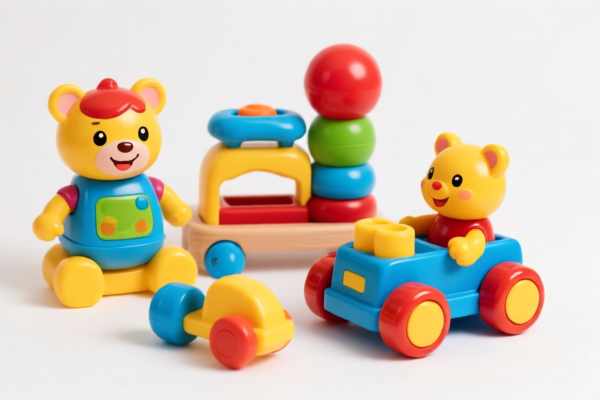
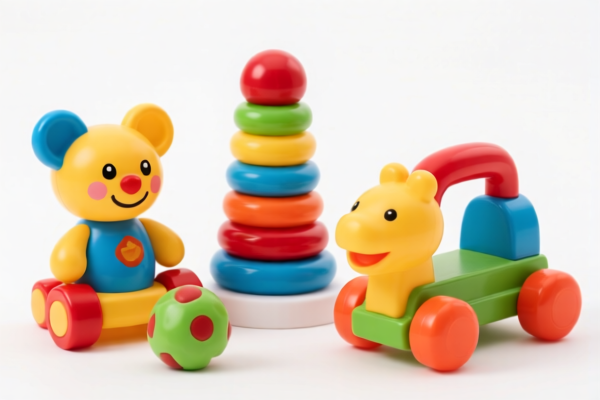
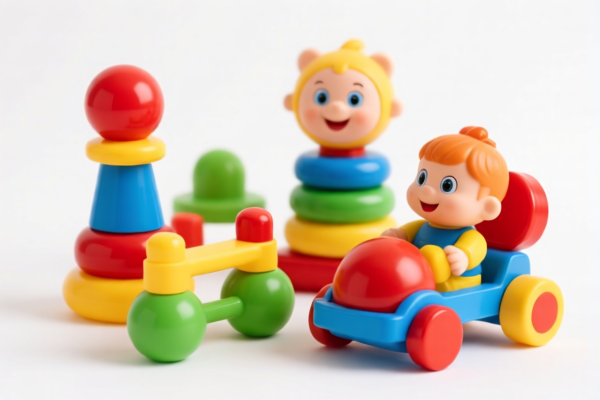
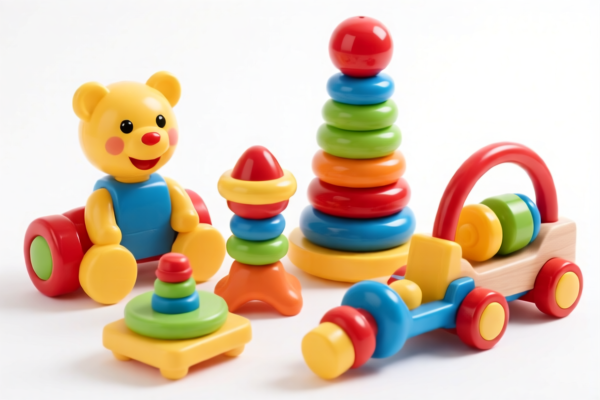
AI Analysis
🧸 儿童玩具 (Children's Toys)
🌐 HS Code Reference & Customs Clearance Guide | 2026 Latest Tariff Analysis | Professional Clearance Strategy
📌 I. Product Definition & Classification: Do You Really Know "Toys"?
Children's toys are a broad category of goods intended for play by children under 14 years of age. In international trade, classification is not just about the name "Toy," but heavily depends on material composition, specific function, and target audience. Misclassification often leads to significant tax disparities (e.g., 22.8% vs. 10%) and potential compliance risks.
⚠️ Key Distinction Logic:
- Plastic/General Materials: Often defaults to "Other Articles of Plastics" (Headings 39xx) if no specific toy function is proven or if it's a generic plastic part.
- Specific Toy Function: If it clearly matches puzzles, models, or children's products, it falls under Heading 9503 (Toys; reduced duty).
- Festival/Entertainment: If it serves a general entertainment purpose (e.g., carnival items), it may fall under Heading 9505.
- Baby Products: Specific to infants, requiring precise age-range confirmation.
📦 II. HS Code Classification Details (2026 Latest Tariff Authoritative Comparison)
| HS Code | Product Description & Summary | Applicable Scenario | Material/Function Conflict Check |
|---|---|---|---|
3926.90.99.89 |
Other Articles of Plastics (Bottom-line Category) • Summary: Based on plastic material inference, defaults to other articles. • Risk: Generic plastic parts lacking specific "toy" identification. |
Generic plastic components, non-specific decorative items, or toys made entirely of plastic where no other toy heading applies. | ❌ High Risk: If declared as a toy but lacks specific toy features, customs may revert to this "catch-all" plastic category. |
9503.00.00.73 |
Toys, Models, Puzzles • Summary: Use matches toys, models, puzzles completely. Non-balloon toys. • Benefit: Lower base duty. |
Building blocks, puzzle sets, model kits, action figures. | ✅ Match: Perfect fit for standard play items. |
9505.90.60.00 |
Festive, Carnival, or Entertainment Articles • Summary: Fits festival, carnival, or other entertainment uses. • Category: Other categories of festive goods. |
Party favors, costume masks, carnival props, holiday decorations used as play items. | ✅ Match: For items that are more "event-based" than "child-centric" but still used for play. |
9503.00.00.71 |
Children's Products • Summary: Use matches "Children's products" completely. No material or form conflict. • Benefit: Zero base duty. |
Educational toys, baby rattles, plush toys, general children's play items. | ✅ Match: Direct alignment with children's usage. |
9503.00.00.11 |
Baby Toys • Summary: Inferred as baby toys. Fits children's toy scope. • Material: Likely rubber or plastic. |
Teethers, soft plush for infants, sensory toys for babies under 3. | ✅ Match: Specifically for the baby demographic. |
🔍 Important Note:
- The difference between 22.8% (3926.90.99.89) and 10% (9503/9505) is driven by whether the item is legally recognized as a "Toy" versus a "Plastic Article." - Evidence is Key: You must prove the item is "intended for children" to qualify for the 10% rate. If it’s a generic plastic figurine, it might be classified as plastic. If it’s a "Superhero Action Figure," it’s a toy.
💰 III. 2026 Latest Tariff Rate Details (Including Surcharges & Policy Add-ons)
✅ Applicable Country: USA (US)
✅ Origin: China (CN)
✅ Effective Date: 2025/2026 (Current Trade Environment)
🎯 1. 3926.90.99.89 —— Other Articles of Plastics (The "Default" Trap)
| Item | Content |
|---|---|
| Base Duty | 5.3% |
| Section 301 Surcharge | +7.5% |
| Section 122 Surcharge | +10.0% |
| Total Duty Rate | 22.8% |
| Tax Calculation | CIF Value × 22.8% |
| De Minimis Exemption | ❌ Not Eligible (High risk of audit for low-value shipments) |
| Legal Basis Path | HTSUS:3926.90.99.89 → USITC Footnote → IEEPA:122 → Section 301 |
📌 Explanation:
- This is the "Worst-Case Scenario" for toy imports if the "toy" nature is not sufficiently proven.
- Why 22.8%? It combines the standard textile/plastic duty, the ongoing Section 301 trade war tariff, and the specific Section 122 tariff on steel/aluminum/plastics (depending on specific sub-heading interpretations).
- Recommendation: Avoid this code unless you are importing raw plastic parts, not finished toys.
🎯 2. 9503.00.00.73 / .71 / .11 —— Toys, Models, Children's Products (The Preferred Route)
| Item | Content |
|---|---|
| Base Duty | 0.0% |
| Section 301 Surcharge | 0.0% |
| Section 122 Surcharge | +10.0% |
| Total Duty Rate | 10.0% |
| Tax Calculation | CIF Value × 10.0% |
| De Minimis Exemption | ⚠️ Check Specifics: While base is 0, the 10% surcharge may still apply depending on current CBP enforcement on de minimis. Assume Taxable for safety. |
| Legal Basis Path | HTSUS:9503.xx → Section 122 (10%) |
📌 Explanation:
- Why 10%? These codes benefit from a 0% base duty and 0% Section 301 surcharge, which are typical for many toys under current US-China trade agreements (or lack thereof, where toys were carved out).
- The Only Cost: The 10% Section 122 Tariff. This is a mandatory surcharge on many imported goods, including toys, under current regulations.
- Savings: Comparing 22.8% vs. 10% means you save 12.8% on every dollar. For a $100,000 shipment, that’s $12,800 saved.
🎯 3. 9505.90.60.00 —— Festive/Carnival Entertainment (Alternative Route)
| Item | Content |
|---|---|
| Base Duty | 0.0% |
| Section 301 Surcharge | 0.0% |
| Section 122 Surcharge | +10.0% |
| Total Duty Rate | 10.0% |
| Tax Calculation | CIF Value × 10.0% |
| De Minimis Exemption | ⚠️ Check Specifics |
| Legal Basis Path | HTSUS:9505.90.60.00 → Section 122 (10%) |
📌 Explanation:
- Use this for Party Supplies (e.g., plastic masks, confetti poppers, carnival costumes) that are not strictly "children's toys" but are used for entertainment.
- Caution: If the item is clearly a "Toy" (e.g., a doll), customs will reject9505and force you into9503or3926.
🛠️ IV. Customs Clearance Practical Advice (Practical Pitfall Avoidance Guide)
✅ 1. Required Documentation Checklist (None Can Be Skipped)
| Document | Mandatory | Explanation |
|---|---|---|
| ✅ Product Description | ✔️ | Must explicitly state "For Children," "Toy," "Puzzle," etc. Avoid generic terms like "Plastic Item." |
| ✅ Target Age Range | ✔️ | Crucial for distinguishing 9503 (Toys) from general household items. |
| ✅ Product Photos (All Angles) | ✔️ | Show packaging, playing instructions, and any safety warnings (e.g., "Choking Hazard"). |
| ✅ Safety Compliance Certs | ✔️ | CPSC (USA), ASTM F963, CPSIA reports. Without these, the shipment may be detained regardless of HS Code. |
| ✅ Commercial Invoice | ✔️ | List items as "Children's Toy: Action Figure" not "Plastic Figure." |
| ✅ Packaging List | ✔️ | Detail contents to prove the item is a complete toy, not a part. |
✅ 2. Declaration Tips (Key Mantra)
🔥 "Prove it's a Toy, Not Plastic. Age matters, Function counts!"
| Scenario | Correct Declaration | Wrong Practice |
|---|---|---|
| Plastic Building Blocks | 9503.00.00.71 (Children's Product) |
3926.90.99.89 (Plastic Article) → Save 12.8% |
| Puzzle Game | 9503.00.00.73 (Toy/Puzzle) |
9505.90.60.00 (Festival) → Potential Rejection |
| Carnival Mask | 9505.90.60.00 (Festive Item) |
3926.90.99.89 (Plastic) → Save 12.8% |
| Baby Rattle | 9503.00.00.11 (Baby Toy) |
9503.00.00.71 (General Toy) → Acceptable, but .11 is more precise |
✅ 3. Special Case Handling
| Situation | Handling Advice |
|---|---|
| Mixed Shipment (Toys + Plastic Parts) | Declare separately. Toys under 9503, parts under 3926. Do not mix to avoid audit flags. |
| OEM Custom Toys | Provide design drawings and "For Children" label proofs to justify 9503 codes. |
| Toys with Electronic Components | Ensure FCC certification is included. The HS Code remains 9503 if the primary function is play, but electronics may attract additional scrutiny. |
| De Minimis (Section 321) Shipments | Caution: Even if duty is 10%, CBP is increasingly auditing low-value toy shipments for safety compliance (CPSIA). Ensure all small shipments have valid safety certificates. |
🌍 V. Global Main Market Clearance Comparison (2026 Latest)
| Country/Region | Recommended HS Code | Tariff Rate | Certification Requirements | Notes |
|---|---|---|---|---|
| 🇺🇸 USA | 9503.00.00.71/73 |
10% (122 Surcharge) | CPSC, ASTM F963, CPSIA | Highest scrutiny for safety. Avoid 3926 for toys. |
| 🇨🇳 China | 9503.00.00 |
0% (Import Duty) | CCC (if applicable) | No Section 122. Very favorable for imports. |
| 🇪🇺 EU | 9503.00 |
0% | CE, EN71, REACH | Strict safety standards. No extra surcharges usually. |
| 🇬🇧 UK | 9503.00 |
0% | UKCA, BS EN71 | Post-Brexit rules apply. |
| 🇦🇺 Australia | 9503.00 |
5% | GS Mark | Moderate duty. |
📌 Conclusion:
- USA is the most complex market due to the 10% Section 122 tariff and strict safety compliance.
- Avoid3926.90.99.89for toys in the US market. The 12.8% tax difference is significant.
- Safety Compliance is just as important as HS Code classification. Non-compliant toys will be seized even with the correct HS Code.
📌 VI. Common Errors & Pitfall Guide (Lessons Learned)
❌ Error 1: Declaring "Plastic Figures" as 3926.90.99.89 when they are clearly toys.
👉 Consequence: You pay 22.8% instead of 10%. Overpaid Tax!
❌ Error 2: Declaring "Plastic Parts" as 9503 (Toys).
👉 Consequence: Customs denies the claim, reclassifies to 3926, adds penalties for misdeclaration. Fines + Back Taxes!
❌ Error 3: Missing CPSC/CPSIA Certificates for US-bound toys.
👉 Consequence: Goods detained or destroyed at port, regardless of HS Code. Total Loss!
❌ Error 4: Using 9505 (Festival) for standard toys.
👉 Consequence: Customs rejects as inaccurate description. Delays + Re-classification Fees.
✅ Correct Approach:
"Children's Plastic Toy: Action Figure, Age 3+, ASTM F963 Compliant, Model XYZ"
🎯 VII. Conclusion: Precise Classification Saves Money!
🎯 Remember the Mantra:
🔹 "Toys are 10%, Plastic Parts are 22.8%. Prove it's a toy!"
🔹 "Safety First, Classification Second. No CPSIA, No Entry!"
📌 Pro Tip:
For high-volume toy imports, consider applying for a Binding Ruling from U.S. Customs if your product is borderline (e.g., a plastic figurine with educational content). This locks in the 10% rate for 5 years, providing cost certainty.
📣 Immediate Action:
📞 Audit your current HS Codes. Are you paying 22.8% for toys?
🚀 Switch to9503codes if eligible. Save 12.8% on every unit.
📄 Ensure CPSC compliance for every single shipment.
✨ Professional Clearance Starts with Accurate Classification!
💼 Your Profit Margin Depends on Your HS Code Choice!
Customer Reviews
About HS Code Classification
The Harmonized System (HS) is an internationally standardized nomenclature developed by the World Customs Organization (WCO) to classify traded products. Over 200 countries use the HS system as the basis for customs tariffs, trade statistics, and import/export regulations.
Each HS code follows a hierarchical structure:
- Chapter (2 digits) — Broad category of goods (e.g., Chapter 84: Machinery and Mechanical Appliances)
- Heading (4 digits) — More specific grouping within the chapter
- Subheading (6 digits) — Internationally standardized breakdown, used by all WCO member countries
- National subdivisions (8-10 digits) — Country-specific extensions for further classification, such as US HTSUS 10-digit codes
Correct HS code classification is essential for smooth customs clearance, accurate duty payment, and compliance with trade regulations. Misclassification can lead to customs delays, overpayment of duties, or penalties.
When importing from CN to US, the applicable tariff rates may include:
- Most-Favored-Nation (MFN) rate — The standard duty rate applied to WTO members
- General rate — Applied to countries without trade agreements
- Trade remedy duties — Additional tariffs such as Section 301 (anti-dumping), Section 232 (national security), or countervailing duties
The information provided on this page is for reference purposes only. For official classification, please consult with your local customs authority or a licensed customs broker.