儿童餐椅
CN → US| HS Code | Tariff Rate | Origin | Destination | Doc |
|---|---|---|---|---|
| 9401802001 | 35.0% | CN | US | Official Doc |
| 9401710001 | 35.0% | CN | US | Official Doc |
| 3926305000 | 22.8% | CN | US | Official Doc |
| 3926909989 | 22.8% | CN | US | Official Doc |
Product Images
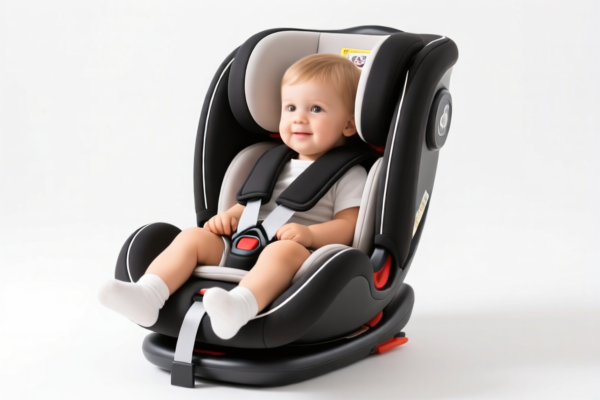

AI Analysis
🍼 High Chair for Infants (Baby Feeding Chair)
🌐 HS Code Reference & Customs Clearance Guide | 2026 Latest Tariff Analysis | Strategic通关 Strategy
📌 I. Product Definition & Classification: Do You Really Understand "Baby High Chairs"?
The "Baby High Chair" is a specialized piece of nursery furniture designed to safely seat infants and toddlers at table height during feeding. In international trade, its classification depends heavily on structure, material composition, and specific usage.
International customs often face ambiguity between: * Furniture Classifications (Chapter 94): Chairs with frames, cushions, and structural support. * Plastic Components Classifications (Chapter 39): Chairs where the primary characteristic is plastic molding or non-specific plastic parts.
⚠️ Key Distinction Point:
- If the chair has a distinct metal/wooden frame and soft padding (cushion), it is typically classified under Furniture (9401).
- If the chair is predominantly plastic (molded body, no distinct frame) or if the material is ambiguous, it may fall under Plastic Products (3926).
- Note: Even if it's plastic, if it's a complete "high chair," Chapter 94 is often preferred, but the provided data suggests specific plastic-based interpretations exist.
📦 II. HS Code Classification Details (2026 Latest Tariff Reference)
Based on the provided analysis, here are the four potential classifications and the logic behind them:
| HS Code | Product Description | Classification Logic & Material Inference |
|---|---|---|
9401.80.20.01 |
High Chair (Other than UPHOLSTERED) | Logic: Matches "High Chair" category specifically. Material: Inferred as Reinforced or Laminated Plastic based on functional requirements for baby safety and durability. |
9401.71.00.01 |
High Chair with Metal Frame & Cushion | Logic: Directly fits the definition of a "High Chair." Material: Inferred as Metal Frame + Soft Padding (Fabric/Leather) based on common knowledge of sturdy baby chairs. |
3926.30.50.00 |
Other Plastic Articles (Car Body Parts/General) | Logic: "Fallback" category. Used when material is not explicitly defined but inferred as Plastic. Fits the "General Plastic Goods" logic as an extension of furniture/vehicle parts. |
3926.90.99.89 |
Other Plastic Articles (Finished Consumer Goods) | Logic: Fits the "Other Plastic Articles" category. Material: Inferred as Plastic; Form: Finished consumer product. No material conflict. |
🔍 Critical Reminder:
-9401codes are the most precise if the chair has a clear frame and cushion. They often attract higher scrutiny for "add-on" tariffs.
-3926codes are used when the chair is perceived as a "plastic article" rather than "furniture." The logic here relies on the "plastic" inference when material is not fully specified.
- Tax Impact: The choice between9401(35% total) and3926(22.8% total) has a massive financial implication.
💰 III. 2026 Tariff Rate Breakdown (Detailed Policy Analysis)
✅ Applicable Country: USA (United States)
✅ Country of Origin: China (CN)
✅ Effective Date: Current policies (including Section 301 & IEEPA)
🎯 Scenario A: Furniture Classification (9401.80.20.01 & 9401.71.00.01)
These codes carry the highest tariff burden due to being classified as "Furniture."
| Tax Component | Rate | Legal Basis / Description |
|---|---|---|
| Base Tariff | 0.0% | Standard Most-Favored-Nation (MFN) rate for furniture. |
| Section 301 (Add-on) | +25.0% | Additional tariff imposed on Chinese imports under Trade Act of 1974 Section 301. |
| IEEPA (Section 122) | +10.0% | Tariff under the International Emergency Economic Powers Act (specific to China). |
| TOTAL DUTY | 35.0% | Calculation: CIF Value × 35% |
📌 Explanation:
- The 25% is the standard "Section 301" penalty on Chinese goods.
- The 10% is the specific "Section 122" add-on.
- Result: Even though the base is 0%, the effective tax is 35%. This is a very high cost for a product like a high chair.
🎯 Scenario B: Plastic Classification (3926.30.50.00 & 3926.90.99.89)
These codes offer a slightly more favorable tariff structure.
| Tax Component | Rate | Legal Basis / Description |
|---|---|---|
| Base Tariff | 5.3% | Standard MFN rate for plastic articles. |
| Section 301 (Add-on) | +7.5% | Lowered additional tariff rate for specific plastic categories. |
| IEEPA (Section 122) | +10.0% | The mandatory 10% IEEPA surcharge still applies. |
| TOTAL DUTY | 22.8% | Calculation: CIF Value × 22.8% |
📌 Explanation:
- While the base tariff is higher (5.3% vs 0%), the Section 301 add-on is lower (7.5% vs 25%).
- The IEEPA 10% remains constant.
- Result: 22.8% is significantly lower than 35%. If your product can legally be classified as "Other Plastic Articles," this saves 12.2% on every unit.
🛠️ IV. Customs Clearance Practical Suggestions (Risk Avoidance Guide)
✅ 1. Preparation Checklist (Must-Haves)
| Document | Requirement | Why It Matters |
|---|---|---|
| Product Specs | ✔️ Essential | Must explicitly state: "Material: Metal Frame + Plastic/Soft Padding" (for 9401) OR "Material: 100% Plastic" (for 3926). |
| Material Breakdown | ✔️ Essential | Customs needs to verify the ratio. If "Plastic > 50%", argue for 3926. If "Frame + Cushion", argue for 9401. |
| Photos (Clear) | ✔️ Essential | Show the frame structure. If it looks like a molded plastic chair without a metal leg, 3926 is more defensible. |
| Bill of Lading/Invoice | ✔️ Essential | Description must match HS Code. Do not just say "Baby Chair." Say "Plastic High Chair" or "Metal Frame High Chair." |
| Safety Certs | ✔️ Essential | CPSIA (US) compliance is mandatory for baby products regardless of HS Code. |
✅ 2. Declaration Strategy (The "Golden Rule")
🔥 "Material Definition Determines Tax: Plastic = 22.8%, Furniture = 35%!"
| Scenario | Recommended HS Code | Reason |
|---|---|---|
| Chair has a visible metal/wooden frame + fabric seat | 9401.71.00.01 |
Matches "Upholstered High Chair" definition. High cost, but accurate. |
| Chair is a single molded plastic piece (no separate frame) | 3926.90.99.89 |
Fits "Other Plastic Articles." Lower tax (22.8%). |
| Material is mixed or unclear in your docs | 3926.30.50.00 |
Use the "fallback" logic. If you can argue it's "plastic furniture," you might save. |
| You want the lowest tax | Try 3926.90.99.89 |
But be prepared for Customs to challenge you. You must prove it's primarily a "plastic article." |
✅ 3. Special Situation Handling
| Situation | Action Plan |
|---|---|
| "Is it Furniture or a Toy?" | High chairs are generally Furniture (9401). If classified as a "Toy" (9503), it might have different rules, but this data set focuses on 9401/3926. |
| "OEM/Custom Design" | If the customer provides a specific plastic mold, use 3926. If they provide a metal frame, use 9401. |
| "Material Ambiguity" | If the invoice says "High Quality Material," Customs will default to the most likely (often 9401). Be specific! |
| "Section 301 Exemptions" | Check if this specific plastic category has an exemption. Currently, data shows 7.5% add-on, so likely no full exemption. |
🌍 V. Global Market Comparison (2026 Outlook)
| Market | Recommended HS Code | Total Duty (Est.) | Key Requirement |
|---|---|---|---|
| 🇺🇸 USA | 3926.90.99.89 (Best) |
22.8% | CPSIA Certification + Accurate Material Declaration |
| 🇺🇸 USA | 9401.80.20.01 (Safe) |
35.0% | Clear Frame/Cushion Structure |
| 🇪🇺 EU | 9401.71.00 |
~0-5% | CE Mark + EN71 Safety |
| 🇯🇵 Japan | 9401.71.00 |
~0-3% | PSE Mark |
📌 Conclusion for US Importers:
The 12.2% difference (35% vs 22.8%) is critical. If your high chair is made of plastic, try to classify under3926to save costs. However, if it has a metal frame, you likely must accept the 35%9401rate to avoid penalties.
📌 VI. Common Pitfalls & Lessons Learned
❌ Pitfall 1: Vague Material Description
👉 Result: Customs assumes "Furniture" (35%) by default because "High Chair" implies furniture.
✅ Fix: Explicitly state "100% Plastic" or "Metal Frame" on the Commercial Invoice.
❌ Pitfall 2: Misclassifying Plastic Furniture
👉 Result: Attempting to put a metal-frame chair into 3926 and getting audited.
✅ Fix: Ensure the product is predominantly plastic (e.g., molded bucket seat, no metal legs).
❌ Pitfall 3: Ignoring CPSIA
👉 Result: Even with low tax, the goods are seized for lack of safety certification.
✅ Fix: Always include CPSIA compliance for any baby product.
❌ Pitfall 4: Splitting the Shipment
👉 Result: Trying to ship "Plastic Parts" and "Metal Frame" separately to avoid tax.
✅ Fix: Ship as a complete unit under the correct HS Code. Splitting often triggers higher duties on parts.
🎯 VII. Final Verdict: Strategic Recommendation
🚀 For Maximum Savings:
Design your high chair as a single-piece or predominantly plastic unit.
Declare it as3926.90.99.89(Total Duty: 22.8%).
Keywords to use: "All-Plastic High Chair," "Molded Plastic Feeding Seat."🛡️ For Maximum Compliance (if Metal Frame):
Accept the 35% tax on9401.80.20.01or9401.71.00.01.
Do not force a plastic classification on a metal-framed chair; the risk of fines is too high.
📌 Pro Tip:
Always request a Binding Ruling (Binding Tariff Information) from US Customs and Border Protection (CBP) if your product is a mix of materials. This "pre-clears" your HS Code and protects you from future audits.
✨ Smart Classification = Lower Costs = Higher Profits!
💼 Don't let tax rates eat your margin. Classify correctly!
Customer Reviews
About HS Code Classification
The Harmonized System (HS) is an internationally standardized nomenclature developed by the World Customs Organization (WCO) to classify traded products. Over 200 countries use the HS system as the basis for customs tariffs, trade statistics, and import/export regulations.
Each HS code follows a hierarchical structure:
- Chapter (2 digits) — Broad category of goods (e.g., Chapter 84: Machinery and Mechanical Appliances)
- Heading (4 digits) — More specific grouping within the chapter
- Subheading (6 digits) — Internationally standardized breakdown, used by all WCO member countries
- National subdivisions (8-10 digits) — Country-specific extensions for further classification, such as US HTSUS 10-digit codes
Correct HS code classification is essential for smooth customs clearance, accurate duty payment, and compliance with trade regulations. Misclassification can lead to customs delays, overpayment of duties, or penalties.
When importing from CN to US, the applicable tariff rates may include:
- Most-Favored-Nation (MFN) rate — The standard duty rate applied to WTO members
- General rate — Applied to countries without trade agreements
- Trade remedy duties — Additional tariffs such as Section 301 (anti-dumping), Section 232 (national security), or countervailing duties
The information provided on this page is for reference purposes only. For official classification, please consult with your local customs authority or a licensed customs broker.