充气水上玩具
CN → US| HS Code | Tariff Rate | Origin | Destination | Doc |
|---|---|---|---|---|
| 9506995500 | 22.8% | CN | US | Official Doc |
| 4016950000 | 21.7% | CN | US | Official Doc |
| 3926909989 | 22.8% | CN | US | Official Doc |
| 3926907500 | 14.2% | CN | US | Official Doc |
| 9506996080 | 21.5% | CN | US | Official Doc |
Product Images


AI Analysis
🌊 Inflatable Water Toys – HS Code & Tariff Guide 2026 | Complete Customs Clearance Strategy
🌐 HS Code Reference & Customs Clearance Handbook | 2026 Updated Tariff Breakdown | Pro-Level Import Planning
📌 One: Product Definition & Classification – What Exactly Is an "Inflatable Water Toy"?
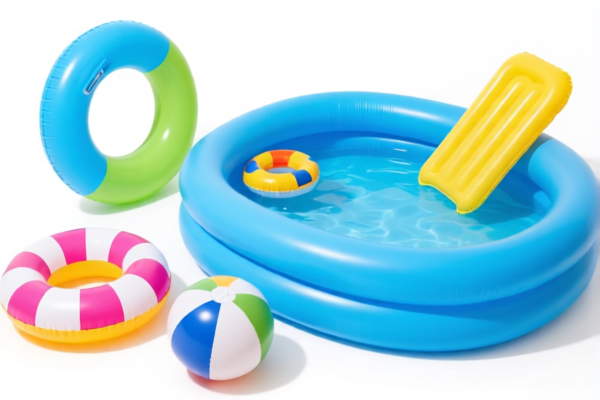
Inflatable water toys are play and recreational devices designed for use in water, commonly used in swimming pools, beaches, and water parks. These include floating rafts, water slides, inflatable animals, swim rings, and other buoyant, air-filled play items.
⚠️ Key Classification Criteria: - Must be inflatable (air-filled) - Designed for water-based play or recreation - Typically made from plastic, PVC, or rubber materials - Not intended for industrial or structural use
✅ Core Rule: If it’s used for swimming, floating, or fun in water, and inflatable, it falls under inflatable toys or recreational equipment – not general plastic goods.
📦 Two: HS Code Classification Details (2026 Official Tariff Matrix)
| HS Code | Product Description | Material | Key Features | Applicable Tax |
|---|---|---|---|---|
9506.99.55.00 |
Inflatable water toys (e.g., swim rings, floating animals, water mats) | Plastic / PVC | Used for swimming, play, or recreation in water | 22.8% |
3926.90.75.00 |
Inflatable beds, air mattresses, and other inflatable goods | Plastic / PVC | Similar to air beds, but used for water play | 14.2% |
4016.95.00.00 |
Inflatable items made from vulcanized rubber or synthetic rubber | Vulcanized/Synthetic Rubber | Durable, flexible, used in water environments | 21.7% |
3926.90.99.89 |
Other plastic products not specified elsewhere | Plastic / Synthetic Rubber | Generic category for non-listed inflatable items | 22.8% |
4016.10.00.00 |
Other vulcanized rubber products (not specified) | Vulcanized/Synthetic Rubber | Includes specialized inflatable items | 35.0% |
🔍 Critical Insight:
- Material matters – PVC/plastic vs. rubber changes the HS Code and tax rate. - Use case determines classification – Even if made of rubber, if used for water play, it’s not just a “rubber product”. - "Not specified" codes (like 3926.90.99.89) are high-risk – often attract higher scrutiny and tax.
💰 Three: 2026 Updated Tariff Breakdown (With Full Tax Clause Explanation)
✅ Applicable Country: United States (US)
✅ Origin: China (CN)
✅ Effective Date: November 10, 2025 (including future imports)
🎯 1. 9506.99.55.00 – Inflatable Water Toys (Plastic/PVC)
| Item | Detail |
|---|---|
| Base Duty | 5.3% (ad valorem) |
| Additional Tariff (Section 301) | 7.5% |
| Section 122 Clause (Steel/Aluminum/Copper Goods) | 10% |
| Total Tax Rate | 22.8% |
| Tax Calculation | CIF Value × 22.8% |
| De Minimis Threshold | ❌ Not applicable (denied) |
| Legal Basis Path | Section 301: 9903.88.01 → Section 122: 9903.01.24 → HS: 9506.99.55.00 |
📌 Explanation: - Section 301 (7.5%): Imposed under U.S. Trade Act for Chinese-origin goods deemed to have unfair trade practices. - Section 122 (10%): Applies to steel, aluminum, and copper products, but also extends to certain non-metallic goods if deemed "critical" or "strategic" – controversial but enforced. - Total: 22.8% – High but standard for water toys from China.
🎯 2. 3926.90.75.00 – Inflatable Beds & Other Inflatable Goods (Plastic/PVC)
| Item | Detail |
|---|---|
| Base Duty | 4.2% |
| Additional Tariff (Section 301) | 0.0% |
| Section 122 Clause | 10% |
| Total Tax Rate | 14.2% |
| Tax Calculation | CIF × 14.2% |
| De Minimis Threshold | ❌ Not applicable |
| Legal Basis Path | Section 122: 9903.01.24 → HS: 3926.90.75.00 |
📌 Note: - No Section 301 duty applied here – likely because this code is not listed under the 301 list. - 10% Section 122 tariff still applies – even for non-metallic inflatable items. - Lower than 9506.99.55.00, but still not negligible.
🎯 3. 4016.95.00.00 – Inflatable Items from Vulcanized/Synthetic Rubber
| Item | Detail |
|---|---|
| Base Duty | 4.2% |
| Additional Tariff (Section 301) | 7.5% |
| Section 122 Clause | 10% |
| Total Tax Rate | 21.7% |
| Tax Calculation | CIF × 21.7% |
| De Minimis Threshold | ❌ Not applicable |
| Legal Basis Path | Section 301: 9903.88.01 → Section 122: 9903.01.24 → HS: 4016.95.00.00 |
📌 Important: - Rubber-based inflatables are not exempt from Section 301 or Section 122. - Same 10% Section 122 applies even if no metal is involved. - 21.7% total – very close to plastic toys.
🎯 4. 3926.90.99.89 – Other Plastic Products (Unspecified)
| Item | Detail |
|---|---|
| Base Duty | 5.3% |
| Additional Tariff (Section 301) | 7.5% |
| Section 122 Clause | 10% |
| Total Tax Rate | 22.8% |
| Tax Calculation | CIF × 22.8% |
| De Minimis Threshold | ❌ Not applicable |
| Legal Basis Path | Section 301: 9903.88.01 → Section 122: 9903.01.24 → HS: 3926.90.99.89 |
⚠️ Red Flag Alert: - This is a "catch-all" code – high risk for audits and penalties. - If your product fits better under 9506.99.55.00, do not use this code. - IRS and CBP may reclassify it → back taxes + fines.
🎯 5. 4016.10.00.00 – Other Vulcanized Rubber Products
| Item | Detail |
|---|---|
| Base Duty | 0.0% |
| Additional Tariff (Section 301) | 25.0% |
| Section 122 Clause | 10% |
| Total Tax Rate | 35.0% |
| Tax Calculation | CIF × 35.0% |
| De Minimis Threshold | ❌ Not applicable |
| Legal Basis Path | Section 301: 9903.88.01 → Section 122: 9903.01.24 → HS: 4016.10.00.00 |
🚨 Extreme Risk: - 25% Section 301 tariff – highest rate in the list. - 10% Section 122 still applies. - Total: 35% – very expensive. - Only apply if your product is truly "other vulcanized rubber" and not a water toy.
🔥 Warning: If you’re shipping inflatable water toys made of rubber, do NOT use this code. Use
4016.95.00.00instead.
🛠️ Four: Customs Clearance Best Practices (Pro Tips to Avoid Penalties)
✅ 1. Required Documentation (Must-Have Checklist)
| Document | Required? | Why It Matters |
|---|---|---|
| ✅ Product Specifications | ✔️ | Material, size, intended use, inflation method |
| ✅ Product Photos (with labels) | ✔️ | Show brand, model, use in water |
| ✅ Technical Drawings / Circuit Diagrams | ✔️ | For rubber-based items (to prove no metal) |
| ✅ Third-Party Test Reports | ✔️ | ASTM, CE, RoHS, FDA (if applicable) |
| ✅ Commercial Invoice | ✔️ | Must state “Inflatable Water Toy”, not “Plastic Product” |
| ✅ Certificate of Origin (CO) | ✔️ | If from Vietnam/Mexico, may reduce tariffs |
| ✅ Packing List | ✔️ | Show total weight, volume, and item count |
✅ 2.申报技巧 (申报口诀)
🔥 “Material First, Use Second, Code Last – Don’t Use 3926.90.99.89!”
| Scenario | Correct HS Code | Wrong Code to Avoid |
|---|---|---|
| Inflatable swim ring (PVC) | 9506.99.55.00 |
3926.90.99.89 |
| Inflatable water mat (rubber) | 4016.95.00.00 |
4016.10.00.00 |
| Air bed used in pool | 3926.90.75.00 |
3926.90.99.89 |
| Generic plastic toy | 3926.90.99.89 |
❌ Only if no better fit |
✅ 3. Special Cases & Solutions
| Situation | Recommended Action |
|---|---|
| Product made in Vietnam/Mexico | Apply for CO → may qualify for 0% Section 301 |
| Rubber toy with PVC coating | Use 4016.95.00.00 – not 4016.10.00.00 |
| Custom-designed water toy | Provide design drawings + use case to support classification |
| High-value shipment | Request Advance Ruling (Pre-Clearance) from U.S. CBP |
🌍 Five: Global Market Comparison (2026 Update)
| Country | Recommended HS Code | Tariff | Certification | Notes |
|---|---|---|---|---|
| 🇺🇸 USA | 9506.99.55.00 |
22.8% (China) | FCC, ASTM | High risk – Section 122 applies |
| 🇨🇳 China | 9506.99.55.00 |
5% | CCC, RoHS | No extra tariffs |
| 🇪🇺 EU | 9506.99.55.00 |
0% (if CE) | CE, REACH | No Section 301/122 |
| 🇦🇺 Australia | 9506.99.55.00 |
5% | RCM | No extra duties |
| 🇯🇵 Japan | 9506.99.55.00 |
0% | PSE | No extra tariffs |
📌 Key Takeaway:
- Only the U.S. applies Section 122 to non-metallic goods. - China-origin toys face the highest tariffs in the world.
📌 Six: Common Mistakes & How to Avoid Them (Real-World Pitfalls)
❌ Mistake 1: Using 3926.90.99.89 for a swim ring
👉 Result: High risk of audit, reclassification, back taxes + penalties
❌ Mistake 2: Labeling a water toy as “Plastic Product” on invoice
👉 Result: Customs may suspect misclassification → delayed release
❌ Mistake 3: Not providing photos showing use in water
👉 Result: CBP may classify as “general plastic” → higher tax
❌ Mistake 4: Using 4016.10.00.00 for a rubber water toy
👉 Result: 35% tax instead of 21.7% → cost over 10% higher
✅ Correct Way to Describe:
“Inflatable Water Toy – PVC Swim Ring, 24-inch diameter, for pool use, with safety valve, Model XYZ, ASTM F963 Certified”
🎯 Seven: Final Verdict – Smart Strategy for Success
🎯 Remember the Golden Rule:
🔹 “Material First, Use Case Second, Code Last”
🔹 “Never use 3926.90.99.89 unless absolutely necessary”
🔹 “Section 122 hits non-metallic goods in the U.S. – prepare for 10%!”
📌 Pro Tip:
If your product is made in Vietnam, Mexico, or Thailand, apply for a Certificate of Origin → may avoid Section 301 and Section 122 → tax drops to 0–5%.
📣 Act Now!
📞 Contact a licensed U.S. customs broker + submit product photos + request HS Code Pre-Ruling
🚀 Avoid delays, penalties, and tax surprises – ship smarter, not harder!
✨ Precision Classification = Smooth Clearance = Profit Protection!
💼 Your next shipment starts with the right HS Code!
Customer Reviews
About HS Code Classification
The Harmonized System (HS) is an internationally standardized nomenclature developed by the World Customs Organization (WCO) to classify traded products. Over 200 countries use the HS system as the basis for customs tariffs, trade statistics, and import/export regulations.
Each HS code follows a hierarchical structure:
- Chapter (2 digits) — Broad category of goods (e.g., Chapter 84: Machinery and Mechanical Appliances)
- Heading (4 digits) — More specific grouping within the chapter
- Subheading (6 digits) — Internationally standardized breakdown, used by all WCO member countries
- National subdivisions (8-10 digits) — Country-specific extensions for further classification, such as US HTSUS 10-digit codes
Correct HS code classification is essential for smooth customs clearance, accurate duty payment, and compliance with trade regulations. Misclassification can lead to customs delays, overpayment of duties, or penalties.
When importing from CN to US, the applicable tariff rates may include:
- Most-Favored-Nation (MFN) rate — The standard duty rate applied to WTO members
- General rate — Applied to countries without trade agreements
- Trade remedy duties — Additional tariffs such as Section 301 (anti-dumping), Section 232 (national security), or countervailing duties
The information provided on this page is for reference purposes only. For official classification, please consult with your local customs authority or a licensed customs broker.