公交车制动软管
CN → US| HS Code | Tariff Rate | Origin | Destination | Doc |
|---|---|---|---|---|
| 7307995060 | 89.3% | CN | US | Official Doc |
| 4009120020 | 20.0% | CN | US | Official Doc |
| 8708998105 | 37.5% | CN | US | Official Doc |
| 7307995045 | 89.3% | CN | US | Official Doc |
| 4009220020 | 37.5% | CN | US | Official Doc |
Product Images
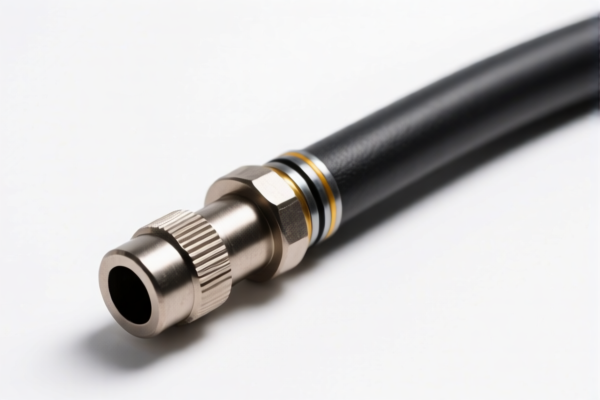
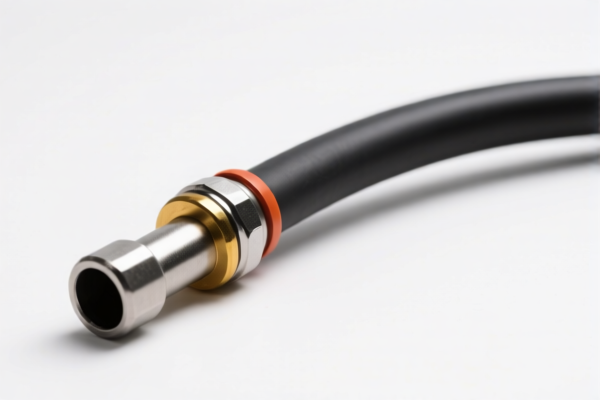
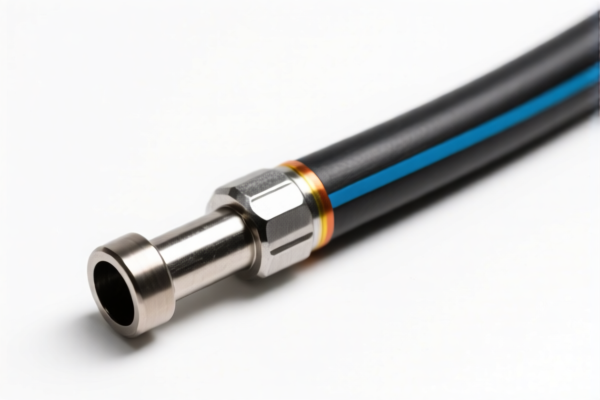
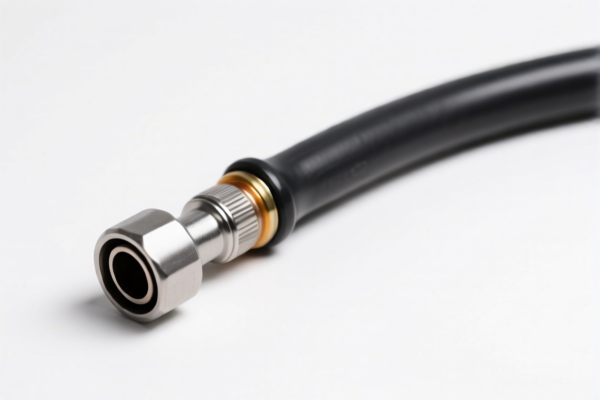
AI Analysis
🚍 Bus Brake Hoses (Brake Fluid Lines)
🌐 HS Code Reference & Customs Clearance Guide | 2026 Latest Tariff Analysis | Professional Clearance Strategy
📌 I. Product Definition & Classification: What Exactly is a "Brake Hose"?
Brake hoses for buses are critical safety components in the vehicle's hydraulic braking system. They transmit brake fluid from the master cylinder to the wheel cylinders or calipers. In international trade, the Harmonized System (HS) classification depends heavily on material composition and specific application structure.
They are generally categorized into two main types based on material: 1. Rubber/Hose-Type Brake Hoses: Flexible tubes made of vulcanized rubber, often reinforced with textile or steel braiding, designed to absorb vibration and movement. 2. Rigid/Accessory-Type Brake Lines: Often classified under "accessories" or "tubes/pipes" if they are metal fittings or rigid connectors attached to the flexible hoses.
⚠️ Key Distinction Point:
- If the product is a flexible tube made of rubber (even with reinforcement) → It falls under Chapter 40 (Rubber).
- If the product is a metal fitting, connector, or rigid tube used in the braking system → It falls under Chapter 73 (Iron/Steel Articles).
- If classified broadly as a vehicle accessory without specific material focus → It may fall under Chapter 87 (Vehicle Accessories).
📦 II. HS Code Classification Details (2026 Latest Tariff Authority Comparison)
| HS Code | Product Description | Inferred Material | Application Scenario | Tax Implication |
|---|---|---|---|---|
4009.12.00.20 |
Rubber hose for brakes, non-rigid | Vulcanized Rubber | Standard flexible brake lines, common in most bus hydraulic systems | 20.0% (Lowest) |
4009.22.00.20 |
Rubber hose for brakes, reinforced | Rubber (Reinforced) | High-pressure brake hoses, often with textile/steel braid | 37.5% (Moderate) |
8708.99.81.05 |
Vehicle accessories for braking | Rubber or Plastic | General braking system components/accessories | 37.5% (Moderate) |
7307.99.50.45 |
Iron/Steel pipe fittings/accessories | Iron or Non-Alloy Steel | Metal connectors, brackets, or rigid parts of the brake system | 89.3% (Highest) |
7307.99.50.60 |
Metal/Reinforced fiber fittings | Metal or Reinforced Fiber | Complex metal fittings or highly reinforced industrial brake parts | 89.3% (Highest) |
🔍 Key Reminder:
- Rubber hoses (4009.xx) are significantly cheaper to import due to lower base tariffs.
- Metal parts (7307.xx) incur heavy additional duties due to Section 301 and Section 232 tariffs.
- Vehicle accessories (8708.xx) sit in the middle but are less specific than Chapter 40 hoses.
💰 III. 2026 Latest Tariff Rate Detailed Breakdown (Including Surcharges)
✅ Applicable Country: United States (US)
✅ Origin: China (CN)
✅ Effective Time: From November 10, 2025 (including subsequent imports)
🎯 1. 4009.12.00.20 —— Rubber Brake Hose (Non-Reinforced/Basic)
| Item | Details |
|---|---|
| Base Tariff | 2.5% (Ad Valorem) |
| Section 301 Surcharge | +7.5% |
| Section 301 (122 Clause) | +10% |
| Total Tariff | 20.0% |
| Tax Calculation | CIF Value × 20% |
| De Minimis Exemption | ❌ Not Eligible (deny_de_minimis) |
| Legal Basis Path | USITC:4009.12.00.20 → FOOTNOTE:301-301 → IEEPA:9903.01.24 |
📌 Explanation:
- This is the most cost-effective classification for flexible rubber brake hoses.
- The "122 Clause" refers to specific additional tariffs on certain Chinese goods.
- Total burden is 20%, which is manageable compared to metal parts.
🎯 2. 4009.22.00.20 —— Reinforced Rubber Brake Hose
| Item | Details |
|---|---|
| Base Tariff | 2.5% |
| Section 301 Surcharge | +25.0% |
| Section 301 (122 Clause) | +10% |
| Total Tariff | 37.5% |
| Tax Calculation | CIF Value × 37.5% |
| De Minimis Exemption | ❌ Not Eligible |
| Legal Basis Path | USITC:4009.22.00.20 → FOOTNOTE:301-301 → IEEPA:9903.01.24 |
📌 Note:
- If the hose is reinforced (e.g., with steel braid or textile), it moves to a higher subheading with a higher Section 301 rate (25%).
- Total burden is 37.5%. Always check if reinforcement is present; if not, use4009.12.
🎯 3. 8708.99.81.05 —— Vehicle Accessory (Brake Hose)
| Item | Details |
|---|---|
| Base Tariff | 2.5% |
| Section 301 Surcharge | +25.0% |
| Section 301 (122 Clause) | +10% |
| Total Tariff | 37.5% |
| Tax Calculation | CIF Value × 37.5% |
| De Minimis Exemption | ❌ Not Eligible |
| Legal Basis Path | USITC:8708.99.81.05 → FOOTNOTE:301-301 → IEEPA:9903.01.24 |
📌 Note:
- This code is used when the item is clearly a vehicle part but the material is ambiguous (plastic/rubber mix).
- Same total rate as reinforced rubber (37.5%), but less specific. Use only if Chapter 40 codes are not applicable.
🎯 4. 7307.99.50.45 —— Iron/Steel Brake Accessories/Fittings
| Item | Details |
|---|---|
| Base Tariff | 4.3% |
| Section 301 Surcharge | +25.0% |
| Section 232 (122 Clause) | +50% (Steel/Aluminum/Copper Products) |
| Total Tariff | 89.3% |
| Tax Calculation | CIF Value × 89.3% |
| De Minimis Exemption | ❌ Not Eligible |
| Legal Basis Path | USITC:7307.99.50.45 → FOOTNOTE:232-Steel → IEEPA:9903.01.24 |
📌 Warning:
- If you are importing metal fittings, brackets, or rigid steel tubes for brakes, the tariff is exorbitant (89.3%).
- The 50% Section 232 tariff is applied specifically to steel/aluminum products.
- Avoid this classification if possible by ensuring the product is described as a "hose" (rubber) rather than a "pipe/fitting" (metal).
🎯 5. 7307.99.50.60 —— Metal/Reinforced Fiber Brake Parts
| Item | Details |
|---|---|
| Base Tariff | 4.3% |
| Section 301 Surcharge | +25.0% |
| Section 232 (122 Clause) | +50% (Steel/Aluminum/Copper Products) |
| Total Tariff | 89.3% |
| Tax Calculation | CIF Value × 89.3% |
| De Minimis Exemption | ❌ Not Eligible |
| Legal Basis Path | USITC:7307.99.50.60 → FOOTNOTE:232-Steel → IEEPA:9903.01.24 |
📌 Warning:
- Same high tariff as above. This code may apply to complex fittings or reinforced metal parts.
- Critical: Ensure your commercial invoice and description emphasize the hose/brake fluid transmission function and rubber composition to argue for Chapter 40 classification.
🛠️ IV. Customs Clearance Practical Advice (Real-World Pitfall Guide)
✅ 1. Essential Documentation Checklist (No Exceptions)
| Document | Required | Description |
|---|---|---|
| ✅ Product Specification Sheet | ✔️ | Must specify material (e.g., "Vulcanized Rubber," "Reinforced with Steel Braid"). |
| ✅ Technical Drawing/Cutaway | ✔️ | To prove the core function is a flexible hose, not a rigid metal pipe. |
| ✅ Product Photos (Labeled) | ✔️ | Clear images of the hose, fittings, and any branding. |
| ✅ Commercial Invoice | ✔️ | Must state: "Brake Hose, Rubber, for Bus Hydraulic System, Model XYZ". Avoid vague terms like "Pipe" or "Fitting" if it's a hose. |
| ✅ Packing List | ✔️ | Detail the relationship between hoses and any attached metal ends. |
| ✅ Certificate of Origin (CO) | ✔️ | To verify Chinese origin and apply correct surcharges. |
✅ 2. Declaration Tips (Key Mnemonic)
🔥 "Rubber Hose is King, Metal is King's Bane! Describe Material, Not Just Shape!"
| Situation | Correct Declaration | Error to Avoid |
|---|---|---|
| Flexible Rubber Hose | 4009.12.00.20 or 4009.22.00.20 |
Misdeclaring as "Metal Pipe" → 89.3% tax |
| Hose with Metal Ends | Declare as Rubber Hose (4009.xx) if rubber is the principal material |
Splitting into "Hose" + "Metal Fitting" → Double taxation risk |
| Pure Metal Fittings | 7307.99.50.45 |
Calling it "Brake Hose" → Customs rejection & penalty |
| General Vehicle Part | 8708.99.81.05 |
Only if material is unclear (e.g., plastic-rubber composite) |
📌 Strategic Advice:
- If the product is >50% rubber by value/weight/function, always argue for Chapter 40.
- The difference between 20% and 89.3% is massive. A $10,000 shipment could save $6,930 in duties by correct classification.
✅ 3. Special Cases Handling
| Scenario | Handling Suggestion |
|---|---|
| Hose with Integrated Metal Fittings | Declare as a single unit under 4009.xx. The metal ends are considered integral parts of the rubber hose. Do NOT split. |
| OEM Custom Brake Lines | Provide customer order + design specs. Ensure specs emphasize "flexible rubber tube." |
| Mixed Containers (Hoses + Fittings) | Separate shipments if possible. If mixed, ensure the primary component is rubber. |
| Used/Refurbished Hoses | Prohibited for brake safety reasons in many jurisdictions. Ensure new goods only. |
🌍 V. Global Market Customs Comparison (2026 Latest)
| Country/Region | Recommended HS Code | Tariff (China Origin) | Certification Required | Notes |
|---|---|---|---|---|
| 🇺🇸 USA | 4009.12.00.20 |
20% (Base) | DOT, FMVSS Compliance | Highest Risk: 301/232 surcharges. |
| 🇨🇳 China | 4009.12.00.20 |
~5-10% | CCC (if applicable) | Lower base rates. |
| 🇪🇺 EU | 4009.12.00 |
0% (Most GSP/FTA) | ECE R12 (Brake Hoses) | No US-style surcharges. |
| 🇬🇧 UK | 4009.12.00 |
0-5% | ECE R12 | Post-Brexit tariffs vary. |
| 🇦🇺 Australia | 4009.12.00 |
5% | ADR Compliance | No major surcharges. |
📌 Conclusion:
- The US is the most expensive market due to Section 301 and 232 tariffs.
- EU and Asia-Pacific offer significantly better duty rates (often 0-5%) and focus more on safety certification (ECE R12) than tariff manipulation.
📌 VI. Common Errors & Pitfalls (Blood Lessons)
❌ Mistake 1: Declaring a Rubber Brake Hose as "Iron Pipe Fitting"
👉 Consequence: Tax jumps from 20% to 89.3%.
💡 Fix: Highlight "Rubber" and "Flexible" in the description.
❌ Mistake 2: Splitting a Rubber Hose with Metal Ends into Two Lines (Hose + Fitting)
👉 Consequence: The metal fitting incurs 89.3% tax, and the hose incurs 20%. Total tax increases.
💡 Fix: Declare as a single composite good under the rubber code (4009.xx).
❌ Mistake 3: Using "Brake Line" Instead of "Brake Hose"
👉 Consequence: "Line" is ambiguous; customs may assume rigid metal.
💡 Fix: Use "Brake Hose" for flexible rubber, "Brake Tube" for rigid metal.
❌ Mistake 4: Ignoring Reinforcement
👉 Consequence: If a hose is reinforced, using 4009.12 (non-reinforced) is false declaration.
💡 Fix: Use 4009.22 if reinforced. The tax is higher (37.5%) than non-reinforced (20%), but it’s legal.
✅ Correct Declaration Example:
"Flexible Rubber Brake Hose, Vulcanized Rubber, Reinforced with Steel Braid, for Bus Hydraulic Braking System, Model BH-100, US DOT Certified"
🎯 VII. Conclusion: Professional Declaration, Save Money, Stay Safe!
🎯 Remember the Golden Rule:
🔹 "Rubber Hose = 20-37%, Metal Fitting = 89.3%. Choose Material, Not Just Function!"
🔹 "HS Code is Life. A 5% difference becomes $50,000 on a $1M shipment!"
📌 Pro Tip:
If your brake hoses are originating from Vietnam, Mexico, or Thailand, you may qualify for IEEPA Exemptions, reducing the effective tariff to 0-5%.
Recommend Advance Ruling (Pre-Classification) for large bulk shipments to mitigate risk.
📣 Immediate Action:
📞 Contact a licensed customs broker + Provide Material Specs + Request HS Code Advance Ruling
🚀 Ensure your Bus Brake Hoses pass customs smoothly, efficiently, and profitably!
✨ Professional Clearance Starts with Accurate Classification!
💼 Every Cent Saved Counts!
Customer Reviews
About HS Code Classification
The Harmonized System (HS) is an internationally standardized nomenclature developed by the World Customs Organization (WCO) to classify traded products. Over 200 countries use the HS system as the basis for customs tariffs, trade statistics, and import/export regulations.
Each HS code follows a hierarchical structure:
- Chapter (2 digits) — Broad category of goods (e.g., Chapter 84: Machinery and Mechanical Appliances)
- Heading (4 digits) — More specific grouping within the chapter
- Subheading (6 digits) — Internationally standardized breakdown, used by all WCO member countries
- National subdivisions (8-10 digits) — Country-specific extensions for further classification, such as US HTSUS 10-digit codes
Correct HS code classification is essential for smooth customs clearance, accurate duty payment, and compliance with trade regulations. Misclassification can lead to customs delays, overpayment of duties, or penalties.
When importing from CN to US, the applicable tariff rates may include:
- Most-Favored-Nation (MFN) rate — The standard duty rate applied to WTO members
- General rate — Applied to countries without trade agreements
- Trade remedy duties — Additional tariffs such as Section 301 (anti-dumping), Section 232 (national security), or countervailing duties
The information provided on this page is for reference purposes only. For official classification, please consult with your local customs authority or a licensed customs broker.