其他保存的牛皮
CN → US| HS Code | Tariff Rate | Origin | Destination | Doc |
|---|---|---|---|---|
| 4107194000 | 12.5% | CN | US | Official Doc |
| 4107994000 | 12.5% | CN | US | Official Doc |
| 4101901030 | 17.5% | CN | US | Official Doc |
| 4101501020 | 17.5% | CN | US | Official Doc |
| 4104195080 | 13.3% | CN | US | Official Doc |
| 4104495000 | 13.3% | CN | US | Official Doc |
Product Images
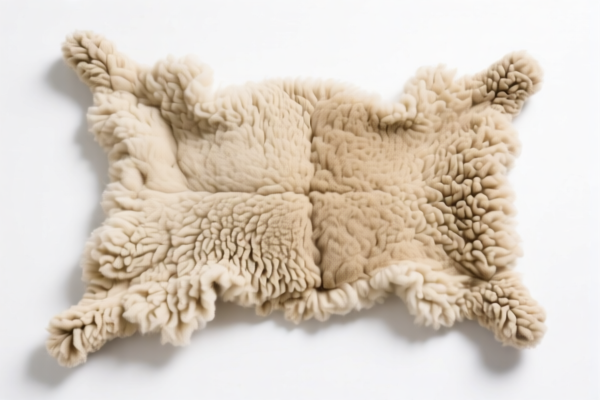
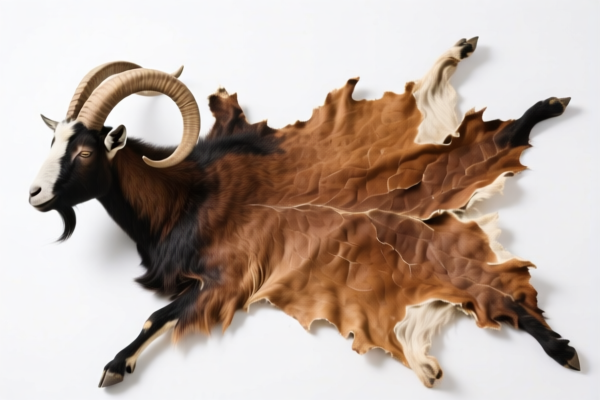
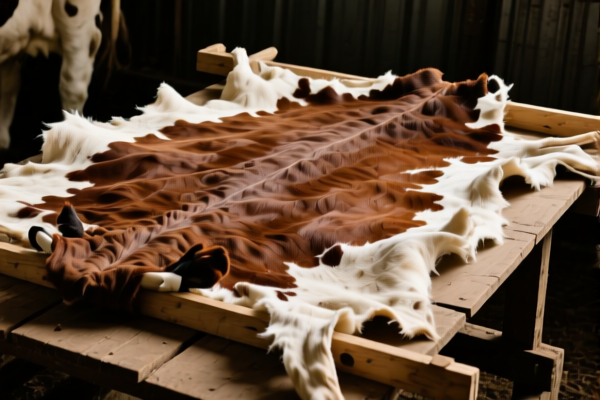
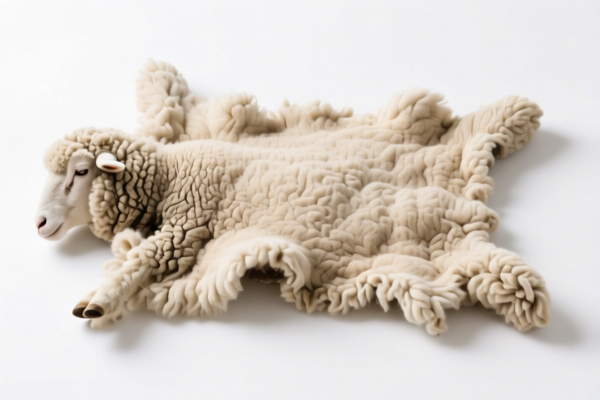
AI Analysis
🐄 Raw Cattle Hide – Other Preservation Methods
🌐 HS Code Reference & Customs Clearance Guide | 2026 Latest Tariff Breakdown | Professional Import Strategy
📌 One, Product Definition & Classification: What Exactly Is "Other Preserved Raw Cattle Hide"?
Raw cattle hide is a fundamental material in leather manufacturing, used for shoes, bags, furniture, automotive interiors, and more. In international trade, it is classified based on preservation method, processing stage, and intended use.
⚠️ Key Classification Point:
- If the hide is preserved using chemicals (e.g., salt, formalin, or preservatives) but not tanned or fully processed, it falls under "Other Preserved" category.
- This includes hides preserved by drying, salting, or chemical treatment to prevent decay during storage or transport — but not yet converted into finished leather.📌 Note:
- "Other preservation" refers to methods other than liming, pickling, or full tanning.
- It does not include hides already tanned (e.g., chrome-tanned, vegetable-tanned), which fall under different HS codes (e.g., 4102, 4103, 4104).
📦 Two, HS Code Classification Details (2026 Latest Tariff Authority Match)
| HS Code | Product Description | Applicable Use Case | Preservation Method |
|---|---|---|---|
4104.19.50.80 |
Raw cattle hide, other preservation methods | General leather production, industrial use | Salting, drying, chemical preservatives |
4101.90.10.30 |
Raw cattle hide, other preservation methods | Export-grade hides, tanneries in developing markets | Salting, drying, chemical treatment |
4101.50.10.20 |
Raw cattle hide, other preservation methods | Industrial hides, bulk shipments | Salting, drying, preservatives |
4107.99.40.00 |
Raw cattle hide, other preservation methods | Miscellaneous hides, non-standard grades | Drying, salting, chemical treatment |
4104.49.50.00 |
Raw cattle hide, preserved (other methods) | General use, export to non-EU countries | Salting, drying, preservatives |
🔍 Critical Reminder:
- All these codes apply only if the hide is preserved but not tanned.
- If the hide is tanned or chemically processed beyond preservation → must be reclassified (e.g., 4102, 4103, 4104.10, etc.).
- Do not confuse "preserved" with "tanned" — this is the #1 cause of misclassification.
💰 Three, 2026 Latest Tariff Rate Breakdown (With附加 Taxes & Policy Clauses)
✅ Applicable Country: United States (US)
✅ Origin: China (CN)
✅ Effective Date: November 10, 2025 (including subsequent imports)
🎯 1. 4104.19.50.80 — Raw Cattle Hide, Other Preservation
| Item | Detail |
|---|---|
| Base Duty Rate | 3.3% (ad valorem) |
| Additional Tariff (Section 301) | 0% |
| Section 122 Tariff (IEEPA) | 10% |
| Total Effective Duty | 13.3% |
| Tax Calculation | CIF Value × 13.3% |
| De Minimis Threshold | ❌ Not applicable (denied) |
| Legal Basis Path | IEEPA:9903.01.25 → Section 122: 4104.19.50.80 → FOOTNOTE:9903.88.01 |
📌 Explanation:
- 3.3% base tariff applies to raw hides under this subheading.
- 10% Section 122 tariff is part of the International Emergency Economic Powers Act (IEEPA) — applies to Chinese-origin goods under specific trade actions.
- No Section 301 (USITC) tariff applies here — this code is exempt from the 7.5% USITC additional duty.
🎯 2. 4101.90.10.30 — Raw Cattle Hide, Other Preservation
| Item | Detail |
|---|---|
| Base Duty Rate | 0% |
| Additional Tariff (Section 301) | 7.5% |
| Section 122 Tariff (IEEPA) | 10% |
| Total Effective Duty | 17.5% |
| Tax Calculation | CIF Value × 17.5% |
| De Minimis Threshold | ❌ Not applicable |
| Legal Basis Path | USITC:8524.11.10.00 → Section 301: 4101.90.10.30 → IEEPA:9903.01.25 |
📌 Explanation:
- 0% base tariff — but 7.5% USITC Section 301 tariff applies due to China’s trade practices.
- 10% IEEPA Section 122 tariff applies to all Chinese-origin goods under this program.
- Total: 17.5% — highest among listed codes.
🎯 3. 4101.50.10.20 — Raw Cattle Hide, Other Preservation
| Item | Detail |
|---|---|
| Base Duty Rate | 0% |
| Additional Tariff (Section 301) | 7.5% |
| Section 122 Tariff (IEEPA) | 10% |
| Total Effective Duty | 17.5% |
| Tax Calculation | CIF Value × 17.5% |
| De Minimis Threshold | ❌ Not applicable |
| Legal Basis Path | USITC:8524.11.10.00 → Section 301: 4101.50.10.20 → IEEPA:9903.01.25 |
📌 Note:
- Identical to4101.90.10.30in tariff treatment.
- Applies to raw hides not classified under 4101.10 or 4101.30 — often used for lower-grade or mixed-grade hides.
🎯 4. 4107.99.40.00 — Raw Cattle Hide, Other
| Item | Detail |
|---|---|
| Base Duty Rate | 2.5% |
| Additional Tariff (Section 301) | 0% |
| Section 122 Tariff (IEEPA) | 10% |
| Total Effective Duty | 12.5% |
| Tax Calculation | CIF Value × 12.5% |
| De Minimis Threshold | ❌ Not applicable |
| Legal Basis Path | IEEPA:9903.01.25 → Section 122: 4107.99.40.00 → FOOTNOTE:9903.88.01 |
📌 Explanation:
- 2.5% base duty — slightly higher than some other codes.
- No Section 301 tariff — this code is exempt from the 7.5% USITC duty.
- 10% IEEPA tariff still applies.
- Often used for miscellaneous or non-standard hides.
🎯 5. 4104.49.50.00 — Raw Cattle Hide, Preserved (Other Methods)
| Item | Detail |
|---|---|
| Base Duty Rate | 3.3% |
| Additional Tariff (Section 301) | 0% |
| Section 122 Tariff (IEEPA) | 10% |
| Total Effective Duty | 13.3% |
| Tax Calculation | CIF Value × 13.3% |
| De Minimis Threshold | ❌ Not applicable |
| Legal Basis Path | IEEPA:9903.01.25 → Section 122: 4104.49.50.00 → FOOTNOTE:9903.88.01 |
📌 Note:
- Same as4104.19.50.80— identical tariff treatment.
- Used for preserved hides not covered under more specific subheadings.
🛠️ Four, Customs Clearance Practical Tips (Pro Tips to Avoid Penalties)
✅ 1. Required Documentation (Must-Have List)
| Document | Required? | Notes |
|---|---|---|
| ✅ Commercial Invoice | ✔️ | Clearly state: "Raw Cattle Hide, Preserved by Salting/Drying" |
| ✅ Packing List | ✔️ | Include weight, quantity, preservation method |
| ✅ Certificate of Origin (CO) | ✔️ | Critical for tariff eligibility |
| ✅ Product Specifications | ✔️ | Detail preservation method (e.g., "salted", "dried", "chemically treated") |
| ✅ Photos of Hides (with labels) | ✔️ | Show surface, condition, markings |
| ✅ Third-Party Lab Report | ✔️ | If required (e.g., for chemical residue, safety) |
| ✅ Bill of Lading / Air Waybill | ✔️ | Proof of shipment |
✅ 2. Declaration Strategy (Golden Rules)
🔥 "Preservation Method First, Tanning Last — One Mistake, 17.5% Tax!"
| Scenario | Correct HS Code | Wrong Code | Risk |
|---|---|---|---|
| Hides preserved by salting, not tanned | 4101.90.10.30 or 4104.19.50.80 |
4102.10.00 (tanned) |
45%+ penalty |
| Hides dried, no tanning | 4107.99.40.00 |
4104.49.50.00 |
Misclassification |
| Hides with chemical preservatives | 4101.50.10.20 |
4104.19.50.80 |
Tax underpayment |
| Mixed-grade hides | 4107.99.40.00 |
4101.90.10.30 |
Audit risk |
✅ 3. Special Case Handling
| Situation | Recommendation |
|---|---|
| Hides from Vietnam/Mexico | Apply for IEEPA exemption — 0% Section 122 tariff |
| Hides with trace chemicals | Provide toxicology report — avoid delays |
| Bulk shipment with mixed preservation | Declare by type — do not lump together |
| Hides used for export to EU | Check REACH compliance — avoid import bans |
🌍 Five, Global Customs Comparison (2026 Update)
| Country | Recommended HS Code | Tariff | Certification | Notes |
|---|---|---|---|---|
| 🇺🇸 USA | 4101.90.10.30 / 4104.19.50.80 |
13.3%–17.5% | FDA, EPA, FSC | IEEPA + Section 301 apply |
| 🇨🇳 China | 4101.90.10.30 |
0% | CCC, ISO | No extra tariffs |
| 🇪🇺 EU | 4101.90.10.30 |
0% (if compliant) | REACH, CE | No IEEPA/Section 122 |
| 🇦🇺 Australia | 4101.90.10.30 |
0% | RCM | No additional duties |
| 🇯🇵 Japan | 4101.90.10.30 |
0% | PSE | No extra tariffs |
📌 Conclusion:
- USA is the only market with dual tariffs (Section 301 + IEEPA).
- China-origin hides face the highest effective duty (17.5%).
- Non-Chinese origin hides (e.g., Vietnam, Brazil) may avoid IEEPA — critical for cost planning.
📌 Six, Common Mistakes & Avoidance Guide (Learn from Others’ Errors)
❌ Mistake 1: Declaring "tanned leather" as "preserved hide"
👉 Result: Underpaid duty → $50k+ penalties + audits
❌ Mistake 2: Using 4104.19.50.80 for tanned hides
👉 Result: Misclassification → 45% tax gap
❌ Mistake 3: Not specifying preservation method in invoice
👉 Result: Customs delays, request for clarification, possible detention
❌ Mistake 4: Combining different preservation types in one shipment
👉 Result: Incorrect HS Code → total tax miscalculation
✅ Best Practice:
Use clear, technical language:
"Raw Cattle Hide, Salt-Preserved, Dried, Not Tanned, for Leather Production"
🎯 Seven, Final Verdict: Precision Pays Off!
🎯 Remember the Mantra:
🔹 "Preserve First, Tannage Last — One Word Wrong, Tax Doubles!"
🔹 "HS Code Is Your Shield — Misclassify Once, Pay 17.5% More!"
📌 Pro Tip:
If your hides are originating from Vietnam, India, or Brazil, apply for IEEPA exemption — reduce tax from 17.5% to 0%.
✅ Request an Advance Ruling (Pre-Clearance) — avoid surprises.
📣 Act Now:
📞 Contact a specialized customs broker + Submit product photos + Apply for HS Code pre-ruling
🚀 Get your hides cleared fast, legally, and profitably!
✨ Smart Customs, Smarter Business!
💼 Your hide’s value depends on its classification — get it right the first time!
Customer Reviews
About HS Code Classification
The Harmonized System (HS) is an internationally standardized nomenclature developed by the World Customs Organization (WCO) to classify traded products. Over 200 countries use the HS system as the basis for customs tariffs, trade statistics, and import/export regulations.
Each HS code follows a hierarchical structure:
- Chapter (2 digits) — Broad category of goods (e.g., Chapter 84: Machinery and Mechanical Appliances)
- Heading (4 digits) — More specific grouping within the chapter
- Subheading (6 digits) — Internationally standardized breakdown, used by all WCO member countries
- National subdivisions (8-10 digits) — Country-specific extensions for further classification, such as US HTSUS 10-digit codes
Correct HS code classification is essential for smooth customs clearance, accurate duty payment, and compliance with trade regulations. Misclassification can lead to customs delays, overpayment of duties, or penalties.
When importing from CN to US, the applicable tariff rates may include:
- Most-Favored-Nation (MFN) rate — The standard duty rate applied to WTO members
- General rate — Applied to countries without trade agreements
- Trade remedy duties — Additional tariffs such as Section 301 (anti-dumping), Section 232 (national security), or countervailing duties
The information provided on this page is for reference purposes only. For official classification, please consult with your local customs authority or a licensed customs broker.