其他家具
CN → US| HS Code | Tariff Rate | Origin | Destination | Doc |
|---|---|---|---|---|
| 9403200050 | 85.0% | CN | US | Official Doc |
| 9403608093 | 35.0% | CN | US | Official Doc |
| 9401806030 | 35.0% | CN | US | Official Doc |
| 9401698090 | 35.0% | CN | US | Official Doc |
Product Images
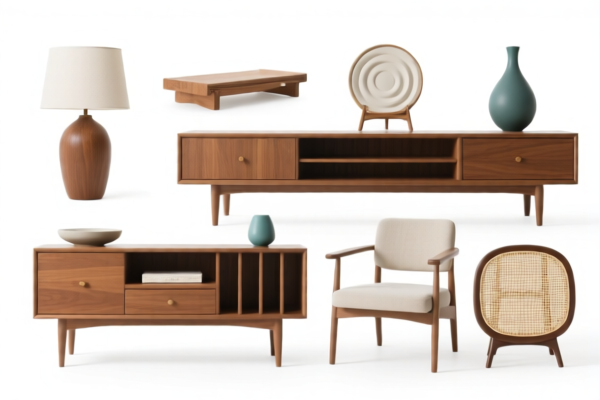
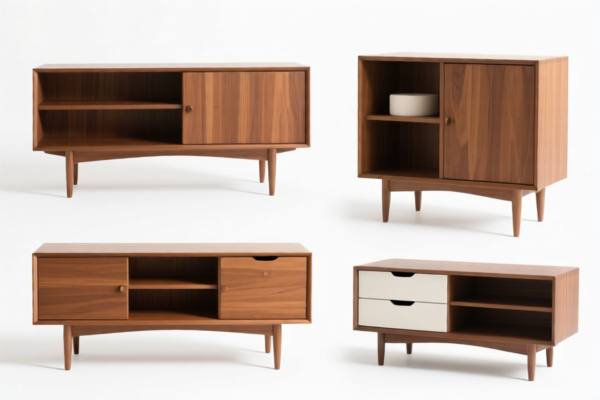
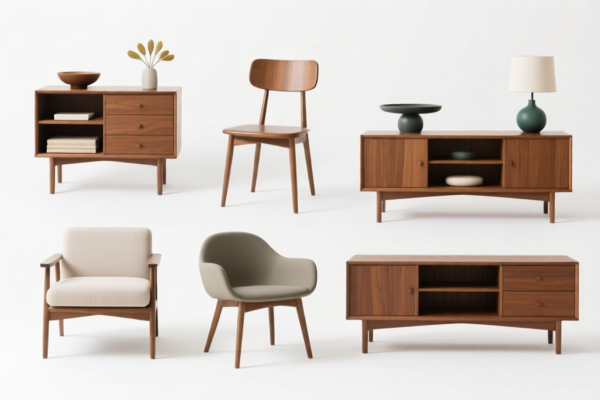
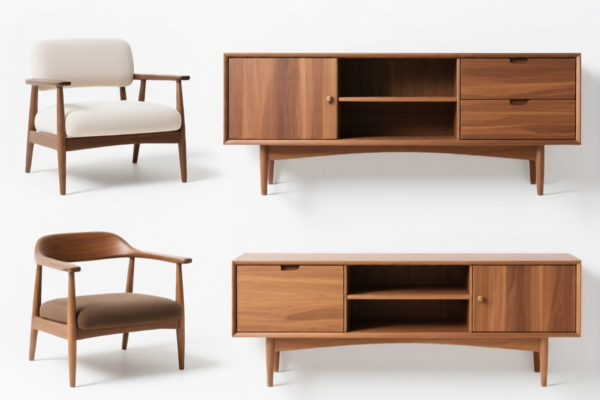
AI Analysis
🪑 Other Furniture (General Category / Fallback Classification)
🌐 HS Code Reference & Customs Clearance Guide | 2026 Latest Tariff Analysis | Professional-Level Strategy
📌 I. Product Definition & Classification: What is "Other Furniture"?
"Other Furniture" is a residual (catch-all) category in the Harmonized System (HS). It is used when a specific type of furniture (e.g., wooden, metal, upholstered) does not fit into the primary, detailed headings.
In international trade, this category often serves as a "Fallback Classification" for items that: 1. Have mixed materials (e.g., wood + metal + plastic); 2. Are unique or non-standard shapes; 3. Do not fit neatly into the specific "Wood," "Metal," or "Upholstered" subheadings.
⚠️ Key Classification Principle:
- If the furniture has a specific primary material (e.g., 90% metal), it should ideally be classified under the metal furniture heading (9403.20).
- However, if the material composition is ambiguous or mixed, customs often defaults to "Other Furniture" (9401.80,9403.60, etc.).
- Critical Risk: Many "Other Furniture" codes attract high additional tariffs due to US trade policies (Section 301 & Section 122).
📦 II. HS Code Classification Details (2026 Latest Tariff Reference)
Based on the provided data, here are the specific HS codes for "Other Furniture" and their tax implications:
| HS Code | Product Description | Summary / Logic | Total Tax Rate |
|---|---|---|---|
9401.80.60.30 |
Other Seats/Furniture | Fallback Category. No logical conflict with the general furniture family. | 35.0% |
9403.20.00.50 |
Other Furniture (Metal-like) | Likely Metal Material. Usage matches. High Risk due to steel/aluminum surcharge. | 85.0% |
9403.60.80.93 |
Other Furniture | Name and classification are consistent. Default Matching. | 35.0% |
9401.69.80.90 |
Other Seats/Furniture | Fallback Category. No obvious material conflict. | 35.0% |
9403.99.90.61 |
Parts of Furniture | "Other Furniture Parts". Usage matches furniture parts. Fallback Category. | 35.0% |
🔍 Key Insight:
- Most "Other Furniture" items (9401.80,9403.60,9403.99) fall into the 35% bracket.
- Beware:9403.20.00.50is classified as 85%. Even though it's labeled "Other Furniture," the system flags it as potentially Steel/Aluminum/Copper, triggering a massive 50% additional surcharge.
- Do NOT assume "Other Furniture" is always cheap. Material composition drives the highest rates.
💰 III. 2026 Latest Tariff Rate Breakdown (Including Additional Duties)
✅ Applicable Country: USA (US)
✅ Origin: China (CN)
✅ Effective Date: Includes imports from Nov 10, 2025, onwards
🎯 1. Standard "Other Furniture" Codes (9401.80.60.30, 9403.60.80.93, 9401.69.80.90, 9403.99.90.61)
| Item | Content |
|---|---|
| Base Duty Rate | 0.0% (Ad Valorem) |
| Additional Duty (Section 301) | +25.0% |
| Section 122 Duty | +10.0% |
| Total Effective Rate | 35.0% |
| Tax Calculation | CIF Value × 35% |
| De Minimis Exemption | ❌ Not Available (deny_de_minimis) |
| Legal Basis Path | Section 301: 25% → Section 122: 10% → HS Code |
📌 Explanation:
- "Base Duty 0%": Most furniture has a low base duty.
- "Additional 25%": From US Trade Law Section 301 (Targeting Chinese goods).
- "Section 122 10%": Additional surcharge on Chinese imports under specific executive orders.
- Total 35%: This is a fixed high rate for general "Other Furniture." No steel/aluminum penalty applies here.
🎯 2. High-Risk "Metal-Like" Furniture (9403.20.00.50)
| Item | Content |
|---|---|
| Base Duty Rate | 0.0% |
| Additional Duty (Section 301) | +25.0% |
| Section 122 Duty | +10.0% |
| Steel/Aluminum/Copper Surcharge | +50.0% |
| Total Effective Rate | 85.0% |
| Tax Calculation | CIF Value × 85% |
| De Minimis Exemption | ❌ Not Available (deny_de_minimis) |
| Legal Basis Path | Section 301: 25% → Section 122: 10% → IEEPA: Steel/Al/Cu 50% → HS Code |
📌 WARNING:
- This code triggers the Steel/Aluminum/Copper Products Surcharge.
- Even if the item is called "Other Furniture," if it contains significant metal parts, customs may apply the 50% surcharge.
- Total 85% is extremely high. Misclassification here can destroy profit margins.
🛠️ IV. Customs Clearance Practical Advice (Battle-Tested Pitfall Guide)
✅ 1. Required Documentation Checklist (Non-Negotiable)
| Document | Must Provide? | Notes |
|---|---|---|
| ✅ Product Specification Sheet | ✔️ | Must detail materials (e.g., "80% Wood, 20% Metal"). Crucial for avoiding the 85% rate. |
| ✅ Material Composition Statement | ✔️ | Explicitly state if any part is Steel, Aluminum, or Copper. |
| ✅ Product Photos (Labeled) | ✔️ | Show the entire item. Close-ups of joints/materials. |
| ✅ Commercial Invoice | ✔️ | Clearly describe as "Other Furniture" or specify material (e.g., "Wooden Shelf"). |
| ✅ Packing List | ✔️ | Ensure no missing accessories that could change classification. |
| ✅ Third-Party Certifications | ✔️ | If applicable (e.g., FIRA for wood, CPSC for safety). |
✅ 2. Declaration Strategy (Key Mantra)
🔥 "Material First, Category Second, Avoid Metal Label!"
| Scenario | Correct Declaration | Wrong Practice |
|---|---|---|
| Mixed Material Furniture | Use 9403.60.80.93 (35%) |
Declare as "Metal Furniture" → 85% |
| Wooden/Metal Mix | Emphasize Wood as primary material | Let customs guess → Risk of 85% |
| Furniture Parts | Use 9403.99.90.61 (35%) |
Declare as "Raw Steel" → Higher penalties |
| General "Other" | Use 9401.80.60.30 (35%) |
Omit HS Code → Clearance Delay |
✅ 3. Special Situation Handling
| Situation | Handling Advice |
|---|---|
| Mixed Material (Wood + Metal) | If metal is <50% by weight/value, argue for non-metal classification (35%). |
| Metal Frame + Wood Top | Provide Bill of Materials (BOM). Argue primary use is wood storage/seating. |
| "Other Furniture" Parts | Ensure parts are specifically for furniture. Generic metal brackets may be classified as steel articles. |
| OEM Custom Furniture | Provide design drawings. Avoid generic terms like "Metal Stand." Use "Wooden Display Rack with Metal Supports." |
🌍 V. Global Market Comparison (2026 Latest)
| Country/Region | Recommended HS Code | Tariff Rate | Notes |
|---|---|---|---|
| 🇺🇸 USA | 9403.60.80.93 |
35% (Standard) 85% (Metal) |
High tariffs due to Section 301 & 122. Avoid "Metal" if possible. |
| 🇨🇳 China | 9403.60.80.93 |
5-10% | Lower base duty. No additional surcharges for exports to China. |
| 🇪🇺 EU | 9403.60.80.93 |
0-6% | Depends on material. No Section 301/122. |
| 🇬🇧 UK | 9403.60.80.93 |
0-6% | Post-Brexit tariffs are generally favorable for furniture. |
| 🇦🇺 Australia | 9403.60.80.93 |
5% | Generally low tariffs. No additional US-style surcharges. |
📌 Conclusion:
- The USA is the only major market with these punitive 35% and 85% rates.
- For US exports, material declaration is critical. Misclassifying a wooden item as "metal-containing" can double your tax burden.
📌 VI. Common Mistakes & Pitfall Guide (Lessons from Blood and Tears)
❌ Mistake 1: Declaring a wooden chair as "Metal Furniture" to avoid "Upholstered" classification.
👉 Consequence: Tax jumps from 35% to 85%. Profit wiped out.
❌ Mistake 2: Using vague terms like "Furniture Part" for steel brackets.
👉 Consequence: Customs reclassifies as "Steel Articles" → 50% additional surcharge + penalties.
❌ Mistake 3: Assuming "Other Furniture" means low tax.
👉 Consequence: Ignoring Section 122 (10%) and Section 301 (25%) → Unbudgeted 35% cost.
❌ Mistake 4: Splitting shipments (e.g., sending metal frames separately).
👉 Consequence: Each package is assessed individually. Metal frames alone attract 85%. Total tax increases.
✅ Correct Approach:
"Wooden Side Table with Metal Legs, Model XYZ, 80% Wood, 20% Metal, for Home Use."
🎯 VII. Conclusion: Precise Classification Saves Money!
🎯 Remember the Mantra:
🔹 "Material is King, Section 301 is Real!"
🔹 "If it's not Metal, fight for 35%. If it is, prepare for 85%."
🔹 "35% is the ceiling for general furniture. 85% is the steel trap."
📌 Pro Tip:
- If your product has any steel/aluminum content, consider re-engineering to use more wood/plastic to stay under the "Other Furniture" 35% bracket.
- Request a Binding Tariff Information (BTI) or US CBP Ruling for high-volume items to avoid surprises.
- Always declare the primary material clearly on the commercial invoice.
📣 Immediate Action:
📞 Contact your customs broker with the BOM (Bill of Materials).
🚀 Ensure your HS Code is9403.60.80.93(or similar 35% code), NOT9403.20(85%).
💼 Your profit margin depends on this 50% difference!
✨ Professional Clearance Starts with Accurate Classification!
💼 Every Percent Counts in Furniture Trade!
Customer Reviews
About HS Code Classification
The Harmonized System (HS) is an internationally standardized nomenclature developed by the World Customs Organization (WCO) to classify traded products. Over 200 countries use the HS system as the basis for customs tariffs, trade statistics, and import/export regulations.
Each HS code follows a hierarchical structure:
- Chapter (2 digits) — Broad category of goods (e.g., Chapter 84: Machinery and Mechanical Appliances)
- Heading (4 digits) — More specific grouping within the chapter
- Subheading (6 digits) — Internationally standardized breakdown, used by all WCO member countries
- National subdivisions (8-10 digits) — Country-specific extensions for further classification, such as US HTSUS 10-digit codes
Correct HS code classification is essential for smooth customs clearance, accurate duty payment, and compliance with trade regulations. Misclassification can lead to customs delays, overpayment of duties, or penalties.
When importing from CN to US, the applicable tariff rates may include:
- Most-Favored-Nation (MFN) rate — The standard duty rate applied to WTO members
- General rate — Applied to countries without trade agreements
- Trade remedy duties — Additional tariffs such as Section 301 (anti-dumping), Section 232 (national security), or countervailing duties
The information provided on this page is for reference purposes only. For official classification, please consult with your local customs authority or a licensed customs broker.