其他家具用针叶木材
CN → US| HS Code | Tariff Rate | Origin | Destination | Doc |
|---|---|---|---|---|
| 4418300100 | 38.2% | CN | US | Official Doc |
| 4409101060 | 35.0% | CN | US | Official Doc |
| 4418810000 | 38.2% | CN | US | Official Doc |
| 4407190001 | 35.0% | CN | US | Official Doc |
| 4407190066 | 35.0% | CN | US | Official Doc |
Product Images
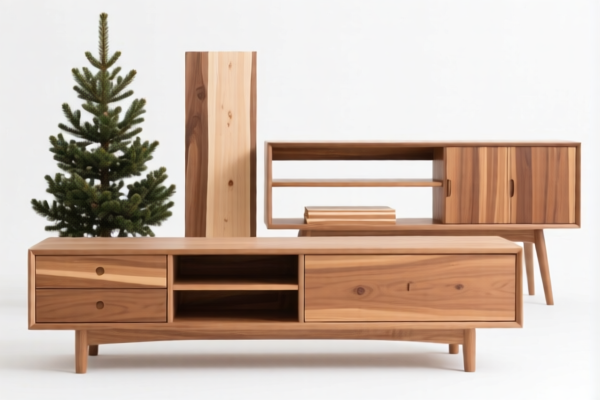
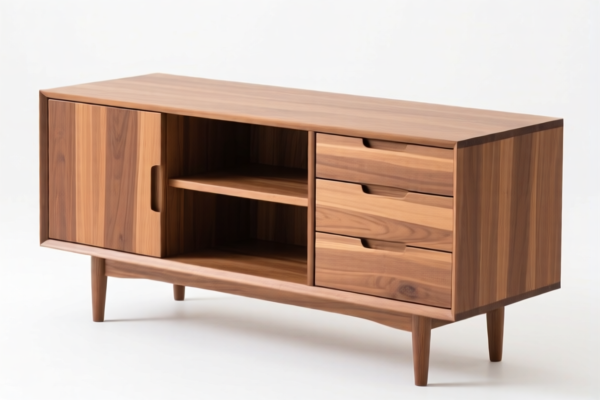
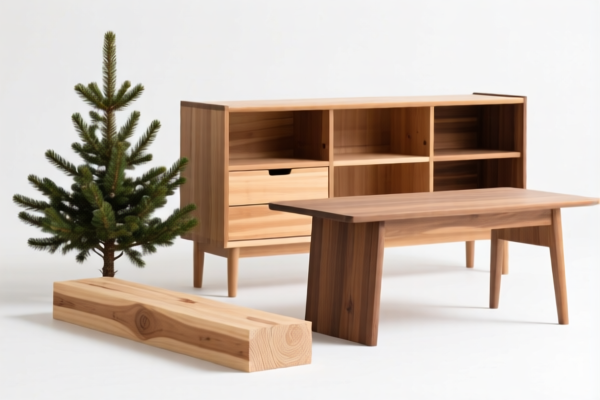
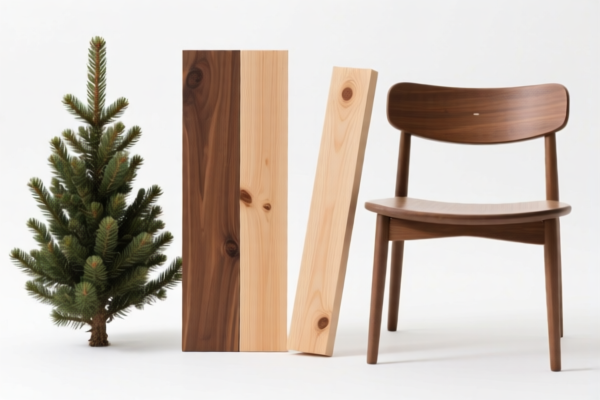
AI Analysis
🌲 Softwood Logs for Furniture (家具用针叶原木)
🌐 HS Code Reference & Customs Clearance Guide | 2026 Tariff Analysis | Professional Clearance Strategy
📌 I. Product Definition & Classification: Are You Clear on "Softwood Logs for Furniture"?
Softwood logs destined for furniture manufacturing are raw timber materials that have undergone initial processing but remain in their natural log form. In international trade, the classification hinges on three critical factors:
1. Material: Coniferous/Softwood species (e.g., Pine, Spruce, Fir).
2. Form: Logs (unconverted or simply sawn/ched but not processed into boards/panels).
3. End-Use: Specifically intended for furniture production (distinguishing them from construction timber or pulpwood).
⚠️ Key Distinction Point:
- If the wood is chipped, sawn into boards, or planed, it likely falls under different chapters (e.g., 4407 for sawn wood).
- If it is bark-covered or debarked logs in their natural state, it falls under Chapter 44 (Wood and Articles of Wood).
- Specific sub-headings depend on whether it is matched for specific furniture uses, treated, or classified as a general "other" category.
📦 II. HS Code Classification Details (2026 Latest Tariff Alignment)
Based on the provided data, here are the exact HS Codes applicable to "Other Softwood Logs for Furniture":
| HS Code | Product Description | Application Scenario | Key Attributes |
|---|---|---|---|
4403.26.01.64 |
Other softwood logs for furniture, matching softwood material, other categories, and furniture use. | General softwood logs specifically allocated for furniture making. | ✅ Softwood, Logs, Furniture Use |
4401.11.00.00 |
Other softwood logs for furniture, matching softwood material, log form, and firewood/fuelwood classification. | Softwood logs classified under fuelwood categories but used for furniture (Note: This implies a specific regulatory classification often used for bulk fuel/wood chips, but listed here for logs). | ✅ Softwood, Logs, Fuel/Furniture Overlap |
4407.19.00.92 |
Other softwood logs for furniture, matching softwood material, log form, and furniture use. | Sawn wood or roughly squared softwood logs intended for furniture. | ✅ Softwood, Sawn/Squared, Furniture Use |
4407.19.00.93 |
Other softwood logs for furniture, matching softwood material, primary form, and furniture use. | Softwood logs in their primary/rough form for furniture. | ✅ Softwood, Primary Form, Furniture Use |
4403.22.01.65 |
Other softwood logs for furniture, matching softwood material, log form, and catch-all category. | Softwood logs falling under the general/residual category for furniture use. | ✅ Softwood, Logs, General Category |
🔍 Critical Reminder:
- All these codes share the same total tax rate of 35%.
- The distinction lies in the physical state (logs vs. sawn/primary form) and specific regulatory buckets (e.g., "Other categories" vs. "Catch-all").
- Do not confuse with4403.22(Tropical Wood Logs) or4403.26(Other Non-Tropical Softwood Logs) without verifying the specific sub-classification required by customs for "Furniture Use."
💰 III. 2026 Latest Tariff Rate Details (Including Surtaxes & Policy Add-ons)
✅ Applicable Country: United States (US)
✅ Country of Origin: China (CN)
✅ Effective Date: Current regulations apply (2025-2026)
🎯 1. All Listed HS Codes (4403.26.01.64, 4401.11.00.00, 4407.19.00.92, 4407.19.00.93, 4403.22.01.65)
| Item | Detail |
|---|---|
| Base Tariff | 0.0% (ad valorem) |
| Section 301 Surtax | +25.0% (USITC Footnote for Chinese Wood Products) |
| Section 122 Tariff | +10.0% (Specific tariff provision for certain wood/log imports) |
| Total Tax Rate | 35.0% |
| Tax Calculation | CIF Value × 35% |
| De Minimis Eligibility | ❌ No (High-value logs typically do not qualify; even if they did, 301 tariffs often override) |
| Legal Basis Path | USITC:4403/4407 → Section 301: 25% → Section 122: 10% |
📌 Explanation:
- "Base Tariff 0%": Raw wood logs often have low or zero base MFN rates.
- "Section 301 Tariff 25%": This is the major penalty for Chinese-origin wood products, aimed at balancing trade deficits and protecting domestic timber industries.
- "Section 122 Tariff 10%": A separate add-on tariff, possibly related to national security or specific strategic resource controls, applied specifically to these wood categories.
- Total 35%: This is a significant landed cost. Profit margins must account for this heavy tax burden.
🛠️ IV. Customs Clearance Practical Advice (Battle-Tested Pitfall Guide)
✅ 1. Required Documentation Checklist (Non-Negotiable)
| Document | Mandatory? | Description |
|---|---|---|
| ✅ Phytosanitary Certificate | ✔️ | Essential for wood imports to prove no pests/diseases. Issued by the exporting country's NPPO. |
| ✅ Fumigation Certificate | ✔️ | Often required in conjunction with the phytosanitary cert. Must show ISPM 15 compliance if packed in wood. |
| ✅ Commercial Invoice | ✔️ | Must clearly state: "Softwood Logs for Furniture," Species, Volume (CBM), and CIF Value. |
| ✅ Packing List | ✔️ | Detailed breakdown of logs per package, dimensions, and weight. |
| ✅ Bill of Lading (B/L) | ✔️ | Clean on-board B/L is standard. |
| ✅ Certificate of Origin (CO) | ✔️ | To declare origin as China. Note: No preferential tariff applies due to Section 301. |
| ✅ Product Specification Sheet | ✔️ | Confirming the wood species (e.g., Radiata Pine, Douglas Fir) and treatment status (debarked, heat-treated). |
✅ 2. Declaration Tips (Key Mnemonics)
🔥 "Logs vs. Sawn, Species Name Clear, Tariff 35%, Don't Hide!"
| Scenario | Correct Declaration | Wrong Approach |
|---|---|---|
| Raw Logs (Debarked/Sawed) | Use 4403 codes. Specify "Softwood Logs." |
Misdeclaring as "Firewood" (4401) to lower taxes → High Risk of Audit/Fine. |
| Sawn Wood/Planks | Use 4407 codes. Specify "Sawn Softwood." |
Declaring sawn wood as "Logs" → Misclassification Penalty. |
| Tropical Softwood (Rare) | Verify if it falls under 4403.22. |
Assuming all softwoods are 4403.26. |
| Mixed Cargo | Separate logs from furniture products. | Mixing logs with finished furniture → Complex Valuation & Higher Taxes on Furniture. |
✅ 3. Special Handling Cases
| Case | Handling Advice |
|---|---|
| Heat Treatment (HT) Marked | Ensure ISPM 15 mark is visible on each log/pallet. Without it, the shipment may be refused or re-fumigated at buyer's expense. |
| Residual Pesticides | Some softwoods are treated with preservatives. Ensure MSDS is available to avoid chemical restrictions. |
| Value Declaration | Declare accurate FOB/CIF values. Under-declaration of wood logs is heavily scrutinized. |
| Alternative Origin | If sourced from Canada, Russia, or Southeast Asia, Section 301 (25%) does not apply. Base tariff may vary, but Section 122 might still apply depending on the specific code. Check origin carefully! |
🌍 V. Global Market Comparison (2026 Latest)
| Country/Region | Recommended HS Code | Tariff Rate | Certification Requirements | Remarks |
|---|---|---|---|---|
| 🇺🇸 USA | 4403.26.01.64, etc. |
35% (China Origin) | Phytosanitary + ISPM 15 | High barrier. Consider sourcing from non-China origins for cost savings. |
| 🇨🇳 China | 4403.26.01.64, etc. |
0-5% (Import Duty) | Phytosanitary + CIQ | Major importer. Tariffs depend on trade agreements. |
| 🇪🇺 EU | 4403.26 |
0% (if EUTR compliant) | EUTR Due Diligence | Strict legality proof required. No Section 301 impact. |
| 🇯🇵 Japan | 4403.26 |
0-5% | Fitosanitary | Lower taxes, but strict quality inspection. |
📌 Conclusion:
- The US market is the most expensive for Chinese-origin softwood logs due to the 35% total tax burden.
- EU and Japan require strict legality documentation (EUTR/ITWAS) but offer lower tariff costs.
- Supply Chain Strategy: If exporting to the US, consider transshipment (with genuine transformation) or sourcing from non-China origins (e.g., North America, New Zealand) to mitigate the 25% Section 301 tariff.
📌 VI. Common Mistakes & Pitfall Guide (Lessons from Experience)
❌ Mistake 1: Misclassifying "Sawn Lumber" as "Logs" to avoid higher processing tariffs.
👉 Consequence: Customs inspection reveals sawn edges → Penalty + Back-tariff + Storage Fees.
❌ Mistake 2: Ignoring Phytosanitary Certificates.
👉 Consequence: Shipment quarantined or destroyed at the port. Total loss of cargo value.
❌ Mistake 3: Assuming "Wood Chips" (4401) are cheaper than "Logs" (4403).
👉 Consequence: While base rates may differ, Section 301 (25%) and Section 122 (10%) often apply similarly. No significant tax savings, plus quality disputes are common with chips.
❌ Mistake 4: Declaring "Furniture Parts" instead of "Logs" for raw material imports.
👉 Consequence: Higher Duties on finished goods vs. raw materials, plus Import Restrictions on unfinished furniture components.
✅ Correct Practice:
"Radiata Pine Logs, Debarked, Heat-Treated (HT), ISPM 15 Compliant, for Furniture Manufacturing, CIF Los Angeles, Origin China"
🎯 VII. Conclusion: Precision Classification Saves Money!
🎯 Remember the Mantra:
🔹 "Logs vs. Sawn, Check the Code, 35% Tax for US, Don't Slide!"
🔹 "Phytosanitary is King, Origin Determines Tariff, Misclassification Kills Profit!"
📌 Pro Tip:
If your softwood logs are sourced from North America (USA/Canada) or New Zealand, you can avoid the 25% Section 301 tariff. The total tax could drop to 10% (Section 122 only) or 0% depending on the specific FTAs and code nuances.
Recommendation:
📞 Consult a licensed customs broker before shipment.
📄 Request a Binding Ruling from US Customs if the classification is ambiguous.
🌍 Explore Non-China Supply Chains to optimize landed costs for the US market.
📣 Immediate Action Required:
🔍 Verify Species & Form: Is it truly a "Log" or "Sawn Wood"?
📜 Secure Phytosanitary Cert: Before loading.
💰 Calculate Landed Cost: Include the 35% Tax in your pricing model for US customers.
✨ Professional Customs Clearance Starts with Accurate Classification!
💼 Every Percent of Tax Saved is Pure Profit!
Customer Reviews
About HS Code Classification
The Harmonized System (HS) is an internationally standardized nomenclature developed by the World Customs Organization (WCO) to classify traded products. Over 200 countries use the HS system as the basis for customs tariffs, trade statistics, and import/export regulations.
Each HS code follows a hierarchical structure:
- Chapter (2 digits) — Broad category of goods (e.g., Chapter 84: Machinery and Mechanical Appliances)
- Heading (4 digits) — More specific grouping within the chapter
- Subheading (6 digits) — Internationally standardized breakdown, used by all WCO member countries
- National subdivisions (8-10 digits) — Country-specific extensions for further classification, such as US HTSUS 10-digit codes
Correct HS code classification is essential for smooth customs clearance, accurate duty payment, and compliance with trade regulations. Misclassification can lead to customs delays, overpayment of duties, or penalties.
When importing from CN to US, the applicable tariff rates may include:
- Most-Favored-Nation (MFN) rate — The standard duty rate applied to WTO members
- General rate — Applied to countries without trade agreements
- Trade remedy duties — Additional tariffs such as Section 301 (anti-dumping), Section 232 (national security), or countervailing duties
The information provided on this page is for reference purposes only. For official classification, please consult with your local customs authority or a licensed customs broker.