其他针叶木环
CN → USProduct Images
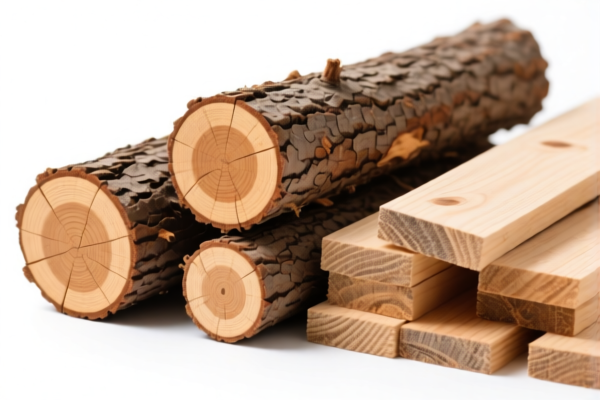
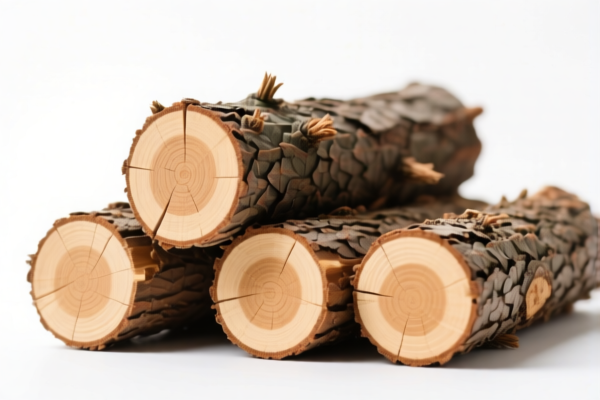
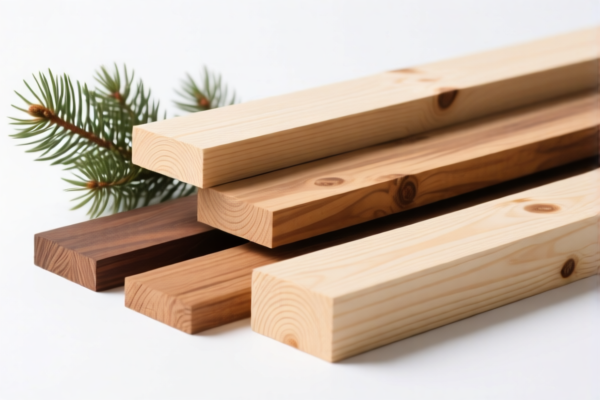
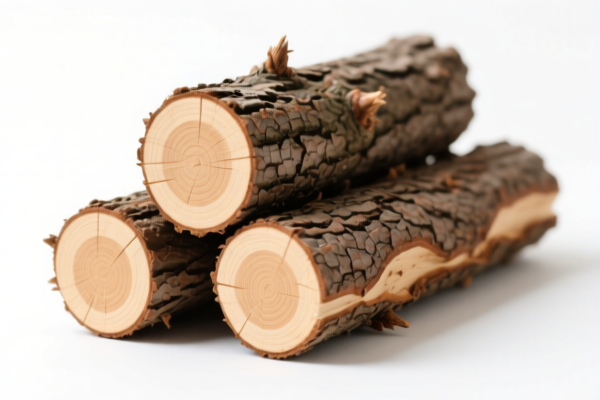
AI Analysis
🌲 Wood Rings & Staves: The Hidden Backbone of Barrels & Containers
🌐 HS Code Reference & Customs Clearance Guide | 2026 Latest Tariff Analysis | Professional Clearance Strategy
📌 I. Product Definition & Classification: What Are "Wood Rings"?
In the timber and packaging trade, "Other Coniferous Wood Rings" (其他针叶木环) typically refer to wooden staves or circular segments used in the construction of barrels (wine, whiskey, oil), industrial containers, or specialized mechanical components. These are distinct from finished planks or raw logs.
The classification hinges on two critical factors: 1. Material: Coniferous (Softwood) like Pine, Spruce, or Fir. 2. Processing/Shape: - Staves (箍木): Curved pieces shaped for barrel construction. - Rings (环): Circular segments, often glued or assembled.
⚠️ Key Distinction:
- If processed into glued panels or structural shapes resembling plywood layers → Classified under Chapter 44 (Plywood/Laminated Wood).
- If simple vertical sawn posts (e.g., fence posts) → Classified under Chapter 44 (Simple Processed Wood).
📦 II. HS Code Classification Details (2026 Latest Tariff Authority)
Based on the provided data, these items are primarily classified under 4412 (Plywood) due to their "stave/ring" morphology which implies laminated or glued construction logic in many industrial contexts, OR under 4407 (Sawn Wood) if they are simple posts.
| HS Code | Product Description | Applicable Scenario | Processing State |
|---|---|---|---|
4412.39.40.11 |
Other Coniferous Wood Staves/Rings, matching coniferous material & stave morphology. Classified as Other Plywood. | Barrel staves, glued wood rings, industrial container parts. | Glued/Laminated (Plywood Logic) |
4412.39.40.19 |
Other Coniferous Wood Staves/Rings, matching coniferous material & non-specific processing state. Classified as Other Plywood. | Semi-finished wood rings, unspecified treatment. | Semi-Processed |
4407.19.00.92 |
Other Coniferous Wood Fence Posts, matching coniferous material & longitudinal sawn morphology. Classified as Untreated Coniferous Wood. | Simple cylindrical posts, fence poles, basic structural elements. | Longitudinally Sawn (Untreated) |
4407.19.00.93 |
Other Coniferous Wood Fence Posts, matching coniferous material & column-shaped sawn morphology. Classified as Other Coniferous Wood. | Column-shaped posts, non-specific coniferous posts. | Column-Shaped Sawn |
4412.39.40.11 |
Other Coniferous Wood Rings, inferred as stave morphology, matching coniferous material & plywood classification logic. | Circular wood segments glued or structured like plywood. | Glued/Structured |
🔍 Important Reminder:
- "Staves" and "Rings" used for barrels are often considered "Plywood" (4412) because they involve laminating or gluing layers/segments, rather than simple solid wood.
- "Posts" (straight, cylindrical) remain in 4407 (Sawn Wood).
- Misclassifying a barrel stave as a simple post can lead to severe penalties due to different tariff structures.
💰 III. 2026 Latest Tariff Rate Breakdown (Including Surcharges)
✅ Applicable Country: United States (US)
✅ Origin: China (CN)
✅ Effective Time: Current rates apply (Section 301 & 122)
🎯 1. 4412.39.40.11 & 4412.39.40.19 —— Coniferous Wood Staves/Rings (Plywood Category)
| Item | Content |
|---|---|
| Base Tariff | 8.0% (Ad Valorem) |
| Section 301 Surcharge | +25.0% (Trade Remedy Duties) |
| Section 122 Surcharge | +10.0% (Special Provision for Certain Imports) |
| Total Tax Rate | 43.0% |
| Tax Calculation | CIF Value × 43% |
| De Minimis Eligibility | ❌ Not Applicable (High value threshold usually applies, but surcharges often block de minimis for wood products) |
| Legal Basis Path | HTSUS:4412.39.40 → Section 301 Footnote → Section 122 Authority |
📌 Explanation:
- "Base 8%": Standard Most Favored Nation (MFN) rate for plywood/wood products.
- "301 Surcharge 25%": Applies to Chinese-origin wood products under the Section 301 Trade Act.
- "122 Surcharge 10%": A specific additional duty under Section 122 of the Trade Expansion Act (often applied to national security or trade deficit reasons).
- Total 43%: This is a very high tariff. Importers must carefully calculate landed costs.
🎯 2. 4407.19.00.92 & 4407.19.00.93 —— Coniferous Wood Fence Posts (Sawn Wood Category)
| Item | Content |
|---|---|
| Base Tariff | 0.0% (Ad Valorem) |
| Section 301 Surcharge | +25.0% (Trade Remedy Duties) |
| Section 122 Surcharge | +10.0% (Special Provision for Certain Imports) |
| Total Tax Rate | 35.0% |
| Tax Calculation | CIF Value × 35% |
| De Minimis Eligibility | ❌ Not Applicable |
| Legal Basis Path | HTSUS:4407.19.00 → Section 301 Footnote → Section 122 Authority |
📌 Note:
- Although the base tariff is 0%, the surcharges (35%) make it expensive.
- The difference between Plywood (43%) and Sawn Wood (35%) is 8%, which can be significant for large volumes.
- Misclassification here can lead to underpayment and penalties.
🛠️ IV. Customs Clearance Practical Advice (Real-World Pitfall Guide)
✅ 1. Documentation Checklist (Mandatory)
| Document | Must Provide | Explanation |
|---|---|---|
| ✅ Product Specification | ✔️ | Detail dimensions, curvature (for staves), glue type, treatment. |
| ✅ Photos of Product | ✔️ | Clear images showing cross-section, length, and whether it's a "ring" or "post". |
| ✅ Commercial Invoice | ✔️ | Must specify "Coniferous Wood Staves" or "Fence Posts" accurately. |
| ✅ Phytosanitary Certificate | ✔️ | Critical for wood products. Must confirm ISPM 15 compliance (fumigation/treatment). |
| ✅ Material Declaration | ✔️ | Confirm it is Coniferous (Softwood), not Hardwood (which has different codes). |
✅ 2. Classification Strategy (Key Mantra)
🔥 "Shape Determines Code: Staves/Rings = Plywood (4412); Posts = Sawn (4407)"
| Scenario | Correct HS Code | Error Risk |
|---|---|---|
| Barrel Staves (curved, glued) | 4412.39.40.11 |
If declared as "Post" → Underpayment of 8% tariff → Audit/Fine. |
| Simple Fence Posts (straight, sawn) | 4407.19.00.92 |
If declared as "Plywood" → Overpayment (unnecessary 8% base). |
| Wood Rings (unclear use) | 4412.39.40.19 |
If unclear, provide usage proof. If used for barrels, stick to 4412. |
| Untreated Softwood | 4407.19.00.93 |
Ensure no glues or layers are present. |
✅ 3. Special Handling Tips
| Situation | Handling Advice |
|---|---|
| Phytosanitary Issues | Wood products must have a phytosanitary certificate. Without it, goods will be rejected or destroyed. |
| Section 301 Exemptions | Check if your specific HS code was removed from Section 301 lists in recent years. Most wood staves are still subject. |
| Mixed Containers | If shipping both staves and posts, separate them on the invoice. Mixed declarations cause delays. |
| Value Declaration | Ensure the CIF value is accurate. High tariffs mean small value errors lead to large tax discrepancies. |
🌍 V. Global Market Comparison (2026)
| Country/Region | Recommended HS Code | Total Tariff (China Origin) | Certification Required | Notes |
|---|---|---|---|---|
| 🇺🇸 USA | 4412.39.40.11 (Staves) |
43.0% | Phytosanitary + Section 301/122 Compliance | Highest cost market. |
| 🇨🇳 China | 4412.39.40.11 |
~8-12% (Import Duty) | N/A | Lower tariff for domestic production. |
| 🇪🇺 EU | 4412.31 (Coniferous) |
0-6% (depending on FTA) | FSC/PEFC Certification | Strict wood legality regulations. |
| 🇬🇧 UK | 4412.31 |
0-6% | FSC/PEFC Certification | Post-Brexit rules apply. |
📌 Conclusion:
- The US market is the most challenging due to the 43% total tariff.
- EU/UK require strict wood legality certification (FSC/PEFC).
- Cost Saving Tip: If possible, explore tariff engineering (e.g., ensuring proper classification to avoid 122 surcharge if applicable, though rare for wood).
📌 VI. Common Mistakes & Pitfalls (Lessons Learned)
❌ Mistake 1: Declaring "Wood Rings" as "Plywood Sheets"
👉 Consequence: Customs may reject the description as inaccurate, leading to delays and fines.
❌ Mistake 2: Ignoring Phytosanitary Requirements
👉 Consequence: Shipment refusal or destruction. Wood products are high-risk for pests.
❌ Mistake 3: Confusing Staves with Planks
👉 Consequence: Wrong HS Code (4407 vs 4412). Leads to 8% tariff difference and potential audits.
❌ Mistake 4: Failing to declare Section 301/122 applicability
👉 Consequence: Underpayment of duties, resulting in penalties and back taxes.
✅ Correct Action:
"Coniferous Wood Staves, Curved, Glued, for Barrels, ISPM 15 Certified"
🎯 VII. Conclusion: Precision in Classification, Profit in Clearance
🎯 Remember the Mantra:
🔹 "Staves/Rings = 4412 (Plywood Logic) → 43% Tariff"
🔹 "Posts = 4407 (Sawn Logic) → 35% Tariff"
🔹 "No Phytosanitary = No Entry!"
📌 Pro Tip:
- For large volume imports, consider Advance Rulings from US Customs to confirm the correct HS code.
- Always verify Section 122 applicability, as it adds a significant 10% burden.
📣 Immediate Action:
📞 Contact a licensed customs broker.
📄 Prepare Phytosanitary Certificates and Detailed Product Specs.
🚀 Clear customs smoothly, avoid penalties, and protect your margins!
✨ Professional Clearance Starts with Precise Classification!
💼 Every dollar of tariff saved is pure profit earned!
Customer Reviews
About HS Code Classification
The Harmonized System (HS) is an internationally standardized nomenclature developed by the World Customs Organization (WCO) to classify traded products. Over 200 countries use the HS system as the basis for customs tariffs, trade statistics, and import/export regulations.
Each HS code follows a hierarchical structure:
- Chapter (2 digits) — Broad category of goods (e.g., Chapter 84: Machinery and Mechanical Appliances)
- Heading (4 digits) — More specific grouping within the chapter
- Subheading (6 digits) — Internationally standardized breakdown, used by all WCO member countries
- National subdivisions (8-10 digits) — Country-specific extensions for further classification, such as US HTSUS 10-digit codes
Correct HS code classification is essential for smooth customs clearance, accurate duty payment, and compliance with trade regulations. Misclassification can lead to customs delays, overpayment of duties, or penalties.
When importing from CN to US, the applicable tariff rates may include:
- Most-Favored-Nation (MFN) rate — The standard duty rate applied to WTO members
- General rate — Applied to countries without trade agreements
- Trade remedy duties — Additional tariffs such as Section 301 (anti-dumping), Section 232 (national security), or countervailing duties
The information provided on this page is for reference purposes only. For official classification, please consult with your local customs authority or a licensed customs broker.