减震鞋垫小码
CN → US| HS Code | Tariff Rate | Origin | Destination | Doc |
|---|---|---|---|---|
| 6406903060 | 15.3% | CN | US | Official Doc |
| 6406901580 | 32.4% | CN | US | Official Doc |
| 3926909905 | 22.8% | CN | US | Official Doc |
| 3926909989 | 22.8% | CN | US | Official Doc |
| 4016996050 | 37.5% | CN | US | Official Doc |
Product Images
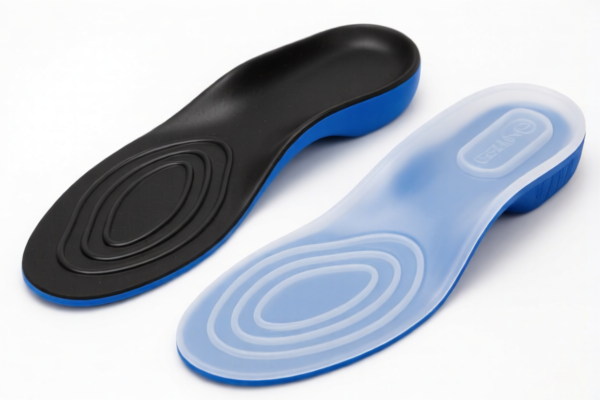
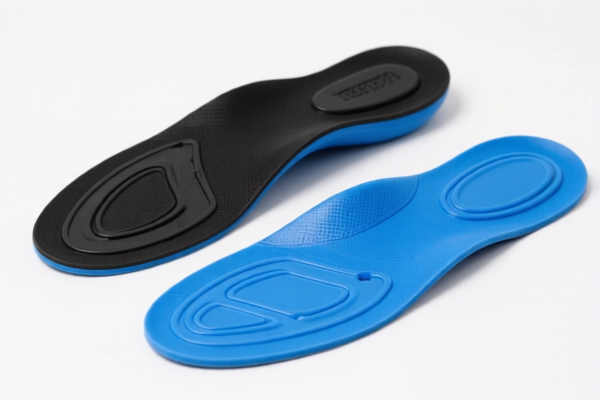
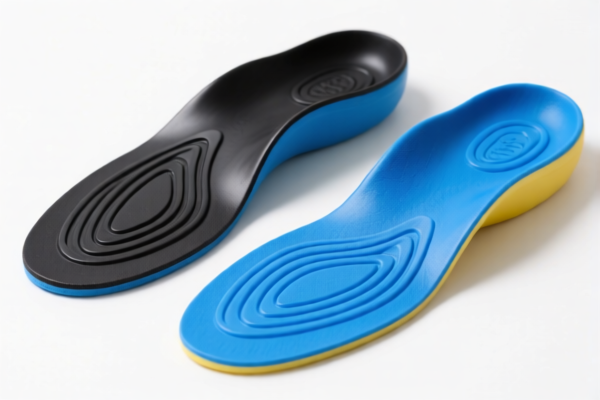
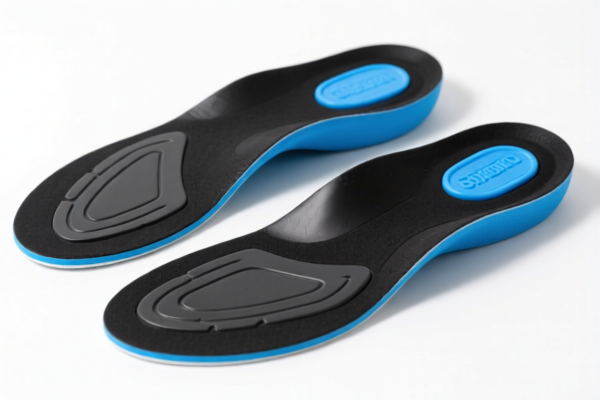
AI Analysis
👟 Shock-Absorbing Insoles (Small Size)
🌐 HS Code Reference & Customs Clearance Guide | 2026 Latest Tariff Analysis | Professional Clearance Strategy for Footwear Parts
📌 I. Product Definition & Classification: What Exactly Are "Shock-Absorbing Insoles"?
Shock-absorbing insoles are accessories or parts used inside footwear to provide cushioning, support, and comfort. In international trade, they are not classified as "footwear" itself, but rather as parts/accessories of footwear or other articles of plastics/rubber.
Key Distinction by Material:
- Rubber/Elastic Material: Classified under Rubber articles (Chapter 40).
- Plastic/Polymer Material: Classified under Plastic articles (Chapter 39).
- Textile/Synthetic Fabric: Classified under Other made-up textile goods (Chapter 63/64 subheading).
⚠️ Critical Identification Point:
- If the insole is primarily rubber (even if it has plastic layers), it often falls under 4016.
- If it is 100% plastic/polymer foam or rigid plastic, it falls under 3926.
- If it is textile-based with some adhesive/filler, it may fall under 6406.
- Small Size does NOT change the HS Code. Size is a commercial attribute, not a classification determinant.
📦 II. HS Code Classification Details (Based on Provided Data)
Below are the 5 possible HS Codes for shock-absorbing insoles, with specific explanations and tax rates derived from the provided data. All scenarios assume Origin: China (CN) and Destination: USA, including Section 301 (122 Clause) tariffs.
| HS Code | Product Description & Logic | Total Tax Rate | Tax Breakdown |
|---|---|---|---|
| 6406.90.30.60 | Footwear Parts: Defined as parts of footwear. Material is often rubber or plastic but classified under Chapter 64 (Footwear Parts). | 15.3% | Base: 5.3% Additional: 0.0% Section 301 (122 Clause): 10% |
| 6406.90.15.80 | Footwear Parts: Classified as "Other made-up insoles and similar articles." Material may be textile or synthetic material. | 32.4% | Base: 14.9% Additional: 7.5% Section 301 (122 Clause): 10% |
| 3926.90.99.05 | Plastic Articles: Material is plastic/polymer, fully meeting the "all-plastic" attribute. Classified under Chapter 39. | 22.8% | Base: 5.3% Additional: 7.5% Section 301 (122 Clause): 10% |
| 3926.90.99.89 | Plastic Articles: Material is plastic/synthetic, classified as "Other articles of plastics" not elsewhere specified. | 22.8% | Base: 5.3% Additional: 7.5% Section 301 (122 Clause): 10% |
| 4016.99.60.50 | Rubber Articles: Material is rubber or elastic material, classified as vulcanized rubber articles. | 37.5% | Base: 2.5% Additional: 25.0% Section 301 (122 Clause): 10% |
🔍 Key Insight:
- The same product can have a tax rate ranging from 15.3% to 37.5% depending entirely on how Customs perceives the primary material.
- HS Code 6406.90.30.60 offers the lowest tax burden (15.3%).
- HS Code 4016.99.60.50 carries the highest risk (37.5%) due to high "Additional Tariffs" (25%).
💰 III. Detailed Tariff Rate Explanation (2026 Latest)
✅ Applicable Country: United States (US)
✅ Origin: China (CN)
✅ Policy Context: Includes Section 301 (122 Clause) Tariffs (10%) on Chinese goods.
🎯 1. 6406.90.30.60 —— Best Option: Footwear Parts (Low Tax)
| Item | Detail |
|---|---|
| Base Duty | 5.3% |
| USITC Additional Tariff | 0.0% |
| Section 301 (122 Clause) | +10.0% |
| Total Tax Rate | 15.3% |
| Tax Calculation | CIF Value × 15.3% |
| Recommendation | ✅ Preferred. If the product is clearly a "part of footwear" with rubber/plastic composition, this is the most cost-effective classification. |
📌 Explanation:
- Chapter 64 covers "Footwear, gaiters, and the like."
- Subheading 6406 covers "Parts of footwear."
- No additional Section 301 penalty beyond the standard 10% is applied here compared to plastic/rubber chapters.
🎯 2. 6406.90.15.80 —— Textile/Synthetic Insoles (High Base Tax)
| Item | Detail |
|---|---|
| Base Duty | 14.9% |
| USITC Additional Tariff | +7.5% |
| Section 301 (122 Clause) | +10.0% |
| Total Tax Rate | 32.4% |
| Tax Calculation | CIF Value × 32.4% |
| Recommendation | ❌ Avoid if possible. Only use if the insole is primarily textile/fabric with significant adhesive or filler that doesn’t fit other categories. |
📌 Explanation:
- Higher base duty (14.9%) due to "Other made-up textile goods."
- Additional 7.5% tariff applies to certain textile-related footwear parts.
🎯 3 & 4. 3926.90.99.05 / 3926.90.99.89 —— Plastic Articles (Mid-High Tax)
| Item | Detail |
|---|---|
| Base Duty | 5.3% |
| USITC Additional Tariff | +7.5% |
| Section 301 (122 Clause) | +10.0% |
| Total Tax Rate | 22.8% |
| Tax Calculation | CIF Value × 22.8% |
| Recommendation | ⚠️ Use only if 100% Plastic. If customs inspector determines the insole is "Plastic" rather than "Footwear Part," this code applies. |
📌 Explanation:
- Chapter 39 covers "Articles of Plastics."
- Although base duty is low (5.3%), the 7.5% Additional Tariff pushes the total to 22.8%.
- Distinguish between05and89:05is for specific plastic articles;89is a "catch-all" for other plastic goods. Use05if your product fits the specific description; otherwise,89.
🎯 5. 4016.99.60.50 —— Rubber Articles (Highest Risk)
| Item | Detail |
|---|---|
| Base Duty | 2.5% |
| USITC Additional Tariff | +25.0% |
| Section 301 (122 Clause) | +10.0% |
| Total Tax Rate | 37.5% |
| Tax Calculation | CIF Value × 37.5% |
| Recommendation | ❌ High Risk. Only use if the product is clearly vulcanized rubber with no textile/plastic dominance. |
📌 Explanation:
- Chapter 40 covers "Articles of Rubber."
- The 25% Additional Tariff is the main driver of high cost.
- Even though base duty is only 2.5%, the total hits 37.5%.
- Warning: If you misclassify a plastic insole as rubber, you might pay 37.5% instead of 15.3% or 22.8%.
🛠️ IV. Customs Clearance Practical Advice (Risk Avoidance Guide)
✅ 1. Documentation Checklist (Must-Haves)
| Document | Required | Purpose |
|---|---|---|
| ✅ Product Specification Sheet | ✔️ | Detail material composition (e.g., "70% EVA Plastic, 30% Rubber Foam") |
| ✅ Material MSDS/TDS | ✔️ | Proof of material type (Plastic vs. Rubber vs. Textile) |
| ✅ Product Photos | ✔️ | Show structure, layers, and "Made in China" label |
| ✅ Commercial Invoice | ✔️ | Clearly state: "Shock-Absorbing Insoles, Part of Footwear, Material: [Specify]" |
| ✅ Packaging List | ✔️ | Confirm size (Small/Medium/Large) but emphasize it doesn’t affect HS Code |
✅ 2. Declaration Strategy (Key Mantra)
🔥 "Material Defines Code, Part Defines Chapter, Size is Irrelevant!"
| Scenario | Recommended HS Code | Reason |
|---|---|---|
| Insole is Rubber/Plastic blend, sold as footwear part | 6406.90.30.60 | Lowest tax (15.3%). Classify as "Footwear Part" not just "Rubber Article." |
| Insole is 100% Plastic Foam | 3926.90.99.05 | Mid-tax (22.8%). No additional tariff beyond 7.5%. |
| Insole is Textile/Fabric | 6406.90.15.80 | High tax (32.4%). Only if material is clearly textile. |
| Insole is 100% Vulcanized Rubber | 4016.99.60.50 | Highest tax (37.5%). Avoid unless necessary. |
📌 Crucial Tip:
- Do NOT declare as "Insoles for Shoes" without specifying material.
- Do NOT separate "Small Size" as a reason for a different code. Size is irrelevant for HS classification.
- If possible, favor HS 6406.90.30.60 by emphasizing the product is a "Part of Footwear" in the description.
✅ 3. Special Cases
| Situation | Handling Advice |
|---|---|
| Mixed Material (e.g., Plastic foam with Rubber coating) | Declare as 6406.90.30.60 (Footwear Part) if the primary function is footwear support. Avoid 4016 (Rubber) due to 25% additional tariff. |
| Branded vs. OEM | Branding does not affect HS Code. Provide authorization letter if requested, but focus on material specs for customs. |
| Small Size Only | No special treatment. Small insoles are still "Parts of Footwear." Ensure packaging clearly states "Size: Small" but do not use this to justify a different HS code. |
🌍 V. Market Comparison (2026)
| Country | Recommended HS Code | Tax Rate (China Origin) | Note |
|---|---|---|---|
| 🇺🇸 USA | 6406.90.30.60 |
15.3% | Includes 10% Section 301. Lowest among options. |
| 🇺🇸 USA | 4016.99.60.50 |
37.5% | Avoid! High 25% additional tariff. |
| 🇨🇳 China | 6406.90.30.60 |
~5-6% | Domestic import tax is lower, but this guide focuses on US Export. |
📌 Conclusion:
- For US Export, the goal is to land in 6406.90.30.60 (15.3%) or 3926.90.99.05 (22.8%).
- Avoid 4016.99.60.50 (37.5%) unless the product is exclusively rubber and cannot be classified as a footwear part.
📌 VI. Common Mistakes & Pitfalls
❌ Mistake 1: Declaring as "Shoes" or "Footwear"
👉 Consequence: Wrong chapter (64 vs 64 parts). Misclassification leads to penalties. Insoles are parts, not finished footwear.
❌ Mistake 2: Ignoring Material Composition
👉 Consequence: If you declare "Plastic" but customs finds "Rubber," they may reclassify to 4016.99.60.50, triggering a 22.2% tariff increase (from 15.3% to 37.5%).
❌ Mistake 3: Assuming "Small Size" Qualifies for De Minimis (Section 321)
👉 Consequence: No! Section 321 (De Minimis) applies to shipments under $800, but Section 301 tariffs (10%) still apply to Chinese goods. Tax savings are only on the base duty, but 10% is still charged. Do not rely on size for tax exemption.
🎯 VII. Conclusion: Professional Declaration, Cost Saving!
🎯 Mantra to Remember:
🔹 "Material First, Function Second, Size is Noise!"
🔹 "Footwear Part (6406) = 15.3% | Plastic (3926) = 22.8% | Rubber (4016) = 37.5%"
🔹 "Small Size Does Not Mean Small Tax!"
📌 Pro Tip:
- Provide MSDS (Material Safety Data Sheet) to prove material composition.
- If the insole is EVA (Ethylene-Vinyl Acetate), it is often considered a Plastic (3926) or Footwear Part (6406), depending on structure.
- Always consult a customs broker for pre-clearance if the material is ambiguous.
📣 Immediate Action:
📞 Contact your customs broker with the product spec sheet.
📝 Declare as: "Shock-Absorbing Insoles, Part of Footwear, Material: [Specify Plastic/Rubber/Textile], HS Code: [Select Lowest Tax Option]."
🚀 Clear Customs Smoothly, Minimize Tax, Maximize Profit!
✨ Professional Clearance Starts with Accurate Classification!
💼 Every Dollar Saved is a Dollar Earned!
Customer Reviews
About HS Code Classification
The Harmonized System (HS) is an internationally standardized nomenclature developed by the World Customs Organization (WCO) to classify traded products. Over 200 countries use the HS system as the basis for customs tariffs, trade statistics, and import/export regulations.
Each HS code follows a hierarchical structure:
- Chapter (2 digits) — Broad category of goods (e.g., Chapter 84: Machinery and Mechanical Appliances)
- Heading (4 digits) — More specific grouping within the chapter
- Subheading (6 digits) — Internationally standardized breakdown, used by all WCO member countries
- National subdivisions (8-10 digits) — Country-specific extensions for further classification, such as US HTSUS 10-digit codes
Correct HS code classification is essential for smooth customs clearance, accurate duty payment, and compliance with trade regulations. Misclassification can lead to customs delays, overpayment of duties, or penalties.
When importing from CN to US, the applicable tariff rates may include:
- Most-Favored-Nation (MFN) rate — The standard duty rate applied to WTO members
- General rate — Applied to countries without trade agreements
- Trade remedy duties — Additional tariffs such as Section 301 (anti-dumping), Section 232 (national security), or countervailing duties
The information provided on this page is for reference purposes only. For official classification, please consult with your local customs authority or a licensed customs broker.