分类玩具
CN → US| HS Code | Tariff Rate | Origin | Destination | Doc |
|---|---|---|---|---|
| 9504909080 | 17.5% | CN | US | Official Doc |
| 9504906000 | 10.0% | CN | US | Official Doc |
| 9503000073 | 10.0% | CN | US | Official Doc |
| 9503000071 | 10.0% | CN | US | Official Doc |
Product Images
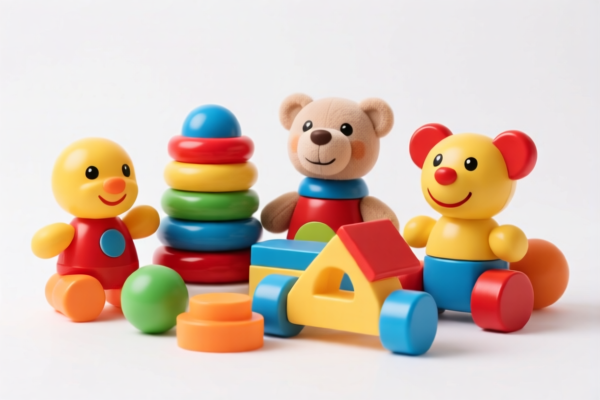
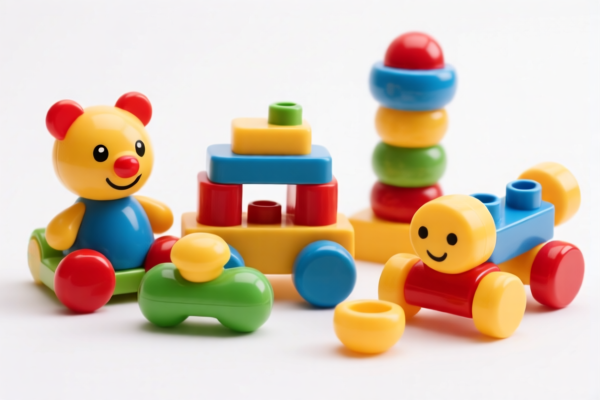
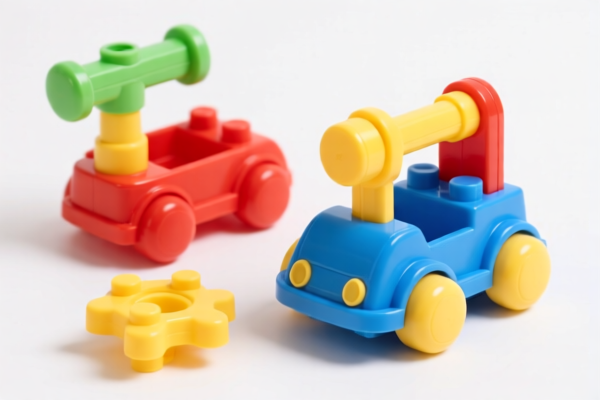
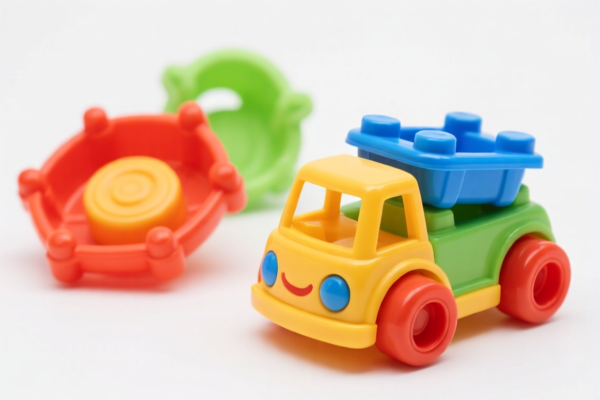
AI Analysis
🧸 Classification Toys (Plush/Plastic/Other Toys)
🌐 HS Code Reference & Customs Clearance Guide | 2024 Latest Tariff Analysis | Professional Strategy
📌 I. Product Definition & Classification: What are "Classified Toys"?
In international trade, "Classified Toys" (or simply "Toys") generally refer to articles designed for children’s amusement. The key to classification lies in the material, function, and form.
- Standard Toys (e.g., Dolls, Plush, Plastic Figures): Typically fall under 9503 (Tricycles, scooters, pedal cars; Dolls; Puzzles; Other toys).
- Amusement/Playground Equipment (e.g., Slides, Swings, Indoor Play Structures): Typically fall under 9508 (Carousel; Ball; Other amusements; Roundabouts; Slides, etc.).
⚠️ Key Distinction:
- If it’s a handheld, boxed, or small item for individual play (e.g., Barbie, Lego, stuffed animals) → 9503
- If it’s a large-scale structure for public or group use (e.g., playground slide, bounce house, merry-go-round) → 9508
📦 II. HS Code Classification Details (Based on Provided Data)
The provided data suggests three primary classification paths depending on the toy’s nature:
| HS Code | Product Description | Applicability | Tax Rate |
|---|---|---|---|
9503.00.00.71 |
Toys for Children’s Products | Standard toys (dolls, figurines, etc.) | 10.0% |
9503.00.00.73 |
Other Toys (Dolls/Other) | Toys not specified by material, fitting "Other Toys" definition | 10.0% |
9508.29.00.00 |
Other Amusement Facilities | Large-scale playground/amusement equipment (no material conflict) | 17.5% |
9508.30.00.00 |
Other Amusement Equipment | Broad category for playground entertainment facilities | 17.5% |
🔍 Key Insight:
- 9503 codes attract a lower total duty (10%) compared to 9508 codes (17.5%).
- 9508 is reserved for amusement/park facilities, not small consumer toys. Misclassifying a large playground slide as a "toy" under 9503 could lead to audits, while misclassifying a small doll as "amusement equipment" might result in duty underpayment.
💰 III. 2024 Latest Tariff Rate Breakdown (Including Surcharges)
✅ Applicable Country: United States (US)
✅ Origin: China (CN)
✅ Effective Date: Current Section 301 / IEEPA Tariffs Apply
🎯 1. 9503.00.00.71 & 9503.00.00.73 — Standard Toys
| Item | Content |
|---|---|
| Base Duty Rate | 0.0% (Most Favored Nation Rate for Toys) |
| Section 301 Surcharge | 0.0% (Base) |
| IEEPA / Section 122 Surcharge | +10.0% |
| Total Effective Rate | 10.0% |
| Tax Calculation | CIF Value × 10% |
| De Minimis Eligibility | ⚠️ Check Current Policy: Historically, toys under $800 (Section 321) may be exempt, but Section 301/122 tariffs often apply to de minimis shipments from China since late 2024. Verify if de_minimis is blocked for these HS codes. |
| Legal Basis Path | IEEPA:9903.01.24 (or relevant 122 clause) → USITC:9503.00.00.7x |
📌 Explanation:
- The 10% total tax is driven entirely by the Section 122/IEEPA surcharge.
- Base duty is 0%, so the 10% is a pure penalty/surcharge on Chinese origin.
- No other surcharges (like Section 232 steel/aluminum) apply here.
🎯 2. 9508.29.00.00 & 9508.30.00.00 — Amusement/Playground Equipment
| Item | Content |
|---|---|
| Base Duty Rate | 0.0% |
| Section 301 / Additional Surcharge | +7.5% |
| IEEPA / Section 122 Surcharge | +10.0% |
| Total Effective Rate | 17.5% |
| Tax Calculation | CIF Value × 17.5% |
| De Minimis Eligibility | ⚠️ Likely Blocked: Large equipment is rarely shipped under de minimis due to size/value, but if shipped, tariffs still apply. |
| Legal Basis Path | IEEPA:9903.01.24 → USITC:9508.xx.xx.xx + FOOTNOTE:Additional Tariffs |
📌 Explanation:
- These items carry a higher total duty (17.5%).
- The additional 7.5% surcharge (on top of the 10%) may reflect specific trade remedy measures or higher scrutiny for "amusement equipment" compared to standard toys.
- Cost Implication: Importing a playground slide is 7.5% more expensive in duties than importing equivalent-value dolls or action figures.
🛠️ IV. Customs Clearance Practical Advice (Avoid Pitfalls)
✅ 1. Documentation Checklist (Must-Have)
| Document | Required? | Notes |
|---|---|---|
| Product Specification Sheet | ✅ Yes | Must clearly state: Age group, Material (Plastic, Fabric, Wood), Function (Play vs. Amusement Facility). |
| Product Photos | ✅ Yes | Show scale. Is it a small hand-held item or a large structure? This determines 9503 vs. 9508. |
| Commercial Invoice | ✅ Yes | Clearly describe as "Toy" or "Amusement Equipment." Avoid vague terms like "Plastic Item." |
| Safety Certifications | ✅ Yes | CPSC (US) is mandatory for toys under 9503. ASTM F963 compliance. For 9508, ensure structural safety standards are met. |
| Origin Certificate | ✅ Yes | To prove Chinese origin (triggering tariffs) or non-Chinese (if applicable for exemptions). |
✅ 2. Classification Strategy (Critical)
🔥 "Size & Function Determines HS Code!"
| Scenario | Correct HS Code | Why? |
|---|---|---|
| Doll, Plush Bear, LEGO Set | 9503.00.00.71 or .73 |
Standard toy definition. Lower duty (10%). |
| RC Car, Puzzle, Board Game | 9503.00.00.71 or .73 |
Fits "Other Toys" or specific toy categories. |
| Indoor Playground Slide | 9508.29.00.00 |
Large-scale amusement facility. Higher duty (17.5%). |
| Outdoor Swing Set | 9508.30.00.00 |
Playground equipment category. Higher duty (17.5%). |
| Toy Vehicle (e.g., Hot Wheels) | 9503.00.00.71 |
Even if it moves, it’s a toy, not transport equipment. |
⚠️ Warning:
- Do NOT classify a large bounce house as9503to save tax. Customs may reclassify it under9508and impose penalties.
- Do NOT classify a small doll as9508. It will be rejected as "not amusement equipment."
✅ 3. Special Considerations
| Situation | Advice |
|---|---|
| Mixed Shipment | If a container has both toys (9503) and playground equipment (9508), declare separately. Mixing can lead to the entire shipment being audited or taxed at the higher rate. |
| De Minimis ($800) | If shipping small toys under $800 per person per day, check if Section 301/122 tariffs apply. Recent policy changes suggest tariffs DO apply to de minimis from China. Do not assume exemption. |
| Material-Based Classification | If the toy is made of specific materials (e.g., plush vs. plastic), ensure the description matches the subheading. 9503.00.00.71 often covers specific doll types, while .73 is a catch-all. |
🌍 V. Global Market Comparison (2024)
| Country/Region | Recommended HS Code | Duty Rate (China Origin) | Certification Required |
|---|---|---|---|
| 🇺🇸 USA | 9503.00.00.71/.73 |
10% | CPSC, ASTM F963 |
| 🇺🇸 USA | 9508.29/30 |
17.5% | Structural Safety Certs |
| 🇨🇳 China | 9503.00.00.71/.73 |
5-10% (Import Duty) | CCC (if applicable) |
| 🇪🇺 EU | 9503.00 |
0-6.5% (Varies by sub) | CE, EN71, REACH |
| 🇬🇧 UK | 9503.00 |
0-6.5% | UKCA, UKCA Mark |
| 🇨🇦 Canada | 9503.00 |
0% (MFN) + 5-8% (GST) | CPSIA-compliant testing |
📌 Conclusion:
- USA has a clear 10% surcharge on standard toys and 17.5% on amusement equipment due to trade policies.
- EU/UK have lower duties but strict safety standards (CE/EN71).
- China imports toys with lower base duties but requires compliance with Chinese standards.
📌 VI. Common Mistakes & Pitfalls
❌ Mistake 1: Classifying all plastic items as "Toys" (9503)
👉 Risk: If it’s a large playground structure, you’ll face a 7.5% duty penalty plus potential fines.
❌ Mistake 2: Assuming De Minimis ($800) is tariff-free
👉 Risk: Section 301/122 tariffs STILL APPLY to most Chinese goods under de minimis. You will owe 10-17.5% on these shipments.
❌ Mistake 3: Missing CPSC/ASTM Certification
👉 Risk: Customs Detention & Return. Toys entering the US must have proof of CPSIA compliance. Without it, the shipment is blocked.
❌ Mistake 4: Vague Description ("Plastic Toy")
👉 Risk: Customs may classify it based on their own interpretation, often resulting in higher duties or audits.
✅ Best Practice: Use specific terms: "Plastic Action Figure, 6-inch, PVC, For Ages 3+."
🎯 VII. Conclusion: Smart Classification Saves Money!
🎯 Remember the Rule:
🔹 "Small Toy = 9503 (10%) | Big Play Structure = 9508 (17.5%)"
🔹 "De Minimis is NOT tariff-free anymore for China"
🔹 "Certification is Mandatory, Not Optional!"
📌 Pro Tip:
If your toys are shipped from Vietnam, Mexico, or Malaysia, you may qualify for IEEPA Exemptions or lower tariffs.
Consider supply chain diversification if your volume is high.
For large playground equipment, pre-clearance with a customs broker is highly recommended to avoid detention.
📣 Immediate Action:
📞 Contact a Licensed Customs Broker
📄 Prepare CPSC Test Reports & Product Specs
🚀 Declare Accurately: "Toy, 9503.00.00.73, Origin China, 10% Duty"
✨ Precise Classification = Lower Costs = Faster Clearance!
💼 Don’t let misclassification eat your profit margin!
Customer Reviews
About HS Code Classification
The Harmonized System (HS) is an internationally standardized nomenclature developed by the World Customs Organization (WCO) to classify traded products. Over 200 countries use the HS system as the basis for customs tariffs, trade statistics, and import/export regulations.
Each HS code follows a hierarchical structure:
- Chapter (2 digits) — Broad category of goods (e.g., Chapter 84: Machinery and Mechanical Appliances)
- Heading (4 digits) — More specific grouping within the chapter
- Subheading (6 digits) — Internationally standardized breakdown, used by all WCO member countries
- National subdivisions (8-10 digits) — Country-specific extensions for further classification, such as US HTSUS 10-digit codes
Correct HS code classification is essential for smooth customs clearance, accurate duty payment, and compliance with trade regulations. Misclassification can lead to customs delays, overpayment of duties, or penalties.
When importing from CN to US, the applicable tariff rates may include:
- Most-Favored-Nation (MFN) rate — The standard duty rate applied to WTO members
- General rate — Applied to countries without trade agreements
- Trade remedy duties — Additional tariffs such as Section 301 (anti-dumping), Section 232 (national security), or countervailing duties
The information provided on this page is for reference purposes only. For official classification, please consult with your local customs authority or a licensed customs broker.