分趾袜
CN → US| HS Code | Tariff Rate | Origin | Destination | Doc |
|---|---|---|---|---|
| 6115959000 | 31.0% | CN | US | Official Doc |
| 6115969020 | 24.6% | CN | US | Official Doc |
| 6217108500 | 24.6% | CN | US | Official Doc |
| 6217109550 | 32.1% | CN | US | Official Doc |
Product Images
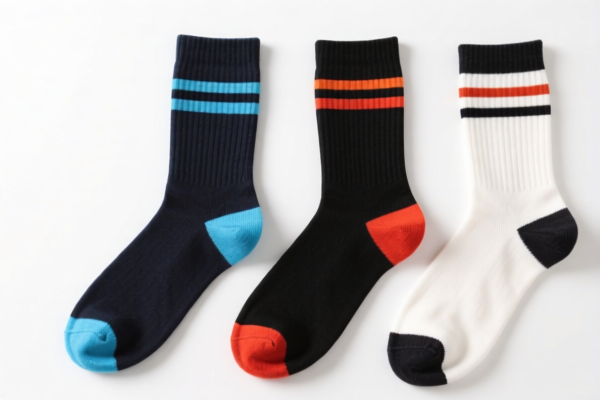
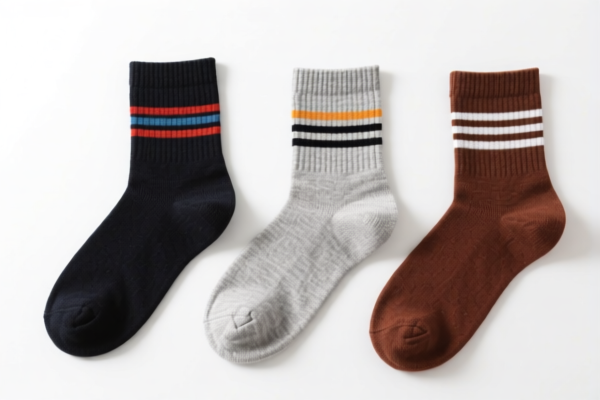
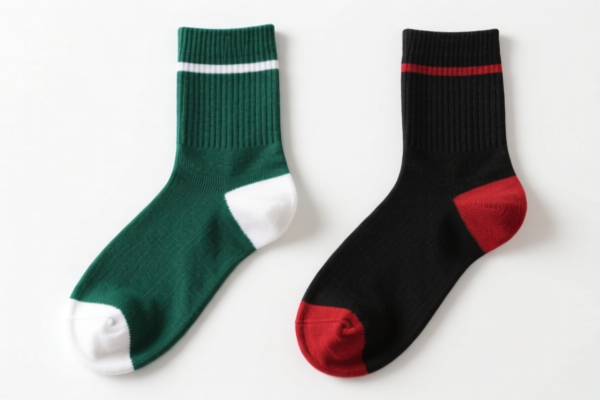
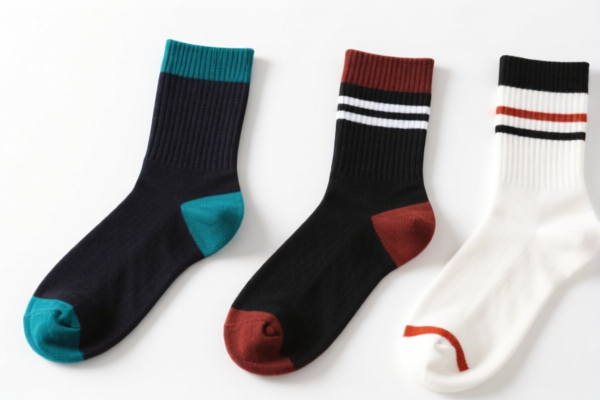
AI Analysis
🦶 Tabi Socks (分趾袜)
🌐 HS Code Reference & Customs Clearance Guide | 2024-2026 Tariff Full Analysis | Professional Clearance Strategy
📌 I. Product Definition & Classification: Do You Really Understand "Tabi Socks"?
Tabi socks are a specialized type of hosiery characterized by the separation of the big toe from the other toes, traditionally worn with footwear like geta or zori. In international trade, they are classified based on their material composition and whether they are considered "hosiery" (footwear) or "garment accessories."
Hosiery Category (Knitted/Crocheted):
If the socks are knitted or crocheted, they fall under Chapter 61. The key distinction lies in the fiber content (Cotton vs. Synthetic) and whether they are wool-based.
Garment Accessories Category:
If classified as accessories rather than hosiery, they fall under Chapter 62. This is often used when the product is viewed as an attachment to a garment or made from non-knitted fabrics, though less common for standard socks.
⚠️ Key Classification Point:
- If knitted and Cotton: Generally falls under 6115.95 or 6115.96 depending on specific material exclusion rules.
- If classified as Accessories: Falls under 6217.10.
- Note: Misclassification between "Hosiery" and "Accessory" can lead to significant tariff differences due to different base rates and additional duties.
📦 II. HS Code Classification Details (Latest Tariff Authority Comparison)
Based on the provided data, here are the specific HS Codes, summaries, and tax structures for Tabi Socks:
| HS Code | Summary / Classification Logic | Total Tax Rate | Tax Detail Breakdown |
|---|---|---|---|
6115.95.90.00 |
Hosiery - Cotton Basis: Classified as hosiery. Based on cotton material inference, matches the "other" cotton兜底 (fallback) logic. | 31.0% | Base: 13.5% Additional (Section 301): 7.5% Section 122 Duty: 10% |
6217.10.95.50 |
Accessory - Knitted/Cotton: Classified as a garment accessory. Matches "other garment accessories" for knitted or cotton fibers. | 32.1% | Base: 14.6% Additional (Section 301): 7.5% Section 122 Duty: 10% |
6217.10.85.00 |
Accessory - Knitted/Cotton: Belongs to garment accessories. Matches "other garment accessories" for knitted/cotton materials. | 24.6% | Base: 14.6% Additional (Section 301): 0.0% Section 122 Duty: 10% |
6115.96.90.20 |
Hosiery - Synthetic/Cotton Exclusion: Classified as hosiery. Based on synthetic fiber or cotton material, matches categories excluding wool. | 24.6% | Base: 14.6% Additional (Section 301): 0.0% Section 122 Duty: 10% |
6217.10.95.50 |
Accessory - Knitted/Cotton Fiber: Classified as a garment accessory. Matches "other garment accessories" for knitted or cotton fibers. | 32.1% | Base: 14.6% Additional (Section 301): 7.5% Section 122 Duty: 10% |
🔍 重点提醒 (Key Reminders):
- Hosiery vs. Accessory: Classification under Chapter 61 (Hosiery) generally offers a lower base rate (13.5%-14.6%) compared to some accessory classifications, but the Additional Duties vary significantly.
- Section 301 Impact: The "Additional Tariff" (加征关税) ranges from 0% to 7.5%. This is the biggest variable affecting cost.
- Section 122 Duty: A flat 10% applies to all listed codes, likely referring to specific anti-dumping or countervailing measures or specific trade remedy duties.
💰 III. 2024-2026 Latest Tariff Rate Details (Including Additional Taxes)
✅ Applicable Country: USA (US)
✅ Origin: China (CN)
✅ Effective Time: Current trade policies (2024-2026)
🎯 1. 6115.95.90.00 & 6115.96.90.20 / 6217.10.85.00 —— Lower Tax Bracket Options
These codes offer a Total Tax Rate of 24.6%.
| Item | Content |
|---|---|
| Base Tariff | 13.5% - 14.6% (ad valorem) |
| USITC/Section 301 Additional Duty | 0.0% (Key Advantage) |
| Section 122 Duty | +10% |
| Total Tax Rate | 24.6% |
| Tax Calculation | CIF Value × 24.6% |
| De Minimis Eligibility | ❌ No (De minimis does not apply to goods subject to Section 301 or Section 122 duties) |
📌 Explanation:
- The 0% Additional Duty in codes6217.10.85.00and6115.96.90.20is significant.
- The Section 122 Duty of 10% is mandatory for these classifications.
- Total 24.6% is more competitive than the 31-32% brackets.
🎯 2. 6115.95.90.00 (Specific Entry) & 6217.10.95.50 —— Higher Tax Bracket
These codes offer a Total Tax Rate of 31.0% or 32.1%.
| Item | Content |
|---|---|
| Base Tariff | 13.5% - 14.6% (ad valorem) |
| USITC/Section 301 Additional Duty | +7.5% |
| Section 122 Duty | +10% |
| Total Tax Rate | 31.0% (for 6115.95) / 32.1% (for 6217.10) |
| Tax Calculation | CIF Value × 31.0% or 32.1% |
| De Minimis Eligibility | ❌ No |
📌 Explanation:
- The 7.5% Additional Duty significantly increases the cost.
- Total 31-32% is substantially higher than the 24.6% options.
- Misclassification here can cost an extra 6-7% in duties.
🛠️ IV. Customs Clearance Practical Advice (Real-World Pitfall Avoidance)
✅ 1. Required Documentation Checklist
| Document | Mandatory | Description |
|---|---|---|
| ✅ Product Specification Sheet | ✔️ | Must specify material (Cotton/Synthetic), knitting type, and toe separation design. |
| ✅ Material Composition Certificate | ✔️ | Crucial for distinguishing between 6115 (Hosiery) and 6217 (Accessory) and determining fiber content. |
| ✅ Product Photos (Labeled) | ✔️ | Clear images showing the toe separation (Tabi style). |
| ✅ Commercial Invoice | ✔️ | Must accurately describe as "Tabi Socks" or "Split-Toe Hosiery." |
| ✅ Packing List | ✔️ | Detailed breakdown of contents. |
| ✅ Country of Origin Certificate | ✔️ | Essential for determining Section 301 applicability. |
✅ 2. Declaration Tips (Key Mantras)
🔥 "Material First, Structure Second, Code Precision Saves Money!"
| Scenario | Correct Declaration Approach | Incorrect Action |
|---|---|---|
| Knitted Cotton Tabi Socks | Consider 6115.96.90.20 or 6217.10.85.00 for 24.6% total rate |
Accidentally using 6217.10.95.50 → 32.1% |
| Synthetic Tabi Socks | Use 6115.96.90.20 (Excludes wool) for 24.6% |
Misclassifying as wool → Different code, potential error |
| Accessory Classification | Use 6217.10.85.00 if deemed accessory for 24.6% |
Using 6217.10.95.50 → 32.1% |
| Hosiery Classification | Use 6115.95.90.00 for 31.0% |
Avoid if 24.6% option is available via correct classification |
✅ 3. Special Cases Handling
| Case | Handling Advice |
|---|---|
| Mixed Material (e.g., Cotton + Synthetic) | Declare the primary material. If cotton-dominant, it may fall under 6115.95. Check rules of origin. |
| Non-Knitted Fabric Tabi | Likely falls under 6217.10 (Accessories). Compare 6217.10.85.00 (24.6%) vs 6217.10.95.50 (32.1%). |
| OEM Custom Tabi Socks | Provide design specs to prove classification. If it's clearly hosiery, stick to Chapter 61. |
| Sample Shipments | Still subject to duties. Do not rely on de minimis for Section 122/301 goods. |
🌍 V. Global Market Clearance Comparison (2024-2026)
| Country/Region | Recommended HS Code | Approx. Tariff | Certification | Notes |
|---|---|---|---|---|
| 🇺🇸 USA | 6115.96.90.20 or 6217.10.85.00 |
24.6% | No special certs | Avoid 6217.10.95.50 due to 7.5% add-on. |
| 🇨🇳 China | 6115.95.90.00 |
~10-15% | CCC (if applicable) | Lower base rates, no Section 122/301. |
| 🇪🇺 EU | 6115.95.00 |
~12-16% | CE (if applicable) | No Section 122/301. |
| 🇬🇧 UK | 6115.95.00 |
~12-16% | UKCA | Post-Brexit rules apply. |
| 🇦🇺 Australia | 6115.95.00 |
~5-10% | RCM (if applicable) | FTA benefits may apply. |
📌 Conclusion:
- USA is the most complex market due to the 10% Section 122 duty and potential 7.5% Section 301 additional duty.
- Optimizing HS Code selection between the 24.6% and 31-32% brackets can save significant costs.
- China/EU/Australia do not have these specific additional duties, making them more straightforward.
📌 VI. Common Errors & Pitfall Guide (Lessons Learned)
❌ Error 1: Using 6217.10.95.50 without checking if 6217.10.85.00 is applicable.
👉 Consequence: Paying 32.1% instead of 24.6% → 8% extra cost on every shipment.
❌ Error 2: Classifying knitted Tabi socks as "Accessories" when they clearly fit "Hosiery."
👉 Consequence: Potential customs rejection or reclassification penalties. Hosiery (Ch 61) is the primary category for socks.
❌ Error 3: Ignoring the Section 122 Duty.
👉 Consequence: Underpaying taxes by 10%, leading to audits, back payments, and fines.
❌ Error 4: Assuming de minimis applies.
👉 Consequence: Seizure of goods. De minimis does not apply to goods subject to Section 122 or Section 301 duties.
✅ Correct Approach:
"Split-Toe Socks (Tabi), Knitted Cotton, for Retail Sale"
Verify if6115.96.90.20or6217.10.85.00is the best fit for 24.6% total duty.
🎯 VII. Conclusion: Precise Classification, Cost Control, Efficient Clearance!
🎯 Remember the Mantra:
🔹 "Hosiery vs. Accessory? Check the Code!"
🔹 "24.6% vs. 32.1%? Small Difference, Big Savings!"
🔹 "Section 122 is Always 10%: Don't Forget It!"
📌 Tips:
- If your Tabi socks are Cotton-based, prefer 6115.96.90.20 or 6217.10.85.00 for the 24.6% rate.
- If Synthetic, 6115.96.90.20 is likely the correct choice for 24.6%.
- Avoid 6217.10.95.50 unless necessary, as it incurs a 7.5% additional duty.
- Pre-clearance ruling is recommended to confirm the exact HS Code based on material composition.
📣 Action Now:
📞 Contact a professional customs broker + Provide material composition + Apply for HS Code pre-ruling
🚀 Ensure your Tabi Socks clear customs smoothly, efficiently, and cost-effectively!
✨ Professional Clearance Starts with Accurate Classification!
💼 Every cent of duty cost deserves precise calculation!
Customer Reviews
About HS Code Classification
The Harmonized System (HS) is an internationally standardized nomenclature developed by the World Customs Organization (WCO) to classify traded products. Over 200 countries use the HS system as the basis for customs tariffs, trade statistics, and import/export regulations.
Each HS code follows a hierarchical structure:
- Chapter (2 digits) — Broad category of goods (e.g., Chapter 84: Machinery and Mechanical Appliances)
- Heading (4 digits) — More specific grouping within the chapter
- Subheading (6 digits) — Internationally standardized breakdown, used by all WCO member countries
- National subdivisions (8-10 digits) — Country-specific extensions for further classification, such as US HTSUS 10-digit codes
Correct HS code classification is essential for smooth customs clearance, accurate duty payment, and compliance with trade regulations. Misclassification can lead to customs delays, overpayment of duties, or penalties.
When importing from CN to US, the applicable tariff rates may include:
- Most-Favored-Nation (MFN) rate — The standard duty rate applied to WTO members
- General rate — Applied to countries without trade agreements
- Trade remedy duties — Additional tariffs such as Section 301 (anti-dumping), Section 232 (national security), or countervailing duties
The information provided on this page is for reference purposes only. For official classification, please consult with your local customs authority or a licensed customs broker.