制动液润滑剂
CN → US| HS Code | Tariff Rate | Origin | Destination | Doc |
|---|---|---|---|---|
| 3819000010 | 41.5% | CN | US | Official Doc |
| 3819000090 | 16.5% | CN | US | Official Doc |
| 3403191000 | 35.2% | CN | US | Official Doc |
| 3819000090 | 16.5% | CN | US | Official Doc |
| 3820000000 | 24.0% | CN | US | Official Doc |
Product Images
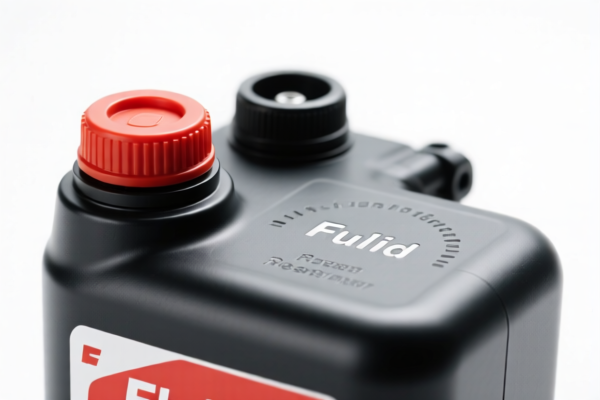
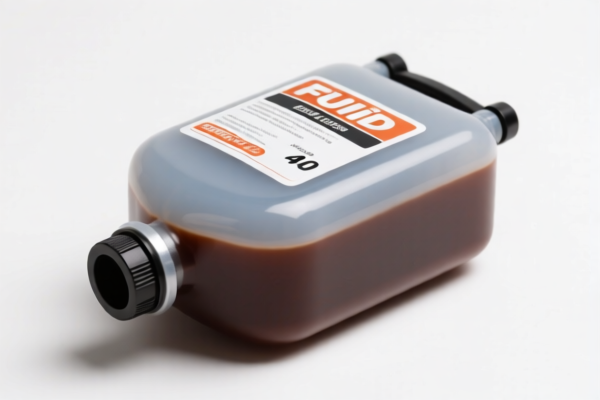
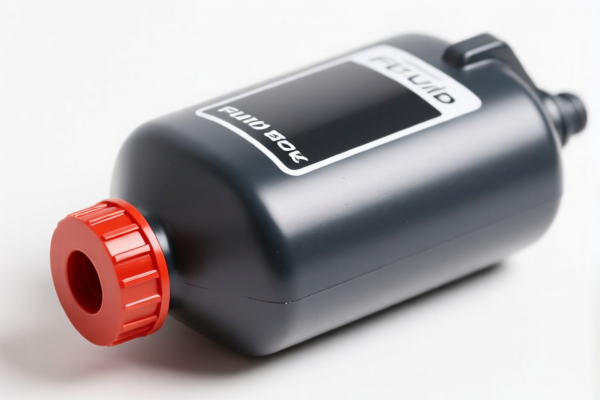

AI Analysis
🚗 Brake Fluid Lubricants
🌐 HS Code Reference & Customs Clearance Guide | 2026 Latest Tariff Analysis | Professional Clearance Strategy
📌 I. Product Definition & Classification: Do You Really Understand "Brake Fluid"?
Brake fluid is a critical non-compressible hydraulic fluid used in automotive brake systems. In international trade, it is primarily classified under Chapter 38 (Miscellaneous Chemical Products), specifically as hydraulic brake fluids or other hydraulic transmission fluids.
However, classification depends heavily on the specific formulation, additives, and intended use. The following analysis details why the provided HS Codes in the data are applicable, based on the input "Brake Fluid Lubricant".
⚠️ Key Distinction:
- If it is a standard Hydraulic Brake Fluid → Primarily 3819.00.00
- If it is a Lubricating Preparation containing oil → Potentially 3403.19.10.00
- If it is an Additive for brake fluid → 3819.00.00.90
📦 II. HS Code Classification Details (Based on Provided Data)
The provided data identifies four potential HS Codes. Here is the breakdown of why each applies, along with the tax implications.
| HS Code | Product Description | Application Scenario | Matching Logic (Summary from Data) | Total Tax Rate (US) |
|---|---|---|---|---|
3819.00.00.10 |
Hydraulic Brake Fluid | Standard automotive brake fluid | ✅ Perfect Match: The product name "Brake Fluid" aligns perfectly with the classification explanation for "Hydraulic Brake Fluid". | 41.5% |
3819.00.00.90 |
Other Hydraulic Transmission Fluids | General hydraulic fluids, brake fluid additives, commercial vehicle brake fluids | ✅ Match: Covers "Other" hydraulic fluids. Specifically applicable to Additives for brake fluid or Commercial Vehicle brake fluids where material conflicts are absent. | 16.5% |
3403.19.10.00 |
Lubricating Preparations | Brake fluid inferred as a lubricant/lubricating agent based on common knowledge of petroleum/mineral oil content | ⚠️ Inferred Match: Based on the assumption that brake fluid contains petroleum or mineral oil, fitting the definition of lubricating preparations. | 35.2% |
🔍 Critical Note:
-3819.00.00.10is the most direct match for pure Brake Fluid.
-3819.00.00.90is the most common match for Additives or non-standard hydraulic fluids.
-3403.19.10.00is a riskier classification based on "inference" of lubricant properties rather than explicit brake fluid function.
💰 III. 2026 Latest Tariff Rate Details (Including Additional Taxes)
✅ Applicable Country: United States (US)
✅ Origin: China (CN)
✅ Effective Date: November 10, 2025 (and subsequent imports)
🎯 1. 3819.00.00.10 —— Hydraulic Brake Fluid (Direct Match)
| Item | Detail |
|---|---|
| Base Tariff | 6.5% |
| Section 301 Tariff | +25.0% |
| Section 122 Tariff | +10.0% |
| Total Tariff | 41.5% |
| Tax Calculation | CIF Value × 41.5% |
| De Minimis Eligibility | ❌ Not Eligible (Typically high-value chemicals are excluded) |
| Legal Basis Path | Base Duty (6.5%) → Section 301 (25%) → Section 122 (10%) |
📌 Explanation:
- This is the highest risk/high cost classification for standard brake fluid.
- The Section 122 Tariff (10%) is a specific additional duty often applied to certain chemical products from China.
- Total 41.5% significantly impacts profit margins.
🎯 2. 3819.00.00.90 —— Other Hydraulic Transmission Fluids (Additives/Commercial)
| Item | Detail |
|---|---|
| Base Tariff | 6.5% |
| Section 301 Tariff | 0.0% |
| Section 122 Tariff | +10.0% |
| Total Tariff | 16.5% |
| Tax Calculation | CIF Value × 16.5% |
| De Minimis Eligibility | ❌ Not Eligible |
| Legal Basis Path | Base Duty (6.5%) → Section 122 (10%) |
📌 Explanation:
- This code is significantly cheaper (16.5% vs 41.5%) if the product is classified as an Additive or Commercial Vehicle Fluid under "Other".
- No Section 301 Tariff (25%) applies here, which is the major difference.
- Crucial: To use this code, you must ensure the product is clearly defined as an Additive or fits the "Other" category without conflicting with specific brake fluid definitions.
🎯 3. 3403.19.10.00 —— Lubricating Preparations (Inferred)
| Item | Detail |
|---|---|
| Base Tariff | 0.2% |
| Section 301 Tariff | +25.0% |
| Section 122 Tariff | +10.0% |
| Total Tariff | 35.2% |
| Tax Calculation | CIF Value × 35.2% |
| De Minimis Eligibility | ❌ Not Eligible |
| Legal Basis Path | Base Duty (0.2%) → Section 301 (25%) → Section 122 (10%) |
📌 Explanation:
- While the base tariff is very low (0.2%), the Section 301 Tariff (25%) makes it expensive.
- This classification relies on the inference that brake fluid is a "lubricant" or contains mineral oil.
- Risk: Customs may challenge this if the primary function is braking, not lubrication. It sits between the two 3819 codes in terms of total cost.
🛠️ IV. Customs Clearance Practical Advice (Pitfall Avoidance Guide)
✅ 1. Preparation Checklist (All Required)
| Document | Mandatory? | Description |
|---|---|---|
| ✅ Product Spec Sheet | ✔️ | Must specify: Type (Dot 3, 4, 5.1), Composition (Glycol, Silicone, etc.), Viscosity, Boiling Point. |
| ✅ Safety Data Sheet (SDS) | ✔️ | Critical for chemical clearance. Must classify as hazardous material if applicable. |
| ✅ MSDS / Chemical Formula | ✔️ | To prove whether it's a pure brake fluid or an additive. |
| ✅ Commercial Invoice | ✔️ | Clearly state: "Brake Fluid" or "Brake Fluid Additive". Do not use vague terms like "Lubricant" if it's primarily brake fluid. |
| ✅ Certificate of Origin | ✔️ | To determine applicability of Section 301 and Section 122 tariffs. |
| ✅ Packing List | ✔️ | Include net/gross weight, volume, and package type (drums, bottles). |
✅ 2. Declaration Tips (Key Strategies)
🔥 “Declare Function, Not Just Name; Additives Save Costs!”
| Scenario | Correct Declaration | Incorrect Practice |
|---|---|---|
| Standard Brake Fluid | 3819.00.00.10 "Hydraulic Brake Fluid" |
Declaring as "Lubricant" (3403) → Risk of reclassification & penalties |
| Brake Fluid Additive | 3819.00.00.90 "Brake Fluid Additive" |
Declaring as "Brake Fluid" → Higher tariff (41.5% vs 16.5%) |
| Commercial Vehicle Fluid | 3819.00.00.90 "Other Hydraulic Transmission Fluid" |
Declaring as "Engine Oil" → Wrong chapter |
| Pure Mineral Oil Base | 3403.19.10.00 (If purely lubricating) |
Using for brake fluid → High risk of audit |
📌 Strategy:
- If your product is an Additive (e.g., "Brake Fluid Booster"), always declare it as an Additive to qualify for 16.5% tariff (3819.00.00.90).
- Do not use the term "Lubricant" (3403) unless the product is primarily a lubricant and brake fluid is a minor secondary function. This invites customs scrutiny.
✅ 3. Special Cases
| Case | Handling Advice |
|---|---|
| Hazardous Material | Brake fluid is often flammable. Ensure UN Number and Hazmat Documentation are included. |
| Mixtures | If mixed with other chemicals, ensure the primary function (braking vs. lubricating) is clear. |
| Origin Marking | Ensure products are clearly marked "Made in China" to trigger correct tariff calculations. |
| Section 122 | Check if any recent policy changes exempt specific chemical sub-categories from Section 122. |
🌍 V. Global Market Clearance Comparison (2026 Latest)
| Country/Region | Recommended HS Code | Tariff Rate | Certification Requirements | Notes |
|---|---|---|---|---|
| 🇺🇸 USA | 3819.00.00.10 / 3819.00.00.90 |
16.5% - 41.5% | SDS, Hazmat | High tariffs due to Section 301 & 122 |
| 🇨🇳 China | 3819.00.00 |
6.5% | GB Standards | No additional import tariffs for self-origin |
| 🇪🇺 EU | 3819.00.00 |
6.5% | REACH, CLP | No Section 301 equivalent, but strict REACH registration |
| 🇦🇺 Australia | 3819.00.00 |
5% | ADR (Transport) | Lower base duty, no Section 122 |
| 🇯🇵 Japan | 3819.00.00 |
6.0% | JIS Standards | Stable tariff environment |
📌 Conclusion:
- USA is the most expensive market due to Section 301 and Section 122 tariffs.
- EU and Australia are more favorable for general brake fluids.
- Additives (3819.00.00.90) offer a 25% tariff saving in the US compared to standard brake fluid.
📌 VI. Common Errors & Pitfall Guide (Blood & Tears Lessons)
❌ Error 1: Declaring "Brake Fluid" as "Lubricant Oil" (3403)
👉 Consequence: Customs may reject the classification, leading to 35.2% tariff or penalties for misdeclaration.
👉 Fix: Use 3819 codes unless the product is primarily a lubricant.
❌ Error 2: Ignoring Section 122 Tariff (10%)
👉 Consequence: Underpayment of duties, leading to back taxes + interest upon audit.
👉 Fix: Always include Section 122 in tariff calculations for chemical imports from China.
❌ Error 3: Vague Product Description ("Chemical Fluid")
👉 Consequence: Customs will detain goods for classification review, causing delays.
👉 Fix: Use precise terms: "DOT 4 Hydraulic Brake Fluid" or "Brake Fluid Additive".
❌ Error 4: Mixing Hazmat Documentation with General Cargo
👉 Consequence: Rejected shipment at port due to missing SDS/UN markings.
👉 Fix: Ensure all chemical shipments have proper Hazmat labeling.
✅ Correct Practice:
"DOT 4 Hydraulic Brake Fluid, 1L Bottle, 100% Glycol-Based, SDS Attached, Made in China"
🎯 VII. Conclusion: Precise Classification, Cost Optimization!
🎯 Key Takeaways:
🔹 "Brake Fluid" →
3819.00.00.10(41.5% Tax)
🔹 "Brake Fluid Additive" →3819.00.00.90(16.5% Tax)
🔹 "Lubricant Inference" →3403.19.10.00(35.2% Tax, High Risk)
🎯 Remember:
Small changes in product description can save up to 25% in tariffs!
If your product is an additive, declare it as an additive.
If it's pure brake fluid, prepare for 41.5%.
📌 Pro Tip:
- For US Imports, consider Supply Chain Diversification (e.g., producing in Vietnam or Mexico) to avoid Section 301/122 tariffs.
- Apply for Advance Ruling from CBP if unsure about the classification of "Additive" vs. "Fluid".
📣 Immediate Action:
📞 Consult a Licensed Customs Broker
📄 Prepare SDS & Spec Sheets
🚀 Optimize your HS Code Selection to minimize costs!
✨ Professional Clearance Starts with Accurate Classification!
💼 Every Percent Saved is Profit Earned!
Customer Reviews
About HS Code Classification
The Harmonized System (HS) is an internationally standardized nomenclature developed by the World Customs Organization (WCO) to classify traded products. Over 200 countries use the HS system as the basis for customs tariffs, trade statistics, and import/export regulations.
Each HS code follows a hierarchical structure:
- Chapter (2 digits) — Broad category of goods (e.g., Chapter 84: Machinery and Mechanical Appliances)
- Heading (4 digits) — More specific grouping within the chapter
- Subheading (6 digits) — Internationally standardized breakdown, used by all WCO member countries
- National subdivisions (8-10 digits) — Country-specific extensions for further classification, such as US HTSUS 10-digit codes
Correct HS code classification is essential for smooth customs clearance, accurate duty payment, and compliance with trade regulations. Misclassification can lead to customs delays, overpayment of duties, or penalties.
When importing from CN to US, the applicable tariff rates may include:
- Most-Favored-Nation (MFN) rate — The standard duty rate applied to WTO members
- General rate — Applied to countries without trade agreements
- Trade remedy duties — Additional tariffs such as Section 301 (anti-dumping), Section 232 (national security), or countervailing duties
The information provided on this page is for reference purposes only. For official classification, please consult with your local customs authority or a licensed customs broker.