制动液清洁剂
CN → US| HS Code | Tariff Rate | Origin | Destination | Doc |
|---|---|---|---|---|
| 3814002000 | 41.5% | CN | US | Official Doc |
| 3814001000 | 41.5% | CN | US | Official Doc |
| 3402905030 | 38.7% | CN | US | Official Doc |
| 3402901000 | 38.8% | CN | US | Official Doc |
| 3819000010 | 41.5% | CN | US | Official Doc |
Product Images
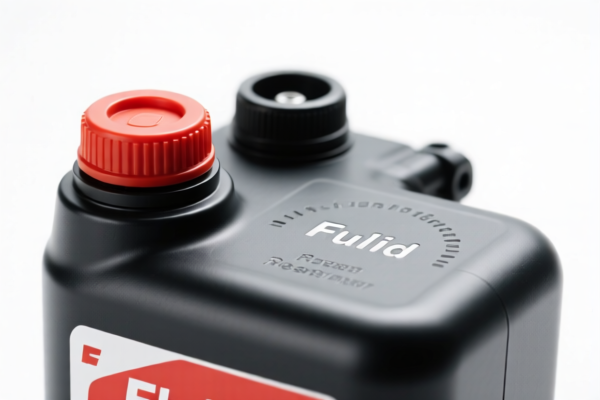
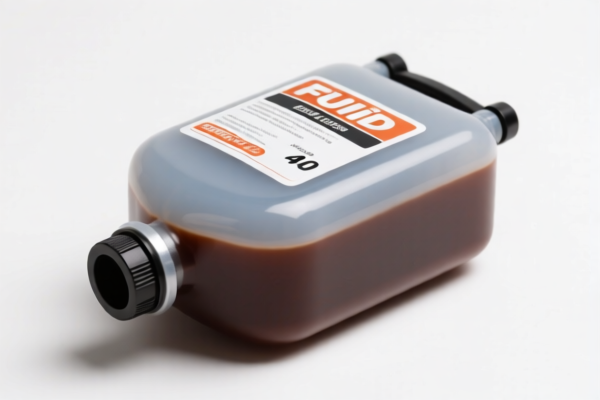
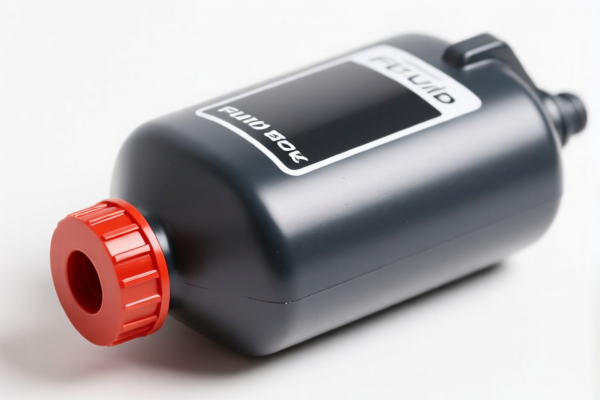

AI Analysis
🛢️ Brake Fluid Cleaner (制动液清洁剂)
🌐 HS Code Reference & Customs Clearance Guide | 2026 Latest Tariff Analysis | Professional Clearance Strategy
📌 I. Product Definition & Classification: What Exactly is "Brake Fluid Cleaner"?
Brake Fluid Cleaner is a specialized industrial chemical used for cleaning, degreasing, and removing residual brake fluid from hydraulic systems, brake components, and sensitive surfaces. In international trade, its classification depends heavily on its chemical composition and primary function. It generally falls into two main categories:
- Solvent-Based Cleaners (Organic Composite Solvents): If the product consists primarily of organic solvents (e.g., acetone, methylene chloride, esters) designed to dissolve grease, oil, and brake fluid residues, it is classified under Chapter 38 (Miscellaneous Chemical Products) as a "Composite Solvents and Thinners" or "Solvent Removal Agents."
- Prepared Cleaning Agents: If the product is a formulated mixture (including surfactants, emulsifiers, and solvents) specifically designed for general cleaning or surface preparation without being a pure solvent, it may fall under Chapter 34 (Soap, Organic Surface-Active Agents, Washing Preparations) as a "Prepared Cleaning Agent."
⚠️ Critical Distinction:
- If the product is predominantly organic solvents used for degreasing/solvent removal →归类到 3814 or 3819.
- If the product is a complex formulation focused on cleaning action (with surfactants) →归类到 3402.
- Note: The specific HS Codes provided in the data suggest a strong alignment with solvent-based or specialized hydraulic cleaning contexts.
📦 II. HS Code Classification Details (2026 Latest Tariff Authority对照)
Based on the provided data, here are the four most relevant HS Codes for "Brake Fluid Cleaner," analyzed by their logical classification paths and tax implications.
| HS Code | Product Description & Logic | Applicable Scenario | Tax Rate (Total) |
|---|---|---|---|
| 3814.00.20.00 | Composite Solvents & Thinners: Inferred as organic solvent-based, matching the material attribute of organic composite solvents. | Pure solvent-based cleaners, industrial degreasers containing high concentrations of organic solvents. | 41.5% |
| 3814.00.10.00 | Solvent Removal Agents: Classified as a cleaning liquid falling under solvent removal agent usage, fitting the composite solvent logic. | Industrial cleaning fluids specifically designed to remove solvent residues or heavy greases. | 41.5% |
| 3402.90.50.30 | Prepared Cleaning Agents: Usage is explicitly as a "cleaning liquid," fully consistent with the definition of prepared cleaning preparations. | Formulated cleaning agents with surfactants/emulsifiers, not just pure solvents. | 38.7% |
| 3402.90.10.00 | Prepared Cleaning Agents: Name "cleaning liquid" falls under cleaning agents, fitting the definition of prepared cleaning preparations. | General-purpose prepared cleaning liquids for mechanical/electrical parts. | 38.8% |
| 3819.00.00.10 | Hydraulic Brake Fluids: Product name usage matches "hydraulic brake fluid" in classification explanations. | Special Note: If the product is actually hydraulic brake fluid rather than a cleaner, or if misclassified as such. | 41.5% |
🔍 Key Insight:
- 3814 Codes (41.5%): Higher tariff, but likely accurate if the product is a strong organic solvent mixture.
- 3402 Codes (38.7%-38.8%): Slightly lower tariff, suitable if the product is a formulated cleaning solution with added surfactants.
- 3819 Code (41.5%): Use with caution! This code is for Brake Fluid itself, not the cleaner. Misclassifying a cleaner as brake fluid can lead to customs delays or penalties. Only use if the product is genuinely brake fluid.
💰 III. 2026 Latest Tariff Rate Breakdown (Including Surcharges & Policy Add-ons)
✅ Applicable Country: United States (US)
✅ Origin: China (CN)
✅ Effective Date: From November 10, 2025 (and subsequent imports)
🎯 1. 3814.00.20.00 & 3814.00.10.00 —— Composite Solvents / Solvent Removal Agents
| Item | Details |
|---|---|
| Base Tariff | 6.5% |
| Section 301 Surcharge | +25.0% |
| Section 122 Tariff | +10.0% |
| Total Tax Rate | 41.5% |
| Tax Calculation | CIF Value × 41.5% |
| De Minimis Exemption? | ❌ No (deny_de_minimis) |
| Legal Basis Path | Base Tariff → USITC:3814.00.10.00/20.00 → Section 301: 25% → Section 122: 10% |
📌 Explanation:
- Base Tariff (6.5%): Standard Most Favored Nation (MFN) rate for miscellaneous chemical products.
- Section 301 (25%): Additional tariff imposed on Chinese goods under Trade Promotion Authority.
- Section 122 (10%): Additional tariff under Section 122 of the Trade Expansion Act of 1962 (often applied to items affecting national security or balance of payments).
- Total: 41.5%. This is a high-cost category due to multiple layers of tariffs.
🎯 2. 3402.90.50.30 & 3402.90.10.00 —— Prepared Cleaning Agents
| Item | Details |
|---|---|
| Base Tariff | 3.7% (for .50.30) / 3.8% (for .10.00) |
| Section 301 Surcharge | +25.0% |
| Section 122 Tariff | +10.0% |
| Total Tax Rate | 38.7% / 38.8% |
| Tax Calculation | CIF Value × 38.7% or 38.8% |
| De Minimis Exemption? | ❌ No (deny_de_minimis) |
| Legal Basis Path | Base Tariff → USITC:3402.90.50.30/10.00 → Section 301: 25% → Section 122: 10% |
📌 Note:
- These codes offer a slight cost advantage (2.7%-2.8% less) compared to the 3814 codes.
- Suitable for products that are not pure solvents but are formulated cleaning preparations.
- Ensure your product description emphasizes "preparation," "surfactants," or "cleaning formulation" rather than just "solvent."
🎯 3. 3819.00.00.10 —— Hydraulic Brake Fluids (Misclassification Risk)
| Item | Details |
|---|---|
| Base Tariff | 6.5% |
| Section 301 Surcharge | +25.0% |
| Section 122 Tariff | +10.0% |
| Total Tax Rate | 41.5% |
| Tax Calculation | CIF Value × 41.5% |
| De Minimis Exemption? | ❌ No (deny_de_minimis) |
⚠️ Warning:
- This code is for Hydraulic Brake Fluid (e.g., DOT 3, DOT 4), not the cleaner.
- If you import a cleaner but classify it as brake fluid, Customs may flag this as misdeclaration, leading to audits, fines, or cargo seizure.
- Only use this code if you are importing actual brake fluid, not the cleaning solvent.
🛠️ IV. Customs Clearance Practical Advice (Field Pitfall Avoidance Guide)
✅ 1. Required Documentation Checklist (Mandatory)
| Document | Must Provide | Explanation |
|---|---|---|
| ✅ Safety Data Sheet (SDS) | ✔️ | Critical for chemical products. Must clearly list ingredients and hazard class. |
| ✅ Product Specification Sheet | ✔️ | Detailed composition, usage instructions, and technical parameters. |
| ✅ Product Photos | ✔️ | Clear images of the container, label, and warning symbols. |
| ✅ Commercial Invoice | ✔️ | Must explicitly state "Brake Fluid Cleaner" or "Solvent Cleaner," not just "Chemical." |
| ✅ Packing List | ✔️ | Details net/gross weight, volume, and package type. |
| ✅ MSDS/SDS Compliance | ✔️ | Ensure it meets US DOT/OSHA standards. Non-compliance leads to detention. |
✅ 2. Declaration Tips (Key Mantras)
🔥 “准确成分,清晰用途,避免混淆,合规优先!”
(Accurate Ingredients, Clear Usage, Avoid Confusion, Compliance First!)
| Scenario | Correct Declaration | Wrong Practice |
|---|---|---|
| Organic Solvent Cleaner | Declare as "Composite Solvent for Cleaning" → HS 3814 | Declare as "Paint Thinner" or "General Solvent" → Ambiguity |
| Formulated Cleaning Liquid | Declare as "Prepared Cleaning Agent" → HS 3402 | Declare as "Brake Fluid" → Major Misclassification |
| Hydraulic Brake Fluid | Declare as "Hydraulic Brake Fluid, DOT 3/4" → HS 3819 | Declare as "Cleaner" → Wrong HS Code |
| Mixed Chemicals | Provide SDS with full ingredient list | Hide ingredients → Customs seizure |
✅ 3. Special Handling
| Situation | Handling Advice |
|---|---|
| Highly Flammable | If flammable, ensure DOT Class 3 labeling. Additional transport fees may apply. |
| Mixed Shipments | Do not mix brake fluid cleaners with food or pharmaceuticals. |
| Customs Audit | If audited, provide test reports proving the product is a cleaner, not brake fluid. |
| Origin Marking | Ensure "Made in China" is clearly marked on packaging to avoid origin fraud claims. |
🌍 V. Global Market Comparison (2026 Latest)
| Country/Region | Recommended HS Code | Tariff (China Origin) | Certification | Notes |
|---|---|---|---|---|
| 🇺🇸 USA | 3814.00.20.00 / 3402.90.10.00 |
38.7% - 41.5% | DOT/OSHA Compliance | High tariffs due to Section 301 & 122. |
| 🇨🇳 China | 3814.00.20.00 / 3402.90.10.00 |
6.5% / 3.7% | CCC (if applicable) | Lower tariffs, but strict environmental regs. |
| 🇪🇺 EU | 3814.00.20.00 / 3402.90.10.00 |
6.5% / 3.7% | REACH / CLP | No Section 301 surcharges. REACH registration mandatory. |
| 🇦🇺 Australia | 3814.00.20.00 |
5% | AICIS | Moderate tariffs. |
| 🇯🇵 Japan | 3814.00.20.00 |
6.5% | JIS/PSIA | Standard tariffs. |
📌 Conclusion:
- USA has the highest tariff burden due to Section 301 (25%) and Section 122 (10%).
- EU and Japan offer more favorable tariff rates but require strict chemical compliance (REACH in EU, JIS in Japan).
- For US imports, HS Code selection (3814 vs. 3402) can save ~2.8% in total cost, making accurate classification crucial.
📌 VI. Common Mistakes & Pitfall Guide (Lessons Learned)
❌ Mistake 1: Classifying Brake Fluid Cleaner as Hydraulic Brake Fluid (HS 3819)
👉 Consequence: Customs may reject the declaration as mislabeled. Brake fluid and cleaners have different hazard profiles.
👉 Penalty: Delay, fines, or return of cargo.
❌ Mistake 2: Declaring as General Solvent without specifying "Composite" or "Prepared"
👉 Consequence: Ambiguity leads to higher scrutiny and potential reclassification to a higher-duty rate.
👉 Penalty: Audits and additional documentation requests.
❌ Mistake 3: Ignoring Section 122 Tariff
👉 Consequence: Underpayment of taxes. The 10% Section 122 tariff is often overlooked but mandatory for many chemical imports from China.
👉 Penalty: Back taxes + interest.
❌ Mistake 4: Using De Minimis Exemption for Small Shipments
👉 Consequence: Chemical products are excluded from de minimis exemptions under Section 321.
👉 Penalty: Cargo detention and penalty fees.
✅ Correct Approach:
"Brake Fluid Cleaner, Organic Solvent Based, For Industrial Use, SDS Provided, HS Code 3814.00.20.00"
🎯 VII. Conclusion: Professional Classification Saves Costs!
🎯 Remember the Mantra:
🔹 "Cleaner vs. Fluid: Know the Difference!"
🔹 "3814 for Solvents, 3402 for Prepared Cleaners!"
🔹 "301+122 = 35% Extra Cost, Plan Ahead!"
📌 Pro Tip:
- If your product is brake fluid cleaner, do NOT use HS 3819 (Brake Fluid) unless it is actually brake fluid.
- For US imports, prepare for 38.7% - 41.5% total tax.
- Consider pre-clearance rulings from US Customs (CBP) to confirm the correct HS Code (3814 vs. 3402) for your specific formulation.
📣 Immediate Action:
📞 Consult a licensed customs broker.
📄 Prepare detailed SDS and product specifications.
🚀 Ensure your supplier provides accurate chemical composition data for precise HS Code classification.
✨ Professional Clearance Starts with Accurate Classification!
💼 Every percentage point of tax saved is pure profit!
Customer Reviews
About HS Code Classification
The Harmonized System (HS) is an internationally standardized nomenclature developed by the World Customs Organization (WCO) to classify traded products. Over 200 countries use the HS system as the basis for customs tariffs, trade statistics, and import/export regulations.
Each HS code follows a hierarchical structure:
- Chapter (2 digits) — Broad category of goods (e.g., Chapter 84: Machinery and Mechanical Appliances)
- Heading (4 digits) — More specific grouping within the chapter
- Subheading (6 digits) — Internationally standardized breakdown, used by all WCO member countries
- National subdivisions (8-10 digits) — Country-specific extensions for further classification, such as US HTSUS 10-digit codes
Correct HS code classification is essential for smooth customs clearance, accurate duty payment, and compliance with trade regulations. Misclassification can lead to customs delays, overpayment of duties, or penalties.
When importing from CN to US, the applicable tariff rates may include:
- Most-Favored-Nation (MFN) rate — The standard duty rate applied to WTO members
- General rate — Applied to countries without trade agreements
- Trade remedy duties — Additional tariffs such as Section 301 (anti-dumping), Section 232 (national security), or countervailing duties
The information provided on this page is for reference purposes only. For official classification, please consult with your local customs authority or a licensed customs broker.