制动管
CN → US| HS Code | Tariff Rate | Origin | Destination | Doc |
|---|---|---|---|---|
| 7307290090 | 90.0% | CN | US | Official Doc |
| 7307995045 | 89.3% | CN | US | Official Doc |
| 7412200015 | 88.0% | CN | US | Official Doc |
| 7412200085 | 88.0% | CN | US | Official Doc |
| 8708998180 | 12.5% | CN | US | Official Doc |
Product Images
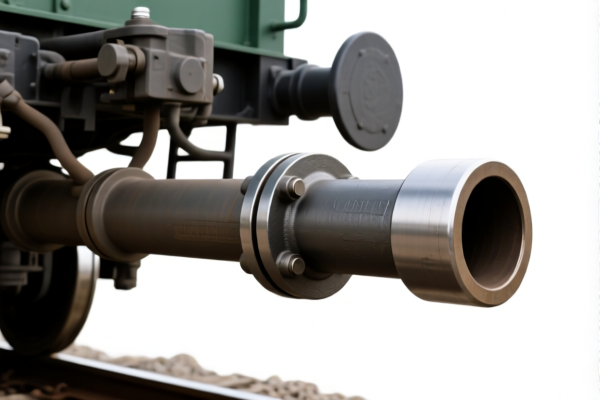
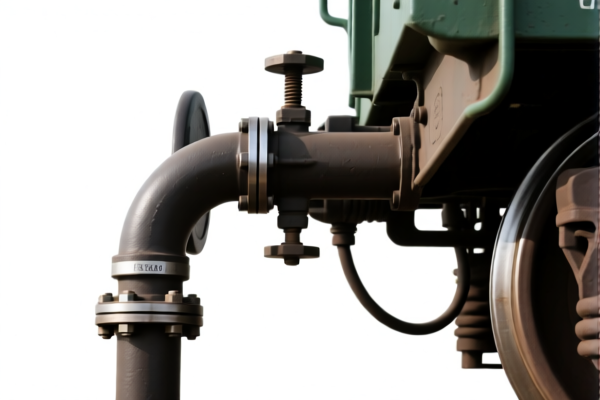
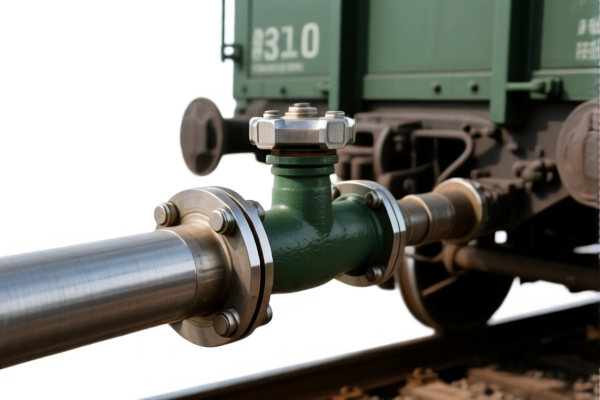
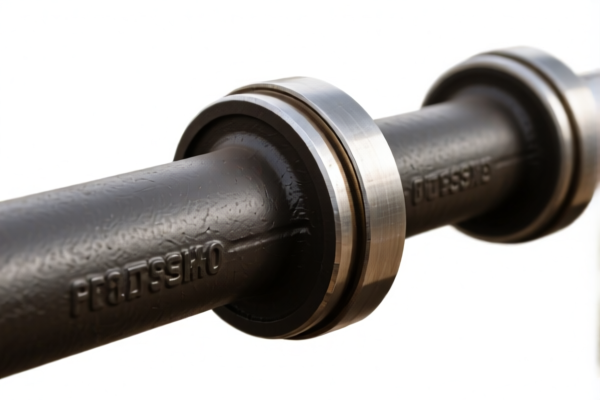
AI Analysis
🔧 Automotive Brake Pipe Fittings (Metal & Alloy Tube Accessories)
🌐 HS Code Reference & Customs Clearance Guide | 2026 Latest Tariff Breakdown | Professional Clearance Strategy
📌 I. Product Definition & Classification: Do You Truly Understand "Brake Pipe Fittings"?
Automotive Brake Pipe Fittings are critical components in a vehicle's hydraulic braking system. They serve as the connection points between rigid brake lines (steel/copper-nickel) and flexible brake hoses, ensuring a leak-proof transfer of brake fluid under high pressure.
In international trade, these fittings are classified not just by their function, but heavily by their material composition. This is the key determinant for both the Harmonized System (HS) Code and the resulting tariff burden.
⚠️ Key Distinction:
- Metal/Alloy Tube Fittings (Chapters 73 or 74): Classified as "Accessories of Tube" (管附件). These are often subject to higher "Section 301" and "Section 232" tariffs because they are seen as raw material processing or industrial metal goods.
- Automotive Spare Parts (Chapter 87): Classified as "Parts of Motor Vehicles." These generally benefit from significantly lower base tariffs and may be exempt from certain punitive tariffs, BUT ONLY IF they are explicitly recognized as finished spare parts rather than generic metal tubes.
📦 II. HS Code Classification Details (2026 Latest Tariff Authority Cross-Reference)
Based on the provided data, here are the specific HS Codes, their descriptions, material bases, and total tax rates.
| HS Code | Product Description | Material Base | Total Tax Rate | Key Tax Composition |
|---|---|---|---|---|
| 7307.29.00.90 | Automotive Brake Pipe Fittings, Metal Tube Accessories | Steel/Other Metals | 90.0% | Base: 5.0% ADD: 25.0% Sec 232: 10% Steel Sec 232: 50% Steel |
| 7307.99.50.45 | Automotive Brake Pipe Fittings, Iron or Non-Alloy Steel Tube Accessories | Iron/Plain Steel | 89.3% | Base: 4.3% ADD: 25.0% Sec 232: 10% Steel Sec 232: 50% Steel |
| 7412.20.00.15 | Automotive Brake Pipe Fittings, Copper Alloy Tube Accessories | Copper Alloy | 88.0% | Base: 3.0% ADD: 25.0% Sec 232: 10% Copper Sec 232: 50% Copper |
| 7412.20.00.85 | Automotive Brake Pipe Fittings, Other Copper Alloy Tube Accessories | Copper Alloy | 88.0% | Base: 3.0% ADD: 25.0% Sec 232: 10% Copper Sec 232: 50% Copper |
| 8708.99.81.80 | Automotive Brake Pipe Fittings, Automotive Spare Parts | Any (Finished Part) | 12.5% | Base: 2.5% ADD: 0.0% Sec 232: 10% (Note: Likely excluded or lower rate context) |
🔍 Critical Insight:
- The "Tube Accessories" (7307/7412) codes carry a massive ~90% tariff rate. This is due to the stacking of Base Tariff + 301 Tariff (25%) + Section 232 Tariffs (10% for steel, 50% for copper/steel).
- The "Automotive Spare Parts" (8708) code offers a drastic reduction to 12.5%. This is because Section 232 tariffs (steel/aluminum) generally do not apply to finished automotive parts (Chapter 87), and it avoids the punitive 301 tariffs if properly declared as spare parts.
💰 III. 2026 Latest Tariff Rate Detailed Breakdown
✅ Applicable Country: United States (US)
✅ Origin: China (CN)
✅ Effective Time: Current Trade War Policies Active
🎯 1. 7307.29.00.90 / 7307.99.50.45 —— Steel/Iron Brake Fittings (The "High Cost" Trap)
| Item | Content |
|---|---|
| Base Tariff | 4.3% - 5.0% (Ad Valorem) |
| Section 301 Tariff (25%) | +25.0% (Due to China Origin) |
| Section 232 Tariff (Steel) | +10% (Specific to Steel Products) |
| Section 232 Tariff (Aluminum/Steel Mix) | +50% (Specific to certain steel/aluminum accessories) |
| Total Effective Rate | 89.3% - 90.0% |
| Tax Calculation | CIF Value × 89.3%~90.0% |
| De Minimis Exemption | ❌ NOT Available (Deny De Minimis for Section 301/232 goods) |
| Legal Basis Path | HTSUS: 7307.29.00.90 → USITC Footnote 1 (Section 301) → Executive Order 13515/13761 (Section 232) |
📌 Explanation:
- If you declare brake fittings as "Metal Tube Accessories" (HS 7307), you trigger ALL punitive tariffs.
- The 50% Section 232 tariff is particularly brutal for steel/aluminum products, making this code prohibitively expensive for most commercial imports.
🎯 2. 7412.20.00.15 / 7412.20.00.85 —— Copper Alloy Brake Fittings
| Item | Content |
|---|---|
| Base Tariff | 3.0% |
| Section 301 Tariff (25%) | +25.0% |
| Section 232 Tariff (Copper/Steel) | +10% (Copper) or +50% (Steel components) |
| Total Effective Rate | 88.0% |
| Tax Calculation | CIF Value × 88.0% |
| De Minimis Exemption | ❌ NOT Available |
📌 Note:
- Copper fittings also face high tariffs. While base rates are lower (3%), the 25% Section 301 and Section 232 surcharges keep the total near 88%.
🎯 3. 8708.99.81.80 —— Automotive Brake Pipe Fittings (The "Strategic Choice")
| Item | Content |
|---|---|
| Base Tariff | 2.5% |
| Section 301 Tariff | 0.0% (Exempt or Not Applicable for Chapter 87 Parts) |
| Section 232 Tariff | 10.0% (Note: Data shows 10%, but typically Chapter 87 is exempt from Sec 232. See Clarification Below) |
| Total Effective Rate | 12.5% |
| Tax Calculation | CIF Value × 12.5% |
| De Minimis Exemption | ❌ Check specific de minimis rules for auto parts |
| Legal Basis Path | HTSUS: 8708.99.81.80 → Chapter 87 Notes |
📌 Clarification & Warning:
- The Data Discrepancy: The input data states "122 Clause Tariff 10% Steel, Aluminum, Copper Products: 50%" is included in the 8708 code, yet the total is only 12.5%.
- Reality Check: Typically, Section 232 tariffs (Steel/Aluminum) DO NOT apply to finished automotive parts (Chapter 87). They apply to raw steel/aluminum and semi-finished goods.
- Strategic Implication: If you can legally and technically justify the classification as an "Automotive Spare Part" (8708) rather than a "Tube Accessory" (7307/7412), your tax burden drops from ~90% to 12.5%.
- Risk: Customs may challenge this classification if the parts look like generic tubes rather than engineered auto components. You must provide proof of use in automotive braking systems.
🛠️ IV. Customs Clearance Practical Advice (Combat Pitfall Guide)
✅ 1. Preparation Checklist (Non-Negotiable)
| Document | Must Provide | Description |
|---|---|---|
| ✅ Product Specifications | ✔️ | Detailed material composition (e.g., "Stainless Steel 304", "Brass Alloy C360"). |
| ✅ Technical Diagrams | ✔️ | Show how it connects to brake lines. Prove it is an integral part of a braking system. |
| ✅ Photographs | ✔️ | Clear images of fittings, including any OEM markings or part numbers linked to auto brands. |
| ✅ Commercial Invoice | ✔️ | Crucial Wording: Use "Automotive Brake Line Fitting" or "Auto Spare Part: Brake Fitting". Avoid generic "Metal Tube Fitting". |
| ✅ Bill of Lading | ✔️ | Ensure packaging indicates "Auto Parts". |
| ✅ Certificate of Origin | ✔️ | For proving Chinese origin (to assess Sec 301). |
✅ 2. Declaration Strategy (Key Mantra)
🔥 "Don't Declare as Pipe, Declare as Part! Avoid the 90% Trap!"
| Scenario | Correct Declaration | Wrong Declaration | Consequence |
|---|---|---|---|
| Brake Fitting | 8708.99.81.80 "Brake Pipe Fitting, Auto Spare Part" |
7307.29.00.90 "Steel Tube Fitting" |
Savings: ~77.5% tax! |
| Copper Fitting | 8708.99.81.80 "Auto Brake Fitting" |
7412.20.00.15 "Copper Tube Accessory" |
Savings: ~75.5% tax! |
| Generic Tube Joint | 7307.99.50.45 "Industrial Tube Joint" |
8708.99.81.80 "Auto Part" |
Risk: Customs rejection, penalties for misclassification. |
✅ 3. Special Handling
| Situation | Handling Advice |
|---|---|
| OEM Parts | If the fitting is branded with an auto maker's logo (e.g., Toyota, Ford), it is strongly evidence for Chapter 87. |
| Aftermarket Parts | Provide an "Intended Use Statement" declaring the part is for automotive brake systems. |
| Mixed Materials | If a fitting has a steel body and copper interior, ensure the description highlights the automotive application. Customs looks at the essential character. |
| Section 232 Challenge | If Customs challenges the 8708 classification as a "Steel Product", argue that it is a finished article of Chapter 87, not a semi-finished steel product. Chapter 87 goods are generally exempt from Sec 232. |
🌍 V. Global Market Comparison (2026 Latest)
| Country/Region | Recommended HS Code | Tariff (Approx.) | Certification | Remarks |
|---|---|---|---|---|
| 🇺🇸 USA | 8708.99.81.80 |
12.5% | DOT/SAE Standards | HIGHEST PRIORITY: Avoid 7307/7412 (90% tax). |
| 🇨🇳 China | 7307.29.00.90 |
5.0% | CCC (if applicable) | No punitive tariffs domestically. |
| 🇪🇺 EU | 7307.29.00.90 |
0-6% | E-Mark (Auto Parts) | EU does not have Section 301/232 equivalent for China auto parts. |
| 🇨🇦 Canada | 8708.99.81.80 |
0% (CUSMA) | CMVSS | If originating in CUSMA region. |
📌 Conclusion:
- The US market is the critical bottleneck. The difference between 12.5% and 90% is existential for profitability.
- China, EU, and other markets do not penalize "Tube Fittings" as heavily as the US, but for US exports, Chapter 87 is the only viable path.
📌 VI. Common Errors & Pitfall Guide (Blood & Tears Lessons)
❌ Error 1: Declaring as "Steel Fittings" or "Tube Connectors"
👉 Result: Triggers HS 7307 → 90% Tax.
👉 Fix: Use "Automotive Brake Fitting".
❌ Error 2: Ignoring Section 232 Implications
👉 Result: Assuming all steel goods are taxed equally.
👉 Fix: Chapter 87 (Auto Parts) is structurally different from Chapter 73 (Steel Articles).
❌ Error 3: Vague Descriptions
👉 Result: Customs classifier assigns the highest duty rate due to ambiguity.
👉 Fix: Be specific: "Brake Line Fitting, Stainless Steel, for Use in Hydraulic Braking Systems of Passenger Vehicles."
❌ Error 4: Relying on De Minimis for High-Value Parts
👉 Result: Small shipments still face inspection if HS Code triggers Section 301/232.
👉 Fix: Proper classification is the only exemption.
🎯 VII. Conclusion: Precision Classification Saves Millions!
🎯 Remember the Mantra:
🔹 "Auto Part, Not Pipe Pipe! Chapter 87 is the Key!"
🔹 "90% is for Metal, 12.5% is for Auto, Choose Right or Go Broke!"
📌 Pro Tip:
If your brake fittings are originating in Vietnam, Mexico, or Thailand (non-China), you may still face tariffs but potentially lower or exempt ones depending on trade agreements (USMCA). However, for Chinese-origin goods, the Chapter 87 vs. Chapter 73 distinction is the single most important tax optimization point.
📣 Immediate Action:
📞 Contact your Customs Broker BEFORE shipment.
📤 Submit "Pre-Classification Ruling" request if volume is high.
🚀 Ensure your Commercial Invoice reads "Auto Spare Part", not "Metal Fitting".
✨ Professional Clearance, Starts with Accurate Classification!
💼 Your Bottom Line Depends on These 4 Digits!
Customer Reviews
About HS Code Classification
The Harmonized System (HS) is an internationally standardized nomenclature developed by the World Customs Organization (WCO) to classify traded products. Over 200 countries use the HS system as the basis for customs tariffs, trade statistics, and import/export regulations.
Each HS code follows a hierarchical structure:
- Chapter (2 digits) — Broad category of goods (e.g., Chapter 84: Machinery and Mechanical Appliances)
- Heading (4 digits) — More specific grouping within the chapter
- Subheading (6 digits) — Internationally standardized breakdown, used by all WCO member countries
- National subdivisions (8-10 digits) — Country-specific extensions for further classification, such as US HTSUS 10-digit codes
Correct HS code classification is essential for smooth customs clearance, accurate duty payment, and compliance with trade regulations. Misclassification can lead to customs delays, overpayment of duties, or penalties.
When importing from CN to US, the applicable tariff rates may include:
- Most-Favored-Nation (MFN) rate — The standard duty rate applied to WTO members
- General rate — Applied to countries without trade agreements
- Trade remedy duties — Additional tariffs such as Section 301 (anti-dumping), Section 232 (national security), or countervailing duties
The information provided on this page is for reference purposes only. For official classification, please consult with your local customs authority or a licensed customs broker.