制动系统部件
CN → US| HS Code | Tariff Rate | Origin | Destination | Doc |
|---|---|---|---|---|
| 8708305090 | 0.0% | CN | US | Official Doc |
| 6813810050 | 35.0% | CN | US | Official Doc |
| 8708301090 | 35.0% | CN | US | Official Doc |
| 6813200015 | 35.0% | CN | US | Official Doc |
Product Images
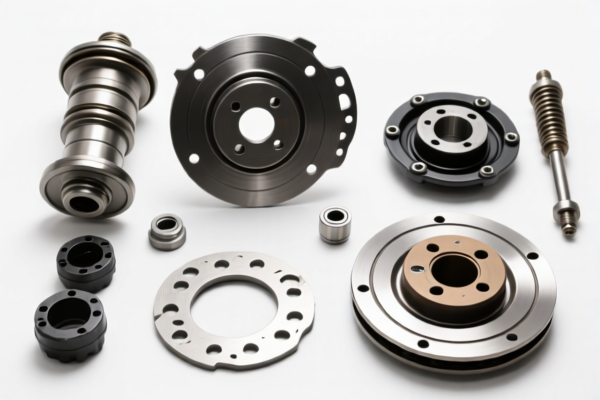
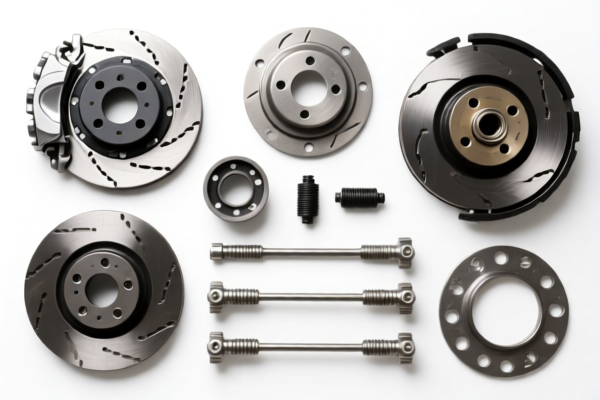
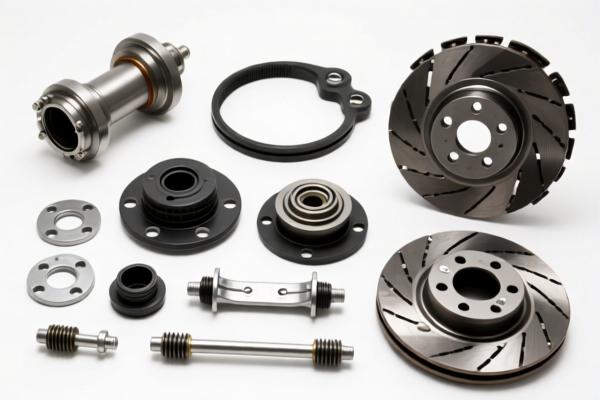
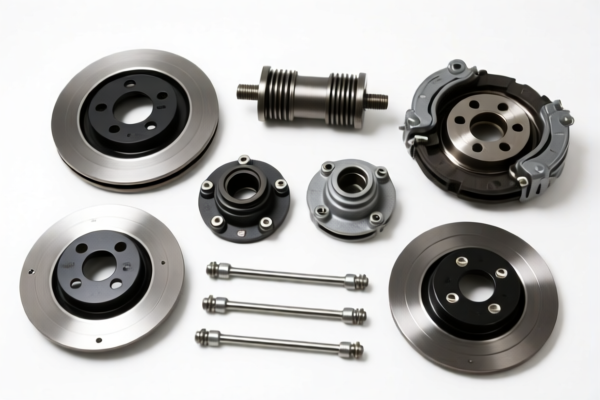
AI Analysis
🚗 Brake System Components (制动系统部件)
🌐 HS Code Reference & Customs Clearance Guide | 2026 Latest Tariff Analysis | Professional Clearance Strategy
📌 I. Product Definition & Classification: What Exactly Are "Brake Accessories"?
Brake System Components are critical safety parts used in automotive braking systems, including servo-brake systems and their parts. In international trade, these items are primarily classified based on their function (braking) rather than just their material, though material inference plays a role in specific subheadings.
Core Categories: 1. Automotive Brake Parts (8708 Series): General-purpose mechanical parts of the braking system for motor vehicles. 2. Friction Material Parts (6813 Series): Specific components made of friction materials (like brake pads or linings), often classified under "Other" if not specified as asbestos or specific composites.
⚠️ Key Distinction Point:
- If the part is a general mechanical component (calipers, pipes, mounts) → 8708.30
- If the part is specifically identified as a friction material insert/lining (brake pads/linings) → 6813 (Note: Some generalists may still use 8708 if material is unknown, leading to different tax rates).
📦 II. HS Code Classification Details (2026 Latest Tariff Authority Comparison)
Based on the provided data, here are the four possible HS codes derived from "Brake Accessories" (制动配件), ordered by match logic:
| HS Code | Product Description | Matching Logic & Application | Tax Impact Note |
|---|---|---|---|
8708.30.50.90 |
Other parts and accessories of brakes and servo-brakes | Best Fit for General Parts. • Logic: The name "Brake Accessories" matches "Brake systems and servo-brake systems and their parts." • Classification: Falls under "Other" (n.e.s.). • Material: No obvious conflict with material/shape; defaults to parts preference. |
2.5% Base + 25% Section 301 + 10% IEEPA = 37.5% Total |
6813.81.00.50 |
Other articles of friction material, not on base of asbestos | Fit for Friction Components. • Logic: Inferred as friction material products based on common sense for "brake accessories." • Classification: "Other" category (n.e.s.). • Conflict: No known material conflict; defaults to parts/accessories principle. |
0% Base + 25% Section 301 + 10% IEEPA = 35% Total |
8708.30.10.90 |
Parts and accessories of brakes (Other) | Standard Automotive Parts. • Point: "Accessories" maps to "Parts"; "Brake Accessories" has no conflict with "Brakes and their parts." • Classification: "Other" (other) catch-all category. • Principle: Tendency to match based on function. |
0% Base + 25% Section 301 + 10% IEEPA = 35% Total |
6813.20.00.15 |
Brake linings and blocks, of other materials | Specific Friction Material. • Logic: Function matches "Brakes, clutches"; Form matches "Accessories/Parts"; Material inferred as friction material. • Conflict: No conflict with "Other" category. • Inference: Common sense suggests inclusion of friction material products. |
0% Base + 25% Section 301 + 10% IEEPA = 35% Total |
🔍 Key Reminder:
-8708.30.50.90has a 2.5% Base Tariff, while the others have 0% Base. However, all are subject to the same 35% additional tariffs (25% Section 301 + 10% IEEPA). - The total duty for8708.30.50.90is 37.5%, while the others are 35%. - If the product is clearly a friction lining/pad,6813codes are technically more precise, but8708is often used for general "brake parts" if material is not explicitly declared as friction-only.
💰 III. 2026 Latest Tariff Rate Breakdown (Detailed Tax Clauses)
✅ Applicable Country: United States (US)
✅ Origin: China (CN)
✅ Effective Time: November 10, 2025 onwards (for subsequent imports)
🎯 1. 8708.30.50.90 – Parts of Brakes (Other)
| Item | Detail |
|---|---|
| Base Tariff | 2.5% (Ad Valorem) |
| USITC Additional Tariff (Section 301) | +25.0% |
| IEEPA Additional Tariff | +10.0% (Against China/HK products, effective Nov 10, 2025) |
| Total Effective Rate | 37.5% |
| Calculation Method | CIF Value × 37.5% |
| De Minimis Exemption | ❌ Not Eligible (deny_de_minimis) |
| Legal Basis Path | IEEPA:9903.01.25 → IEEPA:9903.01.24 → USITC:8708.30.50.90 → FOOTNOTE:9903.88.01 |
📌 Explanation:
- The 2.5% base rate is standard for many auto parts under Chapter 87. - The 25% Section 301 tariff applies to most Chinese-origin automotive parts. - The 10% IEEPA tariff is a new/additional layer on top of Section 301 for Chinese goods. - Total 37.5% is a high burden. Precise classification is key to avoiding under/over-declaration.
🎯 2. 6813.81.00.50, 8708.30.10.90, 6813.20.00.15 – Friction Materials & Other Parts
| Item | Detail |
|---|---|
| Base Tariff | 0.0% |
| USITC Additional Tariff (Section 301) | +25.0% |
| IEEPA Additional Tariff | +10.0% |
| Total Effective Rate | 35.0% |
| Calculation Method | CIF Value × 35.0% |
| De Minimis Exemption | ❌ Not Eligible (deny_de_minimis) |
| Legal Basis Path | Similar to above: IEEPA + USITC + Footnote |
📌 Note:
- Although the base rate is 0%, the 35% total is still significant. - The difference between 37.5% and 35% is only 2.5%, which is the base tariff of8708.30.50.90. - Strategic Implication: If the product is clearly a friction material (brake pad/lining),6813codes may be more accurate and save the 2.5% base tariff. If it's a mechanical part (caliper, bracket),8708.30.10.90or8708.30.50.90is more appropriate.
🛠️ IV. Customs Clearance Practical Advice (Battle-Tested Pitfall Guide)
✅ 1. Required Documentation Checklist (Non-negotiable)
| Document | Must Provide | Purpose |
|---|---|---|
| ✅ Product Specification Sheet | ✔️ | Details material (friction vs. metal), dimensions, part number. |
| ✅ Product Photos (Clear) | ✔️ | Show the part clearly to determine if it's a friction lining or mechanical part. |
| ✅ Commercial Invoice | ✔️ | Must state "Brake System Component" or "Brake Accessories," not generic "Auto Parts." |
| ✅ Packing List | ✔️ | Confirm if items are complete units or loose accessories. |
| ✅ Origin Certificate (CO) | ✔️ | To prove China origin (triggering tariffs) or eligible for exemption if shipped from elsewhere. |
| ✅ Third-Party Test Report | ✔️ | Especially for friction materials (e.g., DOT brake lining standards). |
✅ 2. Declaration Tips (Key Mantras)
🔥 “Identify Material, Declare Function, Avoid Generic Terms!”
| Scenario | Correct Declaration | Incorrect Declaration | Consequence |
|---|---|---|---|
| Brake Pads/Linings | Brake Friction Linings, Non-Asbestos (6813) |
Brake Parts (Generic) |
Risk of misclassification; 6813 may be more accurate for material. |
| Brake Calipers/Hoses | Brake Calipers, Aluminum (8708) |
Brake Accessories (Vague) |
Customs may ask for clarification; stick to 8708. |
| Mixed Package | List items separately | Package as "Brake Kit" | May lead to partial classification errors; itemize! |
| OEM Parts | State "OEM Replacement Part for [Vehicle Model]" | Auto Accessories |
Clarifies origin of design but not material; still subject to tariffs. |
✅ 3. Special Situations
| Situation | Handling Advice |
|---|---|
| Unknown Material | If material is unclear, 8708.30.50.90 is safer as a "parts" default, but be prepared for customs inquiry. |
| Friction Material Inference | If "Brake Accessories" clearly refers to pads, use 6813 to reflect material reality, potentially saving 2.5% base duty. |
| High Value Shipments | Consider Advance Ruling (APA) to lock in the HS code and tariff rate before shipment. |
| Exemptions | No IEEPA exemption for auto parts from China. Ensure no diversion via third countries (transshipment risks). |
🌍 V. Global Market Clearance Comparison (2026 Update)
| Country/Region | Recommended HS Code | Base Tariff | Additional Tariffs (China) | Total Rate | Notes |
|---|---|---|---|---|---|
| 🇺🇸 USA | 8708.30.50.90 or 6813.81.00.50 |
0%~2.5% | +25% (301) +10% (IEEPA) | 35%~37.5% | High Tariff Zone. Strict enforcement. |
| 🇨🇳 China | 8708.30.50.90 |
5%~10% | None | ~5-10% | Lower entry barrier for imports. |
| 🇪🇺 EU | 8708.30.90 |
4.5% | None | 4.5% | No Section 301/IEEPA. |
| 🇦🇺 Australia | 8708.30.90 |
5% | None | 5% | Free trade agreement benefits may apply. |
| 🇯🇵 Japan | 8708.30.90 |
3%~5% | None | ~3-5% | Stable tariff environment. |
📌 Conclusion:
- USA is the most expensive market for brake components due to cumulative tariffs (25% + 10%). - EU, Australia, and Japan offer significantly lower tariffs (no US-style punitive duties). - Strategy: If possible, consider supply chain diversification to non-China origins for the US market to avoid the 35-37.5% burden.
📌 VI. Common Errors & Pitfall Guide (Lessons Learned)
❌ Error 1: Using "Brake Parts" as a generic description without material details.
👉 Result: Customs may select a higher-duty code or request additional info → Delay.
❌ Error 2: Misclassifying Brake Pads (6813) as General Auto Parts (8708).
👉 Result: While rates are similar (35% vs 37.5%), accuracy is crucial for regulatory compliance and audit trails.
❌ Error 3: Assuming "Accessories" means low value/de minimis.
👉 Result: NO. Auto parts from China are explicitly denied de minimis exemption under IEEPA. All shipments are taxed.
❌ Error 4: Ignoring the 10% IEEPA tariff.
👉 Result: Under-declaration leads to penalties and back-taxes upon audit.
✅ Correct Practice:
“Brake Pads, Non-Asbestos, Ceramic Compound, for Toyota Camry 2020-2023, Model BP-123, DOT Certified”
🎯 VII. Conclusion: Precision Saves Money!
🎯 Remember the Mantra:
🔹 “Material Matters: Friction (6813) vs. Mechanical (8708).”
🔹 “Total Duty: 35%~37.5% for China Origin. No Exceptions.”
🔹 “Declare Specifics: Avoid ‘General Parts’.”
📌 Pro Tip:
- For high-volume imports, apply for a Binding Tariff Ruling from CBP to confirm whether your specific "brake accessory" falls under 8708.30.50.90 or 6813.81.00.50.
- Ensure your supplier provides a detailed material breakdown (e.g., % ceramic, % metal) to justify the 6813 classification if applicable, potentially saving the 2.5% base duty.
📣 Take Action Now:
📞 Consult a Licensed Customs Broker
📄 Prepare Detailed Material Specifications
🚀 Verify IEEPA Compliance Before Shipment
✨ Professional Clearance Starts with Accurate Classification!
💼 Your Bottom Line Depends on These 2.5%!
Customer Reviews
About HS Code Classification
The Harmonized System (HS) is an internationally standardized nomenclature developed by the World Customs Organization (WCO) to classify traded products. Over 200 countries use the HS system as the basis for customs tariffs, trade statistics, and import/export regulations.
Each HS code follows a hierarchical structure:
- Chapter (2 digits) — Broad category of goods (e.g., Chapter 84: Machinery and Mechanical Appliances)
- Heading (4 digits) — More specific grouping within the chapter
- Subheading (6 digits) — Internationally standardized breakdown, used by all WCO member countries
- National subdivisions (8-10 digits) — Country-specific extensions for further classification, such as US HTSUS 10-digit codes
Correct HS code classification is essential for smooth customs clearance, accurate duty payment, and compliance with trade regulations. Misclassification can lead to customs delays, overpayment of duties, or penalties.
When importing from CN to US, the applicable tariff rates may include:
- Most-Favored-Nation (MFN) rate — The standard duty rate applied to WTO members
- General rate — Applied to countries without trade agreements
- Trade remedy duties — Additional tariffs such as Section 301 (anti-dumping), Section 232 (national security), or countervailing duties
The information provided on this page is for reference purposes only. For official classification, please consult with your local customs authority or a licensed customs broker.