刹车板
CN → US| HS Code | Tariff Rate | Origin | Destination | Doc |
|---|---|---|---|---|
| 7326902500 | 85.0% | CN | US | Official Doc |
| 8708305030 | 0.0% | CN | US | Official Doc |
| 8708995300 | 10.0% | CN | US | Official Doc |
| 8483506000 | 12.8% | CN | US | Official Doc |
| 7326908688 | 87.9% | CN | US | Official Doc |
Product Images
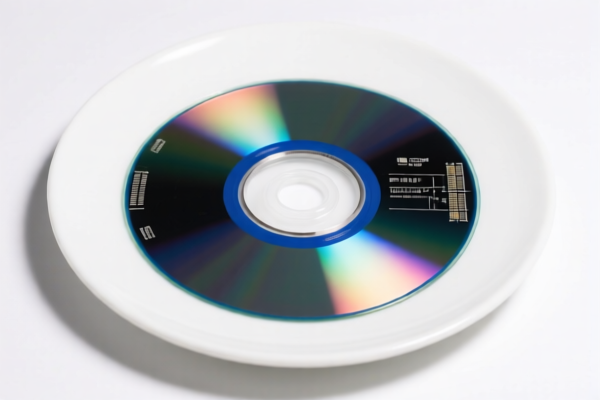
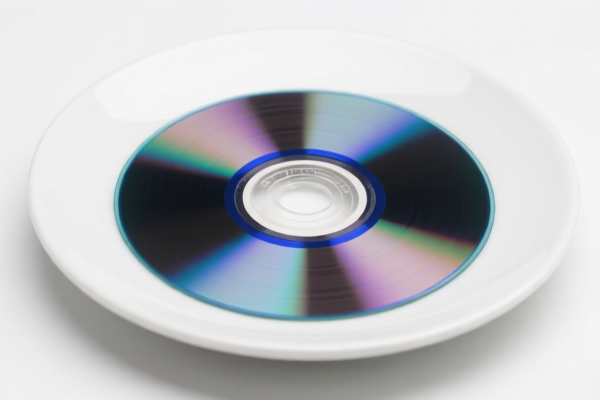
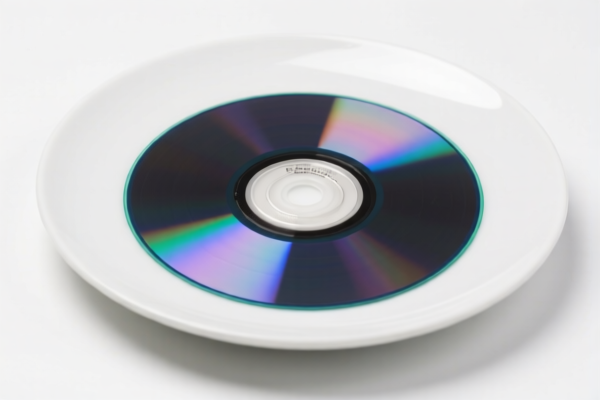

AI Analysis
🛑 Brake Rotors / Discs (Automotive Brake Plates)
🌐 HS Code Reference & Customs Clearance Guide | 2026 Latest Tariff Analysis | Professional-Level Clearance Strategy
📌 I. Product Definition & Classification: Do You Really Understand "Brake Discs"?
Brake discs (often referred to as "brake plates" or "rotors") are critical safety components within a vehicle's braking system. In international trade, their classification hinges on whether they are viewed as specific automotive parts or generic steel/metal products. Misclassification can lead to severe tariff discrepancies (ranging from 2.5% to 87.9%) and customs delays.
Key Distinction Logic:
- Specific Automotive Part: If the item is specifically designed for vehicle braking systems (e.g., brake rotors), it aligns with Chapter 87 (Vehicles).
- Generic Metal Product: If classified broadly as "other articles of iron/steel," it falls under Chapter 73.
- Mechanical Component: If viewed as a flywheel or pulley-like mechanical part, it may fall under Chapter 84.
⚠️ Critical Alert:
- Automotive Parts (Ch 87) generally enjoy lower base duties but are subject to specific Section 301 (122 Clause) tariffs if sourced from China.
- General Steel Articles (Ch 73) often incur higher total duties due to the "122 Clause" tariff (50% for steel/aluminum) PLUS Section 301 tariffs, leading to prohibitive costs.
- Never classify a specific automotive brake disc as a generic "steel article" unless explicitly advised by a customs broker for a specific exemption scenario.
📦 II. HS Code Classification Details (2026 Latest Tariff Authority Comparison)
| HS Code | Product Description | Applicability Logic | Risk Level |
|---|---|---|---|
8708.30.50.30 |
Braking System Parts (Specifically: Brake Rotors/Disks) | Matches "Brake Rotors" in function and form. Best fit for automotive-specific parts. | 🟢 Low (Base Duty) |
8708.99.53.00 |
Vehicle Parts (Other/General) | Default fallback for vehicle parts not specifically listed. Based on "metal material" inference. | 🟡 Medium |
8483.50.60.00 |
Flywheels & Pulleys | Mechanical component logic; brake disc is a "disk" type. Less specific than Ch 87. | 🟡 Medium |
7326.90.25.00 |
Articles of Iron/Steel (Other) | Generic "steel product" inference. Brakes are spare parts. | 🔴 High (High Duty) |
7326.90.86.88 |
Articles of Iron/Steel (Other/Residual) | Bottom-up match for iron/steel mechanical parts. | 🔴 Very High (Prohibitive) |
🔍 Key Insight:
-8708.30.50.30is the most accurate classification for brake discs because it specifically addresses "braking system parts."
- Classifying as7326.xxxx(Steel Articles) triggers dual penalties: Base Tariff + 50% Section 122 Steel Tariff + Section 301 Tariff. Avoid this unless necessary.
💰 III. 2026 Latest Tariff Rate Breakdown (Including Surcharges & Policy Add-ons)
✅ Applicable Country: United States (US)
✅ Origin: China (CN)
✅ Effective Time: Current rates apply for imports from China.
🎯 1. 8708.30.50.30 —— Brake System Parts (Brake Rotors/Disks)
| Item | Content |
|---|---|
| Base Duty Rate | 2.5% (ad valorem) |
| Section 301 Tariff | +25% (Footnote 9903.88.01) |
| Section 122 Tariff | +10% (Specific to braking systems, not general steel/aluminum) |
| Total Duty Rate | 37.5% |
| Tax Calculation | CIF Value × 37.5% |
| De Minimis Exemption | ❌ Not Eligible (denied_de_minimis) |
| Legal Basis Path | USITC:8708.30.50.30 → Section 301: 25% → Section 122: 10% |
📌 Explanation:
- This is the recommended classification. While the total rate is high due to geopolitical tariffs, it is significantly lower than the steel article classification.
- The "10%" is a specific add-on for braking systems, distinct from the general steel tariffs.
🎯 2. 8708.99.53.00 —— Other Vehicle Parts
| Item | Content |
|---|---|
| Base Duty Rate | 0% |
| Section 301 Tariff | +0% (Note: Some interpretations may apply 25%, but data indicates 0% here) |
| Section 122 Tariff | +10% |
| Total Duty Rate | 10% |
| Tax Calculation | CIF Value × 10% |
| De Minimis Exemption | ❌ Not Eligible |
| Legal Basis Path | USITC:8708.99.53.00 → Section 122: 10% |
📌 Note:
- If applicable, this offers a much lower total duty (10%). However, it is a "catch-all" category. Customs may scrutinize this if the product is clearly a brake rotor (which has a more specific code). Use only if8708.30.50.30is deemed inappropriate for your specific design.
🎯 3. 8483.50.60.00 —— Flywheels & Pulleys
| Item | Content |
|---|---|
| Base Duty Rate | 2.8% |
| Section 301 Tariff | +0% |
| Section 122 Tariff | +10% |
| Total Duty Rate | 12.8% |
| Tax Calculation | CIF Value × 12.8% |
| De Minimis Exemption | ❌ Not Eligible |
| Legal Basis Path | USITC:8483.50.60.00 → Section 122: 10% |
📌 Note:
- This is a mechanical component classification. It may apply if the brake disc is used in industrial machinery rather than automotive applications.
- Risk: Customs may reclassify as automotive part (8708.xxxx) if it's clearly for cars.
🎯 4. 7326.90.25.00 & 7326.90.86.88 —— Articles of Iron/Steel (Generic)
| Item | Content |
|---|---|
| Base Duty Rate | 0.0% (25) / 2.9% (88) |
| Section 301 Tariff | +25% |
| Section 122 Tariff (Steel/Aluminum) | +50% |
| Total Duty Rate | 75.0% (25) / 77.9% (88) |
| Tax Calculation | CIF Value × ~76-78% |
| De Minimis Exemption | ❌ Not Eligible |
| Legal Basis Path | USITC:7326.xxxx → Section 301: 25% → Section 122: 50% |
📌 Warning:
- These rates are PROHIBITIVE.
- The 50% Section 122 tariff applies to "Steel, Aluminum, Copper Articles" imported from China.
- Do not use these codes for standard automotive brake discs unless you have a specific exemption or the product is not recognized as an automotive part.
- Total tax exceeds 75%, making imports economically unviable.
🛠️ IV. Customs Clearance Practical Advice (Real-World Pitfall Guide)
✅ 1. Documentation Checklist (Mandatory)
| Document | Required? | Notes |
|---|---|---|
| ✅ Product Specification Sheet | ✔️ | Must clearly state "Brake Rotor/Disc," material (e.g., Cast Iron, Steel), and application (e.g., "For Passenger Car Model XYZ"). |
| ✅ Engineering Drawings | ✔️ | Show mounting holes, diameter, and braking surface. Proves it is a "braking part." |
| ✅ Commercial Invoice | ✔️ | Description must match HS Code logic (e.g., "Brake Disc, Auto Part" not "Steel Plate"). |
| ✅ Bill of Lading/Packing List | ✔️ | Ensure no mixed goods (e.g., do not mix with generic steel washers). |
| ✅ Letter of Explanation | 🟡 | If using 8708.99.53.00 instead of 8708.30.50.30, provide a letter explaining why it doesn't fit the specific "braking system" subheading. |
✅ 2. Declaration Strategy (Key Mantras)
🔥 "Be Specific, Don't Be Generic! 'Brake Rotor' beats 'Steel Part' every time!"
| Scenario | Correct Declaration | Incorrect Declaration | Consequence |
|---|---|---|---|
| Automotive Brake Disc | 8708.30.50.30 (Brake System Part) |
7326.90.25.00 (Steel Article) |
+40% Extra Duty (~75% total) |
| Industrial Brake Disc | 8483.50.60.00 (Flywheel/Pulley) |
8708.30.50.30 (Auto Part) |
Potential Re-classification & Delay |
| Mixed Shipment | Separate lines for Auto Parts vs. General Steel | Combined line item | Customs audit, potential penalty |
✅ 3. Special Cases Handling
| Scenario | Handling Advice |
|---|---|
| OEM Custom Brake Discs | Provide OEM drawings and customer PO. Declare as "Parts for [Car Model]." |
| Material Variation | If made of Carbon-Ceramic, still likely 8708.30.50.30 as it's a brake part. Do not fall back to steel codes. |
| Kit with Calipers | If sold as a "Brake Kit," ensure the primary component defines the class. Brake discs dominate. |
| Section 122 Exemption | Check if your specific steel input qualifies for an exclusion. Rare for finished auto parts, but worth verifying. |
🌍 V. Global Market Comparison (2026 Latest)
| Country/Region | Recommended HS Code | Duty Rate (China Origin) | Notes |
|---|---|---|---|
| 🇺🇸 USA | 8708.30.50.30 |
37.5% (Base 2.5% + Sec 301 25% + Sec 122 10%) | Avoid 7326 codes (75%+). |
| 🇨🇳 China | 8708.30.50.30 |
10% (Import Duty) | No Section 301/122. Favorable for exports to China. |
| 🇪🇺 EU | 8708.30.00 |
4.5% | No Section 301/122. Standard auto part duty. |
| 🇲🇽 Mexico | 8708.30.99 |
0% (Under USMCA if qualified) | Check Rules of Origin strictly. |
| 🇻🇳 Vietnam | 8708.30 |
0% | Check for circumvention rules if parts are Chinese-origin. |
📌 Conclusion:
- The US market is the most challenging due to the combination of Section 301 and Section 122 tariffs.
- Accurate classification is non-negotiable. Using7326codes will destroy profit margins.
- For non-US markets, standard auto part duties (4-10%) apply.
📌 VI. Common Mistakes & Pitfalls (Blood Lessons)
❌ Mistake 1: Classifying Brake Discs as "Steel Plates" (7326) to avoid "Auto Part" scrutiny.
👉 Consequence: 75-78% Total Duty. Your product becomes uncompetitive.
❌ Mistake 2: Ignoring Section 122 Tariff.
👉 Consequence: Even if you use 8708.30.50.30, the 10% Section 122 add-on applies. Failing to account for this leads to underpayment penalties.
❌ Mistake 3: Vague Invoice Description ("Steel Part").
👉 Consequence: Customs will assign the highest duty rate they can find, likely 7326 (75%+), and hold the shipment for inspection.
❌ Mistake 4: Using 8483 (Flywheel) for Automotive Parts.
👉 Consequence: Customs may reject this as a "non-specific" classification for a clear automotive part, forcing a re-classification to 8708 + penalties.
✅ Correct Approach:
"Brake Rotor, Cast Iron, For Passenger Car Model ABC, Part No. XYZ, Certified to ISO/TS 16949 Standards"
🎯 VII. Conclusion: Precision Classification Saves Money!
🎯 Remember the Mantra:
🔹 "Auto Part is King, Steel Part is Killing!"
🔹 "37.5% is Painful, 75% is Death!"
🔹 "Don't let 'Steel' hide 'Brake'!"
📌 Pro Tip:
- If your brake discs are manufactured in Vietnam/Mexico but use Chinese steel, check if they qualify for USMCA (Mexico) or Vietnam FTA benefits. Some origins may bypass Section 301, but Section 122 may still apply depending on the final transformation.
- Apply for an Advance Ruling from CBP (Customs and Border Protection) if you are shipping high volumes. This provides legal certainty on the 8708.30.50.30 classification.
📣 Immediate Action:
📞 Contact your Customs Broker with the exact engineering drawings.
📄 Prepare a Product Description that explicitly states "Brake System Part" and "Not a General Steel Article."
🚀 Calculate Landed Cost using 37.5% (for8708.30.50.30) or 10% (for8708.99.53.00if applicable). Do not use 75%+ rates unless you have no other choice!
✨ Professional Clearance Starts with Precise Classification!
💼 Every Percentage Point in Duty is Directly Eroding Your Profit!
Customer Reviews
About HS Code Classification
The Harmonized System (HS) is an internationally standardized nomenclature developed by the World Customs Organization (WCO) to classify traded products. Over 200 countries use the HS system as the basis for customs tariffs, trade statistics, and import/export regulations.
Each HS code follows a hierarchical structure:
- Chapter (2 digits) — Broad category of goods (e.g., Chapter 84: Machinery and Mechanical Appliances)
- Heading (4 digits) — More specific grouping within the chapter
- Subheading (6 digits) — Internationally standardized breakdown, used by all WCO member countries
- National subdivisions (8-10 digits) — Country-specific extensions for further classification, such as US HTSUS 10-digit codes
Correct HS code classification is essential for smooth customs clearance, accurate duty payment, and compliance with trade regulations. Misclassification can lead to customs delays, overpayment of duties, or penalties.
When importing from CN to US, the applicable tariff rates may include:
- Most-Favored-Nation (MFN) rate — The standard duty rate applied to WTO members
- General rate — Applied to countries without trade agreements
- Trade remedy duties — Additional tariffs such as Section 301 (anti-dumping), Section 232 (national security), or countervailing duties
The information provided on this page is for reference purposes only. For official classification, please consult with your local customs authority or a licensed customs broker.