剥皮桉木
CN → US| HS Code | Tariff Rate | Origin | Destination | Doc |
|---|---|---|---|---|
| 4401490090 | 35.0% | CN | US | Official Doc |
| 4401394290 | 35.0% | CN | US | Official Doc |
| 4403980095 | 35.0% | CN | US | Official Doc |
| 4403980023 | 10.0% | CN | US | Official Doc |
| 4407290296 | 35.0% | CN | US | Official Doc |
| 4407190093 | 35.0% | CN | US | Official Doc |
Product Images

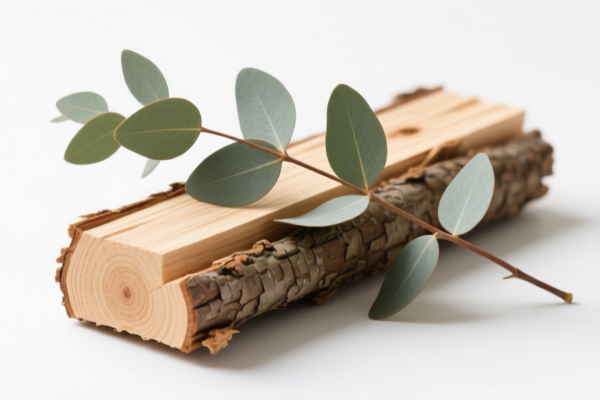
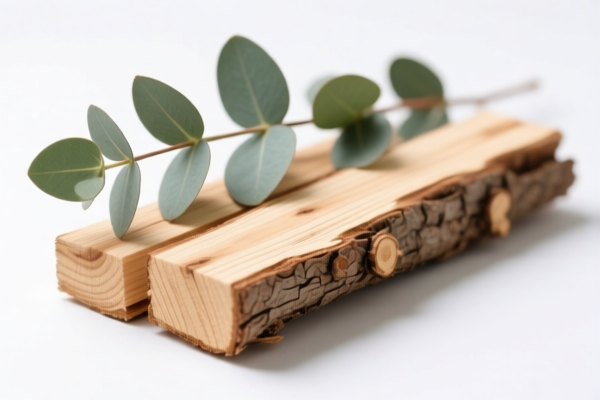
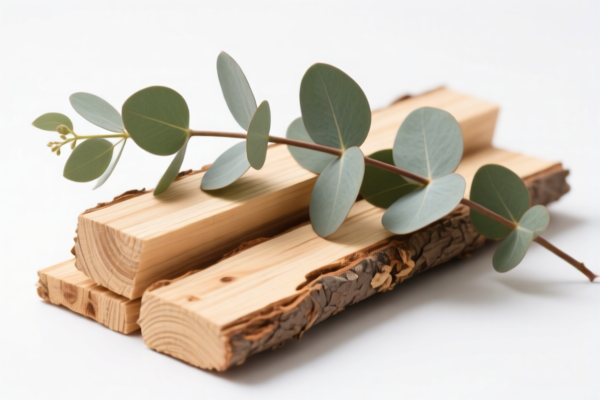
AI Analysis
🌳 剥皮桉木 (Eucalyptus Wood, Barked)
🌐 HS Code Reference & Customs Clearance Guide | 2026 Latest Tariff Analysis | Professional Clearance Strategy
📌 I. Product Definition & Classification: Do You Truly Understand "Eucalyptus Wood"?
Eucalyptus wood, specifically barked eucalyptus wood, is a versatile timber resource widely used in construction, paper production, and as biomass fuel. In international trade, the classification hinges on the degree of processing and the intended use. It is not a single category but a spectrum ranging from raw fuel to processed lumber.
Key Distinctions: 1. Raw Material/Fuel vs. Lumber: Is it intended for burning (fuel/wood waste) or for structural/industrial use (sawn wood)? 2. Processing Level: Is it just barked, or has it been sawn, planed, or treated? 3. Species Classification: As a tropical/hardwood species, it often falls under "Other wood" or specific tropical wood categories depending on the subheading logic.
⚠️ Critical Classification Point:
- If used for fuel, waste, or chips → Falls under Chapter 44.01 (Wood in the rough, wood waste).
- If used for construction, furniture, or export as solid timber → Falls under Chapter 44.07 (Wood sawn/chipped lengthwise) or 44.03 (Wood charred or simply sawn).
- Note: All entries in reflect a 35% Total Tax Rate, driven by specific trade restrictions (Section 122 + Section 301 equivalent).
📦 II. HS Code Classification Details (2026 Latest Tariff Authority Comparison)
The following HS Codes are derived strictly from the provided data, explaining why barked eucalyptus wood is classified under each specific code.
| HS Code | Product Description (Summary) | Why This Classification? | Processing State |
|---|---|---|---|
4407.19.00.93 |
Barked Eucalyptus Wood, Thickness > 6mm, Untreated | Classifies as sawn wood exceeding 6mm thickness. It is not processed further (planed/sanded), so it falls under the "other" subcategory for sawn wood. | Sawn/Slabbed (>6mm, Untreated) |
4401.49.00.90 |
Barked Eucalyptus Wood, Classified as Fuel | Classified as wood fuel when the primary intent is energy generation. It is not specifically identified as peels or pellets, hence the "other wood fuel" category. | Fuel/Raw |
4401.39.42.90 |
Barked Eucalyptus Wood, Wood Waste/Chips | Classified as wood waste, scrap, or chips if the material is fragmented, sawdust, or residual processing waste not suitable for structural use. | Waste/Chip |
4407.29.02.96 |
Barked Eucalyptus Wood, Other Tropical/General Category | A catch-all category for other tropical woods or specific eucalyptus variants that don't fit precise primary headings. Uses "other" logic for hardwoods. | Sawn/General Hardwood |
4403.98.00.95 |
Barked Eucalyptus Wood, Rough Sawn State | Classified under wood simply sawn or chipped lengthwise. This is for rough-sawn timber that has undergone minimal processing (just barked and sawn), often used for basic construction. | Rough Sawn |
🔍 Key Insight:
- 4401 vs. 4407/4403: The fundamental split is Fuel/Waste (4401) vs. Timber/Lumber (4407/4403).
- 6mm Threshold: For sawn wood, thickness determines if it’s considered "lumber" (4407) or potentially "slabs/waste" depending on quality.
- "Other" Logic: Codes ending in.9xoften indicate "Other" subcategories, requiring careful justification based on physical form and usage.
💰 III. 2026 Latest Tariff Rate Breakdown (Including Surcharges & Policy Add-ons)
✅ Applicable Country: United States (US)
✅ Origin: China (CN) (Implied by "122 Clause" and 35% total structure, typical of US-China trade context)
✅ Effective Time: Current applicable rates as per
🎯 1. General Tax Structure for All Listed Codes
| Item | Content |
|---|---|
| Base Duty Rate | 0.0% (Ad Valorem) |
| Additional Duty (Section 301/307) | +25.0% |
| Section 122 Tariff | +10.0% |
| Total Tax Rate | 35.0% |
| Tax Calculation | CIF Value × 35% |
| De Minimis Exemption | ❌ Not Applicable (High duty prevents small parcel exemption) |
| Legal Basis Path | Base: 0% → Section 301: +25% → Section 122: +10% → Total: 35% |
📌 Explanation:
- "Base Duty 0%": Eucalyptus wood often has a low or zero base MFN rate, but this is heavily offset by trade war tariffs.
- "Additional Duty 25%": Reflects the standard Section 301 tariff on Chinese wood products.
- "Section 122 Tariff 10%": A specific surcharge applying to certain Chinese goods, likely related to intellectual property or specific trade remedy actions.
- Combined Impact: The 35% total rate is significant and must be factored into landed cost calculations immediately.
🛠️ IV. Customs Clearance Practical Advice (Actionable Pitfall Avoidance Guide)
✅ 1. Documentation Checklist (Non-negotiable)
| Document | Required? | Purpose |
|---|---|---|
| ✅ Commercial Invoice | ✔️ | Must clearly state "Barked Eucalyptus Wood" and specify form (sawn, fuel, waste). |
| ✅ Packing List | ✔️ | Detail dimensions, weight, and whether wood is chipped, sawn, or whole logs. |
| ✅ Certificate of Origin (CO) | ✔️ | To verify country of origin and confirm applicability of Chinese tariffs. |
| ✅ Wood Treatment Certificate | ✔️ | IPPC Mark is mandatory for wood packaging/materials to prevent invasive species entry. |
| ✅ Product Specification Sheet | ✔️ | Clarify if wood is "untreated," "barked," or "sawn" to justify HS Code selection. |
| ✅ Bill of Lading/Air Waybill | ✔️ | Must match invoice description exactly. |
✅ 2. Declaration Strategy (Key Rules)
🔥 "Define Use, Define Form, Avoid Guesswork!"
| Scenario | Correct Declaration Approach | Common Mistake |
|---|---|---|
| Solid Lumber (>6mm) | Declare as 4407.19.00.93 or 4403.98.00.95. Provide thickness and width. |
Declaring as "fuel" → 35% rate may still apply, but risk of re-classification penalties. |
| Wood Chips/Fuel | Declare as 4401.49.00.90 or 4401.39.42.90. Specify moisture content and size. |
Declaring as "sawn wood" → Higher scrutiny on processing level. |
| Mixed Shipment | Split lines on invoice. Do not combine fuel and lumber on one line. | Combined declaration → CBP may audit entire shipment, delaying clearance. |
| Treatment Status | Explicitly state "Untreated" or "Barked Only". Do not say "Processed." | Mislabeling treated wood as untreated → Quarantine Rejection/Return. |
✅ 3. Special Handling & Risk Mitigation
| Situation | Handling Advice |
|---|---|
| Thickness Dispute | If wood is exactly 6mm, ensure documentation proves it is >6mm for 4407 classification. Otherwise, it may be classified as waste. |
"Other" Classification (4407.29.02.96) |
Use this only if the wood doesn't fit standard eucalyptus categories. Be prepared to provide botanical proof. |
| Section 122 Impact | Since 10% is added, ensure your pricing strategy accounts for this non-negotiable surcharge. |
| Wood Pests | Barked wood still carries risk. Ensure fumigation certificates are valid if required by destination port regulations. |
🌍 V. Global Market Comparison (2026 Context)
| Market | HS Code Focus | Tariff Structure | Notes |
|---|---|---|---|
| 🇺🇸 United States | 4407 / 4401 / 4403 series |
35% Total (0% Base + 25% Sec 301 + 10% Sec 122) | High barrier; supply chain diversification recommended. |
| 🇨🇳 China (Export) | Various | Low Base Rate | Export duties may apply; check Chinese export regulations. |
| 🇪🇺 European Union | 4403 / 4407 |
Low/Zero Base | No Section 301/122 equivalents. Likely 0-5% + VAT. |
| 🇦🇺 Australia | 4403 / 4407 |
Low Base | Strict biosecurity (BPS) laws; quarantine is key. |
📌 Conclusion:
- The 35% US tariff is the dominant cost factor.
- No preferential agreements currently offset the Section 301 and Section 122 surcharges for Chinese-origin eucalyptus wood.
- Focus on efficiency: Optimize packing to reduce CIF value where possible, and ensure perfect documentation to avoid demurrage.
📌 VI. Common Errors & Pitfall Avoidance (Lessons Learned)
❌ Error 1: Declaring "Eucalyptus Logs" as "Sawn Wood"
👉 Consequence: HS Code mismatch → 100% audit → Delayed shipment + Storage fees.
❌ Error 2: Ignoring "Section 122" in cost calculations
👉 Consequence: Profit margin erosion. The 10% surcharge is not a negotiable duty; it is a fixed add-on.
❌ Error 3: Mixing Fuel Wood and Lumber in One Container
👉 Consequence: Customs may classify the entire container under the highest-scrutiny code or demand separation. Split shipments are safer.
❌ Error 4: Omitting "Barked" or "Untreated" Description
👉 Consequence: Ambiguity leads to manual classification by CBP, which may default to a higher-risk code. Be specific.
✅ Correct Approach:
"Barked Eucalyptus Sawn Timber, Untreated, Thickness 70mm, For Furniture Manufacturing, ICCP Marked"
🎯 VII. Conclusion: Precision in Classification, Profit in Clearance
🎯 Remember the Golden Rules:
🔹 "Fuel vs. Lumber: Define the End-Use!"
🔹 "35% is the Floor: Budget for Base + Sec 301 + Sec 122!"
🔹 "Documents Must Match Physical Form: Barked, Sawn, or Chipped!"
📌 Pro Tip:
If you are importing large volumes, consider:
1. Pre-emption Rulings: Apply for a Binding Tariff Information (BTI) or USCBP Ruling to lock in the HS Code and avoid disputes.
2. Supply Chain Audit: Verify that "Section 122" does not change frequently. Monitor trade policy updates.
3. Alternative Markets: Explore exports to EU/Asia where tariffs are significantly lower, reducing reliance on the US market.
📣 Immediate Action:
📞 Consult a Licensed Customs Broker to validate your HS Code selection.
📄 Prepare Detailed Specs: Thickness, moisture content, and treatment status are critical.
🚀 Optimize Logistics: With 35% duty, every dollar saved on CIF value reduces tax burden.
✨ Professional Clearance Starts with Accurate Classification!
💼 Your Margin Depends on Your Micro-Details!
Customer Reviews
About HS Code Classification
The Harmonized System (HS) is an internationally standardized nomenclature developed by the World Customs Organization (WCO) to classify traded products. Over 200 countries use the HS system as the basis for customs tariffs, trade statistics, and import/export regulations.
Each HS code follows a hierarchical structure:
- Chapter (2 digits) — Broad category of goods (e.g., Chapter 84: Machinery and Mechanical Appliances)
- Heading (4 digits) — More specific grouping within the chapter
- Subheading (6 digits) — Internationally standardized breakdown, used by all WCO member countries
- National subdivisions (8-10 digits) — Country-specific extensions for further classification, such as US HTSUS 10-digit codes
Correct HS code classification is essential for smooth customs clearance, accurate duty payment, and compliance with trade regulations. Misclassification can lead to customs delays, overpayment of duties, or penalties.
When importing from CN to US, the applicable tariff rates may include:
- Most-Favored-Nation (MFN) rate — The standard duty rate applied to WTO members
- General rate — Applied to countries without trade agreements
- Trade remedy duties — Additional tariffs such as Section 301 (anti-dumping), Section 232 (national security), or countervailing duties
The information provided on this page is for reference purposes only. For official classification, please consult with your local customs authority or a licensed customs broker.