加热袜
CN → US| HS Code | Tariff Rate | Origin | Destination | Doc |
|---|---|---|---|---|
| 6217109510 | 32.1% | CN | US | Official Doc |
| 6115969020 | 24.6% | CN | US | Official Doc |
| 6217109550 | 32.1% | CN | US | Official Doc |
| 6115959000 | 31.0% | CN | US | Official Doc |
| 6217109510 | 32.1% | CN | US | Official Doc |
Product Images
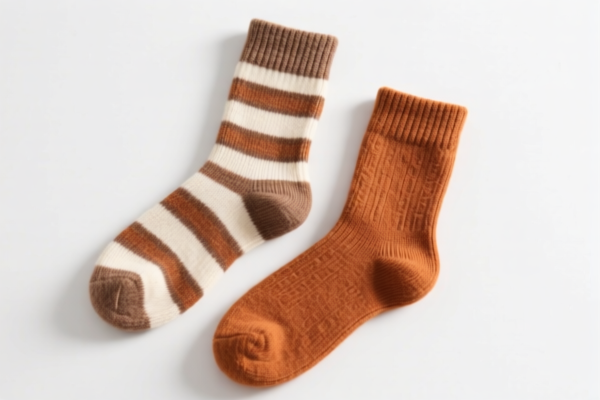
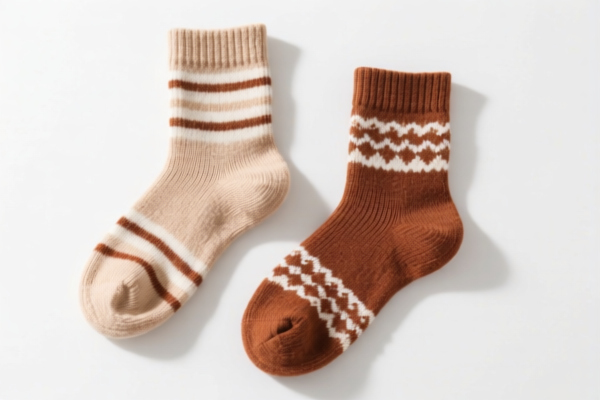


AI Analysis
🧦 Heated Socks (Thermal Socks) – The Ultimate HS Code & Customs Clearance Guide
🌐 HS Code Reference & Customs Guide | 2026 Latest Tariff Analysis | Professional Clearance Strategy
📌 1. Product Definition & Classification: Do You Really Understand "Heated Socks"?
Heated socks, also known as thermal socks, are a type of clothing accessory designed to maintain foot warmth in cold environments. In international trade, they are generally classified under Chapter 61 (Knitted or Crocheted Clothing) or Chapter 62 (Non-Knitted or Non-Crocheted Clothing), depending on the manufacturing process and material composition.
Key Classification Logic: * Knitted/Crocheted (Chapter 61): Usually made from synthetic fibers (e.g., polyester, nylon) or cotton blends. If the primary material is synthetic, it often falls under heading 6115. * Non-Knitted/Non-Crocheted (Chapter 62): Often used for thicker, woven, or specialized textile accessories. If classified as "other clothing accessories," it may fall under heading 6217.
⚠️ Critical Distinction: - If made of synthetic fibers (most common for heated socks due to conductivity and durability) → Likely 6115.96.90.20 (Lower Tax). - If made of cotton or classified broadly as clothing accessories → Likely 6217.10.95.10 or 6217.10.95.50 (Higher Tax). - If made of cotton but knitted → May fall under 6115.95.90.00 (Medium Tax).
📦 2. HS Code Classification Details (2026 Latest Tariff Authority Comparison)
| HS Code | Product Description | Applicable Scenario | Material/Logic |
|---|---|---|---|
6115.96.90.20 |
Other synthetic fiber socks, knitted or crocheted | Most common heated socks; synthetic fiber, non-wool | ✅ Synthetic Fiber |
6217.10.95.10 |
Other made-up clothing accessories, other | Cotton, wool, or mixed material socks classified as accessories | ✅ Cotton/Wool/Mixed |
6217.10.95.50 |
Other made-up clothing accessories, other | Generic "clothing accessory" classification for socks without specific fiber breakdown | ✅ Clothing Accessory |
6115.95.90.00 |
Other knitted socks, other | Cotton-based knitted socks, general thermal wear | ✅ Cotton/General |
🔍 Key Reminder: - Heated socks are typically classified under 6115 (Knitted Socks) if they are knitted and made of synthetic fibers, which offers a lower tax rate (24.6%). - If classified under 6217 (Clothing Accessories), the tax rate is higher (32.1%) due to additional duties. - The key to minimizing tax is correctly identifying the primary material (synthetic vs. cotton) and the manufacturing process (knitted vs. non-knitted).
💰 3. 2026 Latest Tariff Rate Details (Including Additional Taxes & Policy Surcharges)
✅ Applicable Country: United States (US)
✅ Origin: China (CN)
✅ Effective Date: 2025 November 10 onwards (including subsequent imports)
🎯 1. 6115.96.90.20 — Synthetic Fiber Heated Socks (Lowest Tax Option)
| Item | Content |
|---|---|
| Base Tariff | 14.6% (ad valorem) |
| Section 301 Additional Duty | 0.0% |
| Section 122 Duty | 10.0% |
| Total Tariff Rate | 24.6% |
| Tax Calculation | CIF Value × 24.6% |
| De Minimis Eligibility | ❌ No (deny_de_minimis) |
| Legal Basis Path | USITC:6115.96.90.20 → SECTION_122:10% |
📌 Explanation: - This code applies to synthetic fiber socks (e.g., polyester, nylon), which are common in heated socks due to their durability and electrical conductivity. - No Section 301 duty applies, making this the most cost-effective classification. - Section 122 Duty (10%) is added on top of the base tariff, resulting in a total of 24.6%.
🎯 2. 6217.10.95.10 — Other Made-Up Clothing Accessories (Cotton/Wool)
| Item | Content |
|---|---|
| Base Tariff | 14.6% (ad valorem) |
| Section 301 Additional Duty | 7.5% |
| Section 122 Duty | 10.0% |
| Total Tariff Rate | 32.1% |
| Tax Calculation | CIF Value × 32.1% |
| De Minimis Eligibility | ❌ No (deny_de_minimis) |
| Legal Basis Path | USITC:6217.10.95.10 → SECTION_301:7.5% → SECTION_122:10% |
📌 Explanation: - This code is used for cotton, wool, or mixed-material socks classified as "other clothing accessories." - Section 301 Duty (7.5%) and Section 122 Duty (10%) both apply, leading to a higher total tariff of 32.1%. - Suitable for natural fiber heated socks or those not strictly categorized as "synthetic fiber socks."
🎯 3. 6217.10.95.50 — Other Made-Up Clothing Accessories (Generic)
| Item | Content |
|---|---|
| Base Tariff | 14.6% (ad valorem) |
| Section 301 Additional Duty | 7.5% |
| Section 122 Duty | 10.0% |
| Total Tariff Rate | 32.1% |
| Tax Calculation | CIF Value × 32.1% |
| De Minimis Eligibility | ❌ No (deny_de_minimis) |
| Legal Basis Path | USITC:6217.10.95.50 → SECTION_301:7.5% → SECTION_122:10% |
📌 Explanation: - A catch-all code for socks that do not fit into more specific categories. - Same tax rate as
6217.10.95.10(32.1%) due to additional duties. - Use this only if the product does not clearly qualify as synthetic fiber socks or cotton socks.
🎯 4. 6115.95.90.00 — Other Knitted Socks (Cotton/General)
| Item | Content |
|---|---|
| Base Tariff | 13.5% (ad valorem) |
| Section 301 Additional Duty | 7.5% |
| Section 122 Duty | 10.0% |
| Total Tariff Rate | 31.0% |
| Tax Calculation | CIF Value × 31.0% |
| De Minimis Eligibility | ❌ No (deny_de_minimis) |
| Legal Basis Path | USITC:6115.95.90.00 → SECTION_301:7.5% → SECTION_122:10% |
📌 Explanation: - Applies to knitted socks made of cotton or other non-synthetic materials. - Section 301 Duty (7.5%) and Section 122 Duty (10%) apply, resulting in a total tariff of 31.0%. - Slightly lower than the 6217 codes due to a lower base tariff (13.5% vs. 14.6%).
🛠️ 4. Customs Clearance Practical Advice (Combat Pitfall Guide)
✅ 1. Preparation Checklist (All Required)
| Document | Must Provide | Description |
|---|---|---|
| ✅ Product Specification Sheet | ✔️ | Includes material composition (e.g., 80% polyester, 20% spandex), size, weight |
| ✅ Material Test Report | ✔️ | Third-party lab report confirming fiber content (critical for HS Code classification) |
| ✅ Product Photos (Including Label) | ✔️ | Clear images showing the sock, label, and any electrical components (if applicable) |
| ✅ Commercial Invoice | ✔️ | Must specify "Heated Socks" and material breakdown |
| ✅ Packing List | ✔️ | Details of packaging, ensuring no misdeclaration of components |
✅ 2. Declaration Tips (Key Mantra)
🔥 "Material Matters, Synthetics Save Money!"
| Scenario | Correct Declaration | Wrong Action |
|---|---|---|
| Heated socks made of polyester/nylon | 6115.96.90.20 |
Declare as "cotton socks" → 32.1% |
| Heated socks made of cotton | 6115.95.90.00 |
Declare as "synthetic" → Risk of audit |
| Heated socks with electrical components | Still 6115 or 6217 (as accessories) |
Declare as "electronic device" → Wrong chapter |
| Mixed material socks (e.g., 50% cotton, 50% synthetic) | Depends on primary material | Ambiguous declaration → Delayed clearance |
✅ 3. Special Cases Handling
| Scenario | Recommendation |
|---|---|
| OEM Custom Socks | Provide customer order + design specs to avoid "unspecified" classification |
| Socks with Heating Elements | If the heating element is integral, still classify as socks; do not split into "electronics" and "textiles" |
| High Wool Content | If wool content >50%, consider wool-specific codes; otherwise, use 6115.95.90.00 or 6217.10.95.10 |
| Samples for Testing | Declare as "Samples for Evaluation" with low value, but ensure proper documentation |
🌍 5. Global Market Customs Comparison (2026 Latest)
| Country/Region | Recommended HS Code | Tariff | Certification Requirements | Notes |
|---|---|---|---|---|
| 🇺🇸 USA | 6115.96.90.20 |
24.6% (China-origin) | No special certs | Lowest tax option for synthetic socks |
| 🇨🇳 China | 6115.96.90.20 |
14.6% | No special certs | No additional duties |
| 🇪🇺 EU | 6115.96.90.20 |
12% | CE (if electrical) | Lower base tariff, no Section 301 |
| 🇦🇺 Australia | 6115.96.90.20 |
5% | RCM (if electrical) | No additional duties |
| 🇯🇵 Japan | 6115.96.90.20 |
15% | PSE (if electrical) | No additional duties |
📌 Conclusion: - USA is the most tax-sensitive market due to Section 301 and Section 122 duties. - Synthetic fiber socks (
6115.96.90.20) offer the lowest tax rate (24.6%) in the US. - China-origin socks face significant additional tariffs, so accurate material declaration is crucial.
📌 6. Common Errors & Pitfall Guide (Lessons Learned)
❌ Mistake 1: Declaring synthetic heated socks as cotton socks
👉 Consequence: Incorrect HS Code → Potential audit, back taxes, and penalties.
❌ Mistake 2: Failing to specify material composition in the invoice
👉 Consequence: Customs may assign the highest possible duty (32.1%) → Higher costs!
❌ Mistake 3: Including electrical components in the declaration as "electronics"
👉 Consequence: Wrong chapter classification → Delayed clearance, potential seizure.
❌ Mistake 4: Using generic terms like "Thermal Socks" without material details
👉 Consequence: Customs may reclassify based on best information → Unpredictable tax rate.
✅ Correct Approach:
"Heated Socks, Knitted, 80% Polyester, 20% Spandex, with Integrated Heating Element, Model XYZ, Certified Safe for Electrical Use"
🎯 7. Conclusion: Precise Classification, Time-Saving, Cost-Effective!
🎯 Remember the Mantra:
🔹 "Synthetics Save Money: 6115.96.90.20 = 24.6% vs. 32.1%"
🔹 "Material Matters: Declare accurately, avoid audits, save thousands!"
📌 Tips:
If your heated socks are originally produced in Vietnam, Mexico, Thailand, or Malaysia, you may be eligible for IEEPA exemptions or lower tariffs;
Consider applying for Advance Rulings to avoid customs disputes.
📣 Immediate Action:
📞 Contact a professional customs broker + Provide product specs + Apply for HS Code Advance Ruling
🚀 Let your heated socks clear customs smoothly, maximize profits, and expand globally!
✨ Professional Customs Clearance Starts with Accurate Classification!
💼 Every penny of your cost deserves precise calculation!
Customer Reviews
About HS Code Classification
The Harmonized System (HS) is an internationally standardized nomenclature developed by the World Customs Organization (WCO) to classify traded products. Over 200 countries use the HS system as the basis for customs tariffs, trade statistics, and import/export regulations.
Each HS code follows a hierarchical structure:
- Chapter (2 digits) — Broad category of goods (e.g., Chapter 84: Machinery and Mechanical Appliances)
- Heading (4 digits) — More specific grouping within the chapter
- Subheading (6 digits) — Internationally standardized breakdown, used by all WCO member countries
- National subdivisions (8-10 digits) — Country-specific extensions for further classification, such as US HTSUS 10-digit codes
Correct HS code classification is essential for smooth customs clearance, accurate duty payment, and compliance with trade regulations. Misclassification can lead to customs delays, overpayment of duties, or penalties.
When importing from CN to US, the applicable tariff rates may include:
- Most-Favored-Nation (MFN) rate — The standard duty rate applied to WTO members
- General rate — Applied to countries without trade agreements
- Trade remedy duties — Additional tariffs such as Section 301 (anti-dumping), Section 232 (national security), or countervailing duties
The information provided on this page is for reference purposes only. For official classification, please consult with your local customs authority or a licensed customs broker.