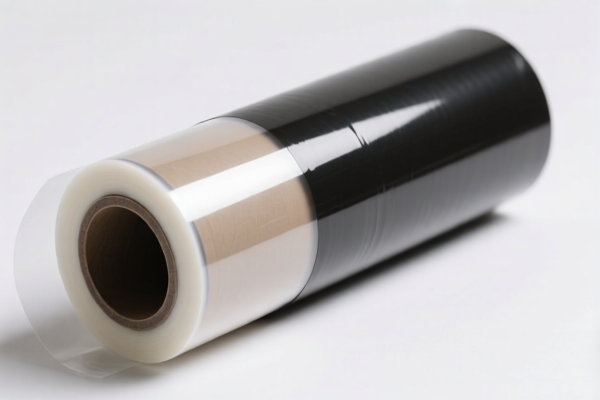
医疗x光胶片卷
CN → US| HS Code | Tariff Rate | Origin | Destination | Doc |
|---|---|---|---|---|
| 3705000000 | 35.0% | CN | US | Official Doc |
| 3703903060 | 38.7% | CN | US | Official Doc |
| 3703903030 | 38.7% | CN | US | Official Doc |
| 3701100030 | 38.7% | CN | US | Official Doc |
| 3701100030 | 38.7% | CN | US | Official Doc |
Product Images


AI Analysis
🩺 Medical X-Ray Film Roll (Medical Radiographic Film)
🌐 HS Code Reference & Customs Clearance Guide | 2026 Latest Tariff Analysis | Professional Import Strategy
📌 One, Product Definition & Classification: What Exactly Is "Medical X-Ray Film"?
Medical X-ray film is a specialized photosensitive material used in diagnostic radiology for capturing high-resolution images of internal body structures. It is typically in the form of a flexible, transparent roll (or sheet) coated with a silver halide emulsion on a polyester or cellulose base.
⚠️ Critical Distinction:
- If it's used in medical imaging (e.g., hospital radiology departments, clinics) → Must be classified under 3701.10.00.30
- If it's used for industrial or non-medical photography → May fall under different HS codes
- If it's not yet processed (unexposed) → Still qualifies as "photographic film" under 3701.10.00.30✅ Key Features:
- Halogen silver-based emulsion
- Roll or sheet format
- High contrast, high resolution
- Designed for X-ray exposure
- Used in medical diagnostics (e.g., chest X-rays, dental imaging, CT scans)
📦 Two, HS Code Classification Details (2026 Latest Tariff Authority Match)
| HS Code | Product Description | Use Case | Material & Form |
|---|---|---|---|
3701.10.00.30 |
Medical X-ray photographic film (unexposed), in rolls or sheets | Hospitals, clinics, diagnostic centers | Halogen silver emulsion on flexible base (polyester/cellulose), roll format |
3701.10.00.30 |
Medical radiographic film (unexposed), used for X-ray imaging | Radiology departments, mobile units | Roll or sheet, sensitive to X-ray radiation, for diagnostic use |
🔍 Important Note:
- Both entries are identical in classification — they refer to unexposed medical X-ray film used for diagnostic imaging
- The "30" suffix in3701.10.00.30specifically denotes medical X-ray film under the U.S. Harmonized Tariff Schedule (HTSUS)
💰 Three, 2026 Latest Tariff Rate Breakdown (With附加 Taxes & Legal Clauses)
✅ Applicable Country: United States (US)
✅ Origin: China (CN)
✅ Effective Date: November 10, 2025 (and onward)
🎯 1. 3701.10.00.30 — Medical X-Ray Photographic Film (Unexposed)
| Item | Details |
|---|---|
| Base Tariff Rate | 3.7% (ad valorem) |
| USITC Section 301 Additional Duty | +25.0% (from U.S. Trade Act 301) |
| IEEPA Section 122 (Emergency Economic Powers Act) | +10.0% (targeting China/Hong Kong products) |
| Total Effective Duty Rate | 38.7% |
| Tax Calculation | CIF Value × 38.7% |
| De Minimis Threshold | ❌ Not eligible (denied under 19 CFR § 181.2) |
| Legal Basis Path | IEEPA:9903.01.25 → IEEPA:9903.01.24 → USITC:3701.10.00.30 → FOOTNOTE:9903.88.01 |
📌 Explanation:
- 3.7% base is standard for medical photographic materials
- 25% USITC duty comes from the Section 301 Tariff List targeting Chinese imports under unfair trade practices
- 10% IEEPA duty is triggered by the International Emergency Economic Powers Act, applied to goods from China/Hong Kong since 2025
- Total = 38.7% — one of the highest effective tariffs on medical imaging materials in the U.S.
🛠️ Four, Customs Clearance Best Practices (Pro Tips to Avoid Delays)
✅ 1. Required Documentation (Must-Have List)
| Document | Required? | Notes |
|---|---|---|
| ✅ Commercial Invoice | ✔️ | Clearly state: “Unexposed Medical X-Ray Film, in Rolls, for Diagnostic Use” |
| ✅ Packing List | ✔️ | Include roll count, dimensions, weight, and batch numbers |
| ✅ Product Specifications | ✔️ | Detail: emulsion type (silver halide), base material (polyester), film speed, resolution |
| ✅ Certificate of Origin (CO) | ✔️ | If from China, must be issued; may qualify for IEEPA exemption if from non-China origin |
| ✅ FDA 510(k) Clearance (if applicable) | ✔️ | For medical devices; though film is not a device, some customs may request proof of medical use |
| ✅ Test Report (e.g., ISO 12233, ISO 14523) | ✔️ | To prove film meets medical imaging standards |
| ✅ Product Photos (with label/branding) | ✔️ | Show roll format, packaging, and markings |
✅ 2.申报技巧 (Key Rules to Remember)
🔥 "Medical Use = 38.7% Tax, But Prove It or Pay More!"
| Scenario | Correct HS Code | Common Mistake |
|---|---|---|
| Unexposed X-ray film for hospitals | 3701.10.00.30 |
Misclassified as "general photographic film" → 0% tariff |
| Film labeled “for medical use” | 3701.10.00.30 |
Labeled as “industrial film” → 0% or 3.7% only |
| Film in roll form, not cut | 3701.10.00.30 |
Reported as “sheet” → wrong code |
| Film used in dental clinics | 3701.10.00.30 |
Reported as “photographic paper” → wrong category |
✅ Correct Description to Use:
"Unexposed Medical X-Ray Photographic Film, in Rolls, Silver Halide Emulsion, for Diagnostic Radiology, 35mm/40mm Width, 100m Length, for Hospital Use"
✅ 3. Special Cases & Solutions
| Situation | Recommended Action |
|---|---|
| Film from Vietnam, Mexico, or Malaysia | Apply for IEEPA exemption — if origin is non-China, 10% IEEPA duty may be waived |
| Film used in research labs (non-clinical) | May still qualify under 3701.10.00.30 if used for medical imaging — provide documentation |
| Film with dual-use (medical & industrial) | Must declare primary use — if medical, use 3701.10.00.30 |
| Customs holds shipment | Request pre-clearance review or advance ruling from U.S. CBP |
🌍 Five, Global Market Customs Comparison (2026 Update)
| Country/Region | Recommended HS Code | Duty Rate | Certification | Notes |
|---|---|---|---|---|
| 🇺🇸 United States | 3701.10.00.30 |
38.7% (with 25% + 10%) | FDA, ISO, CE (if applicable) | High tax — plan ahead! |
| 🇨🇳 China | 3701.10.00.30 |
5% | CCC, ISO 13485 | No additional tariffs |
| 🇪🇺 European Union | 3701.10.00.30 |
0% (if CE certified) | CE, ISO 13485 | No IEEPA/301 duties |
| 🇦🇺 Australia | 3701.10.00.30 |
5% | RCM | No extra taxes |
| 🇯🇵 Japan | 3701.10.00.30 |
0% | PSE | No additional duties |
📌 Takeaway:
- The U.S. is the only major market imposing 38.7% total duty on medical X-ray film from China
- Origin matters: Moving production to Vietnam, Mexico, or India can avoid 10% IEEPA duty
📌 Six, Common Mistakes & Pitfalls (Learn from Others' Errors)
❌ Mistake 1: Calling it “photographic film” without specifying “medical”
👉 Result: Only 3.7% duty applied → Later audit = $100K+ in back taxes + penalties
❌ Mistake 2: Using “industrial film” label to avoid medical classification
👉 Result: Incorrect HS code → Detention, seizure, or destruction
❌ Mistake 3: Not providing proof of medical use (e.g., packaging, labeling, specs)
👉 Result: CBP delays or requests reclassification
❌ Mistake 4: Reporting as “sheet” instead of “roll”
👉 Result: Wrong code (3703.90.30.60) → Higher risk of audit
✅ Best Practice:
Always use clear, precise language in the invoice and description:
"Medical X-Ray Film, Unexposed, in Rolls, for Diagnostic Radiology, 3701.10.00.30"
🎯 Seven, Conclusion: Accurate Classification = Cost Control & Smooth Clearance!
🎯 Remember the Golden Rule:
🔹 "If it's used in hospitals for X-ray imaging, it’s 3701.10.00.30 — even if it’s a roll!"
🔹 "Don’t hide the medical use — declare it, prove it, pay the 38.7%."
📌 Pro Tip:
If your product is manufactured in Vietnam, Mexico, or Thailand, apply for IEEPA exemption — you could reduce duty from 38.7% to 3.7%.
📞 Action Step:
✅ Contact a U.S. Customs Broker + request HS Code Pre-Ruling (Advance Ruling)
✅ Submit product photos, specs, and intended use
✅ Get legal certainty before shipment
📣 Act Now:
🚀 Secure your medical film shipment with correct classification, full documentation, and duty planning
💼 Avoid costly delays, audits, or seizures — your patients depend on timely diagnostics!
✨ Professional Customs, Precision Classification, Zero Surprises!
💼 Every dollar saved starts with the right HS code.
Customer Reviews
About HS Code Classification
The Harmonized System (HS) is an internationally standardized nomenclature developed by the World Customs Organization (WCO) to classify traded products. Over 200 countries use the HS system as the basis for customs tariffs, trade statistics, and import/export regulations.
Each HS code follows a hierarchical structure:
- Chapter (2 digits) — Broad category of goods (e.g., Chapter 84: Machinery and Mechanical Appliances)
- Heading (4 digits) — More specific grouping within the chapter
- Subheading (6 digits) — Internationally standardized breakdown, used by all WCO member countries
- National subdivisions (8-10 digits) — Country-specific extensions for further classification, such as US HTSUS 10-digit codes
Correct HS code classification is essential for smooth customs clearance, accurate duty payment, and compliance with trade regulations. Misclassification can lead to customs delays, overpayment of duties, or penalties.
When importing from CN to US, the applicable tariff rates may include:
- Most-Favored-Nation (MFN) rate — The standard duty rate applied to WTO members
- General rate — Applied to countries without trade agreements
- Trade remedy duties — Additional tariffs such as Section 301 (anti-dumping), Section 232 (national security), or countervailing duties
The information provided on this page is for reference purposes only. For official classification, please consult with your local customs authority or a licensed customs broker.