医疗废弃物处理专用分散剂
CN → US| HS Code | Tariff Rate | Origin | Destination | Doc |
|---|---|---|---|---|
| 3808999501 | 15.0% | CN | US | Official Doc |
| 3402901000 | 38.8% | CN | US | Official Doc |
| 3808594000 | 40.0% | CN | US | Official Doc |
| 3402905050 | 38.7% | CN | US | Official Doc |
Product Images

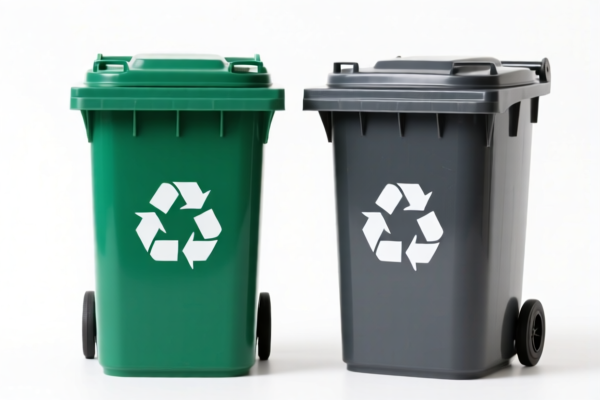
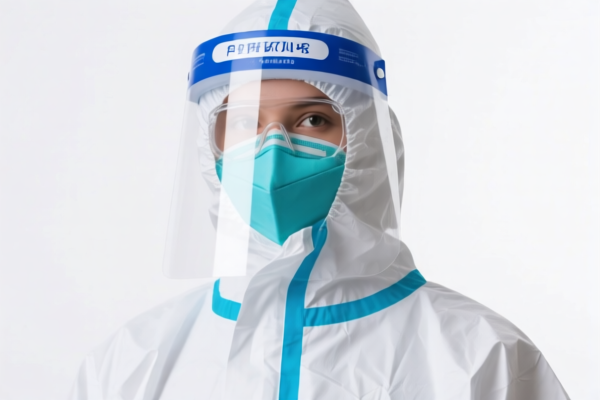
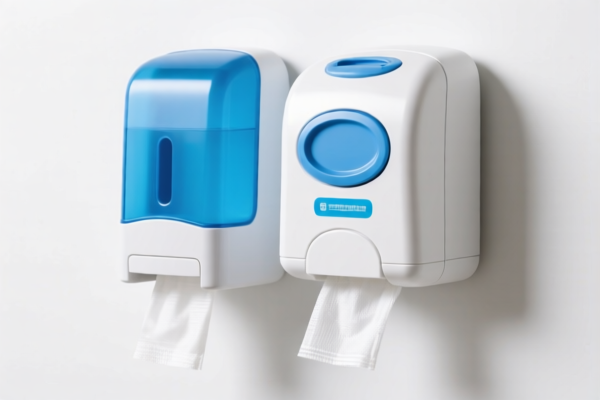
AI Analysis
🧪 Medical Waste Treatment专用消泡剂 (Defoamer for Medical Waste Treatment)
🌐 HS Code Classification & Tariff Guide | 2026 Updated Rules | Expert Customs Clearance Strategy
📌 One, Product Definition & Classification: What Exactly Is This Chemical?
This product is a specialized defoaming agent formulated specifically for medical waste treatment processes, such as in autoclaves, incinerators, or biological treatment systems. It prevents foam formation during sterilization or decomposition, ensuring operational efficiency and safety.
Despite its industrial application, it is not a general-purpose detergent — it belongs to chemical formulations with specific functional properties related to disinfection, stabilization, and waste processing.
⚠️ Key Classification Insight:
- If it's used in medical waste treatment and contains active chemical agents with disinfectant-like functionality, it may fall under chemical disinfectants or related chemical preparations. - Its chemical nature (e.g., silicone-based, polyether-modified, or surfactant-based) determines whether it's treated as a cleaning agent, disinfectant, or specialty chemical.
📦 Two, HS Code Classification Details (2026 Updated Tariff Authority)
| HS Code | Product Description | Applicable Use Case | Chemical Nature | Functional Similarity |
|---|---|---|---|---|
3808.99.95.01 |
Medical waste treatment defoamer; falls under disinfectant & similar product extensions; chemical agent-based | Used in medical waste sterilization, incineration, or biological treatment systems | Chemical pharmaceutical agent | Matches disinfectant function |
3402.90.10.00 |
Medical waste treatment defoamer; chemical formulation similar to synthetic detergents | Applied in wastewater treatment or foam control during waste processing | Synthetic chemical detergent | Functionally aligned with cleaning agents |
3808.59.40.00 |
Medical waste treatment defoamer; used in chemical formulations with disinfectant-like functionality | Employed in waste sterilization and pathogen control systems | Chemical preparation | Functionally equivalent to disinfectants |
3402.90.50.50 |
Medical waste treatment defoamer; chemical formulation outside washing/cleaning categories | Used in specialized industrial waste systems, not for surface cleaning | Non-cleaning chemical agent | No conflict with non-cleaning chemical category |
🔍 Critical Note:
- All four HS codes apply only if the product is used specifically in medical waste treatment. - The chemical composition and intended function are decisive — not just the name. - No general-purpose cleaning agent should be used for this product; misclassification leads to tariff overpayment or penalties.
💰 Three, 2026 Latest Tariff Breakdown (With Detailed Duty Clauses)
✅ Applicable Country: United States (US)
✅ Origin: China (CN)
✅ Effective Date: November 10, 2025 (and onward)
🎯 1. 3808.99.95.01 — Defoamer for Medical Waste Treatment (Disinfectant-Related)
| Item | Detail |
|---|---|
| Base Tariff | 5.0% (ad valorem) |
| Additional Tariff (Section 301) | 0.0% |
| Section 122 Tariff (IEEPA) | 10.0% |
| Total Effective Tariff | 15.0% |
| Tax Calculation | CIF Value × 15.0% |
| De Minimis Exemption? | ❌ Not eligible (denied) |
| Legal Basis Path | IEEPA:9903.01.25 → Section 122:9903.01.24 → HS:3808.99.95.01 |
📌 Explanation:
- This product is not subject to Section 301 (USITC) 25% tariff because it is not a general industrial chemical but functionally aligned with disinfectants. - However, it still falls under the IEEPA 10% Section 122 tariff due to China origin and specialized chemical use. - Total: 15% — lowest among all four codes.
🎯 2. 3402.90.10.00 — Defoamer for Medical Waste Treatment (Synthetic Detergent-Like)
| Item | Detail |
|---|---|
| Base Tariff | 3.8% |
| Additional Tariff (Section 301) | 25.0% |
| Section 122 Tariff (IEEPA) | 10.0% |
| Total Effective Tariff | 38.8% |
| Tax Calculation | CIF Value × 38.8% |
| De Minimis Exemption? | ❌ Not eligible |
| Legal Basis Path | IEEPA:9901.25 → Section 301:9903.01.24 → HS:3402.90.10.00 |
📌 Explanation:
- This code applies when the chemical structure resembles synthetic detergents. - Section 301 (25%) is triggered because it’s a chemical product from China with cleaning agent-like function. - IEEPA 10% applies due to China origin. - Total: 38.8% — very high — avoid if possible.
🎯 3. 3808.59.40.00 — Defoamer for Medical Waste Treatment (Disinfectant Function)
| Item | Detail |
|---|---|
| Base Tariff | 5.0% |
| Additional Tariff (Section 301) | 25.0% |
| Section 122 Tariff (IEEPA) | 10.0% |
| Total Effective Tariff | 40.0% |
| Tax Calculation | CIF Value × 40.0% |
| De Minimis Exemption? | ❌ Not eligible |
| Legal Basis Path | IEEPA:9901.25 → Section 301:9903.01.24 → HS:3808.59.40.00 |
📌 Explanation:
- This is the highest tariff because it is classified as a chemical with disinfectant function. - Section 301 (25%) applies due to China origin and functional similarity to disinfectants. - IEEPA 10% applies. - Total: 40% — most punitive — must avoid if possible.
🎯 4. 3402.90.50.50 — Defoamer for Medical Waste Treatment (Non-Cleaning Chemical)
| Item | Detail |
|---|---|
| Base Tariff | 3.7% |
| Additional Tariff (Section 301) | 25.0% |
| Section 122 Tariff (IEEPA) | 10.0% |
| Total Effective Tariff | 38.7% |
| Tax Calculation | CIF Value × 38.7% |
| De Minimis Exemption? | ❌ Not eligible |
| Legal Basis Path | IEEPA:9901.25 → Section 301:9903.01.24 → HS:3402.90.50.50 |
📌 Explanation:
- This code is only applicable if the product is NOT used for cleaning or washing. - Even if chemically similar to detergents, if the intended use is industrial waste processing (not cleaning), this code applies. - Still triggers Section 301 (25%) and IEEPA (10%). - Total: 38.7% — very high, but slightly lower than 3808.59.40.00.
🛠️ Four, Customs Clearance Best Practices (Pro Tips to Avoid Penalties)
✅ 1. Required Documentation (Must-Have Checklist)
| Document | Required? | Notes |
|---|---|---|
| ✅ Product Specification Sheet | ✔️ | Must include: chemical composition, function, intended use (medical waste), pH, viscosity |
| ✅ Safety Data Sheet (SDS) | ✔️ | Must clearly state "Not for cleaning", "For medical waste treatment only" |
| ✅ Technical Test Reports | ✔️ | e.g., foam suppression efficiency, biodegradability, compatibility with autoclaves |
| ✅ Commercial Invoice | ✔️ | Must state: "Defoamer for Medical Waste Treatment, Not for Cleaning" |
| ✅ Certificate of Origin (CO) | ✔️ | Required for tariff calculation |
| ✅ Lab Test Certificates (if applicable) | ✔️ | e.g., ISO, FDA, or EPA compliance |
| ✅ Packaging & Labeling Proof | ✔️ | Must reflect intended use, not "cleaner" or "detergent" |
✅ 2.申报技巧 (Key Rules to Remember)
🔥 "Function over Form — Use defines the Code!"
| Scenario | Correct HS Code | Wrong Code | Why? |
|---|---|---|---|
| Product used in medical waste autoclave | 3808.99.95.01 |
3402.90.10.00 |
Function = disinfection-related, not cleaning |
| Product chemically similar to detergent but used only in waste treatment | 3402.90.50.50 |
3402.90.10.00 |
Not for cleaning → avoid 301 tariff trap |
| Product functionally identical to disinfectant | 3808.59.40.00 |
3808.99.95.01 |
Higher tariff, but only if function matches |
| Product not used for cleaning, not for disinfection | 3402.90.50.50 |
3808.59.40.00 |
Avoid 40% tariff |
✅ 3. Special Case Handling
| Situation | Recommended Action |
|---|---|
| OEM product with custom formulation | Provide technical specs + usage proof → apply for pre-ruling |
| Product used in medical incinerator | Use 3808.99.95.01 — lowest tariff |
| Product from Vietnam/Mexico/Thailand | Apply for IEEPA exemption — tariff may drop to 0–5% |
| Product used in non-medical waste | May qualify for lower tariff — reclassify accordingly |
🌍 Five, Global Market Comparison (2026)
| Country | Recommended HS Code | Tariff | Certification | Notes |
|---|---|---|---|---|
| 🇺🇸 USA | 3808.99.95.01 |
15.0% | None (unless FDA-regulated) | Best choice to avoid 301 tariff |
| 🇨🇳 China | 3808.99.95.01 |
5.0% | CCC, ISO | No additional tariffs |
| 🇪🇺 EU | 3808.99.95.01 |
0% (if REACH compliant) | REACH, CE | No 301/IEEPA |
| 🇦🇺 Australia | 3808.99.95.01 |
5% | RCM | No extra tariffs |
| 🇯🇵 Japan | 3808.99.95.01 |
0% | PSE | No additional duties |
📌 Conclusion:
- USA is the only market with high tariffs, but3808.99.95.01is the best option (15% vs 40%). - Avoid3808.59.40.00at all costs — 40% is extremely punitive.
📌 Six, Common Mistakes & How to Avoid Them (Real-World Risks)
❌ Mistake 1: Using 3402.90.10.00 because the product looks like a detergent
👉 Result: 38.8% tariff → $10,000+ extra cost per shipment
❌ Mistake 2: Claiming "disinfectant" function without proof
👉 Result: Misclassification → penalties, delays, or seizure
❌ Mistake 3: Not including "not for cleaning" in labeling
👉 Result: Customs assumes cleaning use → 301 tariff applies
❌ Mistake 4: Using generic name like "chemical defoamer"
👉 Result: No functional clarity → customs may default to highest tariff
✅ Correct Declaration Example:
"Defoamer for Medical Waste Treatment, Silicone-based, for use in autoclaves and incinerators, not for cleaning or disinfection, Formulation: [Name], Manufacturer: [Name], SDS Attached"
🎯 Seven, Final Verdict: Choose Wisely, Pay Less, Ship Faster
🎯 Golden Rule:
🔹 "If it’s not for cleaning, don’t call it a detergent. If it’s for medical waste, use
3808.99.95.01— it’s your best friend!"🔹 "Avoid
3808.59.40.00— it’s the 40% trap!"
🔹 "Use3402.90.50.50only if cleaning is truly not involved."
📌 Pro Tip:
📞 Apply for a Pre-Ruling (Advance Ruling) from U.S. Customs before shipment.
✅ Get binding classification and tariff certainty — avoid surprises.
📣 Act Now:
🚀 Contact a licensed customs broker + provide:
- Full SDS
- Technical specs
- Usage proof (e.g., autoclave manual, waste treatment process)
- Request pre-ruling for3808.99.95.01
✨ Precision Classification = Lower Tariffs = Faster Clearance = Higher Profit!
💼 Your chemical’s fate starts with the right HS Code.
Customer Reviews
About HS Code Classification
The Harmonized System (HS) is an internationally standardized nomenclature developed by the World Customs Organization (WCO) to classify traded products. Over 200 countries use the HS system as the basis for customs tariffs, trade statistics, and import/export regulations.
Each HS code follows a hierarchical structure:
- Chapter (2 digits) — Broad category of goods (e.g., Chapter 84: Machinery and Mechanical Appliances)
- Heading (4 digits) — More specific grouping within the chapter
- Subheading (6 digits) — Internationally standardized breakdown, used by all WCO member countries
- National subdivisions (8-10 digits) — Country-specific extensions for further classification, such as US HTSUS 10-digit codes
Correct HS code classification is essential for smooth customs clearance, accurate duty payment, and compliance with trade regulations. Misclassification can lead to customs delays, overpayment of duties, or penalties.
When importing from CN to US, the applicable tariff rates may include:
- Most-Favored-Nation (MFN) rate — The standard duty rate applied to WTO members
- General rate — Applied to countries without trade agreements
- Trade remedy duties — Additional tariffs such as Section 301 (anti-dumping), Section 232 (national security), or countervailing duties
The information provided on this page is for reference purposes only. For official classification, please consult with your local customs authority or a licensed customs broker.