医疗废弃物处理袋
CN → US| HS Code | Tariff Rate | Origin | Destination | Doc |
|---|---|---|---|---|
| 3923290000 | 38.0% | CN | US | Official Doc |
| 3923210095 | 38.0% | CN | US | Official Doc |
| 3926909950 | 22.8% | CN | US | Official Doc |
Product Images
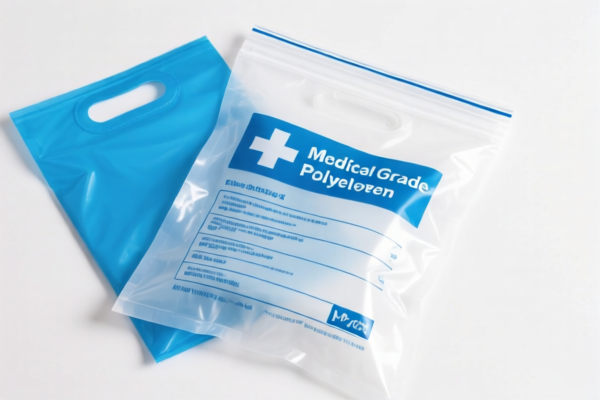
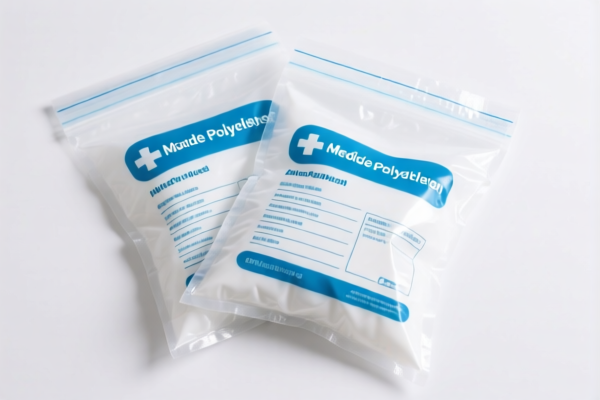

AI Analysis
🩺 Medical Waste Disposal Bags – HS Code & Tariff Guide (2026 Edition)
🌐 HS Code Classification & Customs Clearance Strategy | 2026 Updated Tariff Breakdown | Expert-Level Compliance Advisory
📦 1. Product Definition & Classification: What Exactly Is a Medical Waste Disposal Bag?
A medical waste disposal bag is a specialized plastic container designed for the safe containment, transport, and incineration of hazardous medical waste (e.g., used needles, contaminated gauze, surgical gloves, biohazardous materials). These bags are not for general household or industrial use — they are engineered for compliance with biohazard safety standards and are intended to be incinerated after use.
⚠️ Critical Distinction:
- If the bag is only a flexible plastic pouch used to contain medical waste, it falls under plastic packaging (HS 3923).
- If it functions as a rigid or semi-rigid container (e.g., with a handle, base, or structural support), it may be classified under plastic containers (HS 3926).
- Key factor: Form, function, and intended use determine the correct HS code.
📊 2. HS Code Classification Summary (2026 Official Tariff Authority Reference)
| HS Code | Product Description | Classification Rationale | Total Duty Rate | Tax Breakdown |
|---|---|---|---|---|
3923.29.00.00 |
Medical waste disposal bags, in the form of bags, made of plastic, used for burning medical waste | Plastic packaging under Chapter 39; fits "bags" category; not a container | 38.0% | Base: 3.0%, Additional: 25.0%, Section 122: 10.0% |
3923.21.00.95 |
Medical waste disposal bags, in the form of cylindrical pouches or sacs, made of ethylene polymers (e.g., LDPE, HDPE), used for waste packaging | Plastic packaging; specific material (ethylene polymer) and shape (cylindrical) confirm classification | 38.0% | Base: 3.0%, Additional: 25.0%, Section 122: 10.0% |
3926.90.99.50 |
Medical waste disposal bags, used as medical waste containers, made of plastic, with structural integrity | Plastic containers under Chapter 39; functions as a container, not just a bag | 22.8% | Base: 5.3%, Additional: 7.5%, Section 122: 10.0% |
🔍 Why the Difference?
-3923.29.00.00&3923.21.00.95: These are flexible plastic bags — no structural rigidity, designed to be sealed and burned.
-3926.90.99.50: This refers to bags that act like containers — more rigid, with handles or base, used as primary waste receptacles — thus classified as containers.
💰 3. 2026 Tariff Breakdown: Full Tax Clause Explanation (U.S. Customs & Border Protection)
✅ Applicable Country: United States (US)
✅ Origin: China (CN)
✅ Effective Date: November 10, 2025 (and ongoing)
🎯 1. 3923.29.00.00 – Medical Waste Disposal Bags (Flexible Plastic Bags)
| Tax Component | Rate | Legal Basis | Explanation |
|---|---|---|---|
| Base Tariff | 3.0% | HTSUS 3923.29.00.00 | Standard rate for plastic packaging bags |
| Additional Tariff (Section 301) | +25.0% | USITC Footnote 9903.88.01 | Imposed under Section 301 of the Trade Act of 1974 for Chinese-origin goods deemed to have unfair trade practices |
| Section 122 Tariff (IEEPA) | +10.0% | IEEPA: 9903.01.25 | Enacted under the International Emergency Economic Powers Act (IEEPA) to restrict imports from China related to national security concerns |
| Total Duty Rate | 38.0% | — | CIF Value × 38% |
| De Minimis Threshold | ❌ Not applicable | — | No de minimis exemption — even small shipments are subject to full duty |
| Legal Pathway | IEEPA:9903.01.25 → USITC:9903.88.01 → HTSUS:3923.29.00.00 |
📌 Key Insight:
- Despite being a medical safety product, it is not exempt from Section 301 or IEEPA tariffs due to Chinese origin. - No exceptions for healthcare or environmental safety — all goods from China are subject.
🎯 2. 3923.21.00.95 – Medical Waste Disposal Bags (Cylindrical Pouches, Ethylene Polymers)
| Tax Component | Rate | Legal Basis | Explanation |
|---|---|---|---|
| Base Tariff | 3.0% | HTSUS 3923.21.00.95 | Specific rate for bags made of ethylene polymers |
| Additional Tariff (Section 301) | +25.0% | USITC Footnote 9903.88.01 | Same as above — applies to all Chinese-origin plastic packaging |
| Section 122 Tariff (IEEPA) | +10.0% | IEEPA: 9903.01.25 | Applies to all plastic packaging from China under national security rationale |
| Total Duty Rate | 38.0% | — | CIF × 38% |
| De Minimis | ❌ No | — | No relief even for low-value shipments |
| Legal Pathway | IEEPA:9903.01.25 → USITC:9903.88.01 → HTSUS:3923.21.00.95 |
📌 Note:
- The material (ethylene polymer) does not exempt it from tariffs — form and function matter more. - Same tax burden as3923.29.00.00— 38% total.
🎯 3. 3926.90.99.50 – Medical Waste Disposal Bags (Used as Containers)
| Tax Component | Rate | Legal Basis | Explanation |
|---|---|---|---|
| Base Tariff | 5.3% | HTSUS 3926.90.99.50 | Higher base rate for plastic containers |
| Additional Tariff (Section 301) | +7.5% | USITC Footnote 9903.88.01 | Reduced from 25% due to container classification (less "packaging" and more "functional item") |
| Section 122 Tariff (IEEPA) | +10.0% | IEEPA: 9903.01.25 | Still applies — container status does not exempt from IEEPA |
| Total Duty Rate | 22.8% | — | CIF × 22.8% |
| De Minimis | ❌ No | — | Full duty applies |
| Legal Pathway | IEEPA:9903.01.25 → USITC:9903.88.01 → HTSUS:3926.90.99.50 |
📌 Why Lower Duty?
- Container classification (vs. packaging) reduces Section 301 tariff from 25% to 7.5% — a key strategic distinction. - Still subject to 10% IEEPA — no escape.
🛠️ 4. Customs Clearance Best Practices (Pro Tips to Avoid Penalties)
✅ 1. Documentation Checklist (Mandatory)
| Document | Required? | Purpose |
|---|---|---|
| ✅ Product Specification Sheet | ✔️ | Clarify form, material, use (e.g., "flexible plastic bag for incineration") |
| ✅ Material Test Report (e.g., LDPE/HDPE) | ✔️ | Prove ethylene polymer for 3923.21.00.95 |
| ✅ Product Photos (Clear, labeled) | ✔️ | Show shape, thickness, closure type, handle |
| ✅ Certificate of Origin (CO) | ✔️ | Required for tariff determination |
| ✅ Commercial Invoice | ✔️ | Must state "Medical Waste Incineration Bag – For Burning Only" |
| ✅ Safety/Compliance Certificates | ✔️ | e.g., FDA, ISO 13485, or CE (if applicable) |
| ✅ Packing List | ✔️ | Show unit count, weight, packaging type |
✅ 2.申报技巧(Critical Keywords & Phrases)
🔥 “Form + Function + Material + Use” = Correct HS Code
| Scenario | Correct HS Code | Recommended Description |
|---|---|---|
| Flexible plastic bag, no structure, sealed, for burning | 3923.29.00.00 |
"Flexible plastic bag, for medical waste incineration, made of LDPE, no structural support" |
| Cylindrical pouch, made of HDPE, used to package waste | 3923.21.00.95 |
"Cylindrical plastic sac, ethylene polymer, for medical waste packaging" |
| Bag with base, handles, used as waste container | 3926.90.99.50 |
"Plastic container for medical waste, with base and handles, designed for incineration" |
❌ Never say: "Waste bag", "Medical bag", "Biohazard bag" — too vague.
✅ 3. Strategic Recommendations
| Situation | Recommended Action |
|---|---|
| Shipment from China | Use 3926.90.99.50 if bag has structural integrity → 22.8% vs 38% |
| Shipment from Vietnam, Mexico, India, Thailand | Apply for IEEPA exemption — 0% tariff possible |
| Small volume shipment | Still pay 38% — no de minimis relief |
| Need to reduce cost | Re-engineer bag to be more rigid → qualify as container → save 15.2% |
| Customs audit risk | Get a pre-ruling (Advance Ruling) from U.S. CBP — $1,000–$2,000 fee, but zero risk |
🌍 5. Global Market Tariff Comparison (2026)
| Country | Recommended HS Code | Base Duty | Additional Taxes | Notes |
|---|---|---|---|---|
| 🇺🇸 USA | 3923.29.00.00 / 3926.90.99.50 |
3.0%–5.3% | +25% (301) + +10% (IEEPA) | No de minimis |
| 🇨🇳 China | 3923.29.00.00 |
5% | None | No extra tariffs |
| 🇪🇺 EU | 3923.29.00.00 |
0% (if CE) | None | No IEEPA/301 |
| 🇦🇺 Australia | 3923.29.00.00 |
5% | None | No extra taxes |
| 🇯🇵 Japan | 3923.29.00.00 |
0% | None | No additional duties |
📌 Insight:
- Only the U.S. imposes 38% tariff on Chinese-origin medical waste bags. - All other major markets are tariff-free or low-duty.
🚨 6. Common Mistakes & Penalties (Real-World Risks)
❌ Mistake 1: Using 3923.29.00.00 for a rigid bag with a base
👉 Result: Underpaid duty → back duty + 10% penalty + interest → costs 2–3x the original duty.
❌ Mistake 2: Declaring as “general plastic bag”
👉 Result: Customs may reclassify as non-medical → higher risk of seizure.
❌ Mistake 3: Not providing photos or material proof
👉 Result: Customs delay, request for inspection, possible detention.
❌ Mistake 4: Assuming “medical use” = tariff exemption
👉 Result: No — all Chinese-origin plastic packaging is taxed.
✅ Correct Approach:
“Medical waste incineration bag, flexible, made of LDPE, used only for burning, not reusable, not for storage — HS Code: 3923.29.00.00”
🎯 7. Final Verdict: Strategic Classification Saves Thousands
🔹 If you're shipping from China:
- Flexible bag? →3923.29.00.00→ 38% duty
- Rigid bag with base/handles? →3926.90.99.50→ 22.8% duty → Save 15.2%!🔹 If you're sourcing from Vietnam/Mexico/India:
- Apply for IEEPA exemption → 0% tariff → massive savings.🔹 If you're unsure:
- Get a pre-ruling from CBP → $1,500 fee, but 100% compliance guarantee.
📌 8. Pro Tip: Future-Proof Your Supply Chain
✅ Re-design the bag to be more rigid → qualify as container → lower tariff.
✅ Shift manufacturing to Vietnam, Mexico, or India → avoid 301/IEEPA tariffs.
✅ Use U.S.-based customs brokers with pre-ruling experience.
📣 Take Action Now!
📞 Contact a CBP-licensed customs broker + Submit product photos + Request HS Code pre-ruling
🚀 Avoid penalties, reduce duty, ensure smooth clearance
✨ Professional Compliance Starts with Precise Classification!
💼 Your product’s fate — and your profit — depends on one HS Code.
Customer Reviews
About HS Code Classification
The Harmonized System (HS) is an internationally standardized nomenclature developed by the World Customs Organization (WCO) to classify traded products. Over 200 countries use the HS system as the basis for customs tariffs, trade statistics, and import/export regulations.
Each HS code follows a hierarchical structure:
- Chapter (2 digits) — Broad category of goods (e.g., Chapter 84: Machinery and Mechanical Appliances)
- Heading (4 digits) — More specific grouping within the chapter
- Subheading (6 digits) — Internationally standardized breakdown, used by all WCO member countries
- National subdivisions (8-10 digits) — Country-specific extensions for further classification, such as US HTSUS 10-digit codes
Correct HS code classification is essential for smooth customs clearance, accurate duty payment, and compliance with trade regulations. Misclassification can lead to customs delays, overpayment of duties, or penalties.
When importing from CN to US, the applicable tariff rates may include:
- Most-Favored-Nation (MFN) rate — The standard duty rate applied to WTO members
- General rate — Applied to countries without trade agreements
- Trade remedy duties — Additional tariffs such as Section 301 (anti-dumping), Section 232 (national security), or countervailing duties
The information provided on this page is for reference purposes only. For official classification, please consult with your local customs authority or a licensed customs broker.