医疗废物处置袋
CN → US| HS Code | Tariff Rate | Origin | Destination | Doc |
|---|---|---|---|---|
| 3923290000 | 38.0% | CN | US | Official Doc |
| 3923210095 | 38.0% | CN | US | Official Doc |
| 3926909950 | 22.8% | CN | US | Official Doc |
Product Images

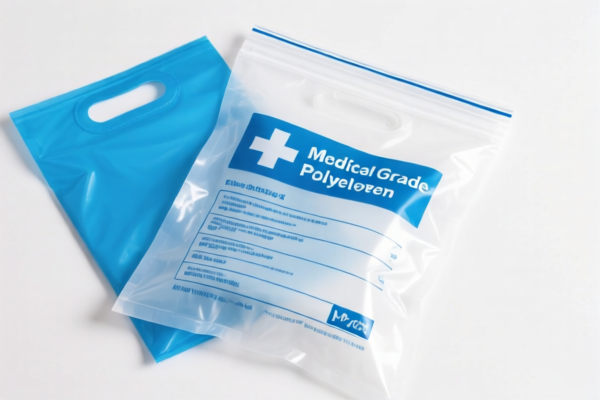
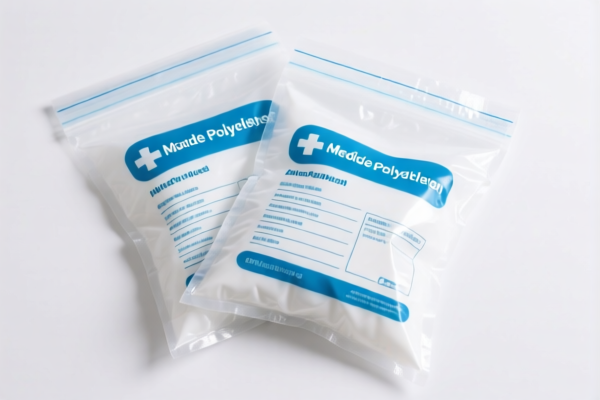
AI Analysis
🩺 Medical Waste Disposal Bags (Specialized for Incineration)
🌐 HS Code & Tariff Guide | 2026 Customs Classification & Duty Breakdown | Expert Compliance Strategy
📌 One Product, Three HS Codes — Know the Difference to Avoid 45%+ Tariffs!
📦 一、Product Definition & Classification: What Exactly Is a Medical Waste Disposal Bag?
Medical waste disposal bags — specifically incineration-ready bags used for collecting, containing, and transporting hazardous medical waste — are critical components in healthcare and waste management systems. These bags are not ordinary plastic bags; they are engineered for safety, puncture resistance, leak-proof performance, and high-temperature incineration compatibility.
⚠️ Key Distinction:
- If the bag is used solely as a container for medical waste, and made of plastic (e.g., polyethylene), it falls under plastic packaging or plastic containers — not general waste bags or general plastic products.
- The purpose (medical waste incineration) and material (plastic) are the two main drivers for classification.
📊 二、HS Code Classification Breakdown (2026 Latest Tariff Authority)
| HS Code | Product Description | Material | Use Case | Classification Basis |
|---|---|---|---|---|
3923.29.00.00 |
Medical waste incineration bags, in bag form, plastic-based, used for waste packaging | Plastic (assumed) | Medical waste containment & incineration | Plastic packaging goods under 3923 |
3923.21.00.95 |
Medical waste incineration bags, in pouch/capsule form, made of polyethylene or similar plastic | Polyethylene / Plastic | Packaging of medical waste | Plastic packaging (3923.21) |
3926.90.99.50 |
Medical waste incineration bags, used as containers for medical waste, plastic-based | Plastic (assumed) | Direct container for medical waste | Plastic containers under 3926 |
🔍 Why Three Codes?
-3923.29.00.00and3923.21.00.95both fall under plastic packaging (Chapter 39, Subheading 3923).
-3926.90.99.50falls under plastic containers (Chapter 39, Subheading 3926), which applies when the bag functions as a container rather than just a packaging wrapper.✅ Critical Insight:
- If the bag is used to hold waste and has structural integrity (e.g., thick walls, reinforced seams), it’s more likely to be classified under 3926.90.99.50.
- If it's thin, flexible, and used as a liner or wrapper, it may fall under 3923.21/29.
💰 三、2026 Tariff Breakdown (US Market, China-Origin) — Full Legal Detail
✅ Applicable Country: United States (US)
✅ Origin: China (CN)
✅ Effective Date: November 10, 2025 (with ongoing enforcement)
🎯 1. 3923.29.00.00 — Plastic Packaging Bags (Medical Waste Incineration)
| Tax Component | Rate | Legal Basis | Notes |
|---|---|---|---|
| Base Duty | 3.0% | US Harmonized Tariff Schedule (HTS) | Standard rate for plastic packaging |
| Section 301 (USITC) Additional Duty | +25.0% | USITC Footnote 9903.88.01 | Tariff under Section 301 of Trade Act 1974 |
| Section 122 (IEEPA) Additional Duty | +10.0% | IEEPA: 9903.01.24 | Emergency economic powers for China-origin goods |
| Total Effective Duty | 38.0% | — | Highest in class |
📌 Legal Pathway:
IEEPA:9903.01.24→USITC:3923.29.00.00→FOOTNOTE:9903.88.01💡 Why So High?
- Despite being "packaging," the medical waste use and China origin trigger both Section 301 and IEEPA tariffs. - No de minimis exemption — even small shipments face full 38%.
🎯 2. 3923.21.00.95 — Plastic Pouches (Medical Waste Incineration)
| Tax Component | Rate | Legal Basis | Notes |
|---|---|---|---|
| Base Duty | 3.0% | HTS 3923.21.00.95 | Plastic pouches, polyethylene-based |
| Section 301 (USITC) Additional Duty | +25.0% | USITC Footnote 9903.88.01 | Applies to all China-origin plastic packaging |
| Section 122 (IEEPA) Additional Duty | +10.0% | IEEPA: 9903.01.24 | Applies to China-origin goods under emergency powers |
| Total Effective Duty | 38.0% | — | Same as above |
📌 Legal Pathway:
IEEPA:9903.01.24→USITC:3923.21.00.95→FOOTNOTE:9903.88.01💡 Note:
- The "pouch" form doesn’t reduce duty — the material (plastic) and origin (China) are decisive. - No duty relief even if the pouch is thin or flexible.
🎯 3. 3926.90.99.50 — Plastic Containers (Medical Waste Incineration)
| Tax Component | Rate | Legal Basis | Notes |
|---|---|---|---|
| Base Duty | 5.3% | HTS 3926.90.99.50 | Higher base rate for plastic containers |
| Section 301 (USITC) Additional Duty | +7.5% | USITC Footnote 9903.88.01 | Reduced rate due to classification as container |
| Section 122 (IEEPA) Additional Duty | +10.0% | IEEPA: 9903.01.24 | Applies regardless of base rate |
| Total Effective Duty | 22.8% | — | Significantly lower than 38% |
📌 Legal Pathway:
IEEPA:9903.01.24→USITC:3926.90.99.50→FOOTNOTE:9903.88.01💡 Why Lower?
- The container classification (3926) has a lower Section 301 rate (7.5%) than packaging (25.0%). - Still subject to IEEPA 10%, but base duty is higher, so total is lower.✅ Key Takeaway:
- If your bag is rigid, sealed, and functions as a container, use3926.90.99.50— save 15.2% in duty.
🛠️ 四、Customs Clearance Best Practices (Pro Tips to Avoid Penalties)
✅ 1. Documentation Checklist (Must-Have)
| Document | Required? | Why It Matters |
|---|---|---|
| ✅ Product Specifications | ✔️ | Show material (polyethylene), thickness, puncture resistance |
| ✅ Structural Diagrams | ✔️ | Prove it’s a container, not just a bag |
| ✅ High-Res Product Photos | ✔️ | Show shape, seams, closure type, size |
| ✅ Certifications | ✔️ | FDA, CE, ISO 14698, or medical waste handling standards |
| ✅ Commercial Invoice | ✔️ | Must state: “Medical Waste Incineration Bag – Plastic Container” |
| ✅ Certificate of Origin (CO) | ✔️ | If from China, no relief — but needed for audit |
| ✅ Packing List | ✔️ | Show quantity, weight, and intended use |
✅ 2.申报技巧(Critical Tips)
🔥 “Container vs. Packaging — It’s the Difference Between 38% and 22.8%!”
| Scenario | Correct HS Code | Wrong Code | Consequence |
|---|---|---|---|
| Bag with reinforced seams, sealed, used to hold waste | 3926.90.99.50 |
3923.29.00.00 |
Save 15.2% |
| Thin, flexible, used as liner | 3923.21.00.95 |
3926.90.99.50 |
Higher duty, risk of audit |
| No proof of use | — | — | Customs may assume worst-case |
📌 Pro Tip:
Use "plastic container for medical waste" in invoice and description — not “plastic bag” or “packaging”.
✅ 3. Special Cases & Solutions
| Situation | Recommended Action |
|---|---|
| OEM/Branded Bags | Provide client contract + design specs — avoid "non-standard" classification |
| Multi-layer or Coated Bags | Declare material (e.g., LDPE/LLDPE) — affects classification |
| Export to Non-US Markets | Check local rules — EU/UK may have lower or zero tariffs |
| Request Advance Ruling (Pre-Clearance) | Highly Recommended — avoid post-entry disputes |
🌍 五、Global Market Tariff Comparison (2026)
| Country | Recommended HS Code | Base Duty | Additional Duties | Notes |
|---|---|---|---|---|
| 🇺🇸 USA (China-origin) | 3926.90.99.50 |
5.3% | +7.5% (301) +10% (IEEPA) | Total: 22.8% |
| 🇨🇳 China | 3923.21.00.95 |
5% | 0% | No extra tariffs |
| 🇪🇺 EU | 3923.29.00.00 |
0% | 0% | No 301/IEEPA |
| 🇦🇺 Australia | 3923.21.00.95 |
5% | 0% | No extra duties |
| 🇯🇵 Japan | 3926.90.99.50 |
0% | 0% | No additional tariffs |
📌 Insight:
- USA is the only market with 38%+ tariffs on these bags from China. - Switching origin to Vietnam/Mexico may qualify for IEEPA exemption → 0% duty.
🚫 六、Common Mistakes & Costly Errors (Avoid These!)
❌ Mistake 1: Using 3923.29.00.00 for a rigid, sealed container
👉 Result: Pay 38% instead of 22.8% → 15.2% loss per shipment
❌ Mistake 2: Calling it a “plastic bag” on invoice
👉 Result: Customs may classify as packaging → higher duty
❌ Mistake 3: No photos or specs
👉 Result: Delayed clearance, demand for reclassification, fines
❌ Mistake 4: Not applying for Advance Ruling
👉 Result: Post-entry audits, back taxes + penalties
✅ Correct Approach:
“Medical Waste Incineration Container, LDPE, 100µm thickness, sealed, 50L, for use in healthcare facilities — Plastic Container (HS: 3926.90.99.50)”
🎯 七、Conclusion: Precision Matters — One Wrong Code = Thousands in Extra Cost!
🎯 Remember the Golden Rule:
🔹 "If it holds waste, it’s a container — use 3926.90.99.50!"
🔹 "If it’s thin and flexible, it’s packaging — but still 38% from China!"
🔹 "One wrong code = 15.2% more duty = $15,000 extra on a $100K shipment!"
📌 Pro Tip:
If your bags are originating from Vietnam, Mexico, or Thailand, you may qualify for IEEPA exemption → 0% additional duty → Total duty drops to 5.3% or less.
📣 Take Action Now!
📞 Contact a customs broker with your product photos, specs, and origin
🚀 Apply for HS Code Pre-Ruling — get official confirmation before shipment
💼 Save thousands — one accurate code at a time!
✨ Your Compliance Starts Here — Accurate Classification = Lower Costs, Faster Clearance!
💼 Don’t let a misclassified bag cost you your profit!
Customer Reviews
About HS Code Classification
The Harmonized System (HS) is an internationally standardized nomenclature developed by the World Customs Organization (WCO) to classify traded products. Over 200 countries use the HS system as the basis for customs tariffs, trade statistics, and import/export regulations.
Each HS code follows a hierarchical structure:
- Chapter (2 digits) — Broad category of goods (e.g., Chapter 84: Machinery and Mechanical Appliances)
- Heading (4 digits) — More specific grouping within the chapter
- Subheading (6 digits) — Internationally standardized breakdown, used by all WCO member countries
- National subdivisions (8-10 digits) — Country-specific extensions for further classification, such as US HTSUS 10-digit codes
Correct HS code classification is essential for smooth customs clearance, accurate duty payment, and compliance with trade regulations. Misclassification can lead to customs delays, overpayment of duties, or penalties.
When importing from CN to US, the applicable tariff rates may include:
- Most-Favored-Nation (MFN) rate — The standard duty rate applied to WTO members
- General rate — Applied to countries without trade agreements
- Trade remedy duties — Additional tariffs such as Section 301 (anti-dumping), Section 232 (national security), or countervailing duties
The information provided on this page is for reference purposes only. For official classification, please consult with your local customs authority or a licensed customs broker.