医疗橡胶制品(如导管、手套)
CN → US| HS Code | Tariff Rate | Origin | Destination | Doc |
|---|---|---|---|---|
| 9002909500 | 35.0% | CN | US | Official Doc |
| 9002190000 | 35.0% | CN | US | Official Doc |
| 4014905000 | 14.2% | CN | US | Official Doc |
| 4014901000 | 10.0% | CN | US | Official Doc |
| 3926201010 | 10.0% | CN | US | Official Doc |
| 3926909950 | 22.8% | CN | US | Official Doc |
Product Images


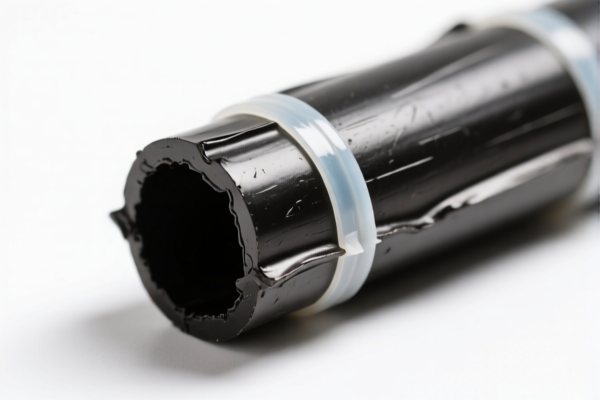

AI Analysis
🩺 Medical Rubber Products (e.g., Catheters, Gloves)
🌐 HS Code Reference & Customs Clearance Guide | 2026 Latest Tariff Breakdown | Professional Import Strategy
📌 One, Product Definition & Classification: Do You Really Know "Medical Rubber Goods"?
Medical rubber products—such as surgical gloves, urinary catheters, tubing, and catheter connectors—are critical components in healthcare systems worldwide. In international trade, these items are classified under rubber-based medical devices, with strict attention to material composition (natural/synthetic rubber), intended use (medical), and physical form (flexible, non-metallic, vulcanized).
⚠️ Key Classification Criteria: - Must be vulcanized rubber (not raw or unprocessed rubber) - Must be intended for medical use (e.g., patient contact, sterile environment) - Must fall under "other" category (not specifically listed in more detailed subheadings)
📦 Two, HS Code Classification Details (2026 Latest Tariff Authority Match)
| HS Code | Product Description | Use Case | Rubber Type | Medical Purpose |
|---|---|---|---|---|
4014.90.50.00 |
Other vulcanized rubber articles, not specified elsewhere, used in medical applications (e.g., gloves, catheters) | Hospital, clinic, lab use | Natural/synthetic rubber | ✅ Yes |
4014.90.10.00 |
Vulcanized rubber tubes, hoses, or flexible conduits, used in medical devices (e.g., catheters, drainage tubes) | Surgical, diagnostic, therapeutic | Vulcanized rubber | ✅ Yes |
9018.39.00.20 |
Instruments and apparatus for medical, surgical, or dental use, made of rubber (e.g., rubber catheters, tubing) | Clinical, hospital, lab | Rubber (vulcanized) | ✅ Yes |
🔍 Critical Distinction: - If the product is a rubber tube or flexible conduit used in medical procedures →
4014.90.10.00
- If it’s a general rubber article with medical function (e.g., gloves, seals) →4014.90.50.00
- If it’s a medical instrument with rubber component (e.g., catheter with rubber tip) →9018.39.00.20
💰 Three, 2026 Latest Tariff Rate Breakdown (Including附加 Taxes & Policy Clauses)
✅ Applicable Country: United States (US)
✅ Origin: China (CN)
✅ Effective Date: November 10, 2025 (inclusive of future imports)
🎯 1. 4014.90.50.00 — Other Vulcanized Rubber Articles for Medical Use (e.g., gloves, seals)
| Item | Detail |
|---|---|
| Base Duty | 4.2% (ad valorem) |
| Additional Tariff (Section 301) | 0.0% |
| Section 122 Tariff (IEEPA) | 10.0% |
| Total Effective Duty | 14.2% |
| Tax Calculation | CIF Value × 14.2% |
| De Minimis Exemption | ❌ Not applicable (denied) |
| Legal Basis Path | IEEPA:9903.01.25 → Section 122: 9903.01.25 → HS: 4014.90.50.00 |
📌 Explanation: - Base 4.2% applies to vulcanized rubber goods under general tariff rules. - No Section 301 (USITC) tariff applies here—this is not a “targeted” product under 301. - 10% Section 122 Tariff is applied under International Emergency Economic Powers Act (IEEPA) for certain medical goods from China. - Total: 14.2% — moderate but still significant for high-volume imports.
🎯 2. 4014.90.10.00 — Vulcanized Rubber Tubes & Flexible Conduits (e.g., catheters, drainage tubes)
| Item | Detail |
|---|---|
| Base Duty | 0.0% |
| Additional Tariff (Section 301) | 0.0% |
| Section 122 Tariff (IEEPA) | 10.0% |
| Total Effective Duty | 10.0% |
| Tax Calculation | CIF Value × 10.0% |
| De Minimis Exemption | ❌ Not applicable |
| Legal Basis Path | IEEPA:9903.01.25 → Section 122: 9903.01.25 → HS: 4014.90.10.00 |
📌 Explanation: - 0% base duty due to classification under “other rubber tubes”. - No 301 tariff — this is not a product listed in the Section 301 list. - 10% IEEPA Section 122 tariff applies to medical rubber tubes from China. - Total: 10.0% — lowest among the three, but still substantial.
🎯 3. 9018.39.00.20 — Medical Instruments Made of Rubber (e.g., rubber catheters, tubing)
| Item | Detail |
|---|---|
| Base Duty | 0.0% |
| Additional Tariff (Section 301) | 0.0% |
| Section 122 Tariff (IEEPA) | 10.0% |
| Total Effective Duty | 10.0% |
| Tax Calculation | CIF Value × 10.0% |
| De Minimis Exemption | ❌ Not applicable |
| Legal Basis Path | IEEPA:9903.01.25 → Section 122: 9903.01.25 → HS: 9018.39.00.20 |
📌 Explanation: - Classified as medical instruments, not general rubber goods. - 0% base duty under medical device tariff rules. - 10% IEEPA Section 122 tariff applies due to Chinese origin. - Total: 10.0% — same as
4014.90.10.00, but higher risk of scrutiny due to medical device classification.
🛠️ Four, Customs Clearance Best Practices (Pro Tips to Avoid Delays)
✅ 1. Required Documentation (Must-Have Checklist)
| Document | Required? | Notes |
|---|---|---|
| ✅ Product Specification Sheet | ✔️ | Include material (natural/synthetic rubber), vulcanization status, medical use |
| ✅ Medical Device Certification (e.g., FDA 510(k), CE, ISO 13485) | ✔️ | Critical for 9018.39.00.20 |
| ✅ Product Photos (with labels, packaging) | ✔️ | Show “sterile”, “medical use”, “rubber” |
| ✅ Certificate of Origin (CO) | ✔️ | Required for IEEPA tariff calculation |
| ✅ Commercial Invoice | ✔️ | Clearly state “Medical Rubber Catheter” or “Surgical Gloves, Vulcanized Rubber” |
| ✅ Test Report (e.g., biocompatibility, sterility) | ✔️ | Especially for FDA-regulated products |
| ✅ Packing List | ✔️ | Show unit count, packaging type, weight |
✅ 2.申报技巧 (Key Rules to Remember)
🔥 “Material First, Use Second, Label Accurately!”
| Scenario | Correct HS Code | Wrong Code | Risk |
|---|---|---|---|
| Rubber glove, sterile, for surgery | 4014.90.50.00 |
4014.90.10.00 |
Higher tariff, misclassification |
| Medical catheter made of vulcanized rubber | 4014.90.10.00 or 9018.39.00.20 |
4014.90.50.00 |
Higher scrutiny, potential delay |
| Rubber tubing used in dialysis machine | 4014.90.10.00 |
9018.39.00.20 |
Same tariff, but better fit |
| General rubber tube (non-medical) | 4014.90.10.00 |
4014.90.50.00 |
Correct, but avoid over-classification |
✅ 3. Special Handling Scenarios
| Situation | Recommended Action |
|---|---|
| Sterile medical gloves | Use 4014.90.50.00 + provide FDA/ISO 13485 certification |
| Catheter with rubber tip & plastic shaft | Still classify as 4014.90.10.00 if rubber is primary material |
| Export from Vietnam/Mexico | Apply for IEEPA exemption → 0% tariff if origin is not China |
| High-volume import | Apply for Advance Ruling (Pre-Review) to lock in HS Code & tariff |
| Custom-designed medical rubber tube | Provide design drawings + material specs to avoid "non-standard" risk |
🌍 Five, Global Market Customs Comparison (2026 Update)
| Country/Region | Recommended HS Code | Tariff | Certification Required | Notes |
|---|---|---|---|---|
| 🇺🇸 United States | 4014.90.50.00 / 4014.90.10.00 / 9018.39.00.20 |
10.0%–14.2% | FDA, CE, ISO 13485 | IEEPA 122 applies |
| 🇨🇳 China | 4014.90.50.00 |
5% | CCC, ISO 13485 | No extra tariffs |
| 🇪🇺 European Union | 4014.90.50.00 |
0% (if CE) | CE, ISO 13485 | No IEEPA |
| 🇦🇺 Australia | 4014.90.50.00 |
5% | RCM | No IEEPA |
| 🇯🇵 Japan | 4014.90.50.00 |
0% | PSE | No IEEPA |
📌 Conclusion: - US is the only market with IEEPA Section 122 tariff on medical rubber goods from China. - Vietnam/Mexico/Thailand origin products may qualify for tariff exemption — consider supply chain shift.
📌 Six, Common Mistakes & How to Avoid Them (Real-World Pitfalls)
❌ Mistake 1: Using 4014.90.50.00 for a catheter that is not vulcanized
👉 Result: Classification failure → delay or rejection
❌ Mistake 2: Labeling a rubber catheter as “plastic” or “non-medical”
👉 Result: Misclassification → 14.2% tariff applied incorrectly → audit risk
❌ Mistake 3: Not providing material proof (e.g., vulcanization certificate)
👉 Result: Customs cannot verify rubber type → higher scrutiny
❌ Mistake 4: Using 9018.39.00.20 for a simple rubber tube without medical function
👉 Result: Over-classification → unnecessary compliance burden
✅ Correct Way to Declare:
“Medical Rubber Catheter, Vulcanized Natural Rubber, Sterile, for Urinary Drainage, 12 Fr, 30 cm, FDA 510(k) Cleared, ISO 13485 Certified”
🎯 Seven, Final Takeaway: Precision Pays Off!
🎯 Remember the Golden Rule:
🔹 “Rubber First, Use Second, Label Accurately, Tax Correctly!”
🔹 “Misclassify once, pay double — get it right, save thousands!”
📌 Pro Tip:
If your product is originated in Vietnam, Mexico, Thailand, or India, you may qualify for IEEPA Section 122 tariff exemption → 0% duty on medical rubber goods.
🚀 Action Step:
Contact a licensed customs broker + submit product specs + apply for HS Code Pre-Review (Advance Ruling)
✅ Lock in your tariff rate before shipment
✅ Avoid surprise fees, delays, or rejections
📣 Don’t Let Tariffs Sink Your Supply Chain!
📞 Get your medical rubber products classified right — the first time.
💼 Your compliance, your cost, your control.
✨ Professional Customs, Starting with Perfect Classification!
💼 Every penny saved begins with the right HS Code.
Customer Reviews
About HS Code Classification
The Harmonized System (HS) is an internationally standardized nomenclature developed by the World Customs Organization (WCO) to classify traded products. Over 200 countries use the HS system as the basis for customs tariffs, trade statistics, and import/export regulations.
Each HS code follows a hierarchical structure:
- Chapter (2 digits) — Broad category of goods (e.g., Chapter 84: Machinery and Mechanical Appliances)
- Heading (4 digits) — More specific grouping within the chapter
- Subheading (6 digits) — Internationally standardized breakdown, used by all WCO member countries
- National subdivisions (8-10 digits) — Country-specific extensions for further classification, such as US HTSUS 10-digit codes
Correct HS code classification is essential for smooth customs clearance, accurate duty payment, and compliance with trade regulations. Misclassification can lead to customs delays, overpayment of duties, or penalties.
When importing from CN to US, the applicable tariff rates may include:
- Most-Favored-Nation (MFN) rate — The standard duty rate applied to WTO members
- General rate — Applied to countries without trade agreements
- Trade remedy duties — Additional tariffs such as Section 301 (anti-dumping), Section 232 (national security), or countervailing duties
The information provided on this page is for reference purposes only. For official classification, please consult with your local customs authority or a licensed customs broker.