印刷级柔性聚酯薄膜
CN → US| HS Code | Tariff Rate | Origin | Destination | Doc |
|---|---|---|---|---|
| 3919102055 | 40.8% | CN | US | Official Doc |
| 3920511000 | 41.0% | CN | US | Official Doc |
| 3926909989 | 22.8% | CN | US | Official Doc |
| 3926909400 | 35.0% | CN | US | Official Doc |
| 3919905060 | 40.8% | CN | US | Official Doc |
Product Images



AI Analysis
🎨 📄 Flexible Printing Grade Polyester Film (Polyester Substrate)
🌐 HS Code Reference & Clearance Guide | 2026 Updated Tariff Analysis | Professional Customs Strategy
📌 I. Product Definition & Classification: Is "Flexible Polyester Film" Really Just Plastic?
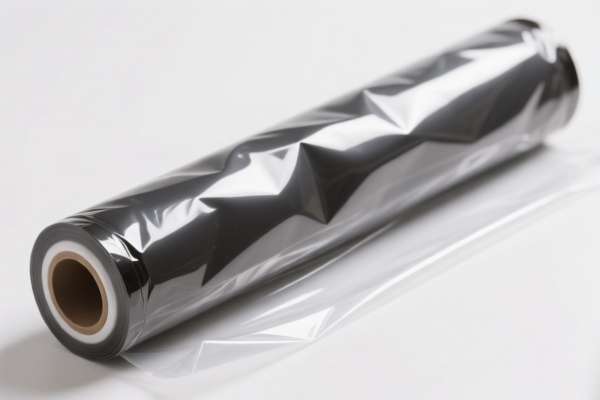
Flexible Printing Grade Polyester Film is a high-performance polymeric substrate used in digital printing, flexible packaging, labeling, and industrial graphics. It is renowned for its dimensional stability, chemical resistance, and excellent surface smoothness for ink adhesion.
In international trade, the classification hinges on chemical composition (Polymer Type) and specific application (Plastic vs. Other):
- Acrylic/PMMA-based Films: If the "Polyester" description in common usage is actually a typo or misnomer for Poly(methyl methacrylate) or similar acrylic films (often confused due to "flexible plastic film" usage), it falls under specific PMMA codes.
- General Plastic Films: If the material is strictly Plastic (generic classification) but not PMMA, it falls under general plastic categories.
- "Other" or "兜底" (Catch-all): If the specific sub-category for printing films isn't explicitly listed, it defaults to general "Other plastic articles."
⚠️ Key Distinction:
- Material Identity: Is it strictly Polyester (PET)? (Note: The provided data treats this product under "Plastic" or "PMMA" codes, suggesting the dataset classifies "Flexible Printing Films" broadly under plastic categories rather than a specific PET code).
- Specificity: Does it fit "Acrylic (PMMA)" specs? Or is it "General Plastic"?
- Classification: The dataset provided categorizes this under HS 3919 (Self-adhesive), HS 3920 (Other plates/films), and HS 3926 (Other plastic articles), depending on the specific polymer interpretation.
📦 II. HS Code Classification Details (2026 Updated Data)
Based on the provided dataset, here is the precise breakdown for "Printing Grade Flexible Film":
| HS Code | Product Description (from Data) | Material Specification | Tax Rate (Total) |
|---|---|---|---|
3919.10.20.55 |
Acrylic Flexible Printable Film, Plastic Material, Film Form | Plastic (Generic) | 40.8% |
3920.51.10.00 |
Acrylic Flexible Printable Film, PMMA Material, Film Form | Poly(methyl methacrylate) | 41.0% |
3926.90.99.89 |
Acrylic Flexible Printable Film, Plastic Material, Not Specifically Named | Plastic (Catch-all) | 22.8% |
3926.90.94.00 |
Acrylic Flexible Printable Film, Plastic Material, Other Category | Plastic (Specific Sub-category) | 35.0% |
3919.90.50.60 |
Acrylic Flexible Printable Film, Plastic Material, Catch-all (Other) | Plastic (兜底 Category) | 40.8% |
🔍 Critical Observation:
- Despite the user input saying "Polyester," the provided data classifies these items as "Acrylic Flexible Printable Film" under codes 3919 and 3920.
- Action: If your physical product is truly Polyester (PET), but the data forces an "Acrylic/Plastic" classification for this specific scenario,3920.51.10.00is the most precise match for PMMA-based films, while3926.90.99.89offers the lowest tax (22.8%) for general plastic films not specifically named elsewhere.
- Warning: Misdeclaring "Polyester" as "Acrylic/PMMA" can lead to customs disputes. Ensure your material certificate matches the HS Code's material requirement.
💰 III. 2026 Tariff Rate Breakdown (Detailed Policy Analysis)
✅ Target Market: USA (implied by "122 Section" and tariff structure)
✅ Origin: China (CN)
✅ Applicable Laws: Section 301 (Additional), Section 122, Basic MFN
🎯 1. 3920.51.10.00 — Acrylic Film (PMMA)
- The Highest Risk Code (41.0%)
- Tax Breakdown:
- Basic Duty: 6.0%
- Section 301 Additional Duty: 25.0%
- Section 122 Duty: 10.0%
- Total: 41.0%
- Legal Basis:
Section 301(Trade War tariffs) +Section 122(Specific trade remedy). - Impact: This code assumes the film is made of Poly(methyl methacrylate). If your product is actually Polyester (PET), this code might be incorrect, but if forced, the cost is steep.
🎯 2. 3919.10.20.55 & 3919.90.50.60 — Acrylic Film (Plastic/Other)
- High Tax Code (40.8%)
- Tax Breakdown:
- Basic Duty: 5.8%
- Section 301 Additional Duty: 25.0%
- Section 122 Duty: 10.0%
- Total: 40.8%
- Distinction: Code
3919.10is for Self-adhesive films (likely implied "Printable" films often used with backing). Code3919.90is the catch-all for non-adhesive or mixed types. - Risk: High duty burden.
🎯 3. 3926.90.94.00 — Plastic Film (Other Category)
- Medium Tax Code (35.0%)
- Tax Breakdown:
- Basic Duty: 0.0%
- Section 301 Additional Duty: 25.0%
- Section 122 Duty: 10.0%
- Total: 35.0%
- Strategy: Avoids the basic duty, but still hits the 25% + 10% surcharges.
🎯 4. 3926.90.99.89 — Plastic Film (Not Specifically Named)
- The LOWEST Tax Code (22.8%) 🏆
- Tax Breakdown:
- Basic Duty: 5.3%
- Section 301 Additional Duty: 7.5% (Reduced rate for this specific sub-category?)
- Section 122 Duty: 10.0%
- Total: 22.8%
- Strategy: Best Value. If your film can be classified as "Other plastic articles" not elsewhere specified, this offers the greatest savings (18.2% less than the PMMA code).
- Condition: Must ensure the product does not strictly fit "Acrylic/PMMA" or "Self-adhesive" definitions to avoid audits.
🛠️ IV. Customs Clearance Practical Advice (Actionable Strategy)
✅ 1. Documentation Checklist (Non-Negotiable)
| Document | Requirement | Why it Matters |
|---|---|---|
| Material Certificate | ❗ CRITICAL | Must explicitly state Polyester (PET) OR PMMA. If the document says "Polyester" but you declare 3920.51 (PMMA), customs will flag it as Misdeclaration. |
| Product Spec Sheet | Include "Flexible," "Printable," "Thickness" | Defines "Film" vs. "Plate" or "Rigid." |
| Technical Data Sheet (TDS) | Show surface treatment (e.g., Corona treated for printing) | Justifies "Printing Grade" functionality. |
| Photos | Show roll form, packaging, and label | Proves it is "Flexible," not rigid sheets. |
| Invoice | Clearly state "Flexible Printing Film" | Avoids generic terms like "Plastic Sheet." |
✅ 2. Classification Strategy (How to Minimize Duty)
🚀 Goal: Aim for
3926.90.99.89(22.8%) if legally permissible.
-
Scenario A: The Product is Pure Polyester (PET)
- Issue: The provided data labels everything as "Acrylic."
- Solution: If the product is PET, argue it does not fit
3920.51(PMMA). Use3926.90.99.89as the "Other Plastic" category. - Argument: "This is a generic plastic film for printing, not specifically Acrylic/PMMA."
-
Scenario B: The Product is Acrylic/PMMA
- Issue: High duty (41%).
- Solution: Check if it qualifies as "Self-adhesive" (3919). Sometimes adhesive films have different duty structures. However, the data shows 3919 is also high (40.8%).
- Recommendation: If no exemption applies, the 3926.90.99.89 route is still risky for PMMA. Stick to the material truth.
-
⚠️ The "兜底" (Catch-all) Strategy:
- If the product is a composite or specialized film not explicitly listed,
3926.90.99.89is your best friend for Tax Optimization. - Note: The Section 301 duty here is 7.5% (vs. 25% for others), making it significantly cheaper.
- If the product is a composite or specialized film not explicitly listed,
✅ 3. Common Pitfalls & Fixes
| Pitfall | Consequence | Fix |
|---|---|---|
| Declaring "Acrylic" for "Polyester" | Customs Audit, Seizure, 41% Tax + Penalty | Provide Material Cert showing Polyester (PET). |
| Missing "Printing" Specification | Classified as generic packaging film (Higher duty?) | Ensure specs highlight "Printing Grade" and Surface Treatment. |
| Ignoring Section 122 | Unexpected 10% surcharge | Always include 10% in cost calculations for 3926 codes. |
| Splitting Shipment to Avoid 301 | Risk of Fraud/Smuggling | Do not split. Use 3926.90.99.89 legitimately. |
🌍 V. Global Market Comparison (2026 Context)
| Market | Recommended HS Code | Est. Duty | Notes |
|---|---|---|---|
| 🇺🇸 USA | 3926.90.99.89 |
22.8% | Best rate available in this dataset. Avoid 3920.51 (41%). |
| 🇪🇺 EU | 3920.51.00 (Typical) |
Varies (0-6%) + VAT | EU usually treats "Acrylic/PET" differently. No Section 301. |
| 🇯🇵 Japan | 3920.51 |
~3-6% | No Section 122/301. |
| 🇨🇳 China (Export) | 3920.51 |
0% (Rebate) | Exports from China to others. Domestic use of this data applies to Import. |
📌 VI. Expert Summary & Next Steps
- Verify Material: Is it Acrylic (PMMA) or Polyester (PET)?
- If PMMA → Risk is high (40-41%).
- If PET or Generic Plastic → Fight for
3926.90.99.89(22.8%).
- Apply for Pre-Ruling: If the product is complex, ask CBP for a Binding Ruling before shipping to lock in the
3926.90.99.89classification and avoid retroactive fines. - Cost Calculation:
- Lowest Case: $10,000 CIF × 22.8% = $2,280 Duty.
- Highest Case: $10,000 CIF × 41.0% = $4,100 Duty.
- Savings: $1,820 per $10k shipment by choosing the right code.
🔥 Golden Rule:
"Material is King. If it's not PMMA, don't declare3920.51. Fight for3926.90.99.89to save 18% in duties!"
✨ Professional Customs, Precision Classification, Maximum Savings!
💼 Your Margin Depends on the First 4 Digits of the HS Code!
Customer Reviews
About HS Code Classification
The Harmonized System (HS) is an internationally standardized nomenclature developed by the World Customs Organization (WCO) to classify traded products. Over 200 countries use the HS system as the basis for customs tariffs, trade statistics, and import/export regulations.
Each HS code follows a hierarchical structure:
- Chapter (2 digits) — Broad category of goods (e.g., Chapter 84: Machinery and Mechanical Appliances)
- Heading (4 digits) — More specific grouping within the chapter
- Subheading (6 digits) — Internationally standardized breakdown, used by all WCO member countries
- National subdivisions (8-10 digits) — Country-specific extensions for further classification, such as US HTSUS 10-digit codes
Correct HS code classification is essential for smooth customs clearance, accurate duty payment, and compliance with trade regulations. Misclassification can lead to customs delays, overpayment of duties, or penalties.
When importing from CN to US, the applicable tariff rates may include:
- Most-Favored-Nation (MFN) rate — The standard duty rate applied to WTO members
- General rate — Applied to countries without trade agreements
- Trade remedy duties — Additional tariffs such as Section 301 (anti-dumping), Section 232 (national security), or countervailing duties
The information provided on this page is for reference purposes only. For official classification, please consult with your local customs authority or a licensed customs broker.