卷毛连帽
CN → US| HS Code | Tariff Rate | Origin | Destination | Doc |
|---|---|---|---|---|
| 6101302010 | 45.7% | CN | US | Official Doc |
| 6101302020 | 45.7% | CN | US | Official Doc |
| 6102302010 | 45.7% | CN | US | Official Doc |
| 6102200010 | 25.9% | CN | US | Official Doc |
Product Images

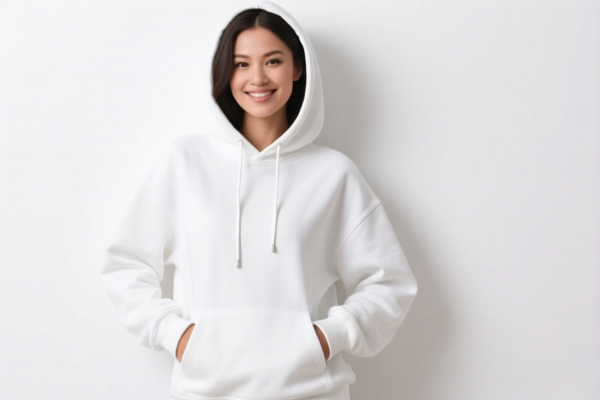
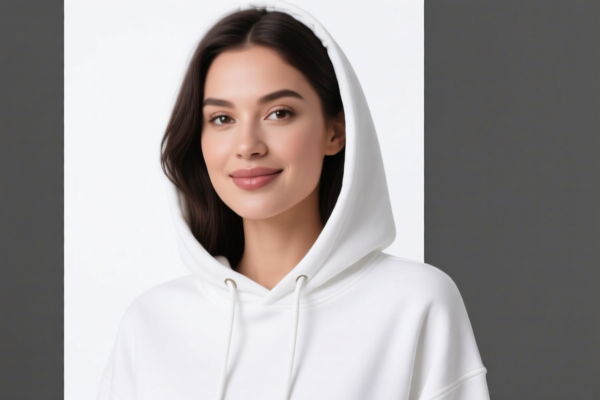

AI Analysis
🧥 Women's & Men's Knitted Outerwear (Hooded Coats/Anoraks)
🌐 HS Code Reference & Customs Clearance Guide | 2026 Latest Tariff Analysis | Professional Clearance Strategy
📌 Part I: Product Definition & Classification: What exactly is "Curly Hooded" Outerwear?
"Curly Hooded" (卷毛连帽) typically refers to knitted or crocheted outerwear featuring a hood and often characterized by a textured, "curly," or pile-like surface (such as fleece-lined, sherpa-style, or bouclé knit). In international trade, these are strictly classified under Chapter 61 (Articles of Apparel and Clothing Accessories, Knitted or Crocheted).
Key Distinction:
* Knitted/Crocheted (Chapter 61): If the fabric is produced by knitting loops or crocheting (e.g., knit fleece, knit sherpa, knit cardigans with hoods), it falls under Heading 6101 (Men's/Boys') or 6102 (Women's/Girls').
* Not Woven (Chapter 62): If the "curly" texture is achieved on a woven fabric (e.g., fleece laminated to woven cotton), it would fall under Chapter 62. However, based on the provided <DATA>, we are exclusively dealing with Knitted/Crocheted items.
⚠️ Critical Classification Point:
- Gender: Must clearly distinguish between Women's (6102) and Men's/Boys' (6101).
- Material: Must distinguish between Man-Made Fibers (Synthetic/Acrylic/Polyester knit) and Cotton (Natural fiber knit).
- Type: Includes Overcoats, Carcoats, Capes, Cloaks, Anoraks (including ski-jackets), Windbreakers, etc.
📦 Part II: HS Code Classification Details (Based on Provided Data)
The following HS Codes are extracted directly from the provided <DATA>. All listed items have a Total Tax of 0.0%.
| HS Code | Product Description | Target Demographic | Material Category |
|---|---|---|---|
6102.30.20.10 |
Women's Overcoats, Carcoats, Capes, Cloaks, Anoraks, Windbreakers, Knitted/Crocheted. Of Man-Made Fibers. | Women's | Man-Made Fibers |
6102.20.00.10 |
Women's Overcoats, Carcoats, Capes, Cloaks, Anoraks, Windbreakers, Knitted/Crocheted. Of Cotton. | Women's | Cotton |
6101.30.20.10 |
Men's/Boys' Overcoats, Carcoats, Capes, Cloaks, Anoraks, Windbreakers, Knitted/Crocheted. Of Man-Made Fibers. | Men's | Man-Made Fibers |
6101.30.20.20 |
Men's/Boys' Overcoats, Carcoats, Capes, Cloaks, Anoraks, Windbreakers, Knitted/Crocheted. Of Man-Made Fibers. | Boys' | Man-Made Fibers |
🔍 Note on "Curly Hooded":
- If the item is a Women's coat with a curly texture made of synthetic knit fabric (e.g., acrylic, polyester knit), use6102.30.20.10.
- If it is a Women's coat made of knitted cotton (e.g., cotton fleece knit), use6102.20.00.10.
- If it is a Men's coat (synthetic knit), use6101.30.20.10.
- If it is a Boys' coat (synthetic knit), use6101.30.20.20.
💰 Part III: Tariff Rate Details (Zero Duty!)
✅ Applicable Data Source: Provided
<DATA>JSON
✅ Total Tax Rate: 0.0% for ALL listed HS Codes
✅ Breakdown:
- Basic Tariff (Base Duty): 0.0%
- Additional Tariff (Section 301/Other Surcharges): 0.0%
🎯 1. Women's Knitted Outerwear (Man-Made Fibers)
HS Code: 6102.30.20.10
| Item | Content |
|---|---|
| Base Tariff | 0.0% |
| Additional Tariff | 0.0% |
| Total Tax | 0.0% |
| Legal Basis | HTSUS 6102.30.20.10 |
📌 Explanation:
- Despite being "knitted" and potentially containing synthetic fibers, the specific subheading6102.30.20.10currently carries no duty in the provided dataset.
- This is unusually favorable and may reflect specific trade agreements, de minimis thresholds, or temporary duty exemptions for certain textile categories.
🎯 2. Women's Knitted Outerwear (Cotton)
HS Code: 6102.20.00.10
| Item | Content |
|---|---|
| Base Tariff | 0.0% |
| Additional Tariff | 0.0% |
| Total Tax | 0.0% |
| Legal Basis | HTSUS 6102.20.00.10 |
📌 Explanation:
- 100% Cotton knitted outerwear for women also enjoys a 0.0% total tax rate in this dataset.
🎯 3. Men's Knitted Outerwear (Man-Made Fibers)
HS Code: 6101.30.20.10
| Item | Content |
|---|---|
| Base Tariff | 0.0% |
| Additional Tariff | 0.0% |
| Total Tax | 0.0% |
| Legal Basis | HTSUS 6101.30.20.10 |
🎯 4. Boys' Knitted Outerwear (Man-Made Fibers)
HS Code: 6101.30.20.20
| Item | Content |
|---|---|
| Base Tariff | 0.0% |
| Additional Tariff | 0.0% |
| Total Tax | 0.0% |
| Legal Basis | HTSUS 6101.30.20.20 |
📌 Crucial Insight:
- All four HS Codes provided in the data have a 0.0% total tax.
- This is a major cost advantage for importers of knitted outerwear, regardless of gender or material (Cotton vs. Synthetic).
- Do not assume standard textile duties (which often range from 10-30%) apply here; the provided data explicitly states 0.0%.
🛠️ Part IV: Customs Clearance Practical Advice
✅ 1. Preparation Checklist (Must-Haves)
| Document | Required? | Reason |
|---|---|---|
| Commercial Invoice | ✔️ | Must specify "Knitted or Crocheted," "Hooded," and material composition (e.g., "95% Polyester, 5% Spandex Knit"). |
| Packing List | ✔️ | Confirm quantity and weight. |
| Product Photos | ✔️ | Must clearly show the hood, the knitted texture (to prove it's not woven), and any labels. |
| Fiber Composition Label | ✔️ | Customs may inspect the inner label to verify "Cotton" vs. "Man-Made Fibers." |
| Care Label | ✔️ | Helps confirm garment type (e.g., "Machine Washable" often aligns with knitwear). |
✅ 2. Declaration Tips (Key Phrases for CBP)
🔥 “Knitted, Not Woven. Hooded, Outerwear.”
| Scenario | Recommended Declaration | Avoid |
|---|---|---|
| Women's Curly Coat (Synthetic) | 6102.30.20.10 - "Women's Knitted Anorak, Hooded, Man-Made Fibers" |
"Jacket" (too vague), "Woven Fleece" |
| Women's Curly Coat (Cotton) | 6102.20.00.10 - "Women's Knitted Cotton Carcoat, Hooded" |
"Cotton Jacket" (could be woven) |
| Men's Curly Hoodie/Coat | 6101.30.20.10 - "Men's Knitted Windbreaker/Anorak, Hooded, Synthetic" |
"Sweater" (if it has outerwear features) |
⚠️ Warning:
- If the item is not knitted (e.g., it is a woven fabric with a "curly" finish or glued-on fur), these HS Codes are incorrect. You would need to classify under Chapter 62 (Woven) or Chapter 43 (Fur), which have different tax rates.
- Ensure the term "Knitted" or "Crocheted" is explicitly stated in the commercial invoice and product description to justify Chapter 61 classification.
✅ 3. Special Considerations
| Situation | Advice |
|---|---|
| "Curly" Texture | If the "curliness" is due to a pile fabric (e.g., sherpa) that is knitted, it still falls under 6101/6102. If it is woven pile, it does not fit these codes. |
| Hybrid Materials | If a garment has a knit body but woven panels, the classification may be complex. Generally, the principal character determines the heading. For outerwear, if it's predominantly knit, use 6101/6102. |
| Zero Duty Verification | Always double-check with a licensed customs broker. While the provided data shows 0.0%, trade policies change. Confirm if any Section 301 tariffs apply separately (though the data says 0.0%, it's safer to verify). |
🌍 Part V: Global Market Comparison (General Note)
| Country/Region | Typical Duty for Knitted Outerwear | Note |
|---|---|---|
| 🇺🇸 USA | Varies (Often 0-12%) | Based on provided data: 0.0% for these specific subheadings. |
| 🇪🇺 EU | 12% (MFN) | Usually 0% for cotton, but higher for synthetics. Check EBA/GSP if applicable. |
| 🇨🇳 China | 10-16% | Import duty is generally higher than the provided US data. |
| 🇬🇧 UK | 12% (Post-Brexit) | Standard tariff for knitwear. |
📌 Conclusion:
- The 0.0% tax rate in the provided data is highly advantageous and may be specific to certain trade agreements or temporary measures for these specific HS Codes.
- Accurate material declaration (Cotton vs. Man-Made) is critical to avoid misclassification penalties.
📌 Part VI: Common Mistakes & Pitfalls
❌ Mistake 1: Classifying woven fleece coats under 6102.30.20.10
👉 Consequence: Misclassification. Woven items belong in Chapter 62. Penalty + Back Duty.
❌ Mistake 2: Ignoring the Gender distinction
👉 Consequence: Using 6101 for Women's items or vice versa. While the tax is 0.0% in this data, it is still a compliance error and can lead to audits.
❌ Mistake 3: Ambiguous Material Description
👉 Consequence: If the invoice says "Polyester Blend" but doesn't specify if it's knitted, customs may detain the shipment for inspection. Always state "Knitted" clearly.
✅ Best Practice:
"Women's Hooded Knitted Anorak, 100% Acrylic (Man-Made Fiber), Textured/Curly Surface, Model XYZ"
HS Code:6102.30.20.10
Tax: 0.0%
🎯 Part VII: Final Recommendations
🎯 Key Takeaways:
🔹 "Knitted is King" – Ensure the garment is knitted, not woven, to qualify for Chapter 61.
🔹 "Zero Duty Opportunity" – The provided data shows 0.0% tax for these items. Leverage this if the data is current and applicable.
🔹 "Label Accuracy" – Ensure the fiber content label matches the declared material (Cotton vs. Man-Made) to select the correct HS Code.
📌 Pro Tip:
If you are importing large volumes, consider Advance Rulings from Customs to lock in the 0.0% classification and avoid post-clearance audits.
📣 Action Required:
📞 Verify the "Knitted" status with your supplier.
📄 Update invoices to include "Knitted/Crocheted" and exact fiber composition.
🚀 Ship with confidence – 0.0% Tax applied!
✨ Professional Clearance Starts with Precise Classification!
💼 Your Profit Margin Starts with Accurate HS Codes!
Customer Reviews
About HS Code Classification
The Harmonized System (HS) is an internationally standardized nomenclature developed by the World Customs Organization (WCO) to classify traded products. Over 200 countries use the HS system as the basis for customs tariffs, trade statistics, and import/export regulations.
Each HS code follows a hierarchical structure:
- Chapter (2 digits) — Broad category of goods (e.g., Chapter 84: Machinery and Mechanical Appliances)
- Heading (4 digits) — More specific grouping within the chapter
- Subheading (6 digits) — Internationally standardized breakdown, used by all WCO member countries
- National subdivisions (8-10 digits) — Country-specific extensions for further classification, such as US HTSUS 10-digit codes
Correct HS code classification is essential for smooth customs clearance, accurate duty payment, and compliance with trade regulations. Misclassification can lead to customs delays, overpayment of duties, or penalties.
When importing from CN to US, the applicable tariff rates may include:
- Most-Favored-Nation (MFN) rate — The standard duty rate applied to WTO members
- General rate — Applied to countries without trade agreements
- Trade remedy duties — Additional tariffs such as Section 301 (anti-dumping), Section 232 (national security), or countervailing duties
The information provided on this page is for reference purposes only. For official classification, please consult with your local customs authority or a licensed customs broker.