去皮枫木原木
CN → US| HS Code | Tariff Rate | Origin | Destination | Doc |
|---|---|---|---|---|
| 4401120000 | 35.0% | CN | US | Official Doc |
| 4403990160 | 35.0% | CN | US | Official Doc |
| 4407930020 | 35.0% | CN | US | Official Doc |
| 4401110000 | 35.0% | CN | US | Official Doc |
| 4407120019 | 35.0% | CN | US | Official Doc |
Product Images
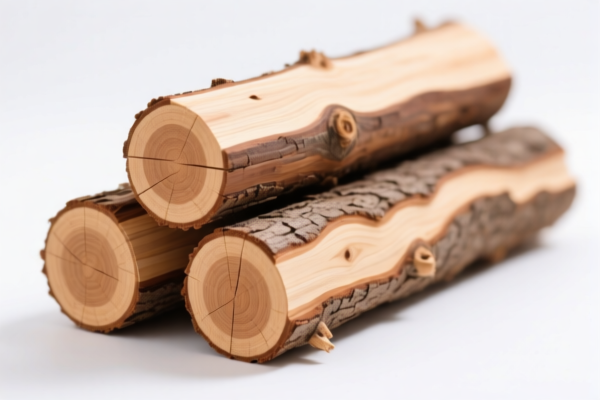
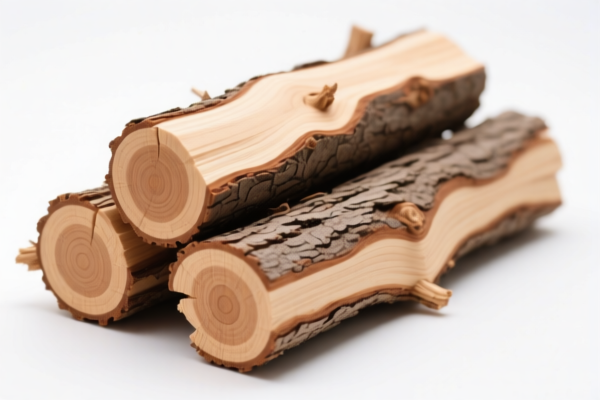
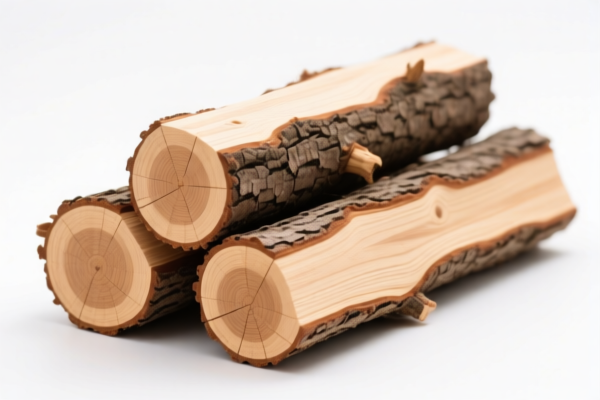
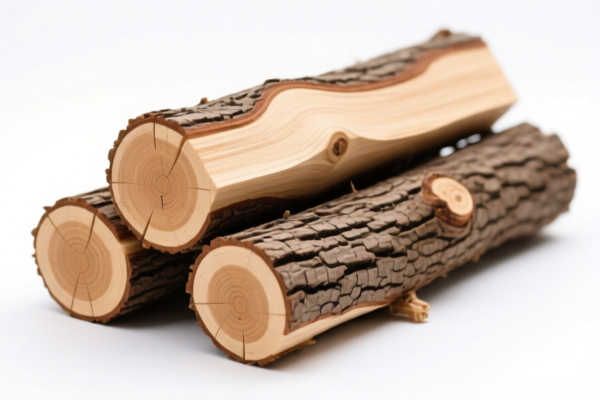
AI Analysis
🌲 去皮枫木原木 (Bark-stripped Maple Logs)
🌐 HS Code Reference & Customs Clearance Guide | 2026 Latest Tariff Analysis | Professional Clearance Strategy
📌 I. Product Definition & Classification: Do You Really Understand "Bark-stripped Maple Logs"?
Bark-stripped maple logs are primary wood products derived from maple trees. In international trade, the classification hinges on two critical factors: 1. Wood Type: Maple is classified as a non-coniferous (hardwood) species. 2. Processing Level & Shape: "Logs" indicate the raw, unprocessed form. "Bark-stripped" implies a preliminary processing step but retains the fundamental "log" characteristic suitable for fuel or further industrial milling.
⚠️ Key Distinction Points:
- If the wood is intended primarily for fuel/energy (raw, bulk, un-sawn), it falls under Chapter 44.01 (Fuel Wood).
- If the wood is intended for industrial processing (sawing, veneer) and meets specific dimension criteria (e.g., thickness >6mm), it may fall under Chapter 44.03 (Wood in the Rough) or 44.07 (Wood Continuously Sawn).
- "Bark-stripped" does not automatically upgrade the classification to processed lumber; it remains "in the rough" unless further worked.
📦 2. HS Code Classification Details (2026 Latest Tariff Authority Comparison)
Based on the provided data, here are the possible HS Code classifications for "Bark-stripped Maple Logs":
| HS Code | Product Description | Applicable Scenario | Tax Rate |
|---|---|---|---|
4401.12.00.00 |
Fuel Wood of Non-Coniferous Species | Logs primarily used as fuel/energy; raw form, non-coniferous (Maple). | 35.0% |
4403.99.01.60 |
Wood in the Rough, Non-Coniferous (Other) | Logs for industrial processing (sawing/veneer); raw form, bark-stripped but not further worked. | 35.0% |
4407.93.00.20 |
Wood Continuously Sawn, Non-Coniferous (Other) | Logs with thickness >6mm, longitudinally sawn/peeled; inferred as "Other" non-coniferous wood. | 35.0% |
🔍 Critical Clarification:
- Maple is Non-Coniferous: All the above codes correctly identify Maple as non-coniferous.
- Shape Determination:
- If declared as Fuel Wood (raw, bulky, unprocessed intent):4401.12.00.00is appropriate.
- If declared as Raw Material for Manufacturing (sawmill/veneer purpose):4403.99.01.60is the most precise fit for "wood in the rough."
- If specifically processed (thick planks/logs >6mm sawn):4407.93.00.20may apply, but this is less common for standard "logs."
💰 3. 2026 Latest Tariff Rate Breakdown (Including Additional Taxes & Policy Surcharges)
✅ Applicable Country: United States (US)
✅ Origin: China (CN) (Inferred from tax details in data)
✅ Effective Date: From November 10, 2025 (and subsequent imports)
🎯 1. 4401.12.00.00 —— Fuel Wood of Non-Coniferous Species
| Item | Content |
|---|---|
| Base Tariff | 0% (ad valorem) |
| Section 301 Additional Tariff | +25% |
| Section 122 Tariff | +10% |
| Total Tariff Rate | 35.0% |
| Tax Calculation | CIF Value × 35% |
| De Minimis Exemption | ❌ Not Applicable (High tariff items usually exclude de minimis) |
| Legal Basis Path | USITC:4401.12.00.00 → 301 Footnote → Section 122 |
📌 Explanation:
- Base 0%: Standard MFN rate for fuel wood is often low or zero.
- 301 Tariff (+25%): Applies to all Chinese-origin wood products under Chapter 44 due to trade tensions.
- Section 122 Tariff (+10%): Specific additional surcharge applied to certain Chinese imports.
- Total 35%: This is the effective landed cost multiplier for duties.
🎯 2. 4403.99.01.60 —— Wood in the Rough, Non-Coniferous (Other)
| Item | Content |
|---|---|
| Base Tariff | 0% |
| Section 301 Additional Tariff | +25% |
| Section 122 Tariff | +10% |
| Total Tariff Rate | 35.0% |
| Tax Calculation | CIF Value × 35% |
| De Minimis Exemption | ❌ Not Applicable |
| Legal Basis Path | USITC:4403.99.01.60 → 301 Footnote → Section 122 |
📌 Explanation:
- Matches the tax profile of4401.12.00.00.
- This code is more accurate if the logs are not for fuel but for industrial milling (e.g., furniture, flooring).
- Key Point: The physical description "Bark-stripped Maple Logs" fits "Wood in the Rough" (4403) better than "Fuel Wood" (4401) if the intent is commercial timber trade.
🎯 3. 4407.93.00.20 —— Wood Continuously Sawn, Non-Coniferous (Other)
| Item | Content |
|---|---|
| Base Tariff | 0% |
| Section 301 Additional Tariff | +25% |
| Section 122 Tariff | +10% |
| Total Tariff Rate | 35.0% |
| Tax Calculation | CIF Value × 35% |
| De Minimis Exemption | ❌ Not Applicable |
| Legal Basis Path | USITC:4407.93.00.20 → 301 Footnote → Section 122 |
📌 Explanation:
- Applies only if the "logs" are actually thick planks (thickness >6mm) that have been continuously sawn or peeled.
- If the product is truly "round logs" or "bark-stripped round logs," this code may be misclassified.
- Warning: Misclassification from4403(Rough) to4407(Sawn) can lead to audits if dimensions do not match.
🛠️ 4. Customs Clearance Practical Advice (Real-World Pitfall Avoidance)
✅ 1. Document Checklist (No Exceptions)
| Document | Required | Explanation |
|---|---|---|
| ✅ Commercial Invoice | ✔️ | Must clearly state: "Bark-stripped Maple Logs," HS Code, Value, Weight. |
| ✅ Packing List | ✔️ | Detail volume (CBM), weight, and number of logs/packages. |
| ✅ Phytosanitary Certificate | ✔️ | Critical! Wood imports require this from the country of origin to prevent pests. |
| ✅ ISPM 15 Marking | ✔️ | If any wood packaging is used, it must be heat-treated and marked. |
| ✅ Product Description Detail | ✔️ | Specify: "Round Logs, Bark Removed, Diameter X-YY cm, Length Z m." |
| ✅ Certificate of Origin | ✔️ | For US Customs to apply correct tariff rates (China-origin triggers 301). |
✅ 2. Declaration Tips (Key Mnemonics)
🔥 "Be Specific, Be Honest, HS Code Matches Reality!"
| Scenario | Correct Declaration | Incorrect Practice |
|---|---|---|
| Logs for Furniture/Milling | 4403.99.01.60 (Wood in the Rough) |
Declaring as "Fuel Wood" to avoid scrutiny → Audit Risk |
| Logs for Burning/Fuel | 4401.12.00.00 (Fuel Wood) |
Declaring as "Lumber" → Misclassification Penalty |
| Bark-Stripped Round Logs | Clearly state "Bark Removed, Round Log" | Omitting "Bark-Stripped" → Discrepancy with Physical Inspection |
| Dimensions | Provide Diameter/Length | Vague description "Wood" → Delay in Clearance |
✅ 3. Special Case Handling
| Scenario | Handling Advice |
|---|---|
| Mixed Wood Species | If Maple is mixed with other non-coniferous woods, declare as "Other Non-Coniferous Wood" (4403.99) and provide a detailed species breakdown. |
| Pest Control | Ensure Phytosanitary Certificate is valid. USDA APHIS will inspect upon arrival. Failure → Re-export or Destruction. |
| Volume Measurement | Use Scribner Log Scale or Board Foot measurement for valuation. Discrepancies cause duty underpayment penalties. |
| Origin Proof | Provide timber harvest permits or supplier invoices to prove Chinese Origin. |
🌍 5. Global Market Comparison (2026 Latest)
| Country/Region | Recommended HS Code | Tariff | Certification | Remarks |
|---|---|---|---|---|
| 🇺🇸 United States | 4403.99.01.60 |
35% (Base 0% + 301 25% + 122 10%) | Phytosanitary + ISPM 15 | High Duty! |
| 🇨🇳 China | 4403.99 |
0-5% | Phytosanitary | Import duty low, but VAT applies. |
| 🇪🇺 European Union | 4403.49 |
0-6.5% | EUTR Compliance (Due Diligence) | Strict legality verification. |
| 🇬🇧 United Kingdom | 4403.49 |
0-6.5% | UK Timber Regulation | Post-Brexit rules apply. |
| 🇯🇵 Japan | 4403.49 |
0-5% | Phytosanitary | No major trade barriers. |
📌 Conclusion:
- USA is the most expensive market for Chinese-origin maple logs due to Section 301 and Section 122 tariffs.
- Total Cost Impact: A $100,000 shipment incurs $35,000 in duties alone.
- Strategy: Consider third-country routing (e.g., Vietnam, Mexico) if possible, but beware of Rules of Origin enforcement.
📌 6. Common Mistakes & Pitfall Guide (Lessons Learned)
❌ Mistake 1: Declaring "Maple Logs" without specifying "Bark-Stripped"
👉 Consequence: Customs may assume unprocessed logs with bark, leading to pest risk alerts or incorrect classification.
❌ Mistake 2: Using 4401.12.00.00 (Fuel Wood) for High-Value Veneer Logs
👉 Consequence: Under-declaration of value or intent. If used for veneer, it should be 4403. Audit risk.
❌ Mistake 3: Ignoring Phytosanitary Requirements
👉 Consequence: Hold at Port, pest inspection, potential destruction of cargo.
❌ Mistake 4: Vague Description: "Wood Products"
👉 Consequence: Customs Hold for detailed inspection. Delays cost money.
✅ Correct Declaration Example:
"Bark-stripped Maple Logs (Acer spp.), Round, Diameter 15-30cm, Length 2-4m, for Industrial Sawmilling, Origin: China, HS Code: 4403.99.01.60"
🎯 7. Conclusion: Precise Classification, Cost Control!
🎯 Remember the Mnemonic:
🔹 "Maple is Non-Coniferous, Check the Shape First!"
🔹 "Fuel = 4401, Rough Wood = 4403, Sawn = 4407!"
🔹 "35% is the US Duty Rate, Don't Get Caught by 301!"
📌 Pro Tip:
If your maple logs are destined for high-end furniture manufacturing, ensure the Phytosanitary Certificate is flawless. For USA imports, calculate the 35% duty into your margin immediately. Consider Advance Ruling from US Customs (CBP) to confirm the exact HS Code (4403 vs 4401) before shipment.
📣 Immediate Action:
📞 Contact a Licensed Customs Broker + Provide Sample Photos + Request CBP Advance Ruling
🚀 Ensure Phytosanitary Certificate is issued by Origin Country's NPPO
💼 Minimize Duty Liability with Correct Classification!
✨ Professional Clearance Starts with Accurate Classification!
💼 Every Dollar of Duty Saved is Profit Earned!
Customer Reviews
About HS Code Classification
The Harmonized System (HS) is an internationally standardized nomenclature developed by the World Customs Organization (WCO) to classify traded products. Over 200 countries use the HS system as the basis for customs tariffs, trade statistics, and import/export regulations.
Each HS code follows a hierarchical structure:
- Chapter (2 digits) — Broad category of goods (e.g., Chapter 84: Machinery and Mechanical Appliances)
- Heading (4 digits) — More specific grouping within the chapter
- Subheading (6 digits) — Internationally standardized breakdown, used by all WCO member countries
- National subdivisions (8-10 digits) — Country-specific extensions for further classification, such as US HTSUS 10-digit codes
Correct HS code classification is essential for smooth customs clearance, accurate duty payment, and compliance with trade regulations. Misclassification can lead to customs delays, overpayment of duties, or penalties.
When importing from CN to US, the applicable tariff rates may include:
- Most-Favored-Nation (MFN) rate — The standard duty rate applied to WTO members
- General rate — Applied to countries without trade agreements
- Trade remedy duties — Additional tariffs such as Section 301 (anti-dumping), Section 232 (national security), or countervailing duties
The information provided on this page is for reference purposes only. For official classification, please consult with your local customs authority or a licensed customs broker.