双肩背包
CN → US| HS Code | Tariff Rate | Origin | Destination | Doc |
|---|---|---|---|---|
| 4202128980 | 52.6% | CN | US | Official Doc |
| 4202923120 | 52.6% | CN | US | Official Doc |
| 4202921500 | 41.3% | CN | US | Official Doc |
| 4202228980 | 52.6% | CN | US | Official Doc |
| 4202923120 | 52.6% | CN | US | Official Doc |
Product Images
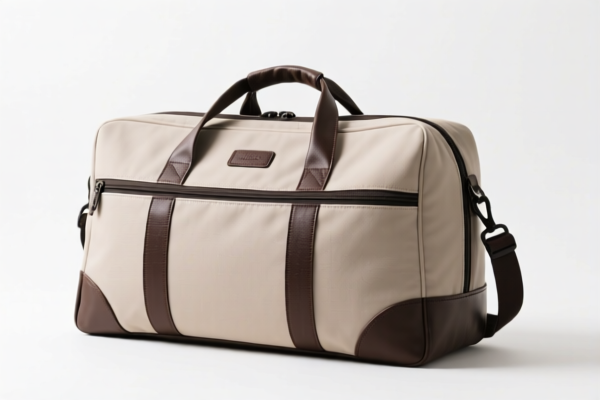
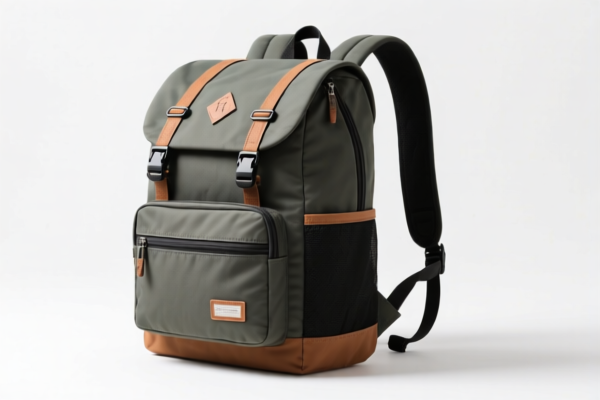
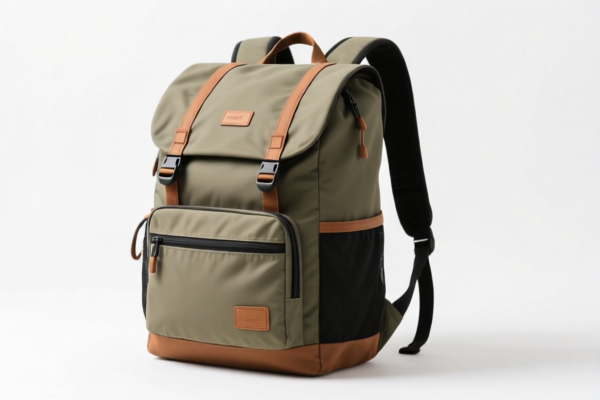

AI Analysis
Here is the Wiki-style clearance guide for Backpacks, tailored to the specific HS Codes and Tax Data provided in your input.
🎒 Backpacks (School Bags & Similar Containers)
🌐 HS Code Classification & Clearance Strategy | 2026 Tax Rate Analysis | Professional Duty Management
📌 一、Product Definition & Classification Logic: Are You Shipping the Right Product?
Backpacks are versatile containers used for carrying personal items, laptops, books, and daily essentials. In international trade (specifically targeting the US market based on the provided tax data), they fall under Chapter 42 (Articles of Leather; Travel Goods).
The classification hinges on Material Composition and Surface Composition: * Textile Surface: If the outer surface is made of textile materials (nylon, polyester, canvas), it generally falls under 4202.12 or 4202.92. * Material Specifics: * Synthetic Fibers: High durability, common in modern travel packs. * Cotton/Plant Fiber (Canvas): Classic style, treated differently by tariff rates.
⚠️ Critical Distinction:
- 4202.12: Specifically for "Backpacks" (school bags, travel bags) with textile surface. - 4202.92: For "Other containers" with textile surface (often a fallback or specific sub-category). - Material Conflict Check: Ensure the primary surface material matches the HS Code description to avoid re-classification penalties.
📦 二、HS Code Classification Details (2026 Latest Tariff Data)
Based on the provided data, here are the three specific HS Codes identified for Backpacks:
| HS Code | Product Description | Material & Logic | Tax Profile |
|---|---|---|---|
| 4202.12.89.80 | Backpacks (General Textile) | Surface: Textile material (General fallback). Logic: Fits "School bags & similar containers" perfectly. |
52.6% |
| 4202.92.31.20 | Backpacks (Synthetic/Textile) | Shape: Backpack. Material: Inferred as Synthetic Fiber or Textile. Logic: No material conflict; matches textile container definition. |
52.6% |
| 4202.92.15.00 | Canvas Backpacks | Material: Canvas (Cotton/Plant Fiber). Logic: Cotton-based textile fits "Cotton/Plant Fiber" definition for specific sub-headings. |
41.3% |
🔍 Key Insight:
- Codes 4202.12.89.80 & 4202.92.31.20 share the highest tax burden (52.6%), likely due to generic textile classification rules or specific USITC footnotes. - Code 4202.92.15.00 (Canvas) offers a significant savings (41.3%), provided the material is genuinely cotton-based. - Misclassification Risk: Declaring a Synthetic Backpack as Canvas to get the lower rate without proof will lead to audits.
💰 三、2026 Tariff Rate Breakdown (Deep Dive)
✅ Target Market: United States (US)
✅ Origin: China (CN)
✅ Status: All tariffs include Base + Section 301 + Section 122.
🎯 Scenario A: High-Tax Textile Backpacks
(HS Code: 4202.12.89.80 or 4202.92.31.20)
Total Tax Rate: 52.6%
| Component | Rate | Legal/Policy Basis | Explanation |
|---|---|---|---|
| Base Duty | 17.6% | Standard MFN Tariff | The baseline import duty for textile bags. |
| Section 301 (Added) | 25.0% | US Trade Act "Section 301" | Additional punitive tariff on Chinese manufactured goods. |
| Section 122 | 10.0% | "122 Clauses" (Specific US Rule) | Additional tariff layer often applied to specific textile categories. |
| TOTAL | 52.6% | Sum of Above | Extremely High. Must be factored into FOB pricing immediately. |
📌 Why so high?
These codes likely represent non-cotton, synthetic textile backpacks which face the full brunt of the "Section 301" trade war tariffs (25%) plus the specific "122 Clause" (10%), layered on top of the standard duty.
🎯 Scenario B: Canvas (Cotton) Backpacks
(HS Code: 4202.92.15.00)
Total Tax Rate: 41.3%
| Component | Rate | Legal/Policy Basis | Explanation |
|---|---|---|---|
| Base Duty | 6.3% | Standard MFN Tariff | Significantly lower base duty for cotton-based items. |
| Section 301 (Added) | 25.0% | US Trade Act "Section 301" | Still subject to the 25% punitive tariff. |
| Section 122 | 10.0% | "122 Clauses" (Specific US Rule) | Still subject to the 10% specific clause. |
| TOTAL | 41.3% | Sum of Above | Lower, but still steep. The 11.3% savings comes entirely from the reduced Base Duty (6.3% vs 17.6%). |
📌 Strategic Advantage:
If your product line allows for Canvas (Cotton) construction, you can save 11.3% on the total landed cost. However, you must provide lab tests proving the material is 100% cotton to justify the6.3%base rate.
🛠️ 四、Customs Clearance Practical Advice (Action Plan)
✅ 1. Preparation Checklist (The "No-Reject" List)
| Document | Requirement | Why It Matters |
|---|---|---|
| ✅ Material Declaration | Critical | Must explicitly state "100% Cotton" for 4202.92.15.00 or "Nylon/Polyester" for 4202.12.89.80. |
| ✅ Lab Test Report | Mandatory | Third-party test (e.g., SGS, Intertek) proving fiber content is the only way to claim the 41.3% rate. |
| ✅ Product Photos | Clear | Show texture (canvas weave vs. synthetic sheen) to customs officers. |
| ✅ Component List | Detailed | List zippers, padding, and straps. Sometimes accessories trigger different HS codes if they constitute the "essential character". |
| ✅ Bill of Lading (B/L) | Accurate | Ensure commodity description matches the HS Code summary exactly. |
✅ 2. Declaration Strategy (Pro Tips)
🔥 Golden Rule: "Material Truth Saves Money!"
| Situation | Correct Action | Wrong Action |
|---|---|---|
| You have a Nylon Backpack | Declare as 4202.12.89.80 or 4202.92.31.20. Accept the 52.6% tax. | Trying to declare it as Canvas (4202.92.15.00). Result: Customs seizure + Penalty. |
| You have a Canvas Backpack | Declare as 4202.92.15.00 with Cotton Lab Report. Pay 41.3%. | Declaring as generic "Synthetic Backpack" (52.6%). Result: Overpaying 11.3% unnecessarily. |
| Mixed Material (Cotton + Synthetic) | Consult Expert. If synthetic >50%, likely high tax. If cotton >50%, might qualify for low tax (complex). | Assuming "Looks like Canvas" = Cotton. Result: Audit risk. |
✅ 3. Special Notes on "Section 122"
The 10% "122 Clause" tariff is an additional layer that applies to both the 52.6% and 41.3% scenarios in the provided data. * Note: Unlike Section 301 (25%) which is a blanket trade war tariff, Section 122 suggests a specific category of textile goods is under extra scrutiny. * Action: Ensure your commercial invoice explicitly states "Subject to Section 122 Tariff" to avoid payment delays.
📌 五、Common Pitfalls & Avoidance Guide
❌ Mistake 1: The "Canvas Illusion"
Claiming a Polyester "Canvas-style" bag is Cotton to get 41.3%.
Consequence: If customs finds a fiber test showing >5% synthetic, they will re-classify to 52.6% + Penalty + Retrospective Duty.
Fix*: Be honest. If you cannot prove 100% cotton, use the 52.6% code.
❌ Mistake 2: Ignoring "Similar Containers"
The data mentions "School bags & similar containers" for
4202.12.89.80.
Consequence: If you ship a "Gym Bag" with no shoulder straps, it might be4202.92.
Fix*: Ensure the description matches "Backpack" (two straps, open top, carrying on back).
❌ Mistake 3: Underestimating the Total Cost
Thinking only of Base Duty (17.6% or 6.3%).
Consequence: Missing the 25% + 10% surcharge leads to cash flow crises.
Fix: Always calculate Total Landed Cost* asCIF Value × 0.526(for non-cotton) orCIF Value × 0.413(for cotton).
🎯 六、Conclusion: Strategic Sourcing & Shipping
🎯 Takeaway:
The 11.3% tax differential between synthetic backpacks (52.6%) and canvas backpacks (41.3%) is the key to profitability.
- If designing for the US Market: Pivot to 100% Cotton Canvas for your core product line to minimize tariff impact.
- If stuck with Synthetics: Factor the 52.6% total cost into your pricing immediately. Do not attempt to hide the Section 301 or Section 122 duties.
🚀 Final Checklist:
1. Verify Material: Get lab report.
2. Select Code:4202.92.15.00(if Cotton) OR4202.12.89.80(if Synthetic).
3. Calculate Cost: Apply 52.6% or 41.3% accurately.
4. Declare: Mark "Subject to Section 301 (25%) & Section 122 (10%)" on Invoice.
✨ Smart Clearance = Accurate Classification + Transparent Materials
💼 Don't let the 11.3% tax gap eat your margins!
Customer Reviews
About HS Code Classification
The Harmonized System (HS) is an internationally standardized nomenclature developed by the World Customs Organization (WCO) to classify traded products. Over 200 countries use the HS system as the basis for customs tariffs, trade statistics, and import/export regulations.
Each HS code follows a hierarchical structure:
- Chapter (2 digits) — Broad category of goods (e.g., Chapter 84: Machinery and Mechanical Appliances)
- Heading (4 digits) — More specific grouping within the chapter
- Subheading (6 digits) — Internationally standardized breakdown, used by all WCO member countries
- National subdivisions (8-10 digits) — Country-specific extensions for further classification, such as US HTSUS 10-digit codes
Correct HS code classification is essential for smooth customs clearance, accurate duty payment, and compliance with trade regulations. Misclassification can lead to customs delays, overpayment of duties, or penalties.
When importing from CN to US, the applicable tariff rates may include:
- Most-Favored-Nation (MFN) rate — The standard duty rate applied to WTO members
- General rate — Applied to countries without trade agreements
- Trade remedy duties — Additional tariffs such as Section 301 (anti-dumping), Section 232 (national security), or countervailing duties
The information provided on this page is for reference purposes only. For official classification, please consult with your local customs authority or a licensed customs broker.