双肩背带
CN → US| HS Code | Tariff Rate | Origin | Destination | Doc |
|---|---|---|---|---|
| 5807902090 | 38.3% | CN | US | Official Doc |
| 5807102090 | 38.3% | CN | US | Official Doc |
| 6212109040 | 34.4% | CN | US | Official Doc |
| 6117909090 | 32.1% | CN | US | Official Doc |
| 6212105030 | 34.4% | CN | US | Official Doc |
Product Images
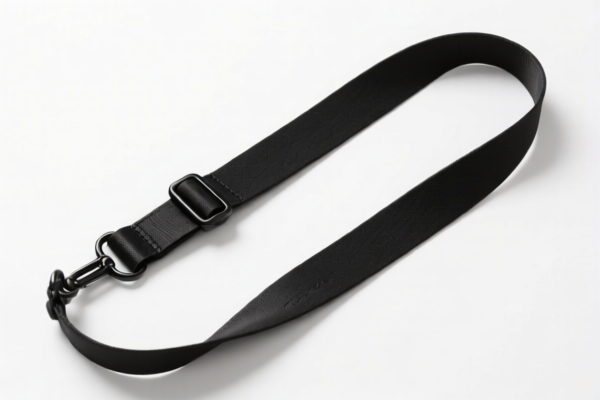
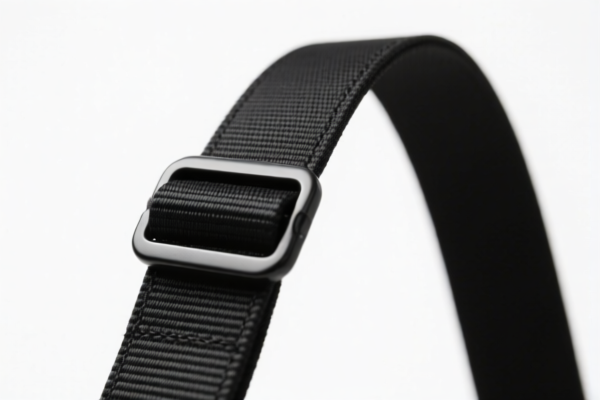
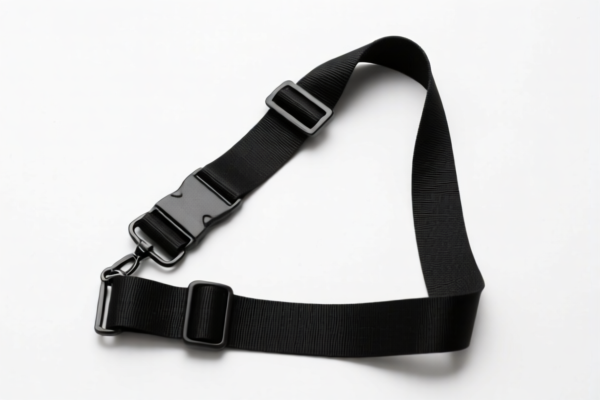
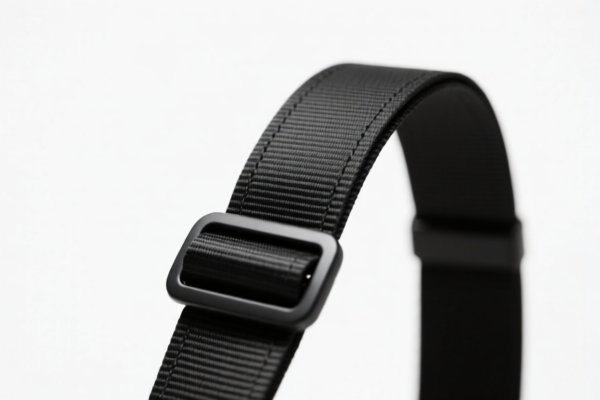
AI Analysis
🎒 Double-Strap Bags / Double Shoulder Straps
🌐 HS Code Reference & Customs Clearance Guide | 2026 Latest Tariff Analysis | Professional Level Strategy
📌 I. Product Definition & Classification: Do You Really Understand "Double Shoulder Straps"?
Double-shoulder straps (often referring to bras, backpack straps, or bag accessories) are critical components in apparel and accessory industries. In international trade, they are classified based on their form, material, and specific use. The following analysis is strictly based on the provided data, focusing on the classification logic and corresponding tax rates.
⚠️ Key Distinction Point:
- If the straps are textile labels, badges, or similar textile articles → Classified under Chapter 58;
- If the straps are parts of brassieres (bras) or apparel accessories → Classified under Chapter 61/62.
📦 II. HS Code Classification Details (Based on Provided Data)
| HS Code | Summary & Logic | Material/Feature | Total Tax Rate (China to US) |
|---|---|---|---|
| 5807.90.20.90 | Textile Labels/Badges: Form and use match textile-made labels, badges, and similar articles. | Textile material | 38.3% |
| 5807.10.20.90 | Textile Strips: Textile-made strip-like items, matching characteristics of other textile categories. | Textile material | 38.3% |
| 6212.10.90.40 | Brassiere Parts: Matches form/use, based on special rules for spare parts and fallback logic. | Textile/Textile blend | 34.4% |
| 6117.90.90.90 | Apparel Accessories/Parts: Belongs to clothing accessories/parts, usually made of artificial fibers. | Artificial fiber | 32.1% |
| 6212.10.50.30 | Brassiere Accessories: Based on default tendency for parts, specifically for bra accessories. | Textile/Textile blend | 34.4% |
🔍 Key Insight:
- Chapter 58 items are treated as textile articles (labels/straps), resulting in higher base tariffs (3.3%) plus significant additional taxes.
- Chapter 61/62 items are treated as apparel parts/accessories, resulting in lower base tariffs (14.6%–16.9%) but still subject to substantial additional taxes.
- 6117.90.90.90 offers the lowest total tax rate (32.1%), making it the most cost-effective option if the product qualifies as a generic apparel accessory.
💰 III. 2026 Latest Tariff Rate Breakdown (Including Surcharge & Policy Add-ons)
✅ Applicable Country: United States (US)
✅ Origin: China (CN)
✅ Effective Date: Post-2025 (including subsequent imports)
🎯 1. HS Code 5807.90.20.90 & 5807.10.20.90 —— Textile Labels/Strips
| Item | Content |
|---|---|
| Base Tariff | 3.3% |
| USITC Surcharge (Section 301) | +25.0% |
| IEEPA Surcharge (Section 122) | +10.0% |
| Total Tax Rate | 38.3% |
| Tax Calculation | CIF Value × 38.3% |
| De Minimis Exemption | ❌ Not Eligible |
| Legal Basis Path | USITC:5807.90.20.90 → FOOTNOTE:301.88.01 → IEEPA:9903.01.25 |
📌 Explanation:
- These codes fall under Chapter 58, which is classified as "Textile articles" rather than apparel parts.
- The 3.3% base tariff is low, but the 25% Section 301 tariff and 10% IEEPA tariff significantly increase the cost.
- Total 38.3% is very high, impacting profitability.
🎯 2. HS Code 6212.10.90.40 & 6212.10.50.30 —— Brassiere Parts/Accessories
| Item | Content |
|---|---|
| Base Tariff | 16.9% |
| USITC Surcharge (Section 301) | +7.5% |
| IEEPA Surcharge (Section 122) | +10.0% |
| Total Tax Rate | 34.4% |
| Tax Calculation | CIF Value × 34.4% |
| De Minimis Exemption | ❌ Not Eligible |
| Legal Basis Path | USITC:6212.10.90.40 → FOOTNOTE:301.88.01 → IEEPA:9903.01.25 |
📌 Explanation:
- These codes fall under Chapter 62, specifically for brassiere parts.
- The base tariff (16.9%) is higher than Chapter 58, but the Section 301 surcharge is only 7.5% (vs. 25% for Chapter 58).
- Total 34.4% is moderate, better than Chapter 58 but still significant.
🎯 3. HS Code 6117.90.90.90 —— Apparel Accessories/Parts
| Item | Content |
|---|---|
| Base Tariff | 14.6% |
| USITC Surcharge (Section 301) | +7.5% |
| IEEPA Surcharge (Section 122) | +10.0% |
| Total Tax Rate | 32.1% |
| Tax Calculation | CIF Value × 32.1% |
| De Minimis Exemption | ❌ Not Eligible |
| Legal Basis Path | USITC:6117.90.90.90 → FOOTNOTE:301.88.01 → IEEPA:9903.01.25 |
📌 Explanation:
- This code falls under Chapter 61, classified as apparel accessories/parts (e.g., for bras, garments).
- The base tariff (14.6%) is the lowest among the options.
- Section 301 surcharge is 7.5%, same as Chapter 62.
- Total 32.1% is the most cost-effective option provided in the data.
- Key Requirement: Must be clearly defined as "apparel accessories" or "parts" made of artificial fibers, not as standalone textile labels.
🛠️ IV. Customs Clearance Practical Advice (Avoid Pitfalls)
✅ 1. Preparation Checklist (All Documents Required)
| Document | Required? | Notes |
|---|---|---|
| ✅ Product Specification Sheet | ✔️ | Detail material, dimensions, purpose (e.g., "Bra Strap," "Bag Strap"). |
| ✅ Photos (Including Labels) | ✔️ | Show the strap in context (attached to a bra/bag) vs. standalone. |
| ✅ Material Composition | ✔️ | Specify "100% Polyester," "Artificial Fiber," etc., for Chapter 61/62 eligibility. |
| ✅ Commercial Invoice | ✔️ | Use precise terms: "Bra Strap Accessory" (for Ch. 61/62) vs. "Textile Label" (for Ch. 58). |
| ✅ Packing List | ✔️ | Clarify if straps are sold separately or with main products. |
✅ 2. Declaration Tips (Crucial for Cost Savings)
🔥 "Choose Chapter 61 for Lowest Tax, Chapter 58 for High Risk!"
| Scenario | Correct Declaration | Incorrect Declaration |
|---|---|---|
| Straps sold with Bras | 6117.90.90.90 or 6212.10.90.40 |
Misclassify as "Textile Label" → 38.3% |
| Standalone Textile Strips | 5807.90.20.90 |
Misclassify as "Bra Part" → Risk of Rejection |
| Artificial Fiber Accessories | 6117.90.90.90 |
Misclassify as "Cotton Label" → 38.3% |
| Mixed Material Straps | Analyze primary material | Ambiguous description → Delays & Penalties |
✅ 3. Special Cases
| Scenario | Handling Advice |
|---|---|
| OEM Custom Straps | Provide client design docs to prove "Apparel Accessory" status. |
| Straps with Metal Parts | If metal parts are structural, may still fall under Ch. 61/62, but declare carefully. |
| Non-Textile Straps | If made of leather or plastic, these HS codes do not apply; seek new classification. |
| De Minimis (Section 321) | ❌ Not Eligible for these codes due to high surcharges. |
🌍 V. Global Market Comparison (2026)
| Country/Region | Recommended HS Code | Total Tax (China Origin) | Certification | Notes |
|---|---|---|---|---|
| 🇺🇸 USA | 6117.90.90.90 |
32.1% | N/A | Lowest among provided options. |
| 🇺🇸 USA | 5807.90.20.90 |
38.3% | N/A | High risk due to Section 301. |
| 🇨🇳 China | 6117.90.90.90 |
~10–15% | CCC (if applicable) | No Section 301/IEEPA. |
| 🇪🇺 EU | 6117.90.90.90 |
0–6% | CE/RoHS | Generally lower tariffs. |
📌 Conclusion:
- For US imports,6117.90.90.90is the optimal choice due to its 32.1% total rate, which is 6.2 percentage points lower than Chapter 58 options.
- Avoid Chapter 58 unless the product is strictly a "label" or "badge" and cannot be classified as an apparel part.
📌 VI. Common Mistakes & Pitfalls (Lessons Learned)
❌ Mistake 1: Classifying Bra Straps as Textile Labels (5807.xxxx)
👉 Consequence: Tax jumps from 32.1% to 38.3% → Loss of Profit.
❌ Mistake 2: Using vague terms like "Strap" without specifying Material or Use
👉 Consequence: Customs may reclassify under Chapter 58 → Higher Taxes & Delays.
❌ Mistake 3: Assuming De Minimis applies to textile parts
👉 Consequence: Section 301/IEEPA surcharges invalidate de minimis exemptions → Full Tax Liability.
✅ Correct Approach:
"Bra Shoulder Strap, Artificial Fiber, Part of Apparel Accessory, Model XYZ"
🎯 VII. Conclusion: Precise Classification, Maximize Profit!
🎯 Key Takeaway:
🔹 "Apparel Accessory (Ch. 61) < Brassiere Part (Ch. 62) < Textile Label (Ch. 58)"
🔹 32.1% vs. 38.3%: A 6.2% difference can mean thousands of dollars saved on large shipments.
🔹 Always declare as "Apparel Accessory" if possible to leverage the lowest base tariff and Section 301 rate.
📌 Pro Tip:
If your straps are originating from Vietnam, Mexico, or Thailand, you may qualify for IEEPA exemptions, reducing tariffs to 0–5%.
Apply for an Advance Ruling before shipment to confirm the best HS Code.
📣 Action Plan:
📞 Consult a Licensed Customs Broker
📸 Provide Clear Photos + Material Specs
🚀 Secure the 32.1% Rate, Avoid the 38.3% Trap!
✨ Professional Clearance, Starting with Accurate Classification!
💼 Every Dollar Saved is a Dollar Earned!
Customer Reviews
About HS Code Classification
The Harmonized System (HS) is an internationally standardized nomenclature developed by the World Customs Organization (WCO) to classify traded products. Over 200 countries use the HS system as the basis for customs tariffs, trade statistics, and import/export regulations.
Each HS code follows a hierarchical structure:
- Chapter (2 digits) — Broad category of goods (e.g., Chapter 84: Machinery and Mechanical Appliances)
- Heading (4 digits) — More specific grouping within the chapter
- Subheading (6 digits) — Internationally standardized breakdown, used by all WCO member countries
- National subdivisions (8-10 digits) — Country-specific extensions for further classification, such as US HTSUS 10-digit codes
Correct HS code classification is essential for smooth customs clearance, accurate duty payment, and compliance with trade regulations. Misclassification can lead to customs delays, overpayment of duties, or penalties.
When importing from CN to US, the applicable tariff rates may include:
- Most-Favored-Nation (MFN) rate — The standard duty rate applied to WTO members
- General rate — Applied to countries without trade agreements
- Trade remedy duties — Additional tariffs such as Section 301 (anti-dumping), Section 232 (national security), or countervailing duties
The information provided on this page is for reference purposes only. For official classification, please consult with your local customs authority or a licensed customs broker.