变速器
CN → US| HS Code | Tariff Rate | Origin | Destination | Doc |
|---|---|---|---|---|
| 8484900000 | 37.5% | CN | US | Official Doc |
| 8483405080 | 37.5% | CN | US | Official Doc |
| 8483405020 | 37.5% | CN | US | Official Doc |
| 8708405000 | 37.5% | CN | US | Official Doc |
| 8708401150 | 0.0% | CN | US | Official Doc |
Product Images
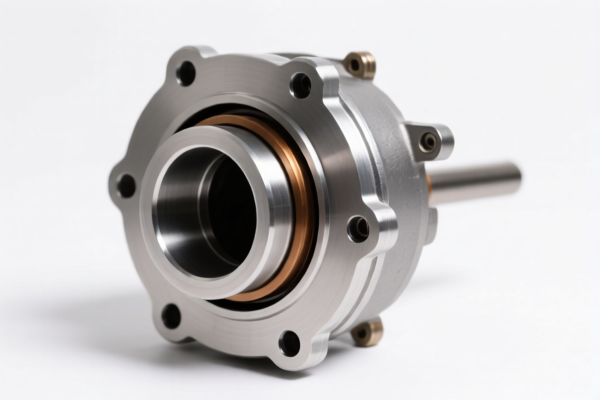
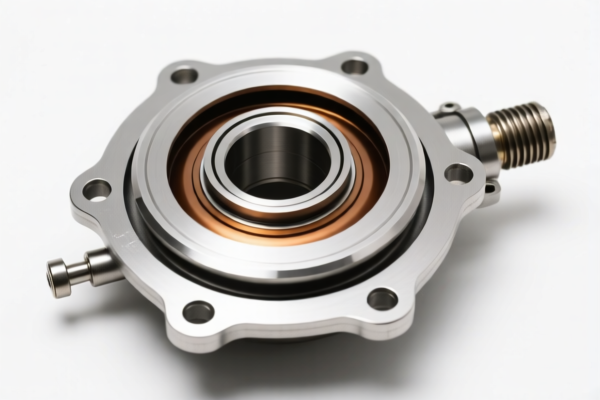
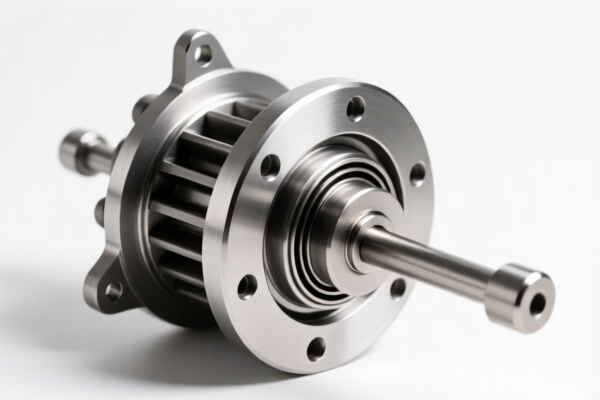
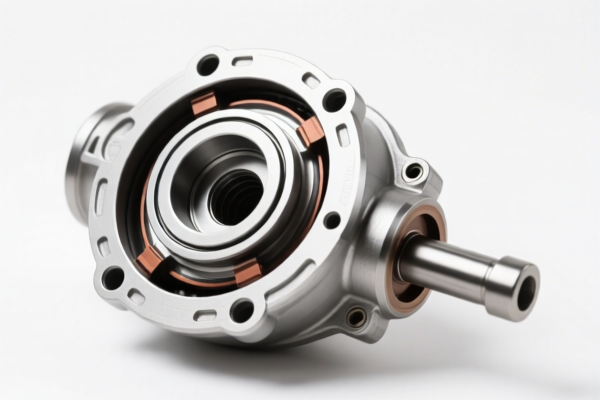
AI Analysis
⚙️ Transmission & Gearboxes (Automotive & Mechanical)
🌐 HS Code Reference & Customs Clearance Guide | 2026 Latest Tariff Analysis | Professional Clearance Strategy
📌 1. Product Definition & Classification: Do You Really Know "Transmissions"?
In international trade, "Transmissions" (or Gearboxes) are core components in the mechanical and automotive sectors. They are primarily categorized based on their intended application (automotive vs. general machinery) and functional integration.
⚠️ Key Distinction Point:
- If it is a vehicle-specific transmission (designed for cars/trucks) →归入 Chapter 87 (Vehicle Parts)
- If it is a general mechanical gearbox (for industrial machinery, engines, etc.) → 归入 Chapter 84 (Machinery)
- Material Inference: Primarily made of metal, fitting the category of "Mechanical Parts."
📦 2. HS Code Classification Details (2026 Latest Tariff Authority Comparison)
Based on the provided data, the classification for "Transmission" (变速箱/变速器) falls into two main chapters with specific subheadings.
| HS Code | Product Description | Application Scenario | Tariff Rate (Total) |
|---|---|---|---|
8483.40.50.80 |
Other transmissions and variable-speed gears | General machinery, industrial equipment, non-vehicle specific | 37.5% |
8483.40.50.20 |
Transmissions for specific mechanical uses | Mechanical parts, gearboxes, inferred as specific-purpose components | 37.5% |
8484.90.00.00 |
Mechanical parts (Metal inferred) | Core mechanical components, inferred as metal-made parts | 37.5% |
8708.40.11.50 |
Vehicle Transmission (Specific Model) | Car/Truck transmissions, matches "Variable Speed Gear" for vehicles | 37.5% (Note: Base 2.5% + Additional 35%) |
8708.40.50.00 |
Other Vehicle Transmissions | General automotive transmissions, matches function and form for vehicles | 37.5% |
🔍 Key Insight:
- Chapter 84 (8483/8484): Covers general mechanical transmissions. The data indicates these are inferred as metal parts or general gearboxes.
- Chapter 87 (8708): Covers automotive transmissions. The summary explicitly states that the product name "Transmission" matches the classification explanation for "Transmissions" (variable speed gears) for vehicles.
- All listed codes carry a total tax rate of 37.5%, but the composition of this rate differs slightly (specifically for8708.40.11.50).
💰 3. 2026 Latest Tariff Rate Details (Including Surtaxes & Policy Surcharges)
✅ Applicable Country: United States (US)
✅ Origin: China (CN)
✅ Effective Date: Current rates apply (Includes Section 301 & IEEPA surcharges)
🎯 1. General Mechanical Transmissions (8483.40.50.80 / 8483.40.50.20 / 8484.90.00.00)
| Item | Detail |
|---|---|
| Base Duty Rate | 2.5% (Ad valorem) |
| Section 301 Surcharge | +25.0% |
| Section 122 Tariff | +10.0% |
| Total Effective Rate | 37.5% |
| Tax Calculation | CIF Value × 37.5% |
| Legal Basis Path | USITC:8483.40.50.80 → Section 301: 25% → Section 122: 10% |
📌 Explanation:
- The 2.5% is the standard MFN (Most Favored Nation) duty.
- The 25% is the additional duty under Section 301 of the Trade Act of 1974, targeting Chinese imports.
- The 10% is specified as "Section 122 Tariff" in the data (likely referring to specific trade remedy or emergency import surcharges under U.S. law).
- Total: 2.5% + 25% + 10% = 37.5%.
🎯 2. Automotive Transmissions (8708.40.50.00)
| Item | Detail |
|---|---|
| Base Duty Rate | 2.5% |
| Section 301 Surcharge | +25.0% |
| Section 122 Tariff | +10.0% |
| Total Effective Rate | 37.5% |
| Tax Calculation | CIF Value × 37.5% |
| Legal Basis Path | USITC:8708.40.50.00 → Section 301: 25% → Section 122: 10% |
📌 Explanation:
- Matches the structure of general mechanical transmissions. The classification hinges on the product being a vehicle part rather than a general machine part.
- Despite being in Chapter 87 (Vehicle Parts), it still bears the full weight of Section 301 and Section 122 surcharges.
🎯 3. Special Vehicle Transmission (8708.40.11.50)
| Item | Detail |
|---|---|
| Base Duty Rate | 2.5% |
| Additional Duty | +35.0% (Combined Surtaxes) |
| Total Effective Rate | 37.5% |
| Tax Calculation | CIF Value × 37.5% |
| Breakdown | Base 2.5% + Section 301 (25%) + Section 122 (10%) |
| Legal Basis Path | USITC:8708.40.11.50 → Section 301: 25% → Section 122: 10% |
📌 Note:
- The data explicitly states "2.5%+35.0%". This is mathematically consistent with 2.5% + 25% + 10% = 37.5%.
- This code likely refers to a specific type or model of automotive transmission, but the tariff burden is identical to other transmission codes.
🛠️ 4. Customs Clearance Practical Advice (Real-World Pitfall Guide)
✅ 1. Documentation Checklist (Essential)
| Document | Mandatory? | Description |
|---|---|---|
| ✅ Product Specification Sheet | ✔️ | Must specify: Type (Automatic/Manual), Application (Vehicle/Machinery), Material (Metal). |
| ✅ Technical Drawing | ✔️ | To distinguish between "General Mechanical Gearbox" (8483) and "Vehicle Transmission" (8708). |
| ✅ Commercial Invoice | ✔️ | Clearly state "Transmission for [Make/Model]" or "Mechanical Gearbox." Avoid vague terms like "Gear Part." |
| ✅ Certificate of Origin (CO) | ✔️ | Essential for confirming Chinese origin to apply surcharges accurately. |
| ✅ Assembly/Usage Photo | ✔️ | Proof of application (e.g., installed in a car vs. an industrial machine). |
✅ 2. Declaration Tips (Key Mantra)
🔥 "Identify Application First, Then Choose Chapter 84 or 87!"
| Scenario | Correct HS Code | Wrong Practice |
|---|---|---|
| Transmission for a Car/Truck | 8708.40.50.00 or 8708.40.11.50 |
Misdeclare as 8483 (General Machinery) → Risk of reclassification & penalties. |
| Gearbox for Industrial Machine | 8483.40.50.80 |
Misdeclare as 8708 (Vehicle Part) → Incorrect duty assessment. |
| Metal Gearbox Part (No Function) | 8484.90.00.00 |
Vague declaration "Metal Part" → Delays for clarification. |
| Complete Transmission Assembly | 8708.40.50.00 |
Splitting into "Gears" + "Housing" → Higher combined duty if declared separately incorrectly. |
📌 Critical Reminder:
- Do not split shipments: If importing a complete transmission, declare it as one unit. Splitting into components may trigger separate duties and higher inspection rates.
- Material Declaration: Emphasize "Metal" if using8484.90.00.00, as it is inferred as a mechanical part.
✅ 3. Special Cases
| Case | Handling Advice |
|---|---|
| OEM Custom Transmission | Provide customer PO and technical specs to prove specific vehicle compatibility. |
| Transmission with Integrated Sensors | Still generally 8708.40.50.00 if primary function is transmission. Do not declare as "Electronic Device." |
| Used/Rebuilt Transmissions | Subject to stricter inspection. Ensure "Used" is clearly stated on invoice. |
| High-End Performance Transmissions | May attract additional scrutiny. Ensure compliance with all safety and emission-related standards. |
🌍 5. Global Market Comparison (2026 Latest)
| Country/Region | Recommended HS Code | Tariff Rate | Certification Requirement | Notes |
|---|---|---|---|---|
| 🇺🇸 USA | 8708.40.50.00 |
37.5% | No specific FCC/CE, but must meet DOT if vehicle part | High surcharge (301+122) applies to China origin. |
| 🇨🇳 China | 8708.40.50.00 |
~5-10% | CCC (if vehicle part) | Lower base duty, no US surcharges. |
| 🇪🇺 EU | 8708.40.50.00 |
~4-5% | E-mark (if vehicle part) | No Section 301 or 122 equivalents. |
| 🇯🇵 Japan | 8708.40.50.00 |
~0-5% | JIS | Generally low duty for mechanical parts. |
📌 Conclusion:
- USA is the highest-cost market for Chinese-made transmissions due to 37.5% total duty.
- China Origin Impact: The 37.5% rate is driven by the 25% Section 301 and 10% Section 122 surcharges. Without these, the base rate is only 2.5%.
- Strategic Advice: For US-bound transmissions, consider supply chain diversification (e.g., assembling in Vietnam/Mexico) to potentially avoid surcharges, if feasible.
📌 6. Common Errors & Pitfalls (Lessons Learned)
❌ Error 1: Declaring a Vehicle Transmission as "General Mechanical Part" (8484)
👉 Consequence: Misclassification, potential penalty, and failure to meet vehicle safety standards.
❌ Error 2: Ignoring Section 122 Tariff in cost calculation
👉 Consequence: Underestimating landed cost by 10%, leading to profit loss.
❌ Error 3: Vague Description "Gearbox"
👉 Consequence: Customs cannot determine if it's for 8483 (Machinery) or 8708 (Vehicle). Leads to audit delays.
❌ Error 4: Splitting Transmission into Parts (Gears, Shafts, Housing)
👉 Consequence: Each part may be classified separately, potentially resulting in higher total duty or complex compliance requirements.
✅ Correct Practice:
"Automatic Transmission Assembly for Toyota Camry, Metal, Model XYZ, US Origin Surcharge Applicable"
🎯 7. Conclusion: Professional Declaration, Cost Efficiency!
🎯 Remember the Mantra:
🔹 "Vehicle Part = 8708, Machine Part = 8483, Metal Part = 8484."
🔹 "37.5% is the US Reality for China Origin – Plan for It!"
🔹 "HS Code Determines Duty, Declaration Determines Speed."
📌 Pro Tip:
If your transmissions are assembled in third countries (e.g., Mexico, Vietnam) with significant transformation, you may qualify for preferential duty rates under USMCA or other FTAs.
Recommendation: Apply for a Binding Ruling (Advance Ruling) from US CBP before shipment to confirm the correct HS Code and duty liability.
📣 Immediate Action:
📞 Contact your customs broker + Provide Product Specs + Verify Origin Status
🚀 Ensure Smooth Customs Clearance, Optimize Costs, and Maximize Profits!
✨ Professional Customs Clearance Starts with Accurate Classification!
💼 Every Cent of Your Cost Should Be Precisely Calculated!
Customer Reviews
About HS Code Classification
The Harmonized System (HS) is an internationally standardized nomenclature developed by the World Customs Organization (WCO) to classify traded products. Over 200 countries use the HS system as the basis for customs tariffs, trade statistics, and import/export regulations.
Each HS code follows a hierarchical structure:
- Chapter (2 digits) — Broad category of goods (e.g., Chapter 84: Machinery and Mechanical Appliances)
- Heading (4 digits) — More specific grouping within the chapter
- Subheading (6 digits) — Internationally standardized breakdown, used by all WCO member countries
- National subdivisions (8-10 digits) — Country-specific extensions for further classification, such as US HTSUS 10-digit codes
Correct HS code classification is essential for smooth customs clearance, accurate duty payment, and compliance with trade regulations. Misclassification can lead to customs delays, overpayment of duties, or penalties.
When importing from CN to US, the applicable tariff rates may include:
- Most-Favored-Nation (MFN) rate — The standard duty rate applied to WTO members
- General rate — Applied to countries without trade agreements
- Trade remedy duties — Additional tariffs such as Section 301 (anti-dumping), Section 232 (national security), or countervailing duties
The information provided on this page is for reference purposes only. For official classification, please consult with your local customs authority or a licensed customs broker.