可伸缩圣诞球红绿
CN → US| HS Code | Tariff Rate | Origin | Destination | Doc |
|---|---|---|---|---|
| 9505102500 | 10.0% | CN | US | Official Doc |
| 9505101010 | 0.0% | CN | US | Official Doc |
| 3926400010 | 15.3% | CN | US | Official Doc |
| 3926400090 | 15.3% | CN | US | Official Doc |
| 7018905000 | 41.6% | CN | US | Official Doc |
| 7018105000 | 35.0% | CN | US | Official Doc |
Product Images
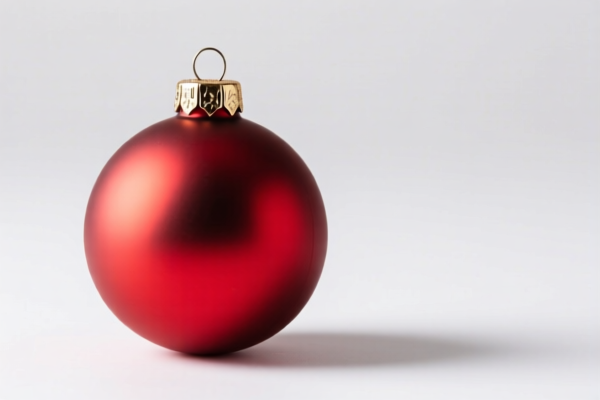
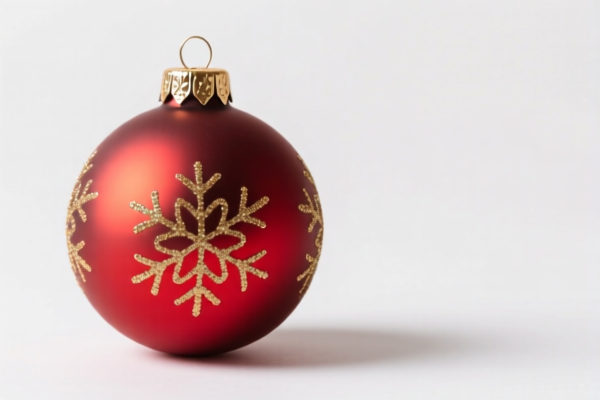
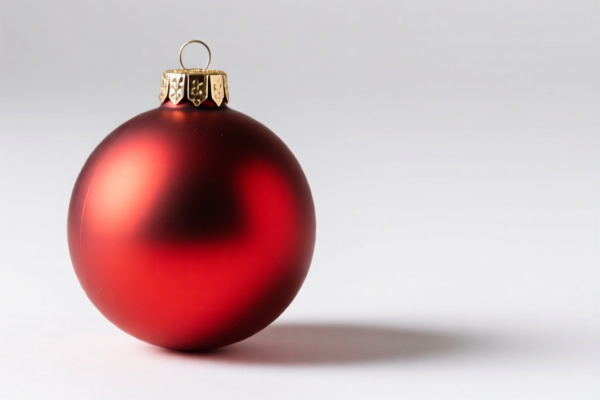
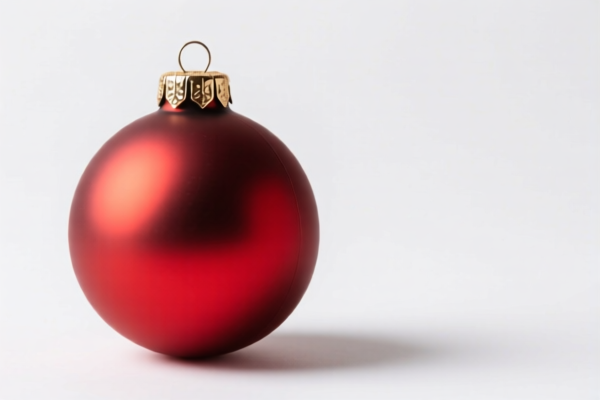
AI Analysis
🎄 Decorative Christmas Balls (Red & Green, Retractable/Telescopic Type)
🌐 HS Code Reference & Customs Clearance Guide | 2026 Latest Tariff Analysis | Professional Clearance Strategy
📌 I. Product Definition & Classification: Are You Sure About "Retractable Christmas Balls"?
"Retractable" or "Telescopic" Christmas balls are essentially decorative ornaments designed to expand or change shape. In international trade, the material is the primary determinant for classification, not the mechanical action (retractability), unless it contains complex electronic components (which is rare for standard decorations).
The core distinction lies in whether the ball is made of Plastic (Artificial) or Glass.
⚠️ Key Classification Point:
- If made of Plastic or Synthetic Material → Classify under Chapter 39 (Plastics) or specific HS 3926.40.
- If made of Glass → Classify under Chapter 70 (Glass).
- If classified broadly under Holiday Articles (Chapter 95) → Specific HS 9505.10.25.
📦 II. HS Code Classification Details (2026 Latest Tariff Authority Comparison)
| HS Code | Product Description | Application Scenario | Material Type |
|---|---|---|---|
3926.40.00.90 |
Decorative balls made of plastics or other synthetic materials | Plastic ornaments, shiny/matte plastic balls | ✅ Plastic/Synthetic |
7018.90.50.00 |
Decorative balls of glass or other materials | Glass ornaments, fragile, traditional shatter-prone | ✅ Glass |
3926.40.00.10 |
Decorative balls made of plastic or similar decorative materials | Plastic balls, often specific sub-categories | ✅ Plastic |
9505.10.25.00 |
Ball-shaped decorations for Christmas festive occasions | General Christmas balls (Material unspecified or mixed) | ✅ Any (Fallback) |
7018.10.50.00 |
Small glass or plastic ornaments made of glass or plastic | Small-sized decorative items, loose beads/small balls | ✅ Glass/Plastic Small Items |
🔍 Important Note:
- The term "Retractable" (可伸缩) does not have its own unique HS Code. It is treated as a feature of the decorative ball.
- Customs primarily looks at the primary material. If the ball is plastic with a spring mechanism inside, it usually falls under 3926 (Articles of Plastics) rather than 9505, unless it is explicitly marketed as a "Holiday Article" of Chapter 95.
- HS 9505.10.25 is often used when the item is clearly a Christmas decoration, but checking the material-specific chapters (39 or 70) is crucial for accurate tax calculation due to different surcharges.
💰 III. 2026 Latest Tariff Rate Breakdown (Including Surcharges & Policy Add-ons)
✅ Applicable Country: United States (US)
✅ Origin: China (CN)
✅ Effective Time: 2025 Nov 10 onwards (including subsequent imports)
🎯 1. 3926.40.00.90 / 3926.40.00.10 —— Plastic/Synthetic Decorative Balls
| Item | Content |
|---|---|
| Base Rate | 5.3% (Ad Valorem) |
| Section 301 Surcharge | 0.0% |
| Section 122 Surcharge | +10% (Against China) |
| Total Tax Rate | 15.3% |
| Tax Calculation | CIF Value × 15.3% |
| De Minimis Exemption? | ❌ No (Denied) |
| Legal Basis Path | Base: 3926.40.00 → Section 122: 10% |
📌 Explanation:
- Plastic Christmas balls enjoy a lower surcharge compared to glass.
- There is no Section 301 (25%) tax, only the Section 122 (10%) tax.
- Total Cost Impact: Moderate. This is the most cost-effective classification for plastic decorations.
🎯 2. 7018.90.50.00 —— Glass Decorative Balls
| Item | Content |
|---|---|
| Base Rate | 6.6% |
| Section 301 Surcharge | +25.0% |
| Section 122 Surcharge | +10% |
| Total Tax Rate | 41.6% |
| Tax Calculation | CIF Value × 41.6% |
| De Minimis Exemption? | ❌ No |
| Legal Basis Path | Base: 7018.90.50 → Section 301: 25% + Section 122: 10% |
📌 Explanation:
- Glass ornaments are hit hard by Section 301 (25%) tariffs.
- Total Cost Impact: High. A 41.6% effective rate significantly reduces profit margins.
- Risk: Glass is fragile; ensure packaging is robust to avoid damage claims which are not covered by tariff issues.
🎯 3. 9505.10.25.00 —— Christmas Ball-Shaped Decorations
| Item | Content |
|---|---|
| Base Rate | 0.0% |
| Section 301 Surcharge | 0.0% |
| Section 122 Surcharge | +10% |
| Total Tax Rate | 10.0% |
| Tax Calculation | CIF Value × 10.0% |
| De Minimis Exemption? | ❌ No |
| Legal Basis Path | Base: 9505.10.25 → Section 122: 10% |
📌 Explanation:
- This is the lowest tax rate (10%) if the customs officer accepts the general "Christmas Decoration" classification.
- However, this relies on the product being classified as a "Holiday Article" (Chapter 95) rather than a specific material article (Ch 39/70).
- Risk: If customs inspects and finds it is primarily a plastic/glass product with specific material characteristics, they may reclassify it to 3926 or 7018, leading to back taxes.
🎯 4. 7018.10.50.00 —— Small Glass/Plastic Ornamental Articles
| Item | Content |
|---|---|
| Base Rate | 0.0% |
| Section 301 Surcharge | +25.0% |
| Section 122 Surcharge | +10% |
| Total Tax Rate | 35.0% |
| Tax Calculation | CIF Value × 35.0% |
| De Minimis Exemption? | ❌ No |
| Legal Basis Path | Base: 7018.10.50 → Section 301: 25% + Section 122: 10% |
📌 Explanation:
- Applies to small items. If your "retractable ball" is considered a "small ornament" rather than a "ball," it might fall here.
- Still subject to Section 301 (25%), making it expensive.
🛠️ IV. Customs Clearance Practical Advice (Battle-Tested Pitfall Guide)
✅ 1. Preparation Checklist (All Items Mandatory)
| Document | Mandatory? | Description |
|---|---|---|
| ✅ Product Specifications | ✔️ | Detail the "Retractable" mechanism (e.g., spring-loaded, telescopic). Specify materials (Plastic vs. Glass). |
| ✅ Product Photos | ✔️ | Clear images of the ball in both expanded and contracted states. Show color (Red/Green). |
| ✅ Commercial Invoice | ✔️ | Must clearly state: "Plastic Decorative Christmas Ball, Retractable Type, Red/Green". Do not just write "Christmas Decoration." |
| ✅ Packing List | ✔️ | Itemize weights carefully. Glass items are heavier due to protective packaging. |
| ✅ Material Declaration | ✔️ | Explicitly state: "100% Polypropylene (PP)" or "Lead-Free Glass". |
| ✅ FCC/CE Certification | ✔️ | If the retractable mechanism has any electronic components (unlikely for standard, but possible for lighted balls), FCC is required. |
✅ 2. Declaration Tips (Key Mnemonics)
🔥 "Material First, Function Second; Plastic is Cheap, Glass is Steep!"
| Scenario | Correct Declaration | Wrong Practice | Consequence |
|---|---|---|---|
| Plastic Retractable Ball | 3926.40.00.90 (15.3%) |
Declare as 9505.10.25 (10%) to save 5.3% |
High Risk: Customs may reclassify to 3926, charge difference + penalty. |
| Glass Retractable Ball | 7018.90.50.00 (41.6%) |
Declare as 9505.10.25 (10%) |
Very High Risk: Glass is clearly Chapter 70. 31.6% back tax + seizure risk. |
| General Christmas Ball | 9505.10.25.00 (10%) |
Use specific material codes if unsure | Safe: If you are confident it falls under "Festive Articles" broadly. |
✅ 3. Special Handling for "Retractable" (Telescopic) Features
| Feature | Handling Advice |
|---|---|
| Mechanism | If the retractable part contains metal springs, ensure the metal content is minimal. If metal is significant, it might be classified as "Metal Articles" (Chapter 83), which has different tariffs. However, for decorative balls, plastic/glass is usually dominant. |
| Packaging | Retractable items can expand. Use boxes with size constraints or secure ties to prevent expansion during transit. Mention "Compressed Size" on invoice. |
| Origin Marking | If assembled in China but components from US/Mexico, check USMCA rules. However, for China origin, IEEPA/Section 122 still applies. |
🌍 V. Global Market Customs Comparison (2026 Latest)
| Country/Region | Recommended HS Code | Tariff Rate (China Origin) | Certification Required | Notes |
|---|---|---|---|---|
| 🇺🇸 USA | 3926.40.00.90 (Plastic) |
15.3% | None usually | Plastic is best for low tax. |
| 🇺🇸 USA | 7018.90.50.00 (Glass) |
41.6% | None usually | Very high tax. Avoid if possible. |
| 🇨🇳 China | 9505.10.25.00 |
5% - 10% (Import Duty) | CCC (if electrical) | Low tax, easy entry. |
| 🇪🇺 EU | 9505.10.00 |
5.0% | CE / REACH | No anti-dumping surcharges like US. |
| 🇬🇧 UK | 9505.10.00 |
5.0% | UKCA | Post-Brexit rules apply. |
📌 Conclusion:
- USA has the most complex tariff structure due to Section 301 and Section 122.
- Plastic balls (3926) are significantly cheaper to import into the US than Glass balls (7018).
- Chapter 95 (9505) offers the lowest base tax but carries classification risk in the US.
📌 VI. Common Errors & Pitfall Guide (Lessons from Blood & Tears)
❌ Error 1: Declaring all Christmas balls as 9505.10.25.00 to get the 10% rate.
👉 Consequence: If US Customs determines the item is primarily a "Plastic Article" (Chapter 39) or "Glass Article" (Chapter 70) due to its specific material composition, they will reassess. For glass, this means jumping from 10% to 41.6%.
❌ Error 2: Ignoring the "Retractable" mechanism in the description.
👉 Consequence: Customs may view the item as "Mechanical" or "Toys" (Chapter 9503) if the mechanism is complex, leading to different duty rates. Clarify it as a "Decorative Ornament."
❌ Error 3: Mixing Plastic and Glass in one shipment without separate HS Codes.
👉 Consequence: Customs will likely apply the highest tax rate (Glass 41.6%) to the entire shipment if not properly segregated and documented.
❌ Error 4: Not declaring Section 122 applicability.
👉 Consequence: Failure to include the 10% Section 122 tax in cost calculations leads to cash flow issues upon import.
✅ Correct Practice:
"Decorative Christmas Ornament, Plastic, Retractable/Telescopic Type, Red & Green, Model X, Made in China"
HS Code:3926.40.00.90
Tax: 15.3%
🎯 VII. Conclusion: Professional Declaration, Save Money, Smooth Customs!
🎯 Remember the Mnemonic:
🔹 "Plastic Ball: 15.3% (Safe & Low); Glass Ball: 41.6% (Expensive & High); Holiday Class: 10.0% (Risky but Cheap)."
🔹 "Check Material First; Don't Guess the Chapter. Section 122 is Always 10% for China."
📌 Pro Tip:
- If your retractable balls are plastic, stick to
3926.40.00.90. It is the most defensible and cost-effective (15.3%).- If you are importing large volumes, consider applying for a Pre-Ruling from US Customs and Border Protection (CBP) to lock in the
3926classification and avoid disputes.- For Glass, ensure the packaging cost is factored in, as the 41.6% tax applies to the full CIF value, including fragile packaging.
📣 Immediate Action:
📞 Consult a Customs Broker: Confirm if your specific "retractable" design might be viewed as a "Mechanical Toy" (higher risk) or standard "Decoration".
🚀 Prepare Accurate Specs: Clearly state "Plastic" or "Glass" on the invoice.
💼 Your Profit Margin Depends on Precise Classification!
✨ Professional Customs Clearance Starts with Accurate Classification!
💼 Every Percent of Tariff Saved is Pure Profit!
Customer Reviews
About HS Code Classification
The Harmonized System (HS) is an internationally standardized nomenclature developed by the World Customs Organization (WCO) to classify traded products. Over 200 countries use the HS system as the basis for customs tariffs, trade statistics, and import/export regulations.
Each HS code follows a hierarchical structure:
- Chapter (2 digits) — Broad category of goods (e.g., Chapter 84: Machinery and Mechanical Appliances)
- Heading (4 digits) — More specific grouping within the chapter
- Subheading (6 digits) — Internationally standardized breakdown, used by all WCO member countries
- National subdivisions (8-10 digits) — Country-specific extensions for further classification, such as US HTSUS 10-digit codes
Correct HS code classification is essential for smooth customs clearance, accurate duty payment, and compliance with trade regulations. Misclassification can lead to customs delays, overpayment of duties, or penalties.
When importing from CN to US, the applicable tariff rates may include:
- Most-Favored-Nation (MFN) rate — The standard duty rate applied to WTO members
- General rate — Applied to countries without trade agreements
- Trade remedy duties — Additional tariffs such as Section 301 (anti-dumping), Section 232 (national security), or countervailing duties
The information provided on this page is for reference purposes only. For official classification, please consult with your local customs authority or a licensed customs broker.