可替换笔记本
CN → US| HS Code | Tariff Rate | Origin | Destination | Doc |
|---|---|---|---|---|
| 4820300020 | 35.0% | CN | US | Official Doc |
| 8473309100 | 35.0% | CN | US | Official Doc |
| 8471410150 | 17.5% | CN | US | Official Doc |
| 8471300100 | 10.0% | CN | US | Official Doc |
| 4820104000 | 10.0% | CN | US | Official Doc |
Product Images

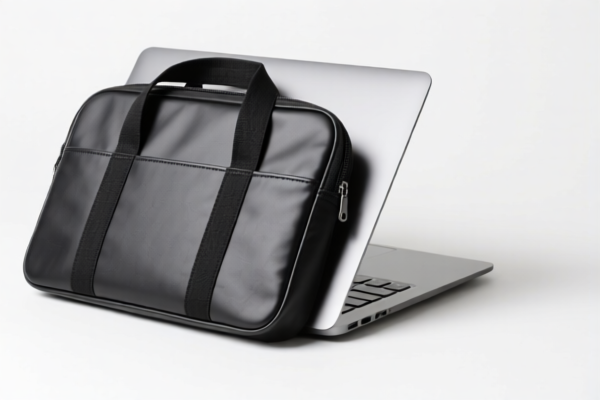
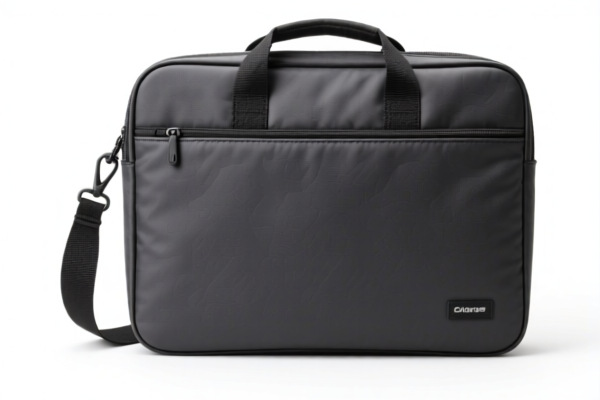
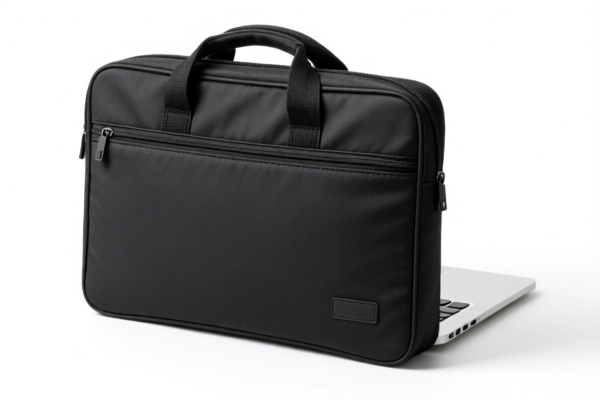
AI Analysis
📓 Replaceable-Page Notebook (Reusable Notebook with Interchangeable Pages)
🌐 HS Code Reference & Customs Clearance Guide | 2026 Updated Tariff Analysis | Pro-Level Import Strategy
📌 One, Product Definition & Classification: Do You Really Know What a "Replaceable Notebook" Is?
A replaceable-page notebook is a stationery product designed for repeated use, featuring paper or cardboard-based pages that can be easily removed and replaced—commonly used in offices, schools, and creative workflows. Unlike traditional notebooks with glued or bound pages, this type is built with mechanical binding systems (e.g., spiral, ring, or slot-based) to allow for page swapping, reorganization, and reuse.
⚠️ Key Classification Trigger:
- Pages are removable and replaceable → Not bound permanently
- Made of paper or cardboard → Not plastic or synthetic materials
- Used for writing, planning, sketching, or record-keeping → Falls under stationery category🔍 Critical Distinction:
- If pages are permanently bound (glued, stitched) → HS Code 4820.10.40.00 applies only if it's a simple notebook without replaceable features
- If pages are designed to be replaced → Must be classified under 4820.30.00.20, not 4820.10.40.00
📦 Two, HS Code Classification Breakdown (2026 Official Tariff Matching)
| HS Code | Product Description | Use Case | Replaceable Pages? | Binding Type |
|---|---|---|---|---|
4820.10.40.00 |
Paper or paperboard notebooks, not bound with replaceable pages, used for writing, sketching, or records | Standard notebooks, daily planners, student notebooks | ❌ No | Glued, stitched, or fixed |
4820.30.00.20 |
Stationery-type ring binders or notebooks with replaceable pages, made of paper or paperboard | Reusable planners, workbooks, art sketchbooks, office templates | ✅ Yes | Spiral, ring, slot, or clip-based binding |
8471.30.01.00 |
Portable automatic data processing (ADP) machines, ≤10kg | Laptops, tablets, portable computers | ❌ No | Electronic device |
8471.41.01.50 |
Integrated ADP equipment with CPU, input/output units | Desktops, all-in-one PCs, embedded systems | ❌ No | Electronic device |
8473.30.91.00 |
Parts & accessories for ADP equipment, replaceable in function | RAM, SSDs, power supplies, keyboard modules | ❌ No | Not paper-based |
📌 Key Insight:
- Only4820.30.00.20applies to reusable paper notebooks with interchangeable pages
- Do NOT confuse with electronic devices (e.g., tablets) or non-replaceable paper notebooks
- Even if it has a cover, spine, or rings, if pages are replaceable → use 4820.30.00.20
💰 Three, 2026 Latest Tariff Breakdown (Including附加 Taxes & Policy Rules)
✅ Applicable Country: United States (US)
✅ Origin: China (CN)
✅ Effective Date: November 10, 2025 (including future imports)
🎯 1. 4820.30.00.20 — Replaceable-Page Notebook (Paper/Cardboard)
| Item | Detail |
|---|---|
| Base Duty Rate | 0% (ad valorem) |
| Section 301 Additional Duty | +25% (from USITC Footnote 9903.88.01) |
| Section 122 (IEEPA) Additional Duty | +10% (applies to goods from China/HK, effective Nov 10, 2025) |
| Total Effective Duty | 35.0% |
| Tax Calculation | CIF Value × 35% |
| De Minimis Exemption? | ❌ Not eligible (denied under de_minimis rule) |
| Legal Basis Path | IEEPA:9903.01.25 → IEEPA:9903.01.24 → USITC:4820.30.00.20 → FOOTNOTE:9903.88.01 |
📌 Explanation:
- 25% USITC Section 301 Tariff: Imposed under the U.S. Trade Act of 1974 for "unfair trade practices" by China
- 10% IEEPA Section 122 Tariff: From the International Emergency Economic Powers Act (IEEPA), targeting Chinese-origin goods for national security concerns
- Total = 35% — Very high for a paper product!
- No de minimis relief → Even small shipments are fully taxed
🛠️ Four, Customs Clearance Best Practices (Real-World Pro Tips)
✅ 1. Required Documentation (Must-Have List)
| Document | Required? | Notes |
|---|---|---|
| ✅ Product Specification Sheet | ✔️ | Include size, page count, binding type, material (paper/cardboard), weight |
| ✅ Product Photos (with open cover) | ✔️ | Show rings, slots, or spiral binding clearly |
| ✅ Manufacturing/Design Drawings | ✔️ | Prove replaceable page mechanism |
| ✅ Commercial Invoice | ✔️ | Must state: "Reusable Notebook with Replaceable Pages, Made of Paper/Cardboard" |
| ✅ Certificate of Origin (CO) | ✔️ | If from China, expect 35% duty; if from Vietnam/Mexico, may qualify for exemption |
| ✅ Packing List | ✔️ | Show total units, packaging type, whether pages are pre-loaded |
| ✅ Third-Party Test Reports (Optional) | ✔️ | RoHS, REACH, or sustainability certifications (helps in audits) |
✅ 2.申报技巧 (Key Rules to Remember)
🔥 "Replaceable = 4820.30.00.20, Not 4820.10.40.00!"
| Scenario | Correct HS Code | Wrong HS Code | Risk |
|---|---|---|---|
| Notebook with ring binder + removable pages | 4820.30.00.20 |
4820.10.40.00 |
Higher tax, audit risk |
| Notebook with spiral binding + replaceable pages | 4820.30.00.20 |
4820.10.40.00 |
45% vs 35%? No—still 35% |
| Notebook with glued pages | 4820.10.40.00 |
4820.30.00.20 |
Incorrect classification → penalties |
| Notebook with plastic pages or synthetic material | ❌ Not eligible for either | 4820.30.00.20 |
Must use different HS Code |
✅ Correct Product Name Example:
"Reusable Ring-Binder Notebook, 8.5x11 in, 100 Pages, Made of Recycled Paper, Spiral Binding, Interchangeable Pages, Brand XYZ"
✅ 3. Special Cases & Risk Mitigation
| Situation | Recommended Action |
|---|---|
| Pages are pre-printed templates | Still qualifies under 4820.30.00.20 if replaceable |
| Used for digital sketching (e.g., with stylus) | Still a paper product → No electronic classification |
| Sold with a separate refill pack | Declare as "Refill Pages for Notebook" → Same HS Code |
| Exported from Vietnam/Mexico/Thailand | Apply for IEEPA exemption → 0% tariff |
| Custom-designed with branding | Provide design proof → Avoid "generic" classification |
🌍 Five, Global Market Comparison (2026 Tariff Snapshot)
| Country/Region | Recommended HS Code | Tariff | Certification Required | Notes |
|---|---|---|---|---|
| 🇺🇸 United States | 4820.30.00.20 |
35% (China-origin) | None (but document proof) | No de minimis |
| 🇨🇳 China | 4820.30.00.20 |
5% | CCC, RoHS | No extra tariffs |
| 🇪🇺 European Union | 4820.30.00.20 |
0% (if CE) | CE, RoHS | No additional duties |
| 🇦🇺 Australia | 4820.30.00.20 |
5% | RCM | No extra tariffs |
| 🇯🇵 Japan | 4820.30.00.20 |
0% | PSE | No extra tariffs |
📌 Conclusion:
- U.S. is the only market with 35% tariff on replaceable paper notebooks from China
- China-origin products face the highest cost
- Consider shifting manufacturing to Vietnam, Mexico, or Thailand for tariff-free access
📌 Six, Common Mistakes & Risk Warnings (Real-World Pitfalls)
❌ Mistake 1: Misclassifying a replaceable-page notebook as 4820.10.40.00
👉 Result: Underpayment of duty → Audits, fines, back taxes, penalties
❌ Mistake 2: Using "Notebook" or "Planner" without specifying "replaceable pages"
👉 Result: Customs may assume it’s a standard bound notebook → Wrong HS Code → 10% tariff vs 35%? No—still 35% if from China
❌ Mistake 3: Not providing photos of the binding mechanism
👉 Result: Customs cannot verify replaceability → Delay, request for info, or rejection
❌ Mistake 4: Trying to split shipment into "cover" + "pages"
👉 Result: Each part taxed separately → Higher total duty → No benefit
✅ Best Practice:
"Always declare as: 'Reusable Notebook with Replaceable Pages, Paper/Cardboard, Ring/Spiral Binding, 4820.30.00.20'"
🎯 Seven, Final Verdict: Precision Matters, Cost Depends on Accuracy!
🎯 Remember the Golden Rule:
🔹 "If pages can be replaced → HS Code
4820.30.00.20→ 35% tariff in U.S. (China-origin)"
🔹 "If pages are glued → HS Code4820.10.40.00→ 10% tariff"
🔹 "Don’t confuse paper notebooks with electronic devices!"
📌 Pro Tip:
If your replaceable notebook is made in Vietnam, Mexico, or Thailand, apply for IEEPA exemption → 0% tariff in the U.S.
✅ Apply for Advance Ruling (Pre-Clearance) before shipment to avoid surprises.
📣 Take Action Now:
📞 Contact a licensed customs broker + provide product photos + request HS Code pre-ruling
🚀 Avoid 35% surprise taxes, ensure smooth U.S. entry, protect your margins!
✨ Smart Exporting Starts with Smart Classification!
💼 Your product’s HS Code isn’t just a number—it’s your profit margin’s guardian!
Customer Reviews
About HS Code Classification
The Harmonized System (HS) is an internationally standardized nomenclature developed by the World Customs Organization (WCO) to classify traded products. Over 200 countries use the HS system as the basis for customs tariffs, trade statistics, and import/export regulations.
Each HS code follows a hierarchical structure:
- Chapter (2 digits) — Broad category of goods (e.g., Chapter 84: Machinery and Mechanical Appliances)
- Heading (4 digits) — More specific grouping within the chapter
- Subheading (6 digits) — Internationally standardized breakdown, used by all WCO member countries
- National subdivisions (8-10 digits) — Country-specific extensions for further classification, such as US HTSUS 10-digit codes
Correct HS code classification is essential for smooth customs clearance, accurate duty payment, and compliance with trade regulations. Misclassification can lead to customs delays, overpayment of duties, or penalties.
When importing from CN to US, the applicable tariff rates may include:
- Most-Favored-Nation (MFN) rate — The standard duty rate applied to WTO members
- General rate — Applied to countries without trade agreements
- Trade remedy duties — Additional tariffs such as Section 301 (anti-dumping), Section 232 (national security), or countervailing duties
The information provided on this page is for reference purposes only. For official classification, please consult with your local customs authority or a licensed customs broker.